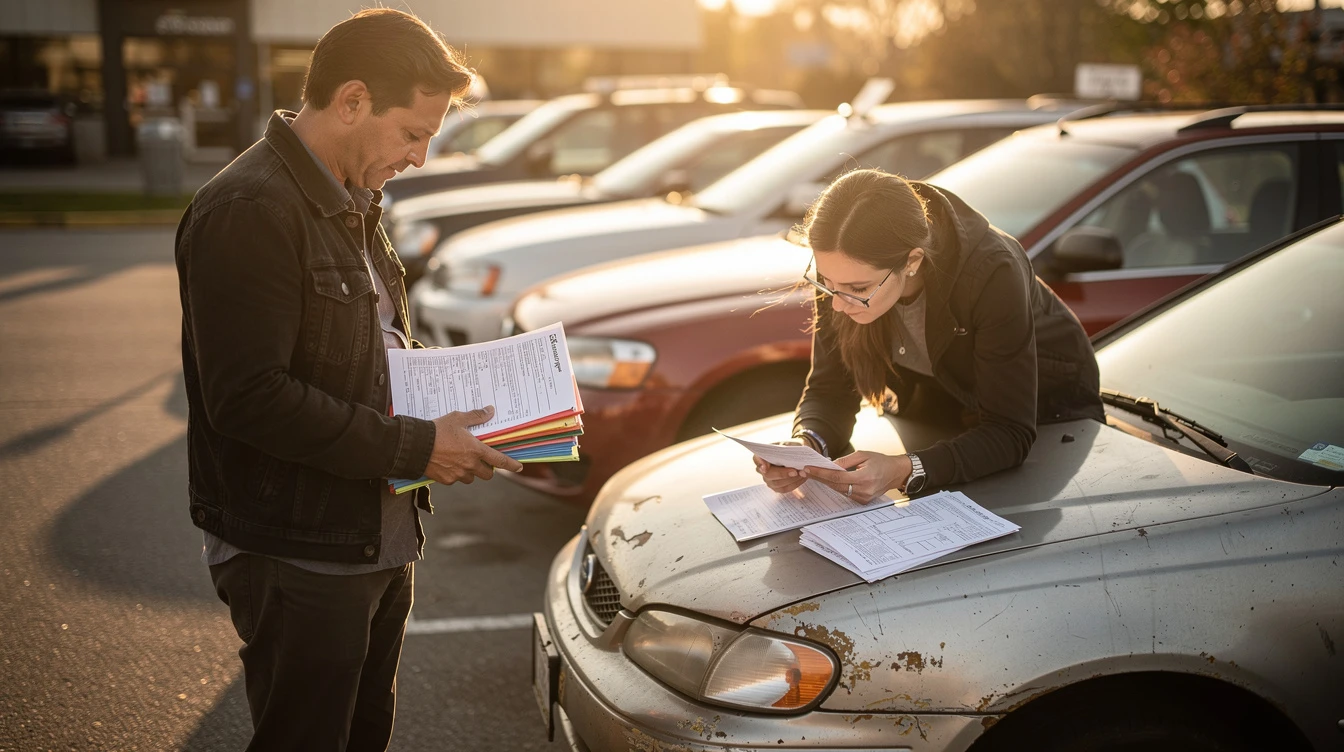
How to Transfer a Car Title: Complete FAQ Guide
Learn how to transfer a car title step by step. From DMV title transfer paperwork to title jumping penalties, get clear answers to every question here.

A car title transfer is the process of legally changing the recorded ownership of a vehicle from one person or entity to another. It sounds straightforward, but the details matter, and getting them wrong can cost you time, money, or even your ability to register the vehicle. Whether you just bought a used car, inherited a vehicle, or are gifting one to a family member, here's everything you need to know about how a DMV title transfer works, what documents you'll need, and where things commonly go wrong.
What Is a Car Title and Why Does It Matter?
A vehicle title is the registration document that proves legal ownership of a car. It is issued by your state's motor vehicle division and lists the owner's name, the vehicle identification number (VIN), and lienholder information if the vehicle was financed. Without a clear title in your name, you typically cannot register the vehicle, get insurance, or sell it later. A title is separate from your registration card and license plate, though both are connected to it.
For a closer look at situations where title and ownership don't always match up, read Title Isn't Always Ownership: The Reality Most People Miss, which covers some common misunderstandings that trip up buyers and sellers alike.
How Do You Transfer a Car Title Step by Step?
- Get the existing title from the seller. The seller signs the back of the title, including the odometer reading and sale price.
- Complete any required state forms. Many states have a separate bill of sale or title application form.
- Check for liens. If a bank is listed on the title, the lien must be released before the transfer can go through.
- Submit paperwork to the DMV. Both parties may need to appear, depending on the state.
- Pay transfer fees and taxes. Fees vary by state, typically ranging from $10 to $100 or more.
- Receive the new title. Processing times vary, but most states issue titles within 2 to 6 weeks.
A useful overview of what qualifies as proof of ownership at each stage of this process is covered in What Is the Best Proof of Vehicle Ownership? A Complete Document Guide.
What Documents Do You Need for a DMV Title Transfer?
Requirements vary by state, but most DMV title transfer transactions need the following:
- The signed-over original title from the seller
- A completed title application form (varies by state)
- A bill of sale (an automotive bill of sale documents the agreed price and is required in many states)
- Valid government-issued photo ID
- Odometer disclosure statement (required for vehicles under 10 years old in most states)
- Lien release documentation if the vehicle was financed
- Payment for transfer fees and any applicable taxes
One of the most frequent reasons title paperwork gets sent back for correction is an incomplete or inaccurate odometer disclosure. The most frequent reason documents come back for correction in our process is odometer compliance, which affects a meaningful share of incoming orders (internal data, rolling last 90 days, n=118). Double-check that field before you submit anything.
What Is Title Jumping and Is It Illegal?
Title jumping (sometimes called floating a title) is when a buyer purchases a vehicle but never formally transfers the title into their own name before selling it to someone else. The title "jumps" from the original owner directly to the third buyer, skipping the middle owner entirely.
Is title jumping illegal? Yes, in virtually every state. Title jumping is treated as fraud because it hides a transaction from the state, evades sales tax, and creates a broken ownership chain that can make the vehicle difficult or impossible to title later.
What is the penalty for title jumping? Penalties range from civil fines to criminal charges depending on the state. In some states, title jumping is a misdemeanor. In aggravated cases involving large-scale fraud, it can be charged as a felony. Even if you received a jumped title accidentally, you may still face registration delays and legal headaches sorting it out.
What Happens if You Have a Vehicle With No Title?
A vehicle without a title isn't automatically stuck forever. Several paths exist depending on your situation:
- Duplicate title: If the title exists but is lost, the current owner can request a duplicate (sometimes called an auto title replacement) from the issuing state.
- Bonded title: If ownership history is unclear or the title was never properly transferred, a bonded title may be an option. You purchase a surety bond, file paperwork, and the state issues a title with a "bonded" notation that clears after a holding period (typically three years).
- Bill of sale title: Some states accept a notarized bill of sale as the basis for issuing a new title when no prior title exists.
- Vermont or Montana title process: Some vehicle owners use alternative state registration paths when their home state has no clean way to issue a title on an older or untitled vehicle.
Understanding what can make a title invalid in the first place helps you catch problems early. Read What Makes a Vehicle Title Invalid? Warning Signs Every Owner Should Know before you buy or sell.
How Does a Montana Title Transfer Work?
Montana is one of the most flexible states in the country for vehicle titling. The state has no sales tax on vehicles, no emissions testing requirements, and a straightforward title process managed through county treasurers. Vehicle title Montana transactions are handled at the county level, and many owners across the country use Montana LLCs to hold vehicles and access these benefits without physically moving to Montana.
For a full breakdown of how Montana LLC registration works and who is eligible, see The Complete Guide to Forming a Montana LLC for Vehicle Registration. If you want to understand whether Montana has any taxes that apply to vehicle purchases, Does Montana Have Sales Tax on Vehicles? Here's the Full Story gives a clear answer backed by state sources.
You can also register your vehicle through a Montana LLC with Dirt Legal's paperwork assistance, which walks you through the full process remotely.
What Is a Manufacturer's Statement of Origin and When Does It Replace a Title?
A Manufacturer's Statement of Origin (MSO), sometimes called an MCO (Manufacturer's Certificate of Origin), is the original ownership document issued by the factory when a brand-new vehicle is built. It functions like a birth certificate for the vehicle. Dealers use the MSO to obtain the first title. As a private buyer, you would not normally receive an MSO unless you're buying a brand-new vehicle directly or a vehicle that has never been titled before.
For more on how MSOs work and what to do with one, see Manufacturer's Statement of Origin (MSO): What It Is and Why It Matters for Your Vehicle Title and the related guide MCO for Vehicle: What It Is, How It Works, and What to Do With It.
Do You Need a VIN Inspection for a Title Transfer?
Many states require a VIN inspection (a physical check of the vehicle's identification number) before issuing a title, especially for out-of-state vehicles, salvage-titled vehicles, or vehicles without a prior title in that state. A VIN inspection is typically performed by a law enforcement officer, licensed dealer, or state inspector who verifies that the VIN on the vehicle matches the paperwork and that the vehicle isn't reported stolen.
If your transfer involves a vehicle coming from out of state or from a non-standard title situation, a VIN inspection is likely on your checklist. The full process is covered in VIN Inspections: What They Are, When You Need One, and How to Pass.
Before any title transfer, running a VIN check is a smart step to confirm the vehicle's history, check for open liens, and spot potential red flags before money changes hands.
How Do You Replace a Lost Car Title?
Auto title replacement (also known as a duplicate title) is available in every state. The process typically involves submitting a duplicate title application to the motor vehicle division, providing your ID, and paying a fee (usually $10 to $25). Some states allow this online; others require an in-person visit. If there's an active lien on the vehicle, the lienholder may also need to be involved in the duplicate request.
One important point: only the current title owner can request a duplicate in most states. If you're buying a vehicle and the seller says they lost the title, make sure the duplicate is in the seller's name and properly signed over to you, not issued directly to you before the transfer is complete.
Can You Transfer a Title Without Going to the DMV in Person?
Some states allow mail-in or online title transfers, especially for straightforward private-party sales. Others require in-person appearances for both buyer and seller. Requirements also change based on vehicle type, lien status, and whether the vehicle is coming from out of state.
If you want remote paperwork support for your title transfer or registration, Dirt Legal's team assists with DMV paperwork without you needing to stand in line. See Simple Process, No Extra Steps: Your Vehicle Registration Handled Without Delays for a look at how that works. You can also review how the process works and what's included before getting started.
What Is a Salvage Title and Can It Be Transferred?
A salvage title is issued when an insurance company declares a vehicle a total loss, typically because repair costs exceed a set percentage of the vehicle's market value (often 75, 80%, though this threshold varies by state). A salvage-titled vehicle can still be transferred, but the buyer takes on a vehicle with a permanently marked title history.
Salvage titles can sometimes be converted to rebuilt or reconstructed titles after the vehicle passes a state inspection, but the salvage notation usually stays in the vehicle's history permanently. Buyers should factor this in when evaluating price and insurability.
What Are Common Mistakes That Delay a Car Title Transfer?
- Missing seller signature on the title. The title must be signed in the exact right spot, including odometer disclosure, to be accepted.
- Incorrect odometer reading. Odometer compliance is one of the top reasons title paperwork is rejected.
- Unreleased lien. If a bank still appears on the title as a lienholder, the transfer cannot proceed until that lien is cleared.
- Wrong name or address. Typos on the application form can send paperwork back for correction.
- Expired title. Some states set time limits on how long a signed-over title is valid before it must be retitled or re-signed.
- Missing bill of sale. An automotive bill of sale is required in many states, especially when the purchase price affects taxes owed.
Also worth reading before any purchase: how to buy a vehicle from Facebook Marketplace safely, which covers documentation pitfalls that trip up private-party buyers regularly.
Ready to Get Your Title Transfer or Registration Started?
Dirt Legal has helped with 80,000+ vehicle orders to date. Whether you need assistance with a title transfer, are registering a vehicle through a Montana LLC, or want to sort out a tricky paperwork situation, our team provides DMV paperwork assistance so you can get moving faster.
Hero photo by momo@land via Pexels
Hero photo by momo@land via Pexels
Hero photo by momo@land via Pexels
Hero photo by momo@land via Pexels
Hero photo by momo@land via Pexels
Hero photo by momo@land via Pexels
Hero photo by momo@land via Pexels
Hero photo by momo@land via Pexels
Hero photo by momo@land via Pexels
Hero photo by momo@land via Pexels
Hero photo by momo@land via Pexels
Hero photo by momo@land via Pexels
Hero photo by momo@land via Pexels
Hero photo by momo@land via Pexels
Hero photo by momo@land via Pexels
Hero photo by momo@land via Pexels
Hero photo by momo@land via Pexels
Hero photo by momo@land via Pexels
Hero photo by momo@land via Pexels
Hero photo by momo@land via Pexels
Hero photo by momo@land via Pexels
Hero photo by momo@land via Pexels
Hero photo by momo@land via Pexels
Hero photo by momo@land via Pexels
Hero photo by momo@land via Pexels
Hero photo by momo@land via Pexels
Hero photo by momo@land via Pexels
Hero photo by momo@land via Pexels
Hero photo by momo@land via Pexels
Hero photo by momo@land via Pexels
Hero photo by momo@land via Pexels
Hero photo by momo@land via Pexels
Hero photo by momo@land via Pexels
Hero photo by momo@land via Pexels
Hero photo by momo@land via Pexels
Hero photo by momo@land via Pexels
Hero photo by momo@land via Pexels
Hero photo by momo@land via Pexels
Hero photo by momo@land via Pexels
Hero photo by momo@land via Pexels
Hero photo by momo@land via Pexels
Hero photo by Vitali Adutskevich via Pexels
Hero photo by Vitali Adutskevich via Pexels