How to Make a UTV Street Legal by State: Complete Guide
Learn how to make a UTV street legal by state with mechanical equipment checklists, state laws, and remote paperwork support options.
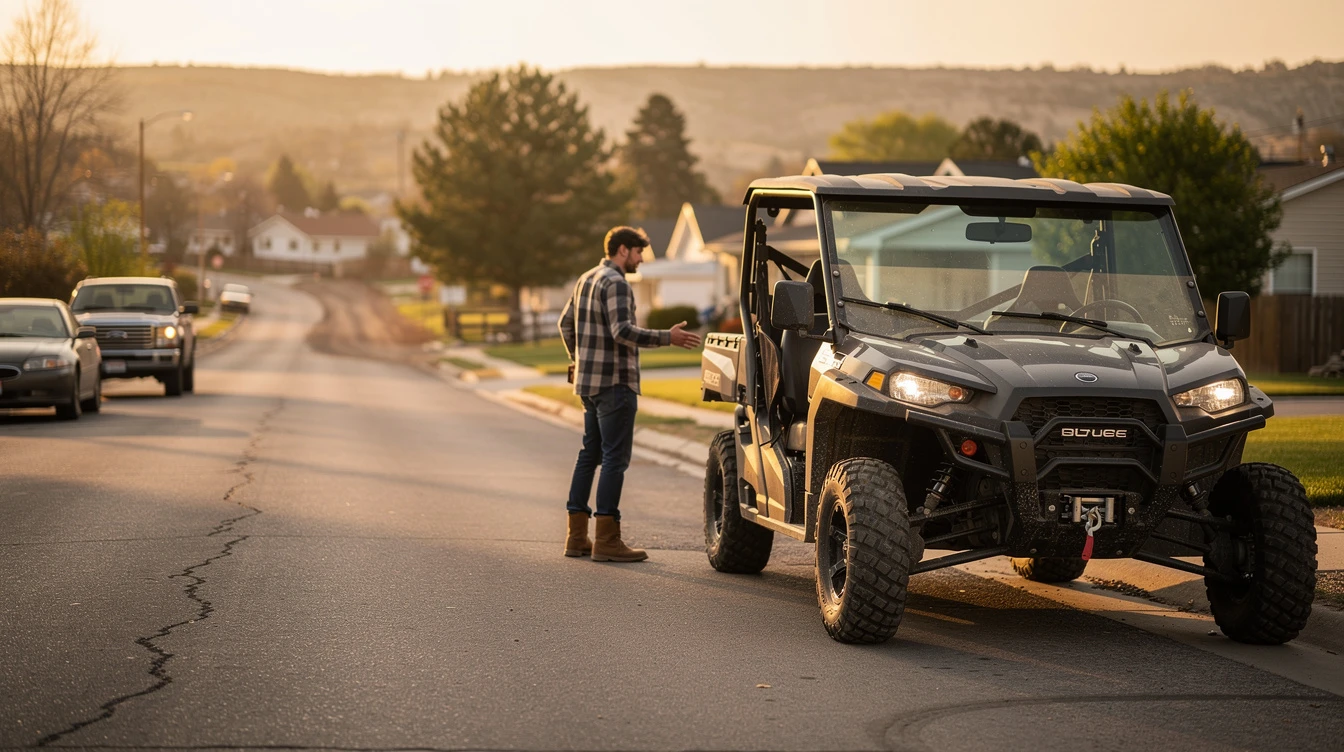
Learning how to make a UTV street-legal by state requires adding essential road equipment like headlights, turn signals, mirrors, and a horn, followed by obtaining a compliant license plate and registration. While states like Montana, South Dakota, Arizona, and Wyoming offer straightforward registration paths for utility terrain vehicles, restrictive states prohibit conversion altogether. Many riders establish ownership through an out-of-state entity to secure street-legal plates without modifying their home title status directly.
Every jurisdiction maintains unique statutes defining what separates an off-highway vehicle from a road-worthy machine. Navigating these regional distinctions determines whether you can drive on primary roads, secondary streets, or strictly marked trail crossings. Understanding both the mechanical modifications and the title documentation is critical before you invest money into aftermarket hardware.
How to Make a UTV Street-Legal by State Through Equipment Compliance
Before any jurisdiction accepts an application for road use, your side-by-side must satisfy baseline mechanical safety standards. Most motor vehicle departments adjust portions of federal passenger car or motorcycle equipment statutes to evaluate converted off-highway vehicles. Installing high-quality components ensures that law enforcement officers recognize your machine as road-ready during transit.
What Lighting Upgrades Are Necessary for On-Road Driving?
Lighting requirements form the backbone of street conversion hardware. Your vehicle needs functional high and low beam headlights visible from at least five hundred feet. Tail lights and integrated brake lights must clarify clearly both day and night, signaling stops instantly to trailing drivers.
Turn signals represent another universal necessity across states allowing road conversions. These kits must feature amber indicators on the front and amber or red lights at the rear, coupled with an interior dash indicator or illuminated switch. Adding a dedicated white light above the rear license plate bracket keeps your registration visible in darkness, satisfying standard motor vehicle codes.
Which Mirrors and Horns Meet State Inspection Standards?
Rearward visibility is mandatory across every state allowing utility task vehicle road use. Most statutes require at least two functional mirrors, consisting of either dual exterior side mirrors or a wide-angle rearview mirror paired with a driver-side mirror. Convex designs are popular among trail enthusiasts because they provide broad fields of view around roll cages.
Your auditory alert system must consist of an electric automotive horn capable of sounding at least two hundred feet away. Hand-operated squeeze bulbs or bicycle noisemakers will fail safety inspections. Wiring your horn into a labeled dash switch creates a clean, factory-style installation that inspectors and law enforcement accept without hesitation.
Do You Need Windshields, Seat Belts, and DOT Tires?
Occupant restraint systems are non-negotiable. Three-point seat belts or multi-point racing harnesses must secure every passenger seat designed by the manufacturer. If your side-by-side lacks doors, some regions mandate safety netting or half doors to prevent limb ejection during highway travel.
Windshield laws split into two camps across the country. Certain jurisdictions demand a full Department of Transportation compliant safety glass windshield, complete with an electric wiper and washer assembly. Other states permit scratch-resistant polycarbonate half-windshields, or even dispense with front glass entirely provided that every occupant wears approved eye protection. Upgrading to DOT-stamped radial tires prevents heavy tread vibration on hot pavement and complies with tire safety mandates nationwide.
If you prefer an experienced hand walking you through the entire administrative sequence, review how the process works to understand how off-road machines transition to road compliance.
How to Make a UTV Street-Legal by State Law Classification
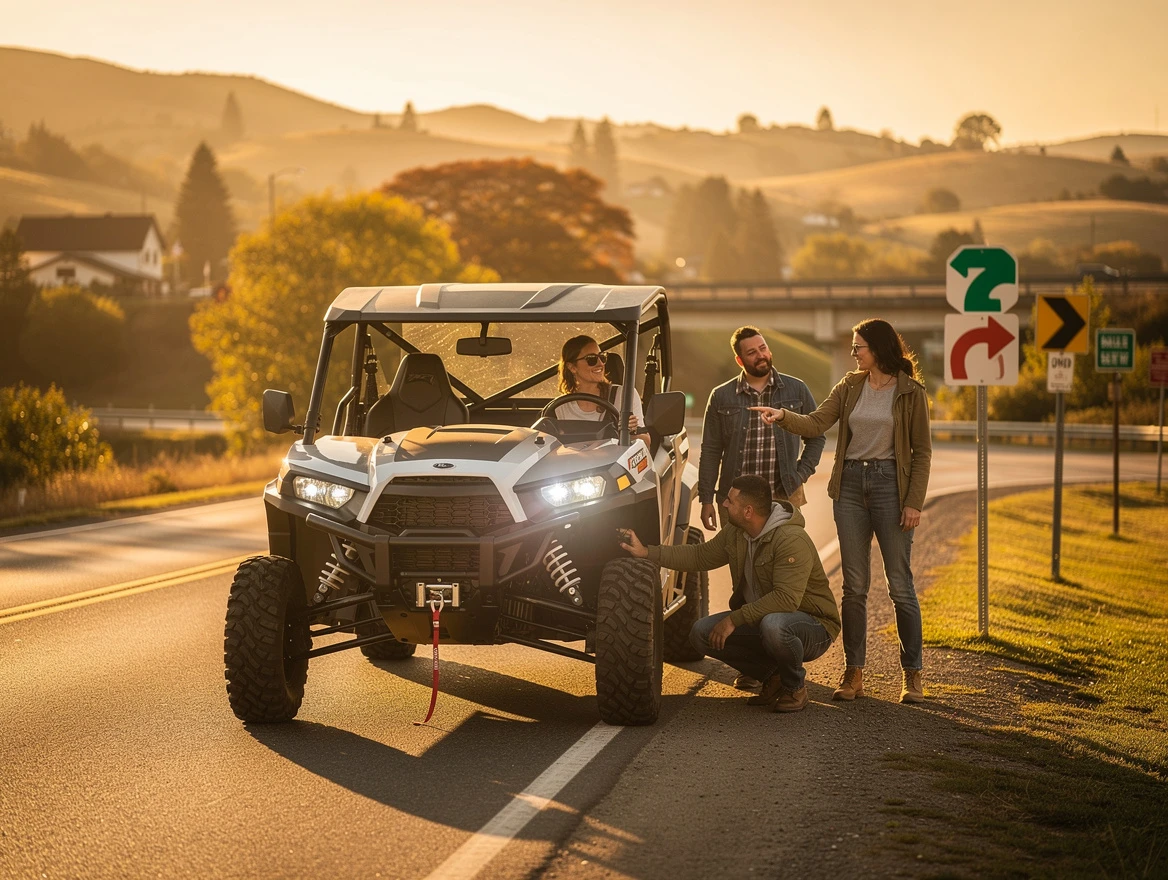
State motor vehicle codes fall into three distinct operational tiers regarding utility task vehicles. Knowing where your local state ranks prevents traffic stops, impoundments, and costly equipment citations. The differences determine whether you can cross state lines or remain confined to low-speed municipal networks.
Ready to register your vehicle?
Join thousands of vehicle owners who use Dirt Legal to handle their registration quickly.
Which States Freely Allow Street Conversion?
States throughout the American West and Midwest maintain open pathways for registering off-highway utility vehicles as regular passenger or low-speed vehicles. States including Montana, South Dakota, Wyoming, Arizona, Utah, and Idaho feature straightforward registration pathways. Once you equip the side-by-side with lights, mirrors, and insurance, these states issue full-sized license plates allowing wide access to highways and county roads.
In places like South Dakota, you simply submit an affidavit confirming equipment readiness alongside proof of ownership. A complete review of local nuances in these top tier states is highlighted in our guide, can you make a utv street-legal in south Dakota?, outlining paperwork steps and mechanical checks.
Which States Allow Only Conditional or Local Access?
A second category of states leaves road permissions to municipal discretion. In states like Tennessee, Ohio, Wisconsin, and Texas, state statutes allow local counties and towns to designate specific public roads for utility vehicle transit. Typically, travel remains restricted to roads with posted speed limits of thirty-five or forty-five miles per hour.
Travelers in these regions must often hold local permits or register under specific limited-use tags. For detailed state rules, read our deep dive on can you make a utv street-legal in tennessee? what you need to know, or inspect the Midwest standard detailed in our breakdown of Wisconsin statutes.
Which States Prohibit Utility Vehicle Street Operation?
A handful of states actively bar standard utility vehicles from ever obtaining public road plates on home titles. California, New York, New Jersey, Pennsylvania, and Massachusetts classify utility task vehicles strictly as off-highway equipment or recreational devices. Their vehicle codes forbid converting these platforms into passenger vehicles, regardless of the aftermarket safety hardware installed.
Owners residing in these jurisdictions often face confusing hurdles when trying to access public lands separated by state routes. Read more about strict Western regulations in our review of can you make a utv street legal in California? and examine Pacific Northwest restrictions in can you make a utv street legal in Oregon? what you need to know.
How to Make a UTV Street-Legal by State Using Out-of-State Registration
When your home state blocks direct registration, establishing vehicle documentation out of state creates a compliant route to secure valid metal license plates. Out-of-state registration structures allow owners to operate across borders under the principle of interstate vehicle reciprocity.
How Does the Montana LLC Method Work?
Montana permits out-of-state residents to form a holding company that owns personal or recreational assets. The newly formed Montana business entity purchases or transfers ownership of the vehicle, titling it directly with the state motor vehicle authority. Because Montana recognizes utility vehicles for highway operation when properly titled, the entity receives permanent license plates that never require recurring renewal visits.
Forming an LLC in Big Sky Country offers an added financial perk because the state does not collect general sales tax on vehicle purchases. Review our Montana llc guide or look at specific vehicle advantages in Why Do People Register Cars in Montana? The Real Reasons Explained. For commercial and recreational entity packages, you can look into our Montana LLC services.
How Does Out-of-State Reciprocity Protect Drivers?
The United States Constitution mandates that states honor public acts, records, and judicial proceedings of every other state. Known as full faith and credit reciprocity, this rule requires local police to recognize valid license plates, registration cards, and titles issued by another state. If your machine carries compliant tags, police officers generally verify plate validity, active liability insurance, and basic safety equipment.
while equipment reciprocity generally applies to visiting vehicles, permanent residents driving out-of-state plates in their home state must abide by local residency titling mandates. Exploring regional alternatives is simplified when reviewing our article on The Benefits of Registering a Florida Car Out-of-State.
Dirt Legal has completed over 6,000 customer orders to date (lifetime through current month, n=6,199), supporting side-by-side owners nationwide who need dependable, compliant vehicle paperwork without facing down complicated state bureaucracies alone.
What Ownership Paperwork and Title Steps Are Required?
Securing road documentation requires authentic ownership paperwork. You must supply a clean original Certificate of Title or an authentic manufacturer certificate of origin. If you purchased a used machine on a bill of sale, clearing the paperwork trail requires title restoration paperwork.
Understanding title chains prevents administrative delays. For insight into title documentation traps, check out our guide on how Title Jumping is More Illegal Than Jumping a Car. Buyers who acquired older machines without formal paperwork can review Can I Get a Title With Just a Bill of Sale in Colorado? for actionable ownership recovery concepts.
Interested in exploring how powersports vehicles compare to unique miniature utility options? Read our project breakdown in ATV/Motorcycle Engine in a Kei Mini Truck: How Difficult Is the Swap? or evaluate street conversions on off-road bikes in How to Register a Dirt Bike in FL for Street Use.
See How We Can Help With Your Registration →
Comparing State Options on How to Make a UTV Street-Legal by State
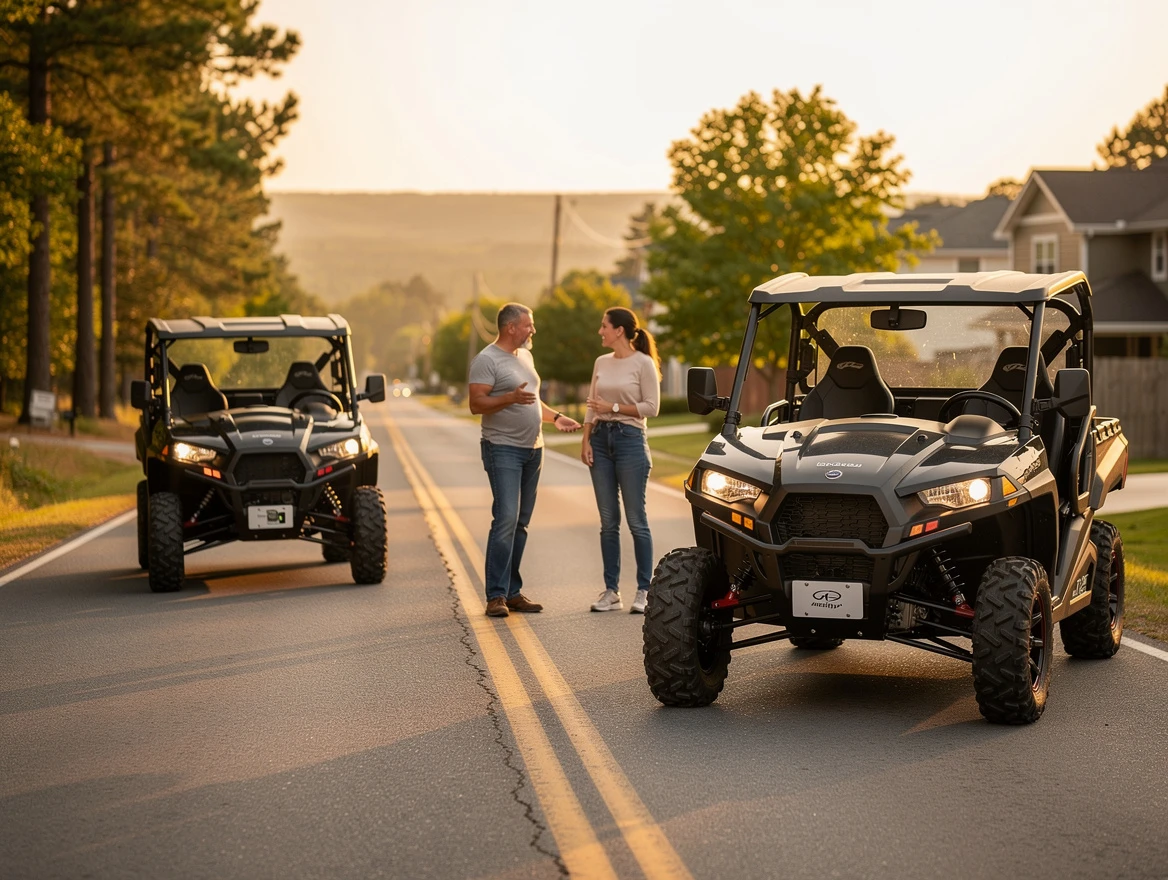
Choosing the correct registration pathway depends on where you live, where you ride, and whether you want ongoing annual renewals. The table below outlines how primary registration solutions compare for off-highway utility vehicles.
| Registration Method | Speed Limits Permitted | Sales Tax Treatment | Annual Renewal Needs | Target Vehicle Types |
|---|---|---|---|---|
| Montana LLC Entity | Full highway speeds | Zero percent state rate | Permanent plate option | UTV, ATV, Custom Builds |
| South Dakota Non-Resident | Full highway speeds | Four percent excise tax | Annual mail-in renewal | Side-by-sides, Quads |
| Home State Local Permit | 25 to 45 mph max | Home state sales tax | Annual municipal fee | Low-speed utility rigs |
| Direct Home State Title | Varies by jurisdiction | Standard state rate | Annual inspection and tag | Approved states only |
For additional details regarding tax frameworks and registration options across multiple vehicle classes, check out the sister platform post States to Register a Collector Car: Montana vs Florida vs SD. You can also look at powersport compliance strategies in How to Make a UTV Street Legal in 2026: Efficient Guide to see how modern enthusiasts structure their recreational titles.
Frequently Asked Questions About Street-Legal Utility Vehicles
How to make a utv street-legal?
To make a utility vehicle street-legal, install mandatory Department of Transportation safety equipment including headlights, turn signals, mirrors, a horn, and seat belts. Once equipped, compile your machine ownership papers, proof of insurance, and safety compliance forms. Submit this documentation to a motor vehicle agency that titles off-highway platforms for road use, or establish registration through an out-of-state LLC to secure street plates.
What states allow street-legal utv?
States that broadly permit street-legal side-by-sides on public roadways include Montana, South Dakota, Arizona, Wyoming, Utah, Idaho, North Dakota, and West Virginia. These states offer clear statutes defining the hardware inspections and paperwork required to issue standard passenger or on-road utility plates. Many other states allow street driving only on specific municipal or county routes designated by local ordinances.
What states are side-by-sides street-legal?
Side-by-sides are street-legal throughout states like Montana, South Dakota, Wyoming, Arizona, Michigan, Tennessee, and Utah, provided the machines carry registered plates and meet minimum lighting standards. Several Midwestern and Southern states also permit utility vehicles on rural roads and secondary corridors. In contrast, states such as California, New York, and Massachusetts keep utility vehicles barred from highway classification entirely.
Can you make a dirt bike street-legal?
Yes, you can make a dirt bike street-legal by outfitting it with a DOT-compliant headlight with high and low beams, tail lights, a functional brake switch, mirrors, a horn, and highway-rated dual-sport tires. After completing mechanical upgrades, submit the title or bill of sale to a friendly registration jurisdiction. To learn more about titling unregistered bikes, read our resource on Have a Motorcycle With No Title? Here’s How to Get One.
Can you make a go kart street-legal?
Making a go-kart street-legal is extremely challenging because karts typically lack roll-cage protection, crash-tested frame structures, standard safety belts, and adequate ride height. Some kit-built buggies or custom fabrications can obtain special construction titles if they combine all road-legal lighting, bumpers, mirrors, and safety glass, though rules vary heavily by state.
Can you make a side by side street-legal in pa?
In Pennsylvania, you cannot convert a side-by-side into a standard street-legal passenger vehicle under normal PennDOT administrative channels. Pennsylvania law classifies these machines as recreational off-highway equipment restricted to private trails, designated park areas, and marked road crossings. Keystone State owners who want road tags frequently choose out-of-state LLC registrations to operate compliantly on permitted connecting highways.
Final Steps to Road Compliance for Your Side-by-Side
Transforming your off-road machine into a road-going utility vehicle expands your trail adventures, daily utility, and outdoor recreation. Once you match your mechanical hardware to motor vehicle safety expectations and secure valid documentation, public roadways open up. Review our dedicated Street Legal Vehicle registration assistance services page to see how our team guides you through the necessary state paperwork from start to finish.