How to Title a Vehicle Without a Title: Options & Documents
Learn how to title a vehicle without a title: legitimate options and documents needed, including bonded titles, bills of sale, and out-of-state paperwork.
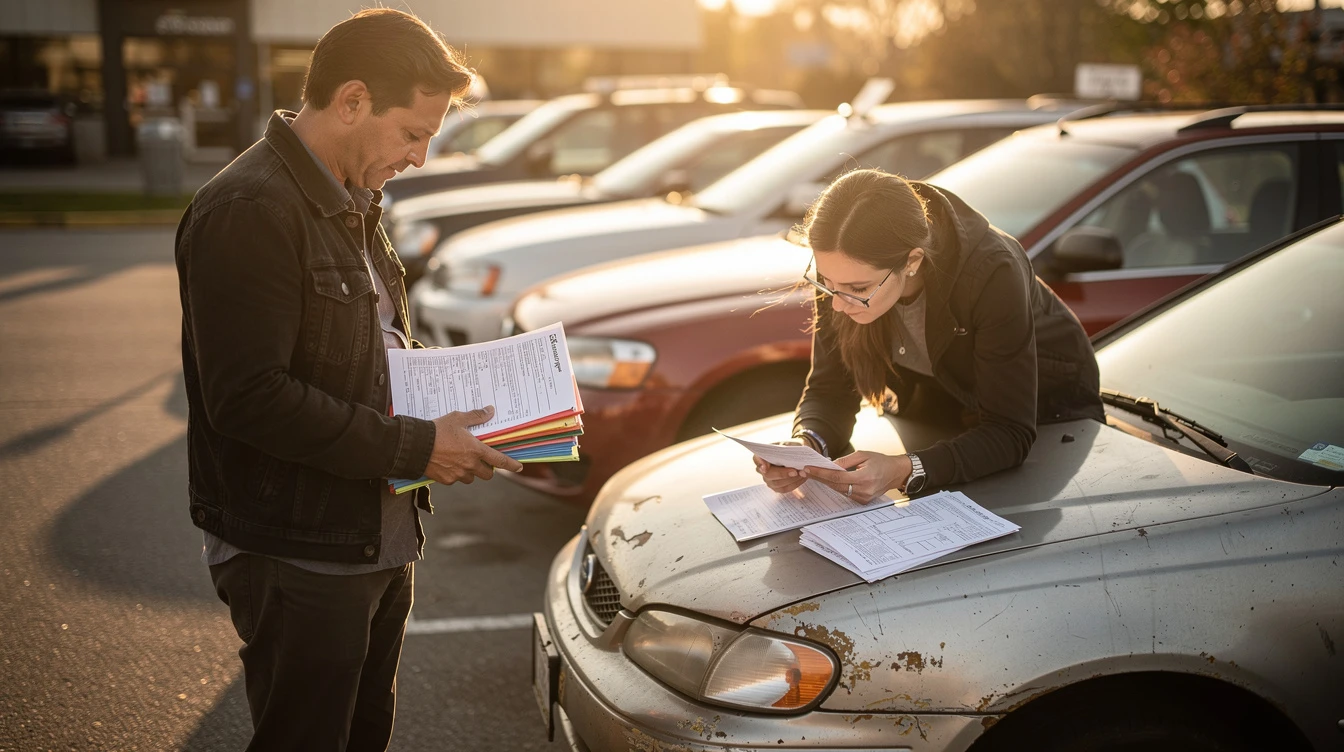
To title a vehicle without an existing title, you must establish ownership through alternative paperwork like a bill of sale, surety bond, or out-of-state title recovery process. Your primary paths include filing for a bonded title through your local DMV, obtaining an auto title replacement through the previous owner, or using out-of-state paperwork assistance in states that issue registration certificates based on bills of sale. Necessary records typically consist of a notarized bill of sale, an active VIN verification, identification, and state-specific title application forms.
Buying a car, truck, or motorcycle without paperwork happens every single day. Barn finds, lost documents, estate sales, and private sellers who never completed their own paperwork leave thousands of buyers stranded without proper ownership papers. Without a clean certificate, you cannot compliantly drive on public roads, insure your investment, or sell it later down the road.
This detailed guide breaks down every compliant pathway available to secure a new title when the original document is completely gone. You will see what paperwork you actually need, how to work through the process without wasting months in line, and when an out-of-state ownership structure makes the most sense for your situation.
Legitimate Ways on How to Title a Vehicle Without a Title: Legitimate Options and Documents Needed Right Now
Acquiring clean ownership records without a physical certificate is entirely achievable when you follow established statutory methods. State departments of motor vehicles recognize that titles get lost, destroyed in floods, or abandoned over decades of storage. Because of this, specific administrative paths exist to reconstruct your vehicle ownership history from the ground up.
The right method depends on the vehicle age, its current market value, and the exact papers you walked away with after buying it. Let us examine the four primary methods used nationwide to turn an un-titled vehicle into a registered, street-legal machine.
1. The Bonded Title Process
A bonded title is the most standard state-level fallback when ownership paperwork vanishes. When you purchase a surety bond, an insurance company guarantees your financial responsibility in case the prior owner or a forgotten lienholder comes forward claiming ownership. The state DMV then issues a branded bonded title that remains in place for three to five years before converting into a standard clean title.
To Eligible for a bonded title, your vehicle must typically be physically inspected by law enforcement or a certified inspector to confirm the Vehicle Identification Number matches state records. You must also prove you purchased the vehicle in good faith, which requires a bill of sale or canceled payment record. If no one contests your ownership claim during the bond duration, the bond expires, and the title status clears completely.
2. Reconstructing Ownership via Auto Title Replacement
If you recently purchased the car directly from the person listed on the state DMV database, your path is much simpler. You can work with the registered seller to request an auto title replacement through their home state motor vehicle division. Once they receive the duplicate title from their DMV, they sign it over to you compliantly, allowing you to complete a routine dmv title transfer.
This process breaks down, however, when the seller becomes unresponsive, moves away, or passes away. If the seller never officially titled the vehicle in their own name, you encounter an entirely different issue known as title floating or jumping, which halts standard duplicate filings immediately.
3. Using Out-of-State Registration and Title Assistance
Certain states provide flexible titling and registration frameworks for older vehicles or unique assets. For example, some states allow vehicles over a certain age threshold to be registered exclusively with a bill of sale, generating a transferable registration document that functions as an ownership certificate. Alternatively, owners often look at vehicle title montana options through an LLC ownership model to secure permanent documentation.
Dirt Legal helps motorists work through complex multi-state paperwork hurdles without headaches. Dirt Legal has completed over 6,000 customer orders to date (lifetime through current month, n=6,186), helping owners across all 50 states establish proper documentation for cars, trucks, dirt bikes, and custom builds.
The Required Documents on How to Title a Vehicle Without a Title: Legitimate Options and Documents Needed
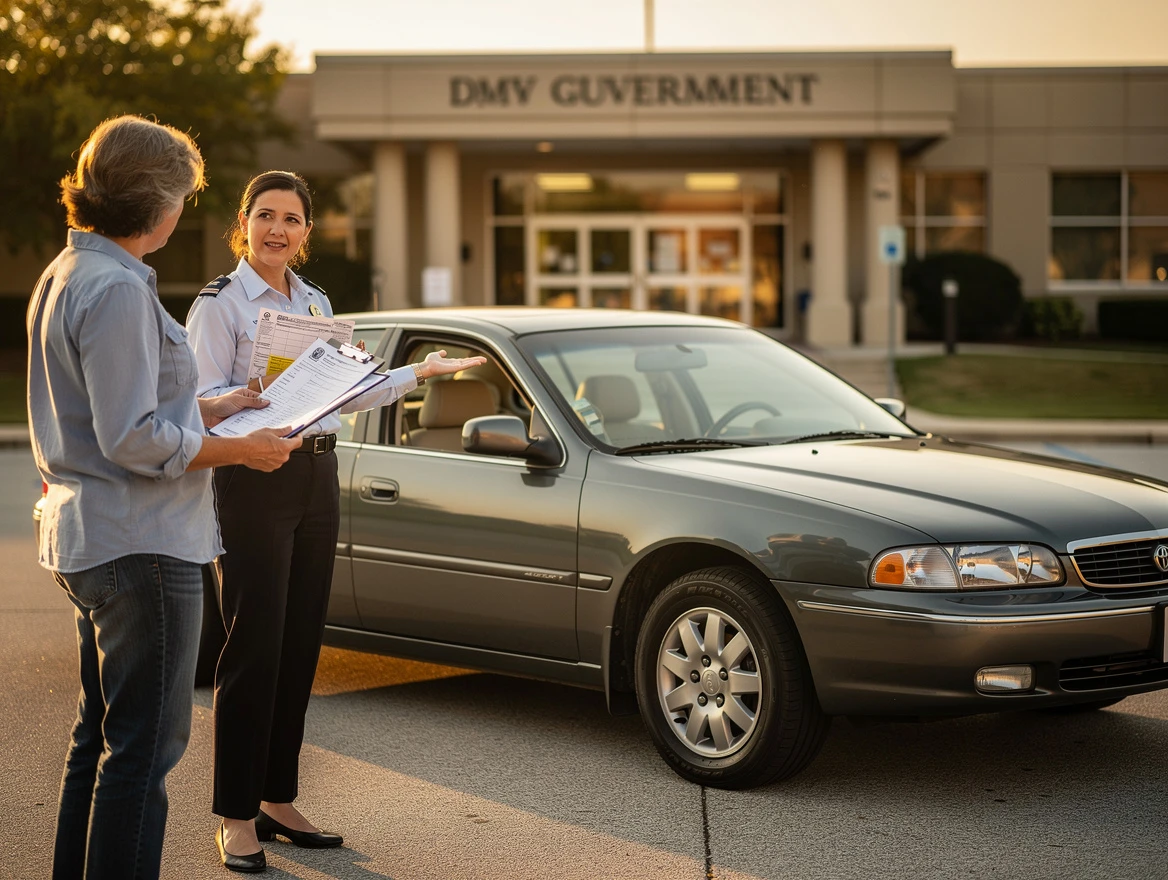
Every motor vehicle department requires tangible documentation before issuing a brand-new ownership certificate. You cannot simply walk in with a vehicle and verbal testimony. Collecting these key items before filing paperwork saves you countless hours and prevents rejected submissions.
Ready to register your vehicle?
Join thousands of vehicle owners who use Dirt Legal to handle their registration quickly.
Register Your Vehicle Today →While exact form names vary across state lines, the underlying evidence needed to demonstrate clean ownership remains remarkably uniform across the United States. Gathering these foundational papers represents half the battle in any title recovery procedure.
Essential Proof of Purchase and Vehicle History
Your primary record is a detailed bill of sale signed by the party who sold you the vehicle. A compliant bill of sale must include the full legal name and address of both buyer and seller, the complete 17-digit VIN (or shorter serial number for pre-1981 classics), the exact purchase price, and the date of sale. Notarizing this document adds significant legal credibility, and several states mandate notarization outright.
Before proceeding, verify that the vehicle has a clean title background. You can check recall status and basic data using the NHTSA VIN Lookup, and run a dedicated vehicle history check through our VIN check service. Knowing beforehand whether a prior owner reported the car stolen or if an active bank lien exists prevents you from investing money into an un-titlable chassis.
Physical Inspections and VIN Verifications
States routinely require an official inspection form before generating a replacement title for an undocumented car. A certified law enforcement officer or designated DMV agent must visually verify the public VIN on your dashboard, door jamb, or motorcycle frame steering neck to make sure it matches your paperwork exactly and shows no signs of tampering.
If you want to understand how inspectors review numbers on older or modified vehicles, our sister brand provides an excellent breakdown on VIN Inspections Explained: What Every Car Owner Should Know. Having a completed physical verification form ready speeds up state document processing dramatically.
Avoiding Title Jumping and Illegal Pitfalls on How to Title a Vehicle Without a Title: Legitimate Options and Documents Needed
When you purchase a car without a title, you must understand the risks of title jumping. Title jumping occurs when someone buys a vehicle, never registers it in their own name with the state, and turns around to resell it to the next buyer. People often ask what is title jumping and is title jumping illegal; the answer is that every state prohibits it.
Unregistered intermediaries frequently do this to avoid paying state sales tax or registration fees. Knowing the risks keeps you out of hot water with state investigators and tax authorities.
Understanding Title Jumping vs Title Floating
While often used interchangeably, people also ask what is title floating. Title floating specifically to the practice of leaving the buyer section on a signed vehicle title blank. The intermediate buyer holds the open title indefinitely without submitting paperwork, effectively floating ownership in administrative limbo until they find a third-party retail buyer.
When this happens, the official state motor vehicle database still shows the original seller as the owner. If that title is subsequently damaged or lost, the intermediate buyer cannot request a duplicate because their name appears nowhere on state records. This leaves the final buyer holding an untitlabled vehicle with broken ownership chains.
Legal Penalties and Enforcement
Many vehicle buyers ask what is the penalty for title jumping and wonder is title jumping a felony. In many jurisdictions, title jumping is categorized as a serious misdemeanor, carrying fines ranging from hundreds to thousands of dollars. In states with strict consumer protection statutes, repeated offenses or title jumping linked to unlicensed vehicle flipping can escalate to felony fraud charges.
If you find that the person who sold you a car was never on the title, do not attempt to forge signatures or alter documents. Instead, use legitimate state-approved recovery channels such as a bonded title, a court order of ownership, or specialized out-of-state paperwork assistance services.
Comparing Titling Pathways on How to Title a Vehicle Without a Title: Legitimate Options and Documents Needed

Choosing the right process depends on vehicle value, documentation history, and how quickly you want to be street-legal. The table below outlines standard routes, expected documentation, and key trade-offs.
| Titling Method | Primary Documents Needed | Typical Turnaround | Best Suited For |
|---|---|---|---|
| Bonded Title | Bill of sale, surety bond, VIN verification, bond application | 4 to 8 weeks | Vehicles with missing history where prior owner is completely unreachable |
| Duplicate from Seller | State application for duplicate title, seller ID, lien release | 2 to 4 weeks | Purchases where the registered seller is cooperative and available |
| Montana LLC Titling | Bill of sale, VIN inspection, LLC formation documents | 3 to 5 weeks | High-value vehicles, motorhomes, unique builds, and exotic cars |
| Court Order Ownership | Petition for writ of mandamus, bill of sale, VIN check, court hearing | 2 to 6 months | High-value assets where DMV administrative appeals have failed entirely |
Specific State Scenarios on How to Title a Vehicle Without a Title: Legitimate Options and Documents Needed
Local DMV policies vary widely depending on geography. Understanding how individual states handle lost paperwork helps clarify your next move. For example, buyers in the Midwest often research what do i need to title a car in missouri and search for a missouri vehicle title search free online to track previous owners.
In Missouri, the state relies on Form DOR-108, officially known as the application for missouri title and license. If you lack the title, the state requires either a court-ordered title or a bonded title filing. You must submit an odometer disclosure, a vehicle safety examination, and tax receipts showing personal property tax compliance alongside your application.
Colorado and Western States
Other states have rigid guidelines regarding bill-of-sale transactions. If you are dealing with a vehicle in the Rocky Mountain region, you might wonder about local allowances. We explored this exact topic in our guide on whether Can I Get a Title With Just a Bill of Sale in Colorado?, highlighting how bonded titles act as the mandatory bridge.
Western states often require detailed certified mailings to the last registered owner of record. You must demonstrate that you sent a formal inquiry via certified mail requesting title transfer paperwork and received no response or a signed rejection before the DMV allows you to purchase a title bond.
Establishing Titling Through an Out-of-State LLC
For many car owners, dealing with rigid home-state titling rules feels like running into a brick wall. When local red tape halts progress, registering through a business entity in Montana offers an effective, completely compliant avenue. Montana permits vehicles owned by a Montana LLC to be titled and registered without in-state physical inspections in many categories.
Through our dedicated Montana LLC Vehicle Registration assistance, we handle the required legal filings to register assets through your newly formed Montana LLC. This approach is widely popular for motorhomes, unique classics, and custom powersports vehicles. To understand how asset protection and compliant corporate ownership align, read our sister brand's review on whether Is Montana LLC Vehicle Registration Compliant for Business?.
You can also review the state statutory guidelines directly through the Montana Motor Vehicle Division to learn how out-of-state entities hold vehicle titles compliantly. Montana does not charge general statewide vehicle sales tax, as outlined by the Montana Department of Revenue, making it an attractive operational base for large collections.
Frequently Asked Questions on How to Title a Vehicle Without a Title: Legitimate Options and Documents Needed
What documents are needed to title an imported vehicle and register it to an LLC?
Titling an imported vehicle through an LLC requires federal customs entry paperwork, proof of vehicle ownership from the country of origin, and entity documentation. Specifically, you will need the foreign registration or export certificate, stamped CBP Form 7501 (Entry Summary), DOT Form HS-7, EPA Form 3520-1, a bill of sale, and your approved LLC formation documents. Dirt Legal manages these filings to make sure federal import declarations match state registration applications compliantly.
What documents are needed to register a vehicle?
To register a vehicle, you typically need the existing title signed over to you (or an approved alternative proof of ownership like an out-of-state registration card), a bill of sale, an active insurance card, proof of passing safety or emissions inspections if required by your state, your driver's license, and completed state title and license plate application forms.
Can titles be obtained for vehicles without titles?
Yes, titles can be obtained for vehicles lacking original titles through administrative DMV procedures. Standard options include applying for a bonded title through an approved surety company, having the prior owner request a replacement title from their DMV, petitioning a local court for an order of ownership, or utilizing out-of-state paperwork assistance in states that recognize bill-of-sale transfers.
How to get a title for a motorcycle without a title?
Securing a motorcycle title without the original certificate involves establishing proof of purchase with a notarized bill of sale, having local law enforcement perform a VIN verification to confirm the bike is not stolen, and either securing a surety bond or using out-of-state title recovery. If you acquired a bike without paperwork, our complete guide on Have a Motorcycle With No Title? Here’s How to Get One covers step-by-step strategies tailored to two-wheeled vehicles.
Can i scrap a car without title?
In most states, scrapping a vehicle without a title is restricted to prevent the theft and unauthorized disposal of automobiles. However, many states allow licensed salvage yards to purchase older vehicles (often 10 to 15 years old or older) with just an official bill of sale, a state-issued photo ID, and a completed DMV form certifying that no active liens exist on the vehicle.
How to title an abandoned vehicle?
Titling an abandoned vehicle requires completing a formal statutory abandonment process. Property owners or repair shops must run a certified owner search through the state DMV, send certified notification letters to the last known registered owner and lienholder, advertise the vehicle publicly if required by law, and hold a public auction or petition the state for an abandoned property title certificate.
Knowing how to title a vehicle without a title: legitimate options and documents needed turns a stressful purchase into a fully street-legal vehicle you can drive with confidence. Whether you pursue a surety bond, request replacement papers, or use our specialized Montana LLC Vehicle Registration assistance, having verified paperwork protects your vehicle investment for years to come.