How to Install a Front License Plate Holder on an ATV/UTV
Learn how do you install a front license plate holder on an all-terrain vehicle (ATV) or utility task vehicle (UTV) with simple mounts, clamps, and hardware.
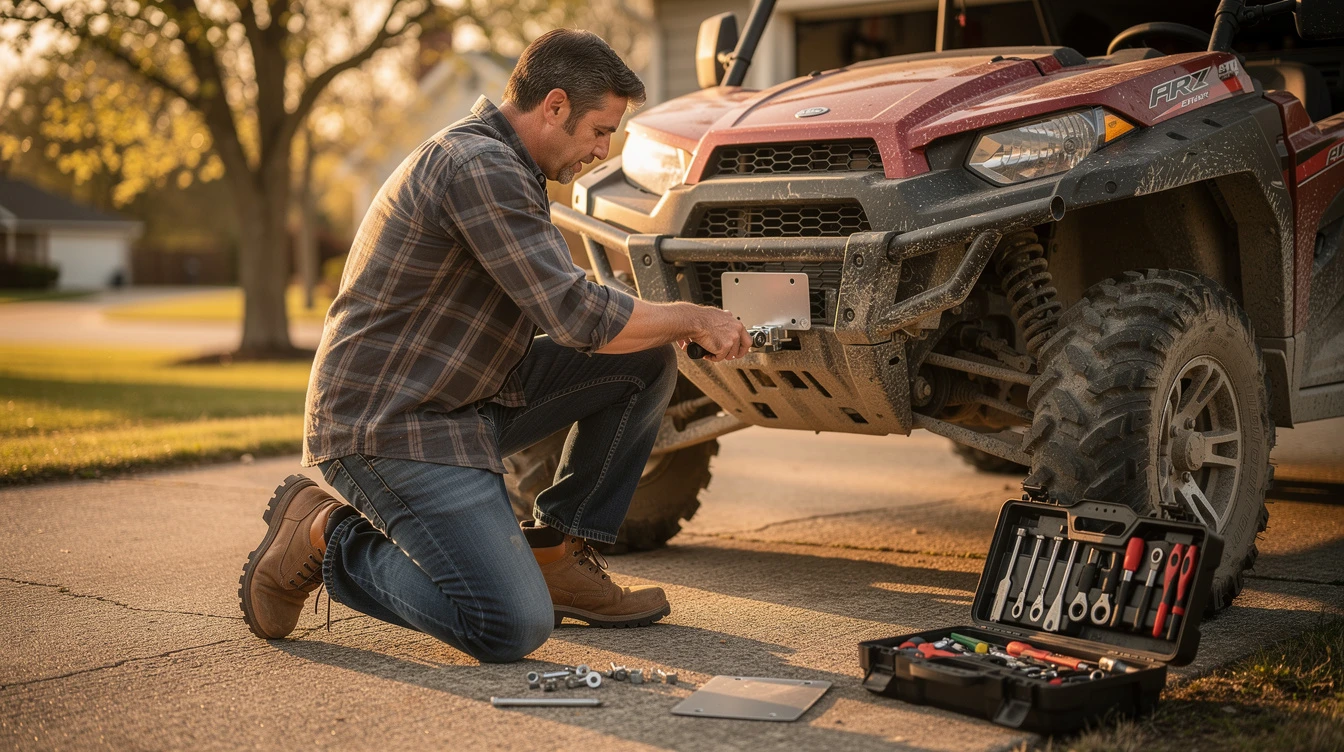
To install a front license plate holder on an all-terrain vehicle (ATV) or utility task vehicle (UTV), you attach a dedicated mounting bracket to your front bumper, winch fairlead, or roll cage tubing using rubber-coated clamps or direct bolt-on hardware. Most riders select clamp-style mounts or winch-bracket adapters to avoid drilling holes directly into their plastic body panels. Once the bracket is bolted firmly into place, secure your tag with nylon-locking nuts to keep it from rattling loose on rough trails.
Equipping an off-road machine for street travel requires paying close attention to state equipment codes. While rear plates are universal, many jurisdictions demand a visible front tag if you want your rig to remain street-legal on public roads. Doing this right keeps you compliant without damaging your vehicle bodywork.
This guide walks you through the tools, mounting styles, wiring for illumination, and state rules you need to know before hitting the pavement or the dirt.
How Do You Install a Front License Plate Holder on an All-Terrain Vehicle (ATV) or Utility Task Vehicle (UTV) Using Modern Brackets?
Installing a front bracket takes thirty minutes with basic hand tools. You do not need professional mechanical skills, but you do need to choose the best location on your machine so the tag stays visible without blocking cooling airflow to your radiator.
Winch Fairlead Mounts for Tight Spaces
If your machine has a front-mounted winch, a hawse or roller fairlead plate bracket offers a clean setup. These brackets sandwich directly behind your existing fairlead or clip over the rollers. You simply loosen the two main fairlead bolts, place the bracket arms over the bolt shanks, and torque the hardware back to manufacturer specifications. This keeps the plate centered, out of the way of suspension travel, and off your painted plastics.
Tubular Bumper and Roll Bar Clamps
For machines with steel aftermarket or factory trail bumpers, billet aluminum roll-cage clamps or rubber-lined P-clamps provide a solid grip. Measure your tube diameter, which is typically 1.5, 1.75, or 2 inches. Wrap the clamp around the bar, align the bracket mounting tabs, and run grade-5 or stainless bolts through the tabs. This setup resists intense off-road vibration and lets you reposition the bracket higher or lower along the tube in seconds.
Direct Plastic Bumper Mounting
When tube space and winch access are absent, direct mounting to the front fascia is another route. Hold your plate holder flat against the plastic in a recessed, flat area away from headlights. Mark the pilot holes with a center punch, drill through using a small bit, and use broad stainless fender washers on the backside of the plastic. The washers distribute mechanical stress so rough trails will not crack the plastic around the bolt holes.
Mounting Hardware and Illumination: How Do You Install a Front License Plate Holder on an All-Terrain Vehicle (ATV) or Utility Task Vehicle (UTV) Compliantly?
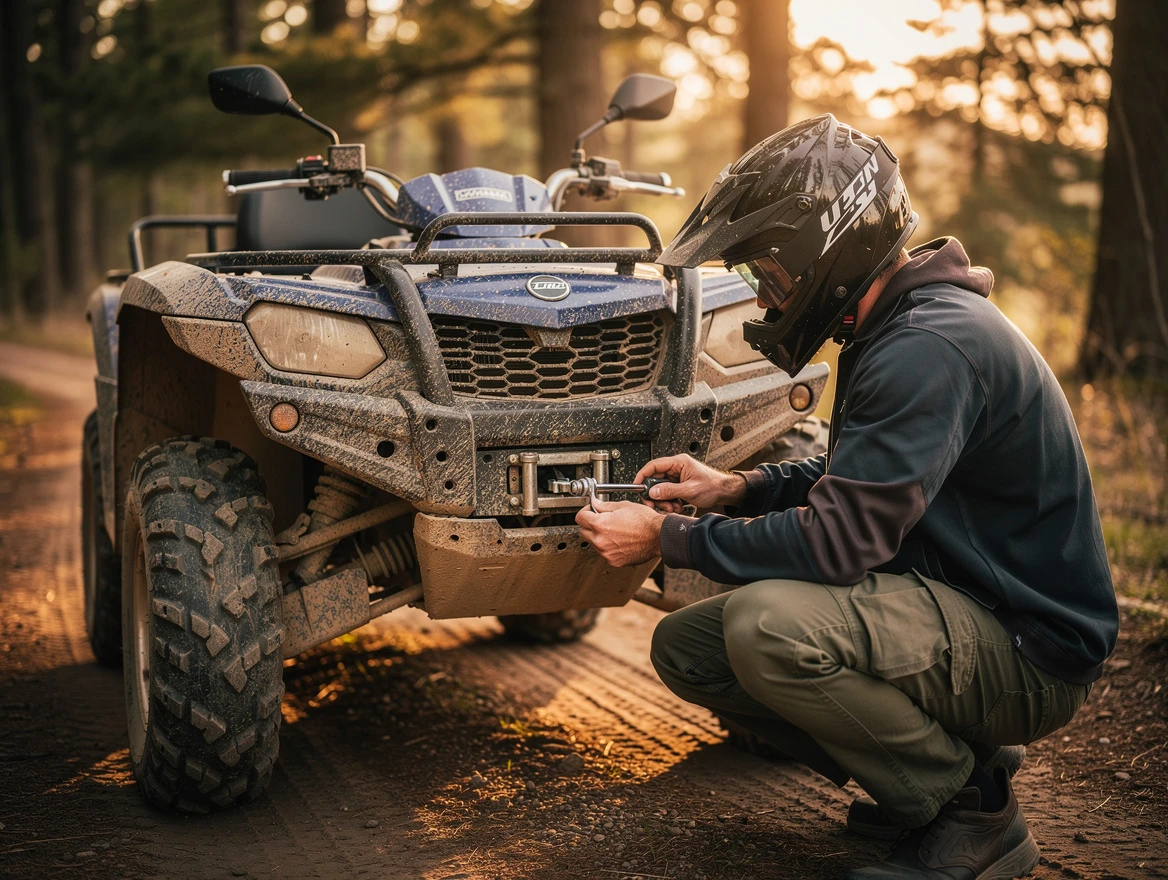
Screwing the plate to the machine is only half the battle. To meet vehicle inspection standards and street-legal criteria, the hardware and lighting must meet state highway standards.
Ready to register your vehicle?
Join thousands of vehicle owners who use Dirt Legal to handle their registration quickly.
Vibration-Resistant Hardware Selection
Off-road riding vibrates hardware loose efficient. Standard nuts and lock washers often back off after a single afternoon on rocky washboards. Always use nylon-insert lock nuts (Nyloc) or apply medium-strength blue thread-locking fluid to every thread. Adding thin rubber washers between the plate and the metal holder cuts down on annoying trail rattle and protects your plate finish.
Wiring LED License Plate Lights
States that require front or rear plates almost universally mandate white illumination lamps that make the numbers readable from 50 feet away at night. Tap the positive wire of your plate light directly into your low-beam headlight circuit or an auxiliary keyed ignition bus bar. Ground the negative lead to your chassis frame. When wired into your running lights, the plate illuminates automatically whenever your machine runs, keeping you street-legal without needing an extra dashboard switch.
You can read more about essential add-on components in our breakdown of parts and equipment for dual-sport and street-legal off-road machines.
Finding the Right Mounting Height
Mount the plate at least 12 inches off the ground to avoid water crossings, rocks, and mud. Make sure the plate remains vertical, rather than angled backward into the machine. Police officers and highway cameras must be able to read the registration numbers clearly from head-on positions.
Front License Plate Bracket Types Compared
Choosing the right mounting system depends on whether you have a winch, an open tube bumper, or a flat front fascia. Here is how common mounting styles compare for powersport applications:
| Mount Type | Best For | Installation Effort | Drilling Needed? |
|---|---|---|---|
| Fairlead Winch Mount | Machines with front winches | 15 to 20 minutes | No |
| Tube Clamps (Billet/P-Clamp) | Round metal bumpers, brush guards | 10 to 15 minutes | No |
| Direct Plastic Bolt-On | Stock flat front bodywork | 25 to 35 minutes | Yes |
| Hitch Receiver Plate Mount | Vehicles with front 2-inch hitch receivers | 5 minutes | No |
Getting your machine equipped with functional hardware makes public road travel possible. Before you take to the street, make sure your registration papers and titles are equally solid. Check out our guide on How to make a UTV street legal by state to see what your home state demands.
See How We Can Help With Your Registration →
Plates, Tags, and Paperwork: How Do You Install a Front License Plate Holder on an All-Terrain Vehicle (ATV) or Utility Task Vehicle (UTV) for Out-of-State Tags?
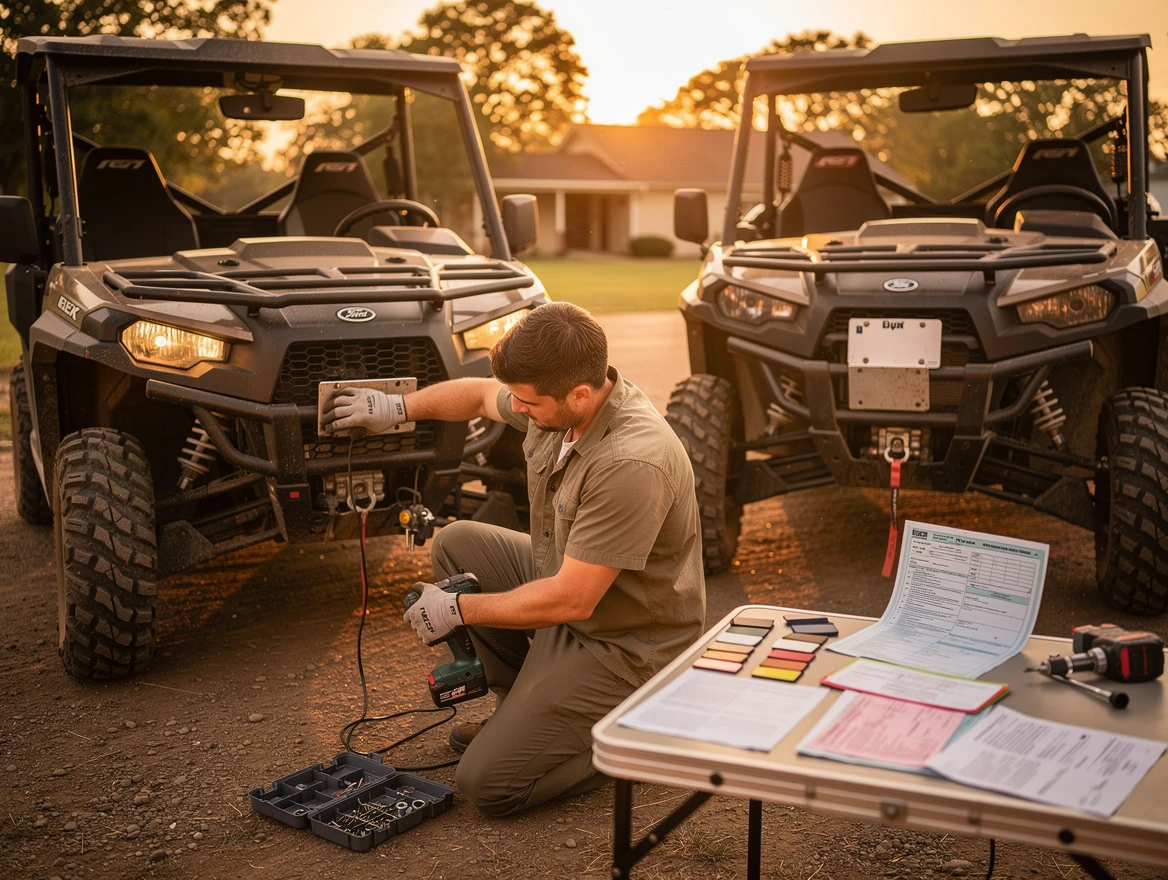
Securing a bracket is simple, but getting the actual plates can be tricky if your home state does not allow off-road vehicles on public highways. That is why thousands of riders look to out-of-state paperwork solutions.
Montana Recreational Vehicle Registration
Montana is one of the most flexible states in the country for four-wheelers and side-by-sides. When you register an off-road asset through a dedicated business structure, you can obtain a Montana LLC Vehicle Registration without needing to travel to a courthouse counter in person. For many powersport owners, forming an LLC allows them to secure permanent vehicle registration Montana tags that never expire, avoiding repetitive yearly paperwork.
Montana License Plates Choices and Formats
When you complete a Montana vehicle registration, you gain access to unique plate selections. You can pick between standard blue-and-white plates, off-road decals, or the popular black Montana license plates that give off-road machines an elevated appearance. Montana motorcycle license plates and powersport plates are sized appropriately for smaller ATV/UTV bracket dimensions, saving you from having to bend an oversized automotive plate onto a small front brush guard.
We can help you work through this process. Dirt Legal has completed over 6,000 customer orders to date (lifetime through current month, n=6,225), guiding owners through paperwork challenges across all fifty states. Dirt Legal has helped 80,000+ vehicle orders to date. You can review official fee structures and requirements through the Montana Motor Vehicle Division portal as well.
Cross-Border Compliance and Street-Legal Entities
Holding a valid out-of-state plate means your machine is registered compliantly under state statutes. The sister team at Ride Legal covers this topic in depth in their guide on Can You Register a Vehicle in a State You Don't Live In?. Holding registration under a legal entity makes sure your assets remain protected while you tour nationwide trail systems, connecting rural town roads directly to trailheads without needing a trailer.
If you are also setting up safety gear and trail readiness, be sure to read our review of Mastering Safety Behind the Wheel for Every Powersport Enthusiast to prepare for both road and trail conditions.
Frequently Asked Questions
How do I order license plates for a newly inspected vehicle?
Once your machine passes a safety or road-readiness inspection, submit your passed inspection certificate alongside your ownership title, bill of sale, and state application forms. You can file these documents with your county treasurer or motor vehicle office, or submit them through a private registration service. After the state processes the file, your plates and registration documents are issued and mailed to your address.
Can I transfer my existing license plate to a new vehicle?
Yes, in most states you can transfer an existing license plate to a newly acquired vehicle if both machines share the identical primary owner name. You must submit a title transfer application, surrender the old registration slip, and update the vehicle identification number associated with the tag. Note that motorcycle and passenger car plates cannot always be transferred to powersport vehicles if state classifications differ.
How can I get a temporary license plate?
You can obtain a temporary tag by visiting your local motor vehicle agency with the bill of sale and signed title, or by requesting a temporary transport tag through an authorized dealership or private registration specialist. Temporary transit tags are typically valid for thirty to ninety days, giving you the necessary window to complete inspections and finalize permanent paperwork without parking your machine.
Can UTVs and ATVs be registered for street use in all states?
No, powersport street-use rules differ widely across the country. While states like Arizona, Montana, South Dakota, and Wyoming have clear pathways for on-road side-by-side use, others like California and New York strictly restrict four-wheel off-road vehicles to private property and designated trail systems. Some states allow limited road access on county routes marked with low speed limits. Our guide on can you make a utv street legal in south dakota? highlights how simple some states make this process compared to others.
Can license plates be transferred to another vehicle under the same name?
Yes, transferring plates between vehicles owned by the same entity or individual is standard procedure. You must file a transfer application with the motor vehicle division, verify the current registration status, and pay any nominal transfer processing fees. The state updates their database so traffic safety enforcement systems see the plate matched with the new machine VIN.
What type of title and license plate are provided for off-road vehicles registered in Montana?
Montana issues a standard clean motor vehicle title indicating the vehicle identification number, make, and year. For street-legal conversions, the state provides a permanent metal motorcycle-sized license plate along with a permanent registration card. Because Montana allows permanent registration on light vehicles and powersports, you avoid annual registration renewal stickers once the initial filing is finalized.
Do all states require a front license plate on an ATV or UTV?
No, plate placement rules vary. Approximately twenty states require only a rear license plate on light vehicles and powersports, while thirty states demand both front and rear plates for full on-road compliance. Always mount a front plate holder if your state issues two plates, as law enforcement officers can stop vehicles operating without a visible forward tag.
Can I mount my front license plate with heavy-duty zip ties?
While heavy-duty nylon cable ties can hold a plate temporarily during trail runs, they rarely pass state vehicle safety inspections. Law enforcement agencies require license plates to be fastened securely with mechanical bolts or metal brackets to prevent the plate from swinging, detaching, or obscuring digits at speed.
Start Your Registration Today, No Hidden Fees →
Learning how do you install a front license plate holder on an all-terrain vehicle (ATV) or utility task vehicle (UTV) comes down to choosing the right bracket for your front-end geometry. With fairlead plates, tube clamps, or direct-mount kits secured by locking nuts, your vehicle will be ready to display its credentials compliantly wherever your travels take you.