Washington Bike Laws: What You Need to Know (2026)
Understand Washington bike laws: what you need to know about road rules, e-bikes, dirt bike conversion, equipment mandates, and registering off-road machines.

Washington bike laws: what you need to know begins with a simple premise: whether you ride a pedal bicycle, an electric bike, or a modified two-wheeler, the state expects you to share the road responsibly. Operating on two wheels in the Evergreen State gives you exceptional freedom, but the Revised Code of Washington treats two-wheeled travel with distinct regulatory standards depending on your equipment and powertrain. Misunderstanding roadway classifications or equipment mandates can leave you facing unexpected infractions.
Riders across Washington frequently confuse basic traffic guidelines with motorized equipment rules, especially when branching out into dual-sport bikes, pit bikes, and electric transport. You might wonder where your standard rights end and where motorcycle licensing starts. State regulations separate muscle-powered bicycles, low-speed electric bicycles, and motorized road vehicles into separate categories.
This guide explains everyday cycling regulations, safety equipment requirements, electric bicycle rules, and the exact steps to convert off-road motorcycles for paved street travel. We will break down every roadway statute in plain English so you can ride across Washington with absolute certainty.
Washington Bike Laws: What You Need to Know About Standard Road Rules
Updated on October 14, 2026
Washington state statutes define standard pedal bicycles as non-motorized vehicles with rights and duties similar to car drivers. Under RCW 46.61.755, every person riding a bicycle upon a roadway has all rights and is subject to all duties applicable to the driver of a motor vehicle. This principle dictates that you must ride with traffic flow, yield when required, and follow standard intersection controls.
How Does Washington Regulate Road Position and Lane Use?
Washington bike laws: what you need to know regarding lane positioning centers on safety and roadway practicality. RCW 46.61.770 dictates that bicyclists on roadways must ride as near to the right side of the right-hand lane as is safe. You are not forced against the curb if conditions create immediate hazards.
Riders may take the center of the lane when passing another vehicle, preparing for a left turn, avoiding road hazards like debris, or when the lane is too narrow for a motor vehicle and a bicycle to travel safely side-by-side. Riding two abreast is permitted on roads, provided you do not impede standard traffic movement.
Are Bicycles Allowed on Washington Sidewalks and Crosswalks?
State law permits riding on sidewalks unless a local municipality explicitly passes an ordinance barring it. RCW 46.61.755 grants bicycle riders on sidewalks and crosswalks all the rights and responsibilities of pedestrians. You must yield right-of-way to pedestrians and give an audible warning, such as a bell or verbal call, before passing them.
Different cities enforce their own restrictions regarding downtown business cores. Cities such as Seattle allow sidewalk riding without broad downtown bans, while other jurisdictions restrict bicycles from busy shopping sidewalks. Checking local municipal codes before traveling through concentrated pedestrian shopping districts prevents unwanted citations.
What Are the Washington Rules for Stop Signs and Traffic Signals?
Washington adopted the safety stop law under RCW 46.61.780, commonly called the Idaho Stop. This statute permits bicycle operators approaching a stop sign to treat the sign as a yield. You must slow down to a reasonable speed, look for cross-traffic, and yield to any vehicle or pedestrian already occupying the intersection.
Traffic control signals displaying steady red lights are different. You must come to a complete stop at a red light. If a sensor fails to detect your bicycle after a full cycle or ninety seconds, Washington law allows you to proceed through the intersection safely if no oncoming traffic approaches.
Washington Bike Laws: What You Need to Know About Safety Equipment and Gear
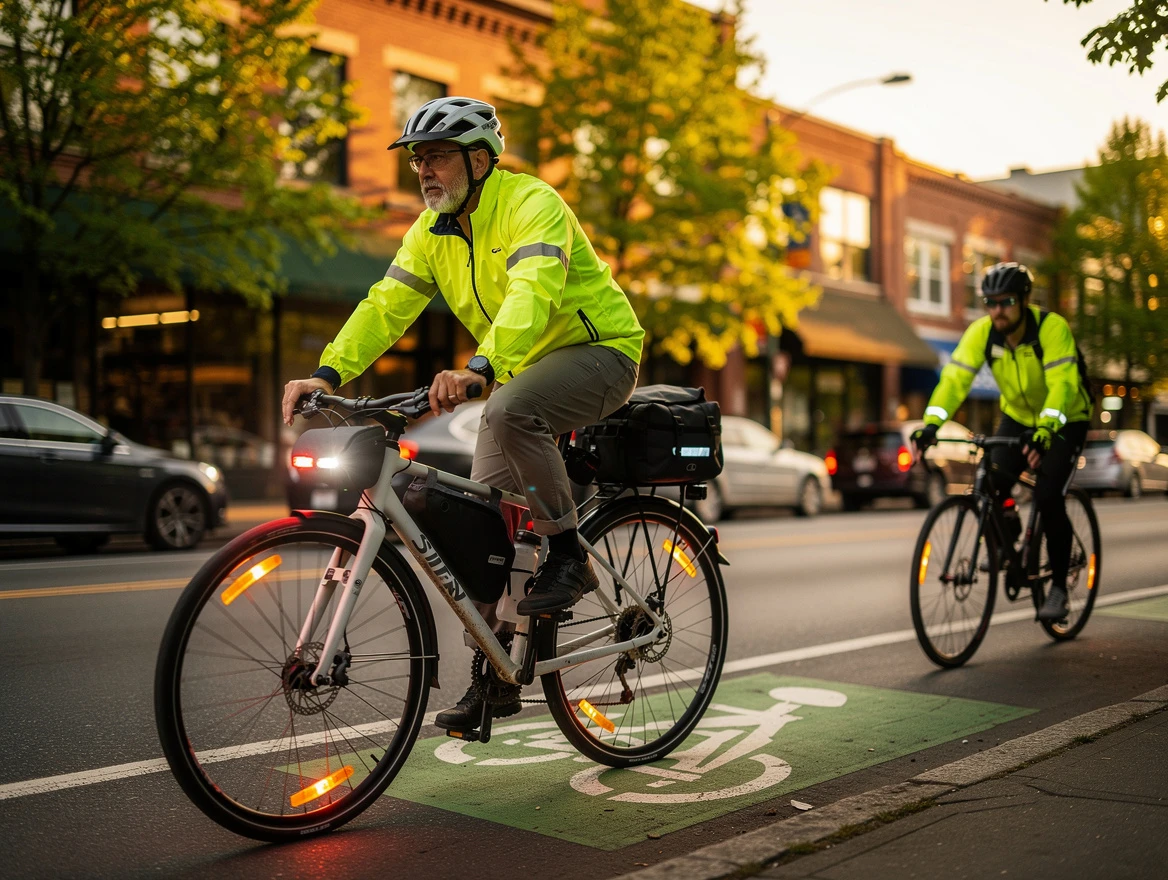
Equipment compliance in Washington focuses on passive visibility and active stopping power. The Revised Code of Washington sets clear baseline mandates for braking distance, nighttime illumination, and rider safety accessories. Ignoring these requirements can compromise your protection in collision disputes.
Ready to register your vehicle?
Join thousands of vehicle owners who use Dirt Legal to handle their registration quickly.
What Lighting and Reflectors Does Washington Require at Night?
Operating a bicycle between a half-hour after sunset and a half-hour before sunrise demands specific lighting under RCW 46.61.780. Your bicycle must feature a front white lamp visible from at least 500 feet away. The light can run in steady or flashing modes.
The rear of your bicycle must display a red reflector visible from 100 feet to 600 feet away when illuminated by lower car headlamps. A functioning rear red lamp visible from 600 feet can be added or used in conjunction with the required reflector. Side pedal reflectors and reflective wheel strips add safety, though the front headlight and rear reflector remain the primary statutory baseline.
Are Helmets Mandatory Under Washington State Bicycle Laws?
Washington state does not enforce a statewide bicycle helmet mandate for adult riders. Helmet laws in Washington exist entirely at the city and county level. Several jurisdictions historically enacted mandatory helmet ordinances, though King County repealed its local bicycle helmet rule in 2022 to address enforcement disparities.
Certain jurisdictions, including portions of Pierce County and specific municipal parks, still hold local helmet regulations on the books. Regardless of municipal mandates, wearing a properly fitted CPSC-approved bicycle helmet prevents head trauma and eliminates comparative fault defenses during civil claims.
What Braking Systems Are Required for Street Travel?
Every bicycle operated on a public roadway must have an operational brake that enables the rider to make the braked wheels skid on dry, level, clean pavement. Coaster brakes, rim brakes, and hydraulic disc systems all satisfy the statute as long as they provide decisive mechanical friction. Riding a fixed-gear track bicycle with no independent hand brake remains a gray area unless the fixed drivetrain allows you to lock the rear tire reliably.
Washington Bike Laws: What You Need to Know About Electric Bicycles
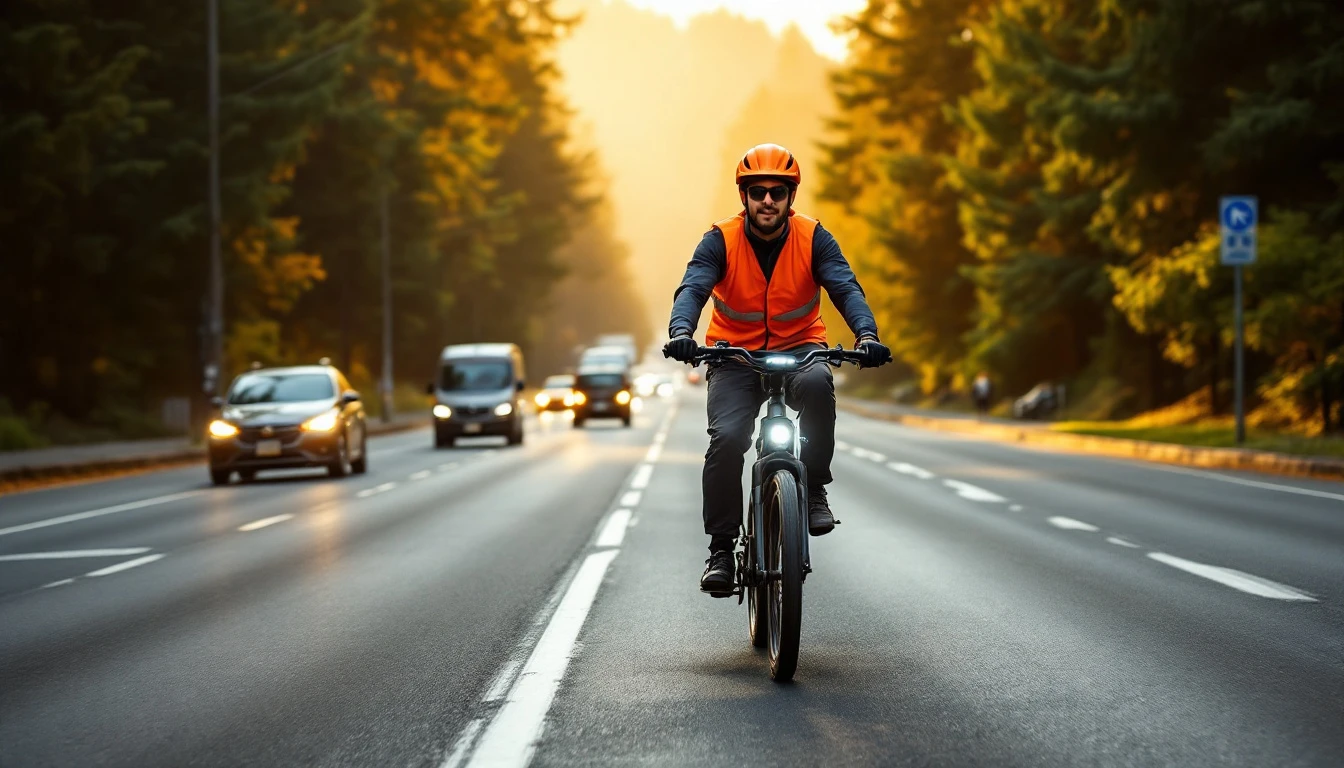
Electric bikes, or e-bikes, follow a dedicated statutory framework established by Washington in 2018 under RCW 46.04.169. The law separates e-bikes from standard mopeds and motorcycles, categorizing them into three distinct functional classes. Understanding these classes determines where you can ride on trails, paths, and roadways.
How Does Washington Define the Three E-Bike Classes?
Washington identifies an electric bicycle as a two- or three-wheeled bicycle with operable pedals and an electric motor of 750 watts or less. The classification system works as follows:
- Class 1: An electric assist bicycle where the motor provides assistance only when the rider pedals, ceasing to assist once the machine reaches 20 miles per hour.
- Class 2: An electric bicycle equipped with a throttle that can drive the machine independently of pedaling, ceasing motor assistance once the bike reaches 20 miles per hour.
- Class 3: An electric assist bicycle where the motor provides power only when the rider pedals, ceasing motor support once the speedometer hits 28 miles per hour. These bikes must include an operational speedometer.
Manufacturers must affix a permanent label specifying the class number, top assisted speed, and motor wattage. Altering motor output beyond 750 watts removes the bike from this class system and reclassifies it as a motor vehicle.
Where Can You Ride Class 1, 2, and 3 E-Bikes?
Class 1 and Class 2 electric bicycles are allowed on all shared-use paths and regional multi-use trails unless a local municipality or land management agency posts specific prohibitive signage. Natural surface singletrack trails managed by Washington State Parks or the Department of Natural Resources generally restrict motorized use unless designated open.
Class 3 e-bikes face tighter restrictions. State law prohibits Class 3 electric bicycles from shared-use paths unless the path runs adjacent to a highway or an ordinance explicitly authorizes them. Class 3 bikes are fully permitted inside road bike lanes and on standard vehicle roadways.
What Are the Age and Licensing Rules for Electric Bikes?
You do not need a driver's license, vehicle registration, or liability insurance to operate a qualifying Class 1, 2, or 3 electric bicycle in Washington. However, operators of Class 3 electric bicycles must be at least sixteen years of age. Class 1 and Class 2 electric bikes have no state statutory minimum age requirement unless specified by city ordinance.
Look at Vehicle Paperwork Services →
Washington Bike Laws: What You Need to Know About Dirt Bikes and Pit Bikes
Converting an off-road motorcycle for street duty falls under an entirely different portion of the Revised Code of Washington. Standard dirt bikes and pit bikes originate with an off-road title or Manufacturer's Certificate of Origin stating the machine is built for closed-course use only. Washington established a direct conversion process under RCW 46.61.705 to let riders make these machines street-legal.
What Equipment Must Be Added to Make a Dirt Bike Street-Legal?
Under Washington statute RCW 46.61.705, transforming an off-road motorcycle for public road operation demands specific DOT-compliant components. You must install the following mechanical items before requesting an inspection:
- A headlight meeting DOT standards, displaying high and low beams with a dashboard indicator lamp.
- A red tail lamp and an active stop lamp wired directly to both front and rear brake levers.
- DOT-approved front and rear turn signals if manufactured after a statutory cutoff, or electric signaling devices visible from 500 feet.
- A functional horn capable of producing sound audible from at least 200 feet.
- Two operational rearview mirrors, or at least one driver-side mirror providing a 200-foot view to the rear.
- Tires bearing explicit DOT highway compliance markings on the sidewalls.
- A functional spark arrester and a factory or aftermarket muffler operating under state decibel thresholds.
- A left-hand clutch mirror and a permanent speedometer capable of reading vehicle speed accurately.
Once you install these parts, a licensed motorcycle repair shop or motorcycle dealer must inspect the bike. The technician signs a declaration confirming all mechanical safety items meet statutory highway standards.
Can You Register a Pit Bike or Mini-Bike for Highway Use?
Small pit bikes rarely meet the physical footprint and lighting standards necessary for highway duty. While technically feasible if the machine reaches proper wheel diameter and minimum seat height specifications, most pit bikes lack the electrical alternator capacity to power DOT-rated lighting systems. Washington also enforces federal safety standards, meaning vehicles without clear 17-digit VIN identifiers cannot complete state road declarations.
When riders face paperwork gaps, such as lacking a title for an older bike, standard state paperwork channels can stall quickly. Understanding how to get a title for a motorcycle becomes an important first step before purchasing conversion equipment. For riders exploring out-of-state options, working through an LLC registration can simplify complicated vehicle titling problems.
How Do Licensing and Insurance Requirements Apply to Converted Bikes?
Once your off-road machine holds a road title, you cannot ride it on Washington streets using standard bicycle rules. You must possess a valid driver's license carrying a motorcycle endorsement or a motorcycle instruction permit. Operating without an endorsement risks vehicle impoundment and traffic misdemeanors.
Washington also mandates liability insurance for all registered motor vehicles, including dual-sport and converted off-road motorcycles under RCW 46.30.020. You must carry minimum coverage limits: $25,000 for bodily injury per person, $50,000 for bodily injury per accident, and $10,000 for property damage.
For owners managing unique conversions, comparing an insurance policy to financial bond alternatives is useful. A helpful overview is available in Car Insurance Policy vs Surety Bond: Key Differences, which explains how state liability rules intersect with risk options.
Comparing Washington Rules Across Two-Wheeled Platforms
| Regulatory Category | Standard Bicycle | E-Bike (Class 1-3) | Converted Dirt Bike |
|---|---|---|---|
| Driver License Needed | No | No | Yes (Motorcycle Endorsement) |
| State Registration | No | No | Yes (Metal License Plate) |
| Liability Insurance | No | No | Yes (Mandatory Limits) |
| Helmet Mandate | Local Ordinances Only | Class 3: Local / Class 1-2: Local | Yes (DOT Helmet Mandatory) |
| Road Position | Far right of right lane | Far right or bike lane | Full traffic lane |
| Sidewalk Riding | Permitted (unless barred locally) | Class 1-2: Typically / Class 3: Barred | Prohibited |
| Minimum Age | None | Class 3: 16 years / Class 1-2: None | 16 years with license |
| Safety Stop at Stop Signs | Permitted (RCW 46.61.780) | Permitted | Prohibited (Complete Stop) |
Overcoming Title and Registration Roadblocks for Converted Bikes
Securing a street title for an off-road machine can turn into an uphill struggle at local offices. Paperwork errors, lost documents, and missing manufacturer certifications regularly delay owners who want to ride their bikes on pavement. Dirt Legal has helped 80,000+ vehicle orders to date, assisting riders with complex title transfers across multiple states.
If you purchased an off-road machine with a basic bill of sale or transferred an old motorcycle across state lines, local clerks often struggle to identify whether your machine is street-legal. Our team provides vehicle registration assistance services to help you secure a valid registration and license plate without dealing with tedious agency delays. You can also look at Street-Legal Vehicle registration assistance services to resolve missing paperwork on custom, off-road, or powersport builds.
For riders managing multiple machines or seeking asset protection, establishing an LLC provides an effective option. To see how corporate ownership functions for recreational vehicles, review our complete resource on Montana LLC Vehicle Registration. You can also review Why Put a Car in an LLC? to evaluate tax treatments, privacy safeguards, and multi-vehicle structures.
Frequently Asked Questions About Two-Wheeled Vehicle Laws
Do dirt bikes need to be registered?
Yes. If you operate a dirt bike exclusively off-road on public lands, Washington requires an off-road vehicle (ORV) permit decal issued by licensing offices. If you intend to ride that dirt bike on public streets and highways, you must complete the physical conversion under RCW 46.61.705 and secure an on-road registration with a full motorcycle license plate.
Do I need a license to ride a dirt bike?
You do not need a driver license to ride a dirt bike on closed private courses, off-road trail systems, or designated public riding parks. However, the moment your dirt bike crosses onto or travels along a public highway, you must hold a valid driver license carrying a registered two-wheeled motorcycle endorsement or a temporary instructional permit.
What does a dirt bike need to be street-legal?
Under Washington statute RCW 46.61.705, a street-legal dirt bike must feature a DOT-compliant headlight with high and low beams, an illuminated taillight, a brake light wired to both brake controls, turn signals, mirrors, a horn audible from 200 feet, DOT-approved tires, a spark arrester, and a calibrated speedometer. A certified dealer or licensed repair shop must inspect and sign off on these mechanical components.
What you need to know about car accidents?
When riding a bicycle or motorcycle in Washington, accidents with passenger vehicles fall under comparative negligence principles under RCW 4.22.005. Both parties can share fault. Immediately call emergency services, document the scene thoroughly, gather witness contact details, and request a formal police report. Adhering to bicycle equipment rules, such as front headlights and rear reflectors, protects your position during liability disputes.
Do you need a license for a pit bike?
Riding a pit bike on private property does not require a driver's license. If you attempt to operate a pit bike on public roads, you must possess a valid driver's license with a motorcycle endorsement. Pit bikes rarely satisfy highway safety equipment standards, meaning operating them on public streets frequently leads to citations for unlicensed and unregistered driving.
Do you need a license to drive a dirt bike on the road?
Yes. Riding any motorcycle or converted dirt bike on public roadways requires a standard driver's license with a motorcycle endorsement. Washington treats converted dirt bikes as standard motor vehicles under the transportation code. Operating on public pavement without proper endorsements can result in fines and immediate vehicle impoundment.
Can electric bicycles ride on Washington state highways?
Electric bicycles can use standard highway shoulders where pedestrian and bicycle traffic is permitted. E-bikes are barred from limited-access highways, interstates, and freeways unless the Washington State Department of Transportation has installed an authorized separate multi-use pathway along the right-of-way corridor.
Start Your Registration Today →
Washington bike laws: what you need to know comes down to matching your equipment to the right roadway framework. Whether you are commuting on a standard bicycle using the safety stop statute, cruising regional trails on a Class 2 e-bike, or taking a dual-sport build onto mountain highways, compliance keeps your ride smooth. If your build needs proper documentation, our registration specialists can help you secure on-road plates without DMV delays.