Can You Make a UTV Street-Legal in Washington? (2026)
Can you make a UTV street-legal in Washington? Find state requirements, local WATV road restrictions, and out-of-state Montana registration paths.
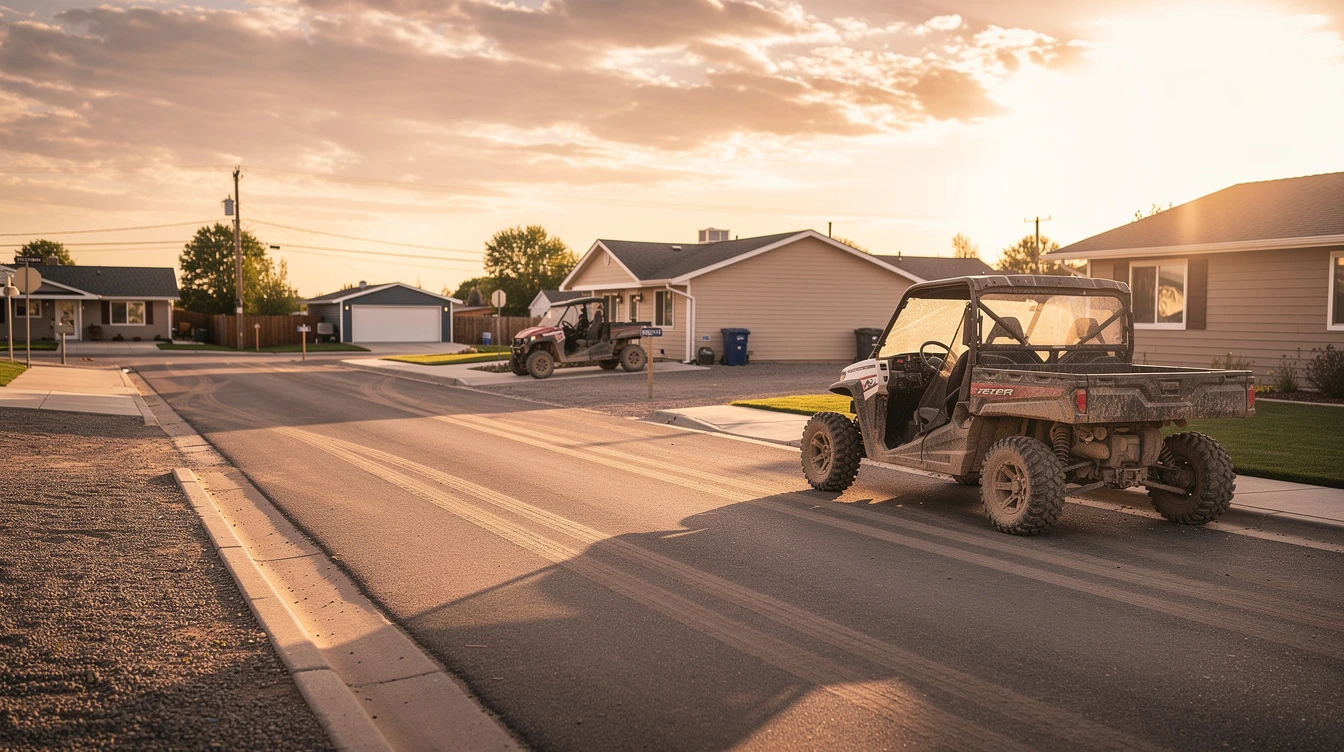
Yes, you can make a UTV street-legal in Washington, but only for public roads with posted speed limits of 35 mph or lower under the state wheeled all-terrain vehicle (WATV) rules. Washington does not permit side-by-sides on interstates or highways posted above 35 mph, and cities must pass an ordinance before WATVs can use their streets. To operate on public roads without those limits, many owners register their machines out of state through a Montana LLC structure.
Understanding Washington vehicle codes saves you from expensive moving violations. Local access varies from county to county across the state. This guide breaks down equipment checklists, safety inspection requirements, paperwork, and alternate out-of-state registration paths.
Washington Law Permits UTVs Only on 35 MPH Roads, Subject to Local Rules
Washington Revised Code (RCW) 46.09 governs wheeled all-terrain vehicles, creating a distinct classification for utility vehicles. The law does not grant broad road privileges. It grants limited access that depends on local approvals and mechanical compliance.
What Washington Considers a Wheeled All-Terrain Vehicle
Under RCW 46.09.310, a utility-type vehicle counts as a WATV if it travels on four or more low-pressure tires of 20 psi or less, is less than 74 inches wide, weighs less than 2,000 pounds, and has a wheelbase of 110 inches or less. Larger modern four-seat side-by-sides sometimes exceed these limits, so check your manufacturer specifications before buying parts.
The 35 MPH Road Limit and Local Opt-In Rules
Washington WATV tabs allow travel only on public roads with a posted speed limit of 35 mph or less. Counties with 15,000 or more residents must pass an ordinance approving WATVs on county roads, and every city or town must do the same for its streets. Counties with fewer than 15,000 residents allow WATVs on qualifying roads unless the county closes specific roads. Your road privileges can change at a county or city line, so check local rules for every route.
Where WATVs Are Strictly Prohibited
Interstates and roads posted above 35 mph are off-limits to Washington-plated WATVs. You may cross a road posted 60 mph or less at an intersection of roughly 90 degrees, unless the county, city or town has banned crossings, but never at an uncontrolled intersection of a state highway. Riding on roads that are not open to WATVs can lead to citations.
Washington WATV Street-Legal Equipment and Safety Inspection Requirements
Before the Washington Department of Licensing issues on-road WATV tabs, your machine must meet the equipment standards in RCW 46.09.457, and a licensed Washington WATV dealer or motor vehicle repair shop must inspect it.
Ready to register your vehicle?
Join thousands of vehicle owners who use Dirt Legal to handle their registration quickly.
Register Your Vehicle Today →Required Physical Equipment Checklist
Washington law requires specific safety hardware before granting road permissions. A utility-type WATV needs:
- Headlights, used at all times while moving on a road.
- Two tail lamps and a stop lamp.
- Reflectors.
- Turn signals.
- A horn audible from at least 200 feet.
- Brakes in working order.
- A spark arrester and muffler.
- A windshield, unless the driver wears approved glasses, goggles or a face shield.
- Seat belts.
- Two mirrors.
Passing the Dealer Safety Inspection
Once you bolt on your blinkers, horn, and mirrors, you cannot simply bring the machine to a licensing office. A licensed Washington WATV dealer or motor vehicle repair shop must inspect the equipment, verify the VIN, and complete Section 1 of the Washington Wheeled All-Terrain Vehicle (WATV) Road Use Declaration. The shop can charge up to $50 for the inspection. You also sign a release, supplied by the Department of Licensing, confirming the vehicle was modified for road use.
Washington Department of Licensing Paperwork Submission
Take the completed Road Use Declaration, the inspection receipt, and your title to a vehicle licensing office. If your WATV passes, you receive on-road and off-road tabs for its metal tag. Washington's mandatory liability insurance law does not cover WATVs, but carrying liability coverage before you drive on public roads is strongly recommended.
For owners encountering paperwork obstacles, a deeper look at titling is available in our resource on Have a Motorcycle With No Title? Here’s How to Get One, which details how title documentation functions across unique powersports categories.
Why Enthusiasts Choose Montana LLC Registration for UTVs
Many owners realize the Washington WATV system leaves major gaps. You cannot drive on roads posted above 35 mph, and access depends on local ordinances. Forming a Montana LLC lets the company title the machine as a standard passenger vehicle.
Understanding the Montana LLC Structure
Montana permits out-of-state residents to form a holding company that compliantly owns and registers assets. Because Montana does not run an emissions testing schedule or mandate speed-limited vehicle tags for off-road models, your side-by-side receives regular passenger plates. Learn more about setting up your asset holding entity with our dedicated montana llc guide.
No Speed Limits and Nationwide Road Recognition
A Montana registration transforms your side-by-side into a fully titled passenger car asset. Under reciprocal state registration agreements, other states generally recognize valid out-of-state passenger registrations. You avoid the 35 mph restriction and the patchy map of Washington local approvals.
Financial Advantages: Zero Sales Tax and Permanent Tags
Montana charges zero percent sales tax on vehicle purchases. Montana also issues permanent metal plates for light vehicles 11 years or older, cutting recurring registration expenses.
Washington residents, note: Washington requires its residents to register their vehicles in Washington. Registering a vehicle in another state to avoid Washington taxes or fees is a gross misdemeanor under RCW 46.16A.030, so check how the rules apply to your situation before you choose out-of-state registration.
Look at the full mechanics of holding corporate assets in our sister brand guide on How Does Registering a Vehicle Through a Montana LLC Work to see how corporate ownership functions compliantly.
Comparing Washington WATV Registration vs Montana LLC Registration
Choosing between staying local and registering through Big Sky Country depends on how you plan to use your machine. Here is how both options match up side by side.
| Feature | Washington WATV Registration | Montana LLC Registration |
|---|---|---|
| Speed Limit Restrictions | Roads posted 35 mph or less | Normal highway speed limits |
| Interstate & Highway Access | Prohibited | Permitted (subject to local safety rules) |
| Local Ordinances Needed? | Yes, in cities and larger counties | No, operates as a standard passenger tag |
| Inspection Requirement | Licensed dealer or repair shop inspection | No physical inspection needed |
| Sales Tax Rate | Over 10% in many areas | 0% state sales tax |
| Paperwork Location | In-person vehicle licensing office | Remote paperwork support |
| License Plate Style | Metal tag with on-road and off-road tabs | Full-size Montana metal plate |
To learn more about regional differences across the country, check out our guide on can you make a utv street legal in oregon? what you need to know or read about southern state frameworks in can you make a utv street legal in tennessee? what you need to know.
We have supported thousands of vehicle owners with out-of-state paperwork over the years. Dirt Legal has completed over 6,000 customer orders to date (lifetime through current month, n=6,187), giving our team direct experience handling tricky side-by-side title scenarios.
Maintaining Safety Equipment for Road Compliance in Washington
Regardless of whether you hold Washington WATV tabs or out-of-state plates, maintaining safety equipment keeps you compliant on public asphalt. Law enforcement officers notice aftermarket rigs quickly.
Tires and DOT Compliance
Aggressive off-road mud tires wear out within hundreds of miles on hot asphalt and deliver unpredictable braking performance in heavy rain. Switching to DOT-approved all-terrain tires designed for dual-sport or automotive use improves steering stability and braking grip on public streets.
Windshields and Wiper Mechanics
While Washington accepts approved glasses, goggles or a face shield in place of a windshield, driving on busy roads without a full windshield exposes you to rock chips and debris. Adding a laminated glass windshield paired with an electric or manual wiper setup keeps visibility clear during Pacific Northwest downpours.
Rear Lighting and Illumination Standards
Make sure turn signals remain clearly visible from both front and rear angles, especially if you mount large cargo boxes or spare tire carriers. Auxiliary high-output light bars must stay switched off while traveling on open roads to avoid blinding oncoming traffic.
For owners balancing asset titles across state lines, review our detailed guide on Why Do People Register Cars in Montana? The Real Reasons Explained, which covers tax treatment, registration renewals, and vehicle classifications.
Frequently Asked Questions About Street-Legal UTVs in Washington
How to make a utv street legal?
To make a UTV street-legal, install mandatory safety equipment including headlights, brake lights, turn signals, mirrors, a horn, seat belts, and a windshield or approved eye protection. Next, acquire proper title paperwork, complete a mechanical safety inspection where required, and register the vehicle either through your local state motor vehicle agency or via an out-of-state Montana LLC registration structure.
Can I make an ATV (quad) street-legal in Washington?
Yes, if it qualifies as a WATV. A handlebar ATV qualifies if it is 50 inches wide or less, weighs less than 1,500 pounds, has a seat height of at least 20 inches, and rides on four tires 30 inches in diameter or smaller. It needs the same safety inspection as a UTV, with one tail lamp and one handlebar mirror instead of two, and the same 35 mph road limits apply.
What if my side-by-side is too big to count as a WATV?
A utility-type vehicle that weighs 2,000 pounds or more, is 74 inches wide or wider, or has a wheelbase over 110 inches does not meet Washington's WATV definition, so it cannot get on-road WATV tabs. Check the weight and width on your manufacturer specifications before you buy parts or book an inspection.
Can I drive my UTV through towns and cities in Washington?
Only where the city or town has passed an ordinance allowing WATVs on its streets, and only on streets posted 35 mph or less. Outside city limits, counties with 15,000 or more residents must also approve WATVs by ordinance, while smaller counties allow them unless they close specific roads. Contact the city or county for each route you plan to ride.
Do I need insurance to drive a UTV on Washington roads?
Washington's mandatory liability insurance law (RCW 46.30) does not cover wheeled all-terrain vehicles, so the state does not require it for WATV road use. Carrying liability coverage is still strongly recommended, because you are personally responsible for any damage or injury you cause on public roads.
Can I drive a street-legal UTV on I-5 in Washington?
No, you cannot drive a UTV on Interstate 5 or any other interstate highway in Washington using in-state WATV registration. Washington WATV rules restrict travel to roads posted 35 mph or less where local rules allow it. Even if registered out-of-state, operating a lightweight UTV on high-speed interstate corridors carries major safety hazards and can prompt police intervention.
Do I need a motorcycle endorsement to drive a UTV on Washington roads?
No, you do not need a motorcycle endorsement to drive an on-road compliant UTV in Washington. A valid driver license is required, and the operator must follow all rules of the road, including the ban on riding side-by-side in a single lane.
Can you make a UTV street-legal in Washington? Yes, by fulfilling state WATV equipment requirements and limiting your driving to roads posted 35 mph or less where local rules allow it, or by pursuing out-of-state registration through a Montana LLC for broader multi-state flexibility. Evaluate your riding routes, check your local codes, and pick the registration strategy that gets your machine safely on the asphalt.