No Title Needed: How, Where, and Why to Scrap a Car
Learn when no title is needed to scrap a car, how junkyards verify ownership, state rules, and why replacing your title might put more cash in your pocket.

Understanding when no title is needed: how, where, and why to scrap a car can save an abandoned clunker from rusting away on your property while putting cash directly into your pocket. Many vehicle owners assume that losing a pink slip leaves them permanently stuck with an inoperable vehicle. That is not always the case, though disposing of a car without title paperwork requires following specific state rules designed to prevent vehicle theft.
Scrapyards, auto recyclers, and auto salvage auctions purchase thousands of end-of-life vehicles every week. While a clean certificate of title remains the gold standard for transferring ownership, multiple states allow licensed automotive dismantlers to purchase older, low-value vehicles using secondary proof such as registrations, bills of sale, and notarized affidavits. In this guide, you will learn the exact criteria across jurisdictions, what junkyards require when you sell, where to find buyers, and whether obtaining a replacement title first makes better financial sense.
Before hauling your vehicle to the nearest shredder, you need to understand how scrap pricing works, how to safeguard yourself from lingering liabilities, and when investing in an auto title replacement turns a junk heap into a far more profitable private sale.
Understanding the Rules: No Title Needed: How, Where, and Why to Scrap a Car
Updated on October 14, 2026
State motor vehicle statutes determine whether an auto recycler may crush or dismantle an automobile without obtaining a physical certificate of title. Across the country, scrap theft prevention laws regulate how metal recycling facilities operate. These statutes require yards to verify that the individual selling the scrap metal actually holds ownership before any cash changes hands or the metal enters an industrial shredder.
State Age Thresholds for Titleless Vehicle Scrapping
Several states maintain clear age exemptions where an older vehicle requires no physical title document for scrap disposal. In states like Georgia, vehicles ten years or older can be purchased by licensed scrap processors using an MVT-16 form along with government identification and a record check. In Florida, an owner can dispose of a vehicle older than ten years through a Certificate of Destruction without tracking down a duplicate paper title.
Other states enforce stricter windows. In states such as Alabama and Maine, vehicles older than twenty or twenty-five model years transition out of traditional titling requirements entirely. If you live in a jurisdiction with strict zero-tolerance policies, such as California or Washington, selling any motor vehicle for salvage parts or scrap without an active title or an approved DMV junk slip is outright prohibited. Checking your local statutes prevents civil penalties and potential criminal inquiry.
Required Ownership Documentation When the Title Is Missing
When you cannot produce a title, junkyards must rely on secondary verification documents to satisfy statutory reporting requirements. The buyer typically asks for an unexpired driver's license or state identification card, an expired registration card matching the seller's name, and a signed bill of sale detailing the purchase date, vehicle identification number, and sale price.
In addition to these records, yards usually demand a signed affidavit of ownership. This document affirms under penalty of perjury that the vehicle carries no active liens, was not stolen, and belongs solely to the individual selling it. Before accepting the vehicle, the scrap business runs the VIN through the National Motor Vehicle Title Information System to make sure no lending institution or registered owner holds an unresolved claim.
The Risks of Scrapping Without Proper Paperwork Transfer
Selling a car for scrap without an official transfer record creates serious personal liability. If an unregulated scrapper purchases your car for cash without submitting a certificate of destruction, the vehicle identification number remains connected to your identity in state motor vehicle databases. If that vehicle gets abandoned in a ditch, involved in an accident, or caught in an environmental hazard, you remain on the hook for towing fees, storage fines, and municipal citations.
Always demand a formal bill of sale and a receipt of destruction from the licensed auto wrecker. You must also notify your state motor vehicle department that you have transferred or sold the vehicle for salvage. Taking these precautions closes out the registration file and protects you from unearned traffic violations or municipal impound costs.
Evaluating the Process: No Title Needed: How, Where, and Why to Scrap a Car for Maximum Payout
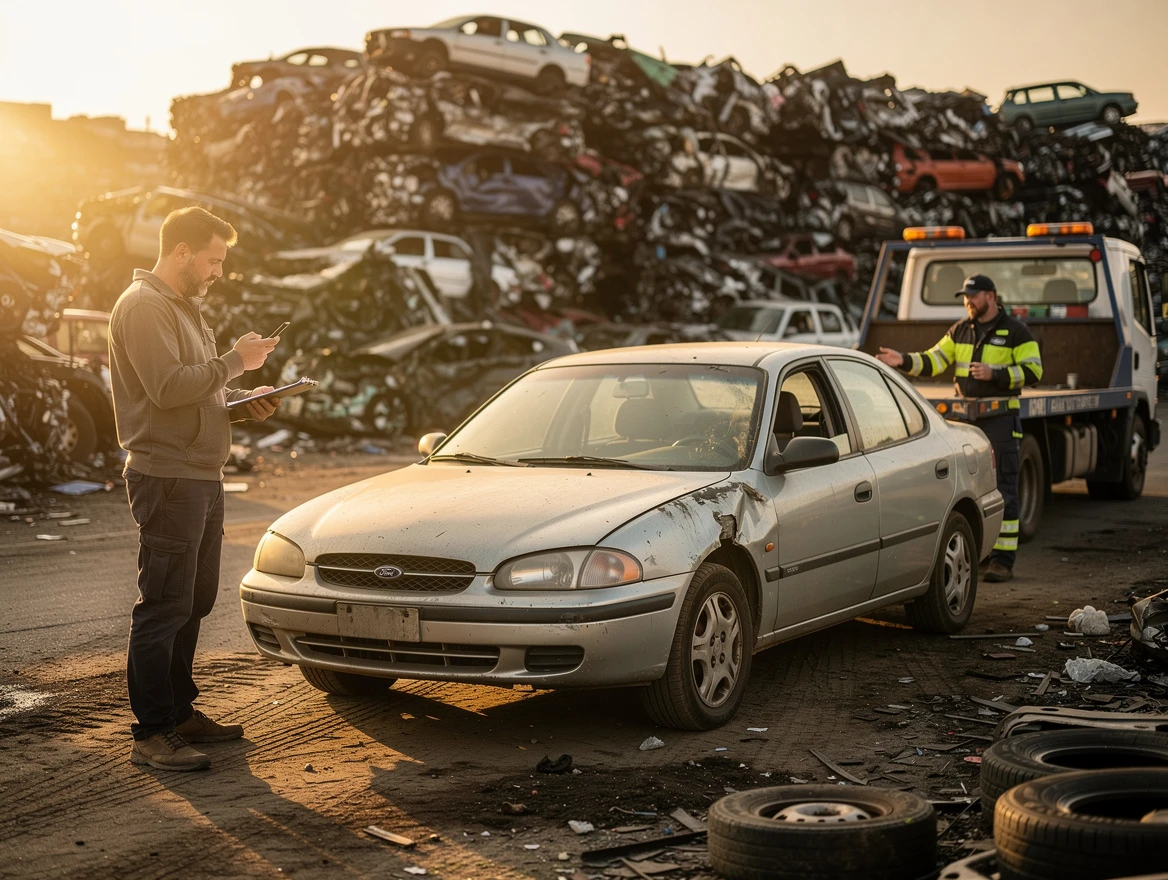
Scrap vehicle values fluctuate daily based on prevailing global commodity prices for steel, aluminum, copper, and platinum group metals found in catalytic converters. When you sell an automobile without documentation, recyclers typically discount the payout because processing secondary paperwork, filing state salvage affidavits, and carrying commercial risk incurs overhead costs. Maximizing your payout requires knowing what your scrap metal is worth before initiating contact.
Ready to register your vehicle?
Join thousands of vehicle owners who use Dirt Legal to handle their registration quickly.
How Salvage Yards Calculate Scrap Valuations
Scrap yards evaluate an end-of-life vehicle primarily by its curb weight rather than retail book value. An average passenger car weighs between 3,000 and 4,000 pounds, comprising roughly 55 percent steel, 35 percent iron and plastics, and small quantities of high-value nonferrous materials like copper wiring and lead-acid batteries. The facility uses commercial drive-on scales to weigh the hauler, offloads the vehicle, and re-weighs the truck to calculate net scrap tonnage.
Valuable components like functional OEM catalytic converters, undamaged alloy rims, starter motors, and alternators increase the baseline salvage value. However, if your car lacks a title, some buyers refuse to buy high-value catalytic converters separately because state scrap laws aggressively penalize unregistered converter transactions to deter organized theft rings.
Step-by-Step Guide to Selling an Undocumented Scrap Car
To dispose of your vehicle smoothly without a paper title, follow this reliable sequence:
- Verify the VIN: Locate the 17-digit vehicle identification number on the driver door jamb and lower dashboard. Check that every digit matches your registration receipt or purchase bill of sale.
- Clear the Cabin: Remove all personal property from the glove box, trunk, and under seats. Check the CD player and sun visors for sensitive personal paperwork.
- Remove the License Plates: Always remove your registration tags before the tow truck departs. In most states, plates must be surrendered directly to the motor vehicle agency to cancel your liability.
- Prepare Secondary Documentation: Gather your driver's license, old insurance cards, registration records, and any bill of sale proving prior purchase.
- Verify Free and Clear Status: Make sure no active bank liens exist against the vehicle. Yards cannot dismantle an automobile if a financial institution holds a lien.
Why Scrapping Might Be a Costly Mistake Compared to Title Replacement
Scrapping a functional or repairable car simply because the title went missing often sacrifices thousands of dollars in resale equity. A complete passenger car that fetches $350 to $600 at a scrap yard could easily sell for $2,500 to $5,000 on the private market if supported by clean registration paperwork. Many owners scrap perfectly viable vehicles purely out of frustration with administrative DMV processes.
Customer records show that the most common refund reason category is changed_mind when owners realize alternative documentation paths exist (internal data, rolling last 180 days, n=144). Rather than surrendering a vehicle to a crushing yard for pennies on the dollar, getting paperwork assistance through a bonded title or replacement process can restore clean ownership and preserve true market value.
Scrap Buyer Comparison: Finding Where No Title Needed: How, Where, and Why to Scrap a Car Applies
Identifying legitimate buyers for a titleless automobile requires evaluating local auto recyclers, regional salvage yards, and nationwide scrap car aggregators. Each buyer category maintains different licensing standards, towing policies, and documentation thresholds for processing vehicles without a title.
| Buyer Category | Accepts Cars Without Title? | Typical Price Offered | Free Towing Included? | Required Paperwork |
|---|---|---|---|---|
| Local Auto Dismantler / Junkyard | Yes, depending on state age laws | Moderate ($300 - $700) | Sometimes (may deduct towing fee) | State ID, registration, bill of sale, lien release |
| National Online Scrap Car Brokers | Rarely (strictly state-dependent) | Low to Moderate ($250 - $600) | Yes, complimentary pickup | Varies; many mandate title in hand |
| Metal Recycling Centers | Yes, if prepped and drained | Baseline commodity weight price ($150 - $400) | No (you must transport vehicle) | Government ID, proof of ownership affidavit |
| Private Backyard Buyers / Part-Outs | Yes, but carries high risk | Low ($100 - $300) | Rarely | Informal (not recommended due to liability) |
Before agreeing to an offer, confirm whether towing is complimentary. A $500 offer that requires you to pay a $175 private tow truck leaves you with only $325 net cash. Clarify payment method up front; reputable operators pay cash or issue an immediate company check upon vehicle loading.
See How We Can Help With Your Title Needs →
The Alternatives: Fixing Paperwork Instead of Scrapping Your Car

Scrapping should always be the choice of last resort for mechanically sound vehicles. If your vehicle runs, has decent body panels, or holds collector appeal, pursuing documentation recovery unlocks real value. Understanding titling alternatives gives you an escape route from the salvage yard shredder.
auto title replacement and Duplicate Titles
If the automobile was last registered in your name, obtaining a duplicate title is straightforward. You submit an application for duplicate title to your local state office, pay a nominal state processing fee, and receive a newly printed pink slip within several weeks. If you recently moved from another state or purchased a project car from an owner who never titled it, the duplicate route might be blocked.
When purchasing from a private seller who lost their paperwork, that seller must request the duplicate. If the previous owner is unavailable or unwilling to help, you cannot simply sign for them. Doing so falls into risky territory, making alternative ownership solutions necessary to avoid title jumping charges.
Understanding Title Jumping and Title Floating
What is title jumping, and why does it trip up vehicle owners? Title jumping occurs when someone purchases an automobile, never registers it in their own name with the motor vehicle department, and subsequently sells it to a third party. This practice, also termed title floating, is considered across every US state. State regulators prohibit it because it evades state sales tax, obscures the vehicle chain of ownership, and creates confusion for law enforcement.
What is the penalty for title jumping? Depending on the jurisdiction, penalties range from significant misdemeanor fines to serious criminal violations. If you find yourself holding a car purchased on an open title or with missing paperwork, bringing the documentation into full standing through legitimate registration pathways is vastly safer than attempting an undocumented sale or passing the problem to an unlicensed scrapper.
Out-of-State Registration and Title Assistance
If local state channels create bureaucratic dead ends, specialized registration pathways can establish ownership records. For example, forming a business entity to manage vehicle titling enables you to obtain fresh title documents and clean registration plates without navigating arbitrary local counter restrictions.
Using Montana LLC vehicle registration allows vehicle owners nationwide to hold title through a dedicated corporate structure. Montana assesses no general sales tax on vehicle registrations and does not require annual emissions checks. For vintage cars, rare finds, or custom builds that lack paperwork, exploring professional registration options can change an untitleable yard ornament into a fully documented asset.
To review broader vehicle titling solutions and specialty paperwork, check out our guide on how to get a title for a motorcycle, which details state bonding and paperwork reconstruction strategies that also apply to automobiles. If you operate unique off-highway haulers, review our breakdown on how to make off-road vehicles road-legal in Montana registration solutions. For those interested in corporate ownership dynamics, our sister brand provides an excellent read on why put a car in an LLC, as well as an informative comparison regarding car insurance policy vs surety bond differences.
Frequently Asked Questions About Titleless Scrap Cars
How to scrap a car with no title?
To scrap a car without a title, first check if your state allows titleless salvage based on the vehicle age or value threshold. Contact a licensed auto salvage yard or scrap metal processor and inform them that you do not have the title. You will need to provide government-issued photo identification, an active or expired vehicle registration card matching your name, a bill of sale, and sign a state-mandated affidavit of ownership certifying that the vehicle is free of liens and not stolen. The yard will run the VIN through state and national databases before towing the vehicle and completing the transaction.
What is needed to scrap a car?
Scrapping a car generally requires the vehicle itself, a valid government-issued photo ID, proof of vehicle ownership, and keys if the steering column is locked. The ideal ownership document is a clear certificate of title signed over to the salvage facility. If the title is unavailable, yards that accept titleless vehicles require secondary proof such as a current or expired vehicle registration, a notarized bill of sale, and an official lien release letter from any previous lender. You must also remove your license plates prior to handing over the vehicle.
Is a title needed to junk a car?
A title is not universally required to junk a car, but requirements vary significantly depending on state statutes and individual salvage yard policies. In several states, vehicles older than ten to twenty-five years can be dismantled or crushed without a physical title if the seller supplies verified alternative ownership records. Other states require specific state-issued disposal documents, like a junk slip or a certificate of destruction, in place of a title. If your car is newer or has an active financial lien, almost every licensed facility will mandate a valid title before taking possession.
What is a car title?
A car title is a state-issued document that establishes certified ownership over a specific motor vehicle. Issued by state motor vehicle departments, the certificate of title records crucial identifying details including the unique 17-digit vehicle identification number (VIN), vehicle make, model, year, and gross vehicle weight rating. It also lists the registered owner's full name and address, along with any active lienholder holding a security interest in the vehicle. The title is the definitive document required to sell, transfer, or export an automobile in the United States.
What happens if you buy a car with no title?
Buying a car without a title puts you at significant financial risk. You cannot register, plate, or drive the vehicle on public roads until proper ownership documentation is established with the motor vehicle department. If the vehicle carries an outstanding lien, the lender can repossess it regardless of what you paid the previous owner. If the vehicle is reported stolen, law enforcement can seize it without compensating you. To resolve ownership, you must locate the registered owner for a duplicate title, apply for a bonded title, or seek out-of-state paperwork assistance.
Can you register a car with a bill of sale and no title?
In most states, you cannot directly register an automobile using only a bill of sale if the vehicle is within normal titling years. A bill of sale merely documents a financial transaction between two parties, but does not prove unencumbered ownership. However, several states allow owners of older or vintage vehicles beyond a specific age to register with a bill of sale alone. For newer vehicles, a bill of sale serves as primary evidence when petitioning for a surety bond or applying for court-ordered title restoration before registration can occur.
How can I verify if my car has an active lien before scrapping?
To confirm that your vehicle has no active bank liens before contacting scrap buyers, examine your vehicle registration card or a title search through your state motor vehicle agency. You can also run an official vehicle identification number check using the National Highway Traffic Safety Administration database at NHTSA VIN Lookup to confirm safety records or verify with state registries like the Montana Motor Vehicle Division. If a bank, credit union, or private finance company appears on record, you must obtain a written, stamped lien release letter showing the debt was satisfied before any recycler can touch the vehicle.
Final Thoughts: No Title Needed: How, Where, and Why to Scrap a Car the Smart Way
Deciding to scrap a car when no title is available does not have to be an overwhelming ordeal. While state statutes strictly control vehicle dismantling to deter theft, knowing your local age exemptions, gathering secondary identification, and choosing reputable licensed auto wreckers makes the scrap transaction completely workable. Always make sure to pull your registration plates, obtain a signed receipt of destruction, and notify your state licensing bureau so you walk away without lingering civil liability.
Before you commit to scrap pricing, take a hard look at whether the vehicle has life left in it. If mechanical restoration or a private sale could yield several times what a scrap shredder pays, pursuing title replacement through bonded processes or specialized corporate registration makes tremendous financial sense. Weigh your salvage value against potential market equity, choose the right buyer, and make an informed choice for your vehicle.