Minnesota Bike Laws: What You Need to Know (2026 Guide)
Minnesota bike laws: what you need to know about bicycle regulations, dirt bikes, e-bikes, and roadway equipment rules in this complete guide.
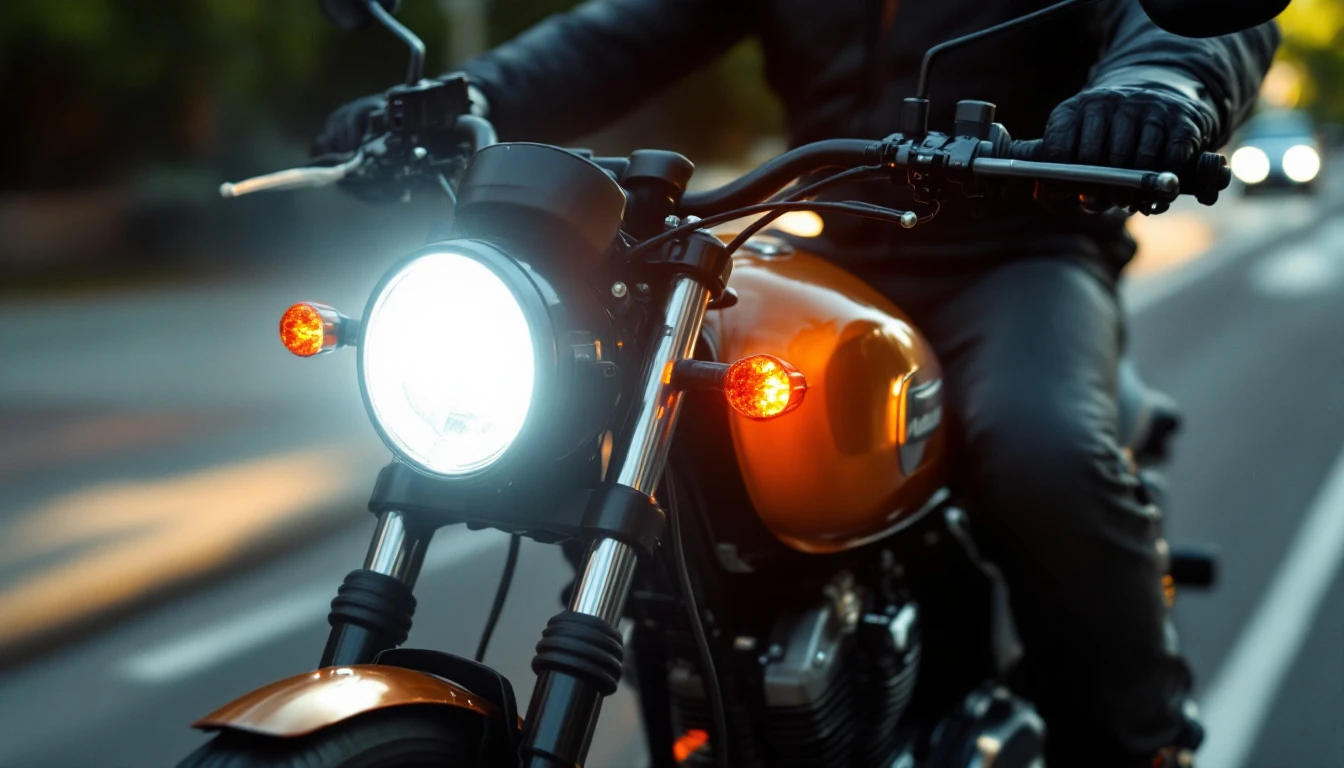
Minnesota bike laws: what you need to know starts with understanding how the North Star State defines vehicles on public roadways. Under Minnesota Statutes Chapter 169, bicycles share the roadway with cars, trucks, and buses, enjoying nearly identical rights and obligations. Riders must obey standard traffic signals, yield right-of-way when entering traffic, and equip their bikes with required safety gear before rolling onto public pavement.
Things get far more complicated once you move past standard pedal cycles into electric bicycles, dirt bikes, mini-bikes, and off-highway motorcycles. A casual trail bike lacks the equipment required for highway use, and local municipalities frequently enforce their own sidewalk and trail restrictions. Navigating these overlapping state statutes prevents expensive tickets, vehicle impoundment, and dangerous traffic encounters.
Whether you commute daily across the Twin Cities, look at gravel routes in Greater Minnesota, or want to make an off-road bike street-legal, understanding state equipment mandates and operational rules is essential. We will break down road rights, trail distinctions, electric bike classes, off-road conversions, and titling standards across Minnesota.
Minnesota Bike Laws: What You Need to Know About Road Rights
Updated on October 14, 2026
Minnesota Statute 169.222 establishes that every person operating a bicycle upon a roadway possesses all of the rights and duties applicable to the driver of any other vehicle. Bicyclists are not second-class road users under state law. Law enforcement treats cyclists as vehicular traffic, meaning you must stop at red lights, obey stop signs, signal turns, and travel in the direction of traffic flow on one-way streets.
Lane Positioning and Riding to the Right
State law mandates that cyclists ride as close as practicable to the right-hand curb or edge of the roadway. Several critical exceptions exist where taking the full lane is permitted. You may move left to pass another vehicle, prepare for a left turn, or avoid surface hazards such as debris, drainage grates, parked car doors, or narrow lanes where cars cannot safely pass within the same lane. Cyclists riding in a designated bicycle lane must travel in the marked direction.
Three-Foot Passing Law
Motor vehicle drivers must give bicyclists a minimum clearance buffer of three feet when overtaking on roadways under Minnesota Statute 169.18. Drivers may cross double yellow lines to execute this pass safely when oncoming lanes are clear. If a driver cuts too close to a cyclist while passing, they violate state traffic statutes and face moving violation citations. Cyclists should hold their line predictably to help passing traffic judge space accurately.
Sidewalk Riding Rules Across Municipalities
Minnesota allows sidewalk riding in most areas, but it bans sidewalk bicycling inside business districts unless a local ordinance explicitly permits it. When riding on a sidewalk or public crosswalk, a bicyclist has all the rights and responsibilities of a pedestrian. Riders must yield to pedestrians at all times and give an audible signal before passing someone on foot. In downtown Minneapolis and Saint Paul, local codes forbid sidewalk riding in central business cores.
Minnesota Bike Laws: What You Need to Know About Equipment
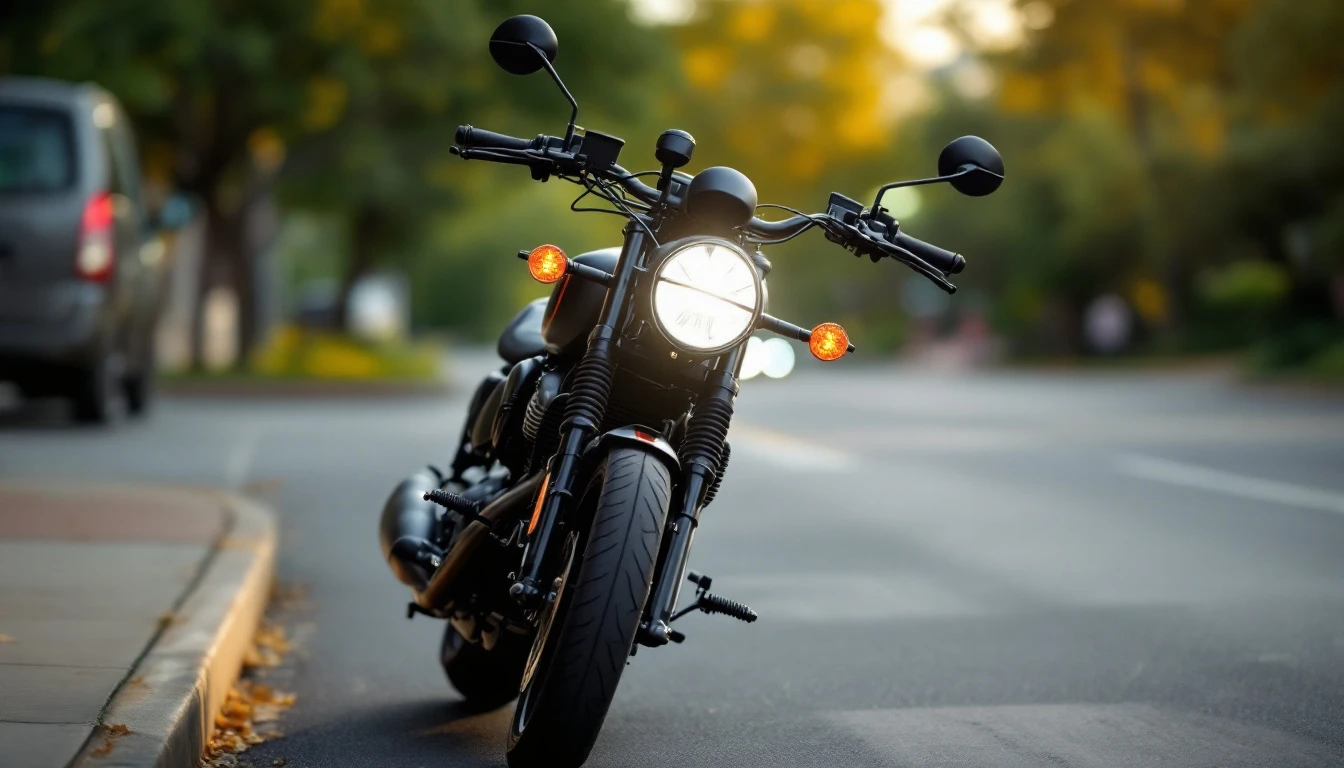
Minnesota Statute 169.222 Subdivision 6 defines the mandatory equipment every bicycle must have before operating on public roads between sunset and sunrise. Violating night riding safety gear rules leads to traffic stops, fines, and civil liability issues if a collision occurs. Your safety depends on high visibility, especially during dark winter commutes or rainy evening rides.
Ready to register your vehicle?
Join thousands of vehicle owners who use Dirt Legal to handle their registration quickly.
Front and Rear Lighting Requirements
Riding after dark requires a front headlight emitting a white light visible from at least 500 feet ahead. The rear of the bicycle must feature a red reflector visible from 100 to 600 feet, or an active red lamp visible from 500 feet to the rear. Flashing red or amber tail lights meet state requirements and significantly improve your visibility to overtaking drivers. Reflective ankle bands and jacket panels add practical conspicuity on dimly lit county roads.
Braking Systems and Handlebar Dimensions
Every bicycle operated on Minnesota roads must feature a brake that skids the braked wheels on dry, level, clean pavement. Coaster brakes and modern disc brakes both Eligible under this standard. Minnesota statutes ban handlebars set higher than the rider shoulders while seated, preventing unstable steering geometry. Fixed-gear bicycles satisfy the braking requirement only if the rider can bring the bike to an immediate, controlled stop.
Dirt Legal has completed over 6,000 customer orders to date (lifetime through current month, n=6,385), proving that resolving paperwork roadblocks helps riders enjoy their machines on public roads across the country.
Minnesota Bike Laws: What You Need to Know for E-Bikes
Minnesota classifies electric-assisted bicycles into three distinct tiers based on motor output and top assisted speed under Minnesota Statute 169.011 Subdivision 27. An electric bike must feature operable pedals and an electric motor of 750 watts (one horsepower) or less. Knowing which category your electric cycle falls under determines where you can street-legal ride.
The Three-Class E-Bike Framework
Class 1 e-bikes provide motor assistance only while the rider pedals, cutting off electrical assistance at 20 mph. Class 2 e-bikes incorporate a throttle capable of propelling the bike without pedaling, also disengaging motor drive at 20 mph. Class 3 e-bikes provide pedal assistance up to 28 mph and require a functional speedometer. Manufacturers must affix a permanent label detailing wattage, class tier, and top assisted speed directly to the frame.
Age Restrictions and Helmet Mandates
Riders operating a Class 3 electric bike in Minnesota must be at least 15 years old. The state does not enforce a universal helmet law for adult pedal cyclists or Class 1 and Class 2 e-bike operators, although safety agencies recommend them. Some city parks and local recreation systems establish their own helmet guidelines on multi-use paved trails, so checking regional park ordinances remains a smart move.
Access to Trails and Shared Paths
Class 1 and Class 2 electric bikes can access paved multi-use trails, bike lanes, and public roadways throughout Minnesota unless a local trail authority posts specific bans. Class 3 e-bikes face stricter trail limits and are generally restricted to roadways and bike lanes unless the local municipality permits them on trails. Natural surface singletrack mountain bike trails manage electric bike access independently through county conservation districts.
Minnesota Bike Laws: What You Need to Know About Dirt Bikes
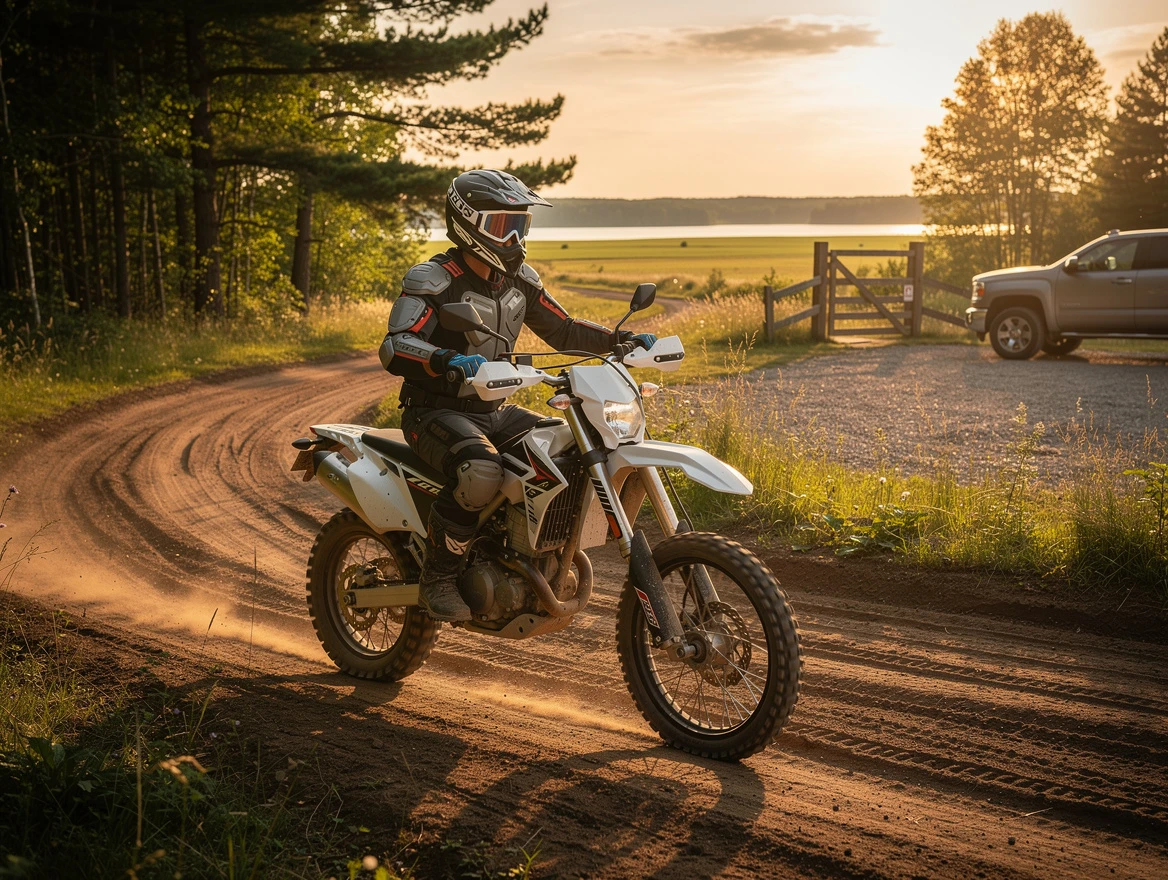
Off-highway motorcycles (OHMs) operated on Minnesota public lands, ditches, and state forest trails must carry valid registration through the Minnesota Department of Natural Resources (DNR). A pure dirt bike cannot run on public city streets or state highways in factory trim. Riding an unregistered or non-compliant off-road bike on asphalt routes results in misdemeanor traffic citations and immediate vehicle impoundment.
DNR Off-Highway Motorcycle Registration
Minnesota DNR registration requires proof of ownership, such as a manufacturer certificate of origin or an assigned title, along with payment of state recreation trail fees. The DNR issues a small decal that must be mounted clearly on the exterior frame or fork leg. Public ditch riding is permitted in specific rural counties outside agricultural growing seasons, but off-road dirt bikes cannot enter municipal roads without full road conversion equipment.
Converting a Dirt Bike for Highway Operation
Turning a dirt bike into a road machine requires significant physical modifications to satisfy Federal Motor Vehicle Safety Standards and state equipment statutes. The machine needs DOT-approved tires, high and low beam headlights, an operational horn, dual rearview mirrors, front and rear turn signals, and a rear brake light activated by both front and rear brake controls. You also need an illuminated license plate bracket mounted securely above the rear fender.
Understanding equipment needs is only half the battle, because obtaining road registration paperwork requires clean titles. A more detailed breakdown is available in how to make off-road vehicles road Montana registration solutions. That guide explains equipment upgrades and titling routes across different states.
Overcoming Lost Titles and Incomplete Paperwork
Many pre-owned off-road bikes trade hands with nothing more than a handwritten note, leaving buyers wondering how to prove ownership. Private sales without titles create massive headaches, especially if you deal with how to get a title for a motorcycle. In some private transactions, improper transfers lead into what is title jumping, which happens when an intermediary sells a machine without ever titling it in their own name. Resolving missing titles usually requires a bonded title process or finding an out-of-state paperwork solution through specialized providers.
| Bike Category | Public Road Use | Registration Required | License Required | Required Equipment |
|---|---|---|---|---|
| Standard Bicycle | Yes (all public roads except freeways) | No (some cities have optional registry) | No | White front light (night), red rear reflector/light, brakes |
| Class 1 & 2 E-Bikes | Yes (roads and most paved trails) | No | No | Standard bike lights, 750W motor cap, permanent class label |
| Class 3 E-Bike | Yes (roads and bike lanes; limited trails) | No | No (must be 15+ years old) | Speedometer, standard lights, 750W motor cap |
| Off-Highway Dirt Bike | No (trail and ditch access only) | Yes (Minnesota DNR trail decal) | No (safety certificate for youth) | USFS spark arrestor, 96 dB muffler, headlight/taillight |
| Street-Legal Converted Bike | Yes (full road access) | Yes (motorcycle road plate) | Yes (motorcycle endorsement) | DOT tires, turn signals, mirrors, horn, high/low beam, plate light |
See How We Can Help With Your Bike Registration →
Minnesota Bike Laws: What You Need to Know for Titling and Transfers
Operating any motorized cycle on public streets requires clean title paperwork and active state registration tags. A bill of sale automotive document alone is rarely enough to secure road plates if the state of Minnesota records show a missing title chain. Titling problems stop owners from enjoying their bikes, whether they ride a lightweight dual-sport, a converted trail bike, or a road-going motorcycle.
Handling Missing Paperwork and Bill-of-Sale Transactions
Private buyers often find that a project bike never had a street title issued by its manufacturer. When an owner sells a machine on a simple bill of sale, state offices often reject requests for street registration. In extreme circumstances, buyers deal with sellers who engaged in what is the penalty for title jumping, exposing themselves to civil delays or title rejections. Similar hurdles appear when buyers encounter what is title floating, where buyers fail to finalize administrative transfers to sidestep state fees.
Out-of-State Registration Options
Riders who buy machines lacking local street titles frequently look at out-of-state titling pathways. Many vehicle owners use Montana LLC Vehicle Registration to establish asset ownership and secure road-legal credentials. Setting up an LLC allows an owner to title specialty vehicles, conversions, and trailers under a corporate structure without paying vehicle sales tax. A driver traveling out of state might spot Montana plates on high-end dual-sports or bespoke builds across national highway routes.
Owners of recreational haulers, camper vans, and utility trailers also look at Street Legal Vehicle registration assistance services to keep all their adventure gear fully road-compliant. For those managing utility trailers or customized toy haulers, understanding out-of-state registration keeps travel Effortless.
Working with Private Registration Specialists
Securing a valid title for an unusual vehicle can involve dozens of forms, physical inspections, and complex agency guidelines. Rather than spending weeks stalled at a customer counter, many owners turn to Montana LLC Services. A private registration service prepares, files, and monitors paperwork with state vehicle offices. We manage the out-of-state paperwork with our paperwork support, so you receive valid plates and registrations without dealing directly with confusing state bureaucracies.
For owners balancing multi-vehicle setups, reviewing Mastering Safety Behind the Wheel for Every Powersport Enthusiast provides great insight into sharing road space responsibly. Safe operation and proper titling work together to keep riders protected on every trip.
Frequently Asked Questions
Do dirt bikes need to be registered?
Yes, dirt bikes operated in Minnesota on public lands, state forests, wildlife management areas, or public trail networks must carry active registration through the Minnesota Department of Natural Resources (DNR). The DNR issues an off-highway motorcycle decal that must mount to the frame. If you want to ride a dirt bike on public paved streets, you must convert it to meet federal and state safety standards, obtain a clean road title, and register it for highway use with a motorcycle license plate.
Do I need a license to ride a dirt bike?
You do not need a driver license to ride a dirt bike purely on private property or designated off-road trails in Minnesota. Riders under 16 operating on public lands must complete a Minnesota DNR off-highway motorcycle safety education course. If you take that dirt bike onto public roads or city streets, the machine must be fully street-legal, and you must hold a valid driver license with an official motorcycle endorsement.
What does a dirt bike need to be street-legal?
To make a dirt bike street-legal in Minnesota, it must pass equipment inspections and carry valid road registration. Mandatory equipment includes DOT-approved tires, high and low beam headlights with an indicator switch, an electric horn, dual rearview mirrors, front and rear turn signals, a tail light with a brake switch actuated by both hand and foot brakes, and an illuminated license plate bracket. The motorcycle must also carry minimum liability insurance coverage.
What you need to know about car accidents?
Under Minnesota no-fault insurance statutes, cyclists involved in collisions with motor vehicles generally access medical benefits through their own auto insurance policy, or through the policy covering the vehicle involved if the cyclist does not own a car. Minnesota bike laws require you to remain at the scene, check for injuries, call emergency services, and exchange contact and insurance details. Documenting property damage, roadway conditions, and witness statements immediately helps resolve insurance and liability claims.
Do you need a license for a pit bike?
No license is required to operate a pit bike on private land with the property owner permission. Pit bikes are classified as off-highway mini-motorcycles and cannot run on public streets, sidewalks, or neighborhood roadways in Minnesota. Operating a pit bike on a public road without a license, registration, or safety equipment can result in criminal citations, vehicle towing, and points against your standard driving record.
Do you need a title for a boat in Minnesota?
Yes, Minnesota law mandates titles for all watercraft over 16 feet in length, as well as any motorized watercraft using a motor regardless of size, with few exceptions for small unpowered canoes or kayaks. Boat titles establish formal ownership and protect against theft. You must register all operational motorized watercraft through the Minnesota DNR to receive watercraft license validation decals.
Can bicyclists ride two abreast on Minnesota roads?
Yes, Minnesota Statute 169.222 permits bicyclists to ride two abreast on public roadways as long as doing so does not impede the normal, reasonable movement of vehicular traffic. If road lanes are narrow or traffic begins backing up, cyclists should drop into a single-file line on the right side of the lane to let motor vehicles pass safely.
Do I need insurance for an e-bike in Minnesota?
Minnesota law does not require personal liability insurance or state registration for Class 1, Class 2, or Class 3 electric-assisted bicycles. Because e-bikes carry motors that assist up to 28 mph, many riders purchase supplemental personal liability or property damage coverage through private insurers. Standard homeowner or renter policies frequently exclude motorized cycle damage or liability claims.
Start Your Registration Today →
Minnesota bike laws: what you need to know boils down to knowing your vehicle classification, obeying core traffic statutes, and making sure your paperwork is completely in order. From urban bike commuters respecting pedestrian right-of-way to trail enthusiasts converting off-road dirt bikes for cross-town travel, following the rules ensures a safe, uninterrupted ride. Take time to audit your equipment, secure your titles, and look at our vehicle registration assistance services whenever you face complex paperwork hurdles.