How Montana Vehicle Registration Impacts Your Car Insurance
Learn how Montana vehicle registration impacts your car insurance, coverage legality, out-of-state garaging rules, LLC titling, and policy underwriting.

How Montana vehicle registration impacts your car insurance depends on your garaging location, vehicle ownership structure, and insurer guidelines. Drivers often look at out-of-state registration to manage vehicle costs, but protecting your asset on the road requires aligning your policy with state underwriting rules. You must understand how insurers view registration documents compared to physical vehicle storage.
Titling a vehicle under an out-of-state entity introduces distinct questions regarding policy structure, risk assessments, and claim payouts. Many vehicle owners assume an auto insurance company will automatically void a policy if the registration state does not match the driver's license state. In reality, insurance carriers operate under specific contract definitions rather than assumptions.
In this guide, you will learn the mechanics of insuring an out-of-state vehicle, how Montana LLCs interact with auto insurance policies, what insurance underwriters look for during risk evaluation, and how to keep your vehicle covered without surprises.
How Montana Vehicle Registration Impacts Your Car Insurance and Coverage Terms
Updated on October 13, 2026
Auto insurance underwriters evaluate risk based primarily on garaging address rather than the state printed on the license plate. The garaging address represents the physical zip code where the vehicle stays overnight for most of the calendar year. When you register a vehicle, state licensing focuses on asset ownership, while your insurance contract focuses on local actuarial probability.
Insurance carriers calculate premiums using traffic density, local collision statistics, vandalism rates, and weather trends in your physical area. If your vehicle displays Montana plates but sits in a garage in Florida, Texas, or Ohio, the insurance carrier prices the risk according to that specific garage location. Misrepresenting that location is what leads to claim denials, not the registration state itself.
Why Do Insurance Carriers Care About Registration State?
Insurance carriers need the titled owner and the insured party to hold an insurable interest in the property. An insurable interest means you would suffer a direct financial loss if the vehicle were damaged, destroyed, or stolen. When a vehicle carries registration from another jurisdiction, underwriters confirm whether the applicant owns the vehicle directly or through a corporate entity.
Underwriters also check state minimum liability limits. Every state sets required minimum limits for bodily injury and property damage. Even if your registration originates in Montana, your insurance policy must satisfy or exceed the liability thresholds established where you operate the vehicle.
What Is Insurable Interest for an Out-of-State Title?
Insurable interest is the foundation requiring that the policyholder bear financial responsibility for the insured asset. If you purchase a vehicle and title it under a personal name, proving insurable interest is straightforward because your name appears across the paperwork. If the vehicle is titled under an entity, the insurance company requires that entity to appear on the policy declarations page.
Carriers handle this by adding the entity as the named insured, a primary policyholder, or an additional interest. A quick review with your agent verifies how their system logs corporate asset ownership alongside individual drivers. When you set up proper paperwork, the insurance company recognizes that you hold the right to protect the vehicle.
How Garaging Location Affects Policy Underwriting
Underwriting guidelines explicitly require policyholders to list the true physical garaging location on application documents. A driver who claims their vehicle is garaged in rural Montana when it actually operates in downtown Los Angeles commits bespoke rate evasion. Doing that compromises your entire policy during an active claim.
Honesty regarding the primary storage address allows underwriters to rate the policy accurately. When underwriters know the true address, the presence of an out-of-state title becomes an administrative detail rather than a coverage obstacle. The policy reflects the actual environment where you store and drive the asset.
How Montana Vehicle Registration Impacts Your Car Insurance for LLC Ownership

A Montana LLC operates as a distinct entity capable of holding property titles, including passenger cars, trucks, and motorhomes. When you choose Montana LLC Vehicle Registration, the company becomes the owner listed on the vehicle title Montana produces. This ownership structure requires structuring your auto policy correctly from day one.
Ready to register your vehicle?
Join thousands of vehicle owners who use Dirt Legal to handle their registration quickly.
Because the LLC owns the vehicle, personal auto insurance policies might not automatically list the LLC unless added via an endorsement. Some insurance providers prefer writing a commercial auto policy, while others happily issue a personal policy with the company listed as an additional interest. Getting this distinction right ensures your insurer pays out without delay following an accident.
Can You Add an LLC as an Additional Insured?
Most major national insurance carriers allow policyholders to list a holding company as an additional insured on a personal auto policy. An additional insured endorsement extends liability protection to the company if a collision leads to a lawsuit targeting the vehicle owner. Adding this endorsement costs little to nothing with most standard carriers.
The policy lists you as the primary driver, rates the bespoke based on your personal driving history, and references your home garaging zip code. At the same time, the paperwork officially recognizes the LLC as the asset holder. That structure creates clear continuity between your registration and your coverage.
Personal Auto Policies Versus Commercial Auto Policies
Personal auto policies cover vehicles used for commuting, pleasure, and personal errands. Commercial auto policies cover vehicles used primarily for business operations, transport services, or commercial fleets. If your Montana LLC is simply a holding company holding title to an asset, many specialty carriers still categorize the use as personal.
Here is how the two policy categories compare for an out-of-state titled vehicle:
- Personal Lines: Best for collector cars, weekend cruisers, and private transportation. Bespoke reflects your personal driving record and credit profile. Requires an endorsement naming the LLC as an interested party.
- Commercial Lines: Best for work trucks, mixed-use vehicles, and commercial transport. Bespoke reflects corporate risk profile and named business drivers. Carries higher baseline liability limits.
For more insights on structuring corporate vehicle assets, read our overview of the benefits of buying a car under an llc dirt legal.
Collector and Specialty Vehicle Insurance Considerations
Specialty vehicles, elevated sports cars, and vintage models frequently use agreed-value policies through niche insurers like Hagerty, Grundy, or American Modern. These specialty underwriters deal with Montana entity titles routinely. They understand why an owner registers through a holding company and actively accommodate corporate ownership.
Agreed-value policies establish the vehicle payout value before the policy takes effect, eliminating standard depreciation disputes after a loss. These carriers place primary emphasis on annual mileage limits, secure garage storage, and clean driver histories. If you want to evaluate high-end ownership strategies, check our guide on Smartest Way to Register Elevated Vehicles: Montana LLC Services.
How Montana Vehicle Registration Impacts Your Car Insurance During Claims Processing
Insurance claims processing evaluates the validity of your initial policy disclosures after an incident occurs. Adjusters review police reports, examine registration documents, inspect physical vehicle damage, and verify that your application was accurate when signed. If your disclosures match your real-world driving habits, out-of-state registration poses no barrier to claim resolution.
Problems occur when policyholders misstate vehicle location to secure lower insurance rates. If an accident takes place in your home state, but you told your carrier the car never leaves Montana, adjusters will open an investigation for rate evasion. Total transparency regarding where you drive and store the vehicle protects your claim payout.
How Claims Adjusters Verify Vehicle Garaging Location
During an investigation, adjusters collect objective data to establish where the vehicle spends its time. They look at toll transponder logs, service records from local mechanic shops, fuel receipts, and home security footage. If your repair receipts show ongoing maintenance near your home address, your carrier verifies that against the address listed on your declarations page.
If you truthfully disclosed your home address as the garaging location, these local receipts support your claim rather than undermining it. Adjusters simply process the claim under the local policy terms you selected. Accuracy on your initial policy paperwork protects your financial interests.
State Minimum Requirements and Out-of-State Travel
Every standard personal auto insurance policy contains an out-of-state coverage extension clause. This clause automatically elevates your liability limits to match the statutory minimum of whichever state you happen to be driving through when an accident occurs. For instance, if you drive through a state requiring higher limits than your home policy, your carrier broadens coverage to comply with that state law.
This principle applies across state lines regardless of where your license plates were issued. As long as you maintain an active policy that satisfies your actual home state regulations, you hold valid coverage anywhere in the United States and Canada.
The Difference Between Registration Compliance and Insurance Validity
Registration compliance and insurance validity operate as two separate categories. Registration compliance involves whether your vehicle paperwork adheres to state transportation codes, tax laws, and DMV statutes. Insurance validity is a contractual agreement between you and a private corporation regarding financial risk.
A state transportation authority might question whether a resident should transfer plates after moving. However, that municipal inquiry does not automatically invalidate a binding private insurance contract. In fact, Dirt Legal has completed over 6,000 customer orders to date (internal data, lifetime through current month, n=6,379), demonstrating that owners across the nation actively manage registration paperwork remotely while keeping their vehicles properly covered.
| Factor | State DMV Requirements | Insurance Carrier Requirements |
|---|---|---|
| Primary Focus | Asset ownership, road taxes, title verification | Actuarial risk, loss likelihood, driving habits |
| Primary Address | Titled owner address (or LLC agent) | Physical overnight garaging zip code |
| Named Parties | Registered owner on title | Licensed drivers and corporate entities with interest |
| Enforcement Action | Citations, administrative fees, registration holds | Bespoke adjustments, policy rescission, claim denials |
| Transfer Triggers | Statutory residency definitions | Changes to physical storage location |
See How We Can Help With Your Registration →
How Montana Vehicle Registration Impacts Your Car Insurance Rates and Annual Costs
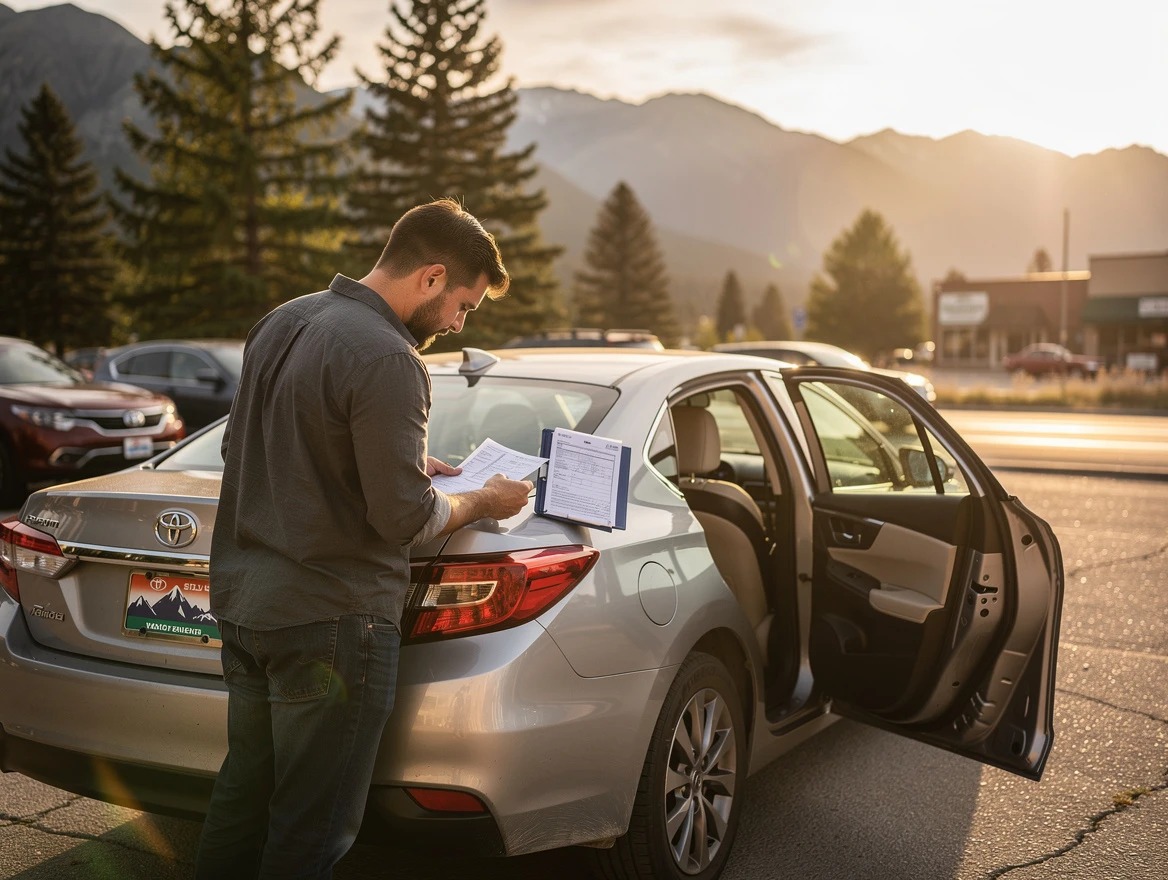
Vehicle registration costs and insurance premiums represent two distinct parts of overall vehicle ownership expenses. Montana car registration fees are widely recognized for their structural advantages, especially for older assets and motorhomes. However, your car insurance bespoke reflects your individual profile rather than state registration fees.
Your auto insurance bespoke hinges on your credit-based insurance score, your age, your claims history, vehicle annual mileage, and the specific zip code where the vehicle parks. Moving your title to an out-of-state LLC will not decrease your insurance bespoke, because your bespoke remains tied to your actual operating location. Understanding this distinction prevents unrealistic budget expectations.
Comparing Registration Savings and Insurance Premiums
Montana does not assess general state sales tax on personal property, making it an attractive option for titled assets. Montana allows permanent registration on light vehicles eleven years old and older, eliminating recurring annual plate renewal fees. While those registration perks save upfront capital, they do not lower your monthly insurance premiums.
You should calculate your total cost of ownership by balancing registration savings against insurance quotes. Many vehicle owners find that holding titles out-of-state saves thousands on initial acquisition costs while leaving auto insurance rates unchanged. To evaluate ownership rights and documentation, review our article on Car Insurance Policy vs Surety Bond: Key Differences.
Insurance Considerations for Recreational Vehicles and Trailers
Owners of motorhomes and campers often choose Montana for their title work. A Montana recreational vehicle can incur significant local taxes in states like California, Georgia, or Colorado. Insuring an RV titled through an out-of-state entity follows specific underwriting channels, especially for full-time travelers who live on the road.
Full-time RV owners often lack a traditional fixed residence, using mail forwarding services instead. Specialty RV carriers offer dedicated full-timer coverage packages that incorporate personal liability, contents coverage, and emergency expense reimbursement. If you are examining RV titling, look into our breakdown on How Much Does It Cost to Set Up a Montana LLC for an RV?.
Does an Out-of-State Title Complicate Fleet Policies?
Commercial operators and collectors managing multiple vehicles benefit from streamlined administrative structures. Commercial fleet policies allow companies to schedule numerous vehicles under a single umbrella policy, regardless of individual vehicle plate origins. Underwriters look at the central terminal address and operating radius rather than individual state plates.
Fleet policies simplify paperwork by establishing uniform liability limits across all company-owned assets. If your LLC owns multiple vehicles, combining them under a scheduled policy simplifies record-keeping. It also provides predictable annual insurance billing without requiring separate policy numbers for every vehicle.
How Montana Vehicle Registration Impacts Your Car Insurance Selection Process
Finding the right insurance broker is the most important step when insuring a vehicle with Montana plates. Standard call center representatives at discount insurance brands often follow strict scripts designed for cookie-cutter personal policies. If a situation falls outside basic parameters, an entry-level customer service agent might say coverage is impossible.
Independent insurance brokers work with multiple carriers and understand complex titling arrangements. They know which underwriters accept out-of-state titles, how to add holding companies as additional insureds, and how to write agreed-value policies. Working with an experienced broker eliminates friction and ensures complete compliance.
How to Speak With Your Insurance Agent
When requesting an insurance quote for a vehicle titled under an out-of-state entity, clarity prevents misunderstandings. Avoid vague phrases and lay out the exact structure right away. Here is a reliable framework for that conversation:
- State the physical zip code where the vehicle will stay overnight and where you drive it daily.
- Explain that the vehicle title is held by your LLC for administrative and asset management purposes.
- Ask the agent to list your LLC as an additional insured or interested party on the declarations page.
- Confirm that your personal name is listed as the primary driver and policyholder.
- Verify that the state minimum limits meet or exceed your local state requirements.
By presenting the information clearly, you help the broker select an underwriting carrier that supports your specific ownership model. That straightforward approach prevents underwriting confusion down the road.
Working with Independent Insurance Brokers
Captive agents sell insurance policies exclusively for one company, such as State Farm, Farmers, or Allstate. If their proprietary guidelines restrict out-of-state entity titles, they cannot offer an alternative. Independent brokers represent dozens of carriers, giving them the flexibility to shop your profile across different underwriters.
Independent brokers routinely work with business owners, high-net-worth collectors, and remote workers who hold assets in diverse jurisdictions. They understand how to match your situation with an underwriter that accommodates holding entities. That broker relationship helps you secure stable, long-term coverage.
Electronic Proof of Insurance Rules
Once your policy takes effect, you must maintain proof of financial responsibility inside the vehicle at all times. Montana law recognizes modern verification methods during traffic stops or administrative checks. To understand current proof standards across jurisdictions, read our guide on Does Montana Allow Electronic Proof of Insurance? (2026).
Carrying digital proof on your smartphone along with a physical card inside the glove box ensures you can satisfy law enforcement requests without delay. Maintaining current documentation prevents roadside issues during travel.
Frequently Asked Questions
Does Montana require car insurance?
Montana law requires every motor vehicle operated on public roadways to carry continuous liability insurance. The statutory minimum liability limits in Montana are twenty-five thousand dollars for bodily injury or death to one person, fifty thousand dollars for bodily injury or death to two or more persons in any one collision, and twenty thousand dollars for injury to or destruction of property. Vehicle owners must maintain proof of continuous coverage and present it upon request during any routine traffic check. Failure to maintain liability coverage can result in statutory fines, driver license suspension, or administrative penalties under Montana law.
Do you need car insurance to renew registration?
You need active proof of insurance to maintain continuous vehicle compliance, though state renewal procedures vary by county and jurisdiction. When completing registration renewals, county motor vehicle offices require applicants to certify that the vehicle carries valid liability insurance meeting state requirements. Operating an unregistered or uninsured vehicle creates liability risks and potential administrative holds on your title. Keeping your auto policy current prevents interruption during renewal periods and avoids state-level compliance flags.
What is a car registration?
A car registration is the official authorization issued by a state government allowing a specific motor vehicle to operate on public roadways. The registration document links the vehicle identification number (VIN) to the registered owner and issues physical license plates and validation decals. While a vehicle title proves asset ownership, registration represents the operational permit that confirms local road fees have been satisfied. Operating without active registration can result in traffic citations, impoundment, and late renewal fees.
What is vehicle registration?
Vehicle registration is the administrative process of recording an automobile, truck, motorcycle, trailer, or recreational vehicle with a jurisdiction motor vehicle authority. This administrative process assigns unique license plates, tracks the asset for law enforcement identification, and confirms compliance with regional safety, emissions, and liability mandates. Registrations require periodic validation decals through annual or permanent renewal schedules, depending on the age of the asset and specific state statutes.
Can I register my car in Montana?
You can register your car in Montana through an established Montana business entity, such as a limited liability company (LLC). Because an LLC is recognized as a resident entity under state law, it possesses the authority to purchase, title, and register assets with the Montana Department of Justice Motor Vehicle Division. The vehicle title is issued directly in the name of the entity, allowing owners nationwide to title their property in Montana without holding personal state residency.
How to register a vehicle in Montana?
To register a vehicle in Montana, you begin by forming a valid Montana LLC through the Montana Secretary of State business portal. Once your entity is registered, the current vehicle title or manufacturer certificate of origin is transferred into the name of the LLC. The required title application paperwork, transfer forms, and county fees are submitted to the local county treasurer's motor vehicle department. The state processes the documentation and issues a clean title, license plates, and registration documents in the name of your company.
Will my current insurer cancel my policy if I switch to Montana plates?
Your insurer will not automatically cancel your policy simply because your vehicle has out-of-state plates, provided you disclose your true garaging address and named insured details. Cancellation risks occur when policyholders misrepresent where the car is parked or fail to notify the company about an LLC title transfer. If your carrier does not support corporate entity ownership, you can transition your coverage to an underwriter or specialty broker that accommodates out-of-state holding structures.
Does an out-of-state registration trigger insurance fraud investigations?
An out-of-state registration does not trigger fraud investigations on its own. Investigations occur when an applicant engages in rate evasion by falsely claiming a lower-cost garaging location to reduce insurance premiums. As long as your insurance contract accurately identifies where you physically store and use the car, adjusters treat the out-of-state plate as an administrative characteristic rather than fraudulent activity.
Understanding how Montana vehicle registration impacts your car insurance ensures you can manage vehicle paperwork smoothly while protecting your financial assets. By coordinating with an independent insurance agent, listing your LLC properly, and maintaining transparent garaging disclosures, you keep full coverage intact across every mile.