Can You Make a UTV Street Legal in Texas? Rules Explained
Can you make a UTV street legal in Texas? Find direct state rules, local restrictions, and how out-of-state Montana registration helps.
Can you make a UTV street-legal in Texas through your local county tax assessor? Under standard Texas Transportation Code statutes, the direct answer is generally no, because Texas classifies off-highway utility vehicles as non-road machines that cannot receive ordinary passenger motor vehicle license plates. However, thousands of side-by-side owners across the Lone Star State operate their machines on public roads every single day by using out-of-state registration pathways.
Texas law strictly limits where and how native off-highway vehicles can travel on public pavement. You might Eligible for very specific local farm use or master-planned community travel, but those exemptions fall short if your goal is unrestricted driving around town or heading directly out to nearby trails. To achieve true road-going freedom without running afoul of local statutes, you need to understand both the Texas Off-Highway Vehicle regulations and the out-of-state alternatives that keep you road-compliant.
In this guide, we break down Texas equipment mandates, county road permits, out-of-state registration mechanisms, and the safety modifications your machine requires before turning the key on public pavement.
Texas Laws on Off-Highway Vehicles: Can You Make a UTV Street-Legal in Texas?
Updated on October 5, 2026
Texas Transportation Code Title 7 Subtitle C governs off-highway vehicles, defining a utility vehicle, or UTV, as a motor vehicle designed for utility or recreational purposes that is not an electric bicycle, golf cart, or all-terrain vehicle. By statutory definition, Texas DMV guidelines treat these side-by-sides as off-highway machinery. Because they do not possess a federal Department of Transportation certification sticker as passenger cars, your local county tax office will not issue standard passenger metal plates for normal road travel.
A Certificate of Title is required for all off-highway vehicles purchased after September 1, 1999, in Texas, establishing your proof of ownership. While this document secures your title, it explicitly marks the vehicle for off-road use only. Attempting to force an ordinary registration through a local branch will result in immediate rejection, leaving owners looking for alternative routes to hit the pavement.
Texas Transportation Code Chapter 551A Explained
Chapter 551A explicitly covers the operation of off-highway vehicles on public roadways. It states that an operator may not drive an off-highway vehicle on a public highway except under very narrow statutory carve-outs. These exemptions include public utility work, agricultural production, law enforcement operations, and designated master-planned communities with uniform covenants.
Even within those carve-outs, speeds are generally restricted, and operators must remain within specified distances of their properties or job sites. For general utility vehicle owners who want to run weekend errands, commute, or connect trail networks, these exemptions offer little practical help.
The Texas OHV Decal Requirement
An Off-Highway Vehicle decal is an official sticker issued by the Texas Parks and Wildlife Department that grants access to designated public riding areas. This decal costs a nominal annual sum and allows you to ride on Texas public lands, state parks, and OHV-funded private trails. Crucially, the Texas OHV decal is an access permit, not a roadway registration document. Affixing a decal to your roll cage gives you zero permission to travel down your local county roads, farm-to-market routes, or city streets.
County-Level Agricultural and Utility Allowances
Farmers and ranchers receive special statutory consideration under Texas law. If you are operating an off-highway vehicle purely for agricultural production or utility maintenance, you may drive on public roads for distances under 25 miles between parcels of land during daylight hours. To remain compliant, the vehicle must display a triangular slow-moving vehicle emblem on the rear, maintain active liability insurance, and the operator must hold a valid driver's license. The moment you use that side-by-side for recreational transport, this protection vanishes completely.
The Out-of-State Option: Can You Make a UTV Street-Legal in Texas with montana plates?
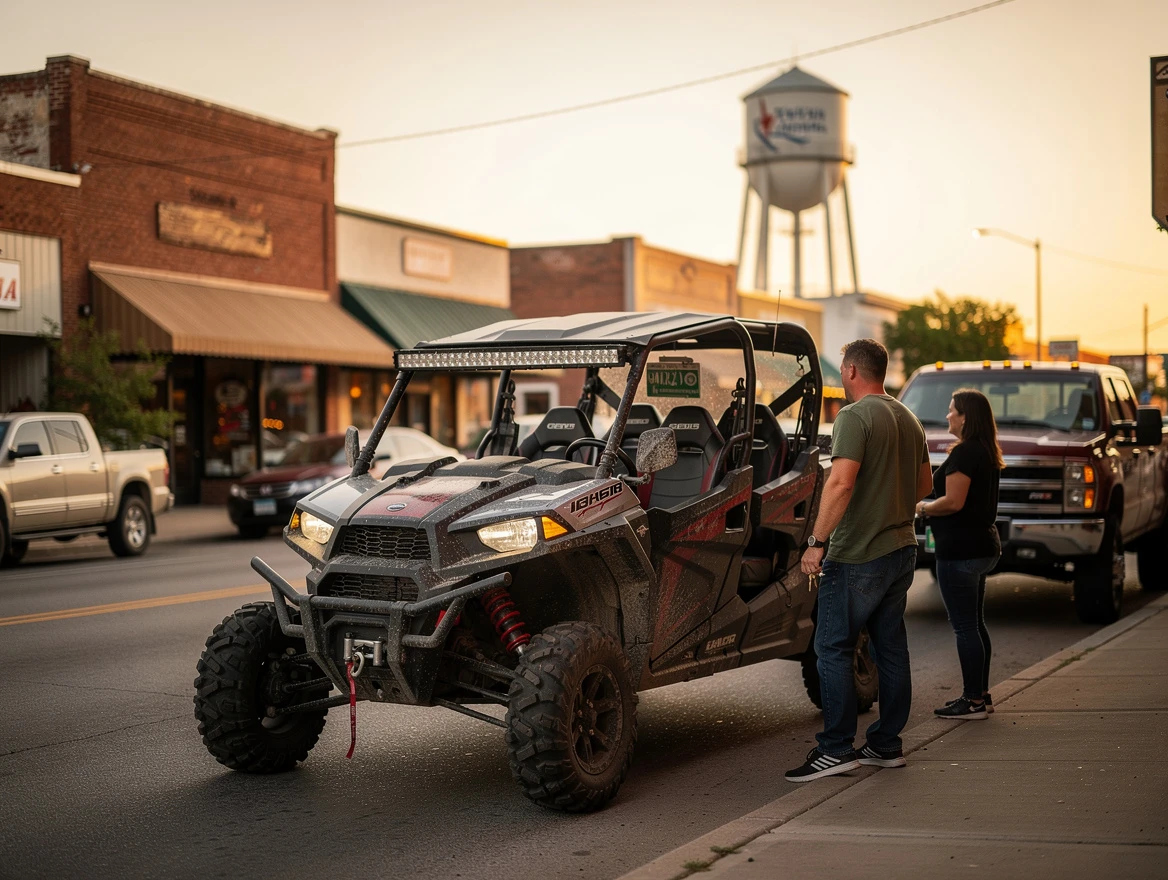
Montana registration provides a proven path to making your side-by-side fully street-legal without facing the roadblocks of local Texas DMV restrictions. Under Montana law, off-highway vehicles and powersports machines can be inspected, equipped, and titled as street-legal motor vehicles. By holding this title and registration under an established out-of-state structure, you receive a valid out-of-state title, permanent registration, and license plates that other states recognize under national reciprocity agreements.
Ready to register your vehicle?
Join thousands of vehicle owners who use Dirt Legal to handle their registration quickly.
We help you work through this paperwork by creating an LLC with our paperwork support in Montana. As an out-of-state entity, your LLC holds ownership of the vehicle, which is then titled and plated directly through the Montana Motor Vehicle Division. Dirt Legal has completed over 6,000 customer orders to date (internal data, lifetime through current month, n=6,285), guiding vehicle enthusiasts across the country through complex title and registration procedures.
How Montana LLC Vehicle Ownership Works
Creating a corporate entity in the state of Montana allows non-residents to own titled assets without needing physical residency. The newly formed Montana LLC acts as the owner of your UTV, holding the title document directly. Because Montana does not collect general sales tax on motor vehicles, you avoid unexpected tax bills on purchases, as detailed by the Montana Department of Revenue, Vehicle Taxes guidelines. Our Montana LLC Vehicle Registration assistance guides you through the entire administrative sequence from filing paperwork to securing your metal tags.
Reciprocity Agreements Between States
The United States Constitution features a Full Faith and Credit Clause that instructs states to honor the valid judicial acts, records, and proceedings of sister states. Under driver and vehicle reciprocity compacts, a vehicle that is titled and registered in Montana can travel across state lines on public roads. When an owner drives a properly registered side-by-side displaying authentic Montana plates in Texas, law enforcement officers can verify the vehicle's active status through standard law enforcement databases.
If you have questions regarding other powersports platforms, you can check our sister brand's guide on Tennessee Driving Laws: A Complete Guide for Powersport Operators to understand how different jurisdictions treat off-road platforms on regional pavement.
Understanding vehicle registration costs and Requirements
Calculating the true investment for registering your off-road machine means weighing long-term renewals against one-time out-of-state administrative filings. Unlike states that demand recurring annual inspection fees and escalating elevated property taxes, Montana offers permanent registrations for powersports vehicles once they hit standard criteria. This drastically reduces ongoing maintenance fees over your ownership window. You can evaluate full cost comparisons in our breakdown of vehicle registration costs across the United States.
Mandatory Street-Legal Equipment: Can You Make a UTV Street-Legal in Texas Without Upgrades?
Regardless of where your side-by-side holds registration, operating any motorized vehicle on public roads requires specific mechanical equipment to comply with street-legal safety standards. Police officers look for clear safety compliance when evaluating any atypical vehicle running alongside road traffic. If your machine lacks basic indicators, mirrors, or illumination, you risk receiving traffic citations regardless of what license plate hangs on the rear bumper.
Installing an aftermarket road-safety kit bridges the gap between a pure trail machine and an asphalt-ready vehicle. These kits are readily available across powersports suppliers and can be wired into standard battery systems in a weekend garage session.
Lighting and Signaling Essentials
Standard trail illumination does not satisfy road safety regulations. To bring your side-by-side up to standard road specifications, you must install functional DOT-approved lighting components:
- Headlights with functional high-beam and low-beam settings capable of illuminating objects at least 200 feet ahead.
- Red taillights coupled with illuminated brake lights that activate clearly upon pedal depression.
- Front and rear amber turn signals with an interior dashboard indicator that confirms activation.
- An illuminated white light mounted directly above or beside the rear license plate to maintain night visibility.
- Side reflectors and rear red reflectors positioned to outline the vehicle width in dark conditions.
Mirrors, Horns, and DOT-Compliant Windshields
Visibility and driver communication components are essential. You will need at least one rearview mirror and two side mirrors that provide an unobstructed sightline of at least 200 feet to the rear. Additionally, you must mount an electric horn capable of being heard from a distance of at least 200 feet; basic handheld air horns do not meet inspection requirements.
Windshield rules require careful attention. An AS-48 or AS-1 rated DOT-compliant automotive glass or polycarbonate windshield is strongly advised. If you choose to run without a full windshield or choose a folding design, state law and basic road safety demand that the driver and all passengers wear protective eye wear, such as shatter-resistant goggles or helmet visors, at all times.
Tires, Seatbelts, and Emissions Concerns
Knobby off-road mud tires can be dangerous on wet public tarmac and wear out rapidly under road friction. Outfitting your side-by-side with DOT-rated all-terrain tires provides predictable handling, reduced stopping distances, and meets road equipment requirements. You can verify manufacturing standards and vehicle specifications via the NHTSA VIN Lookup portal to review compliance details.
Every seating position must feature a secure seatbelt, ideally a three-point use or four-point restraint system securely bolted to the vehicle chassis. Because side-by-sides produce substantial engine noise, make sure your exhaust system utilizes a functioning muffler that keeps sound levels below state noise violation thresholds.
Comparing Your Texas UTV Registration Paths
Choosing the correct operational pathway depends on where you live, what kind of property you manage, and how you intend to use your machine. Review this side-by-side comparison of off-road and street-ready options available to Texas residents:
| Registration Method | Allowed Texas Roads | Equipment Required | Speed / Range Restrictions | Annual Tax Overhead |
|---|---|---|---|---|
| Texas OHV Decal Only | State trails, designated public parks | Muffler, spark arrestor | Off-road only; 0 miles on public tarmac | Low decal fee; no road taxes |
| Texas Agricultural Exemption | County roads, local farm routes | Slow-moving triangle, flashers | Daylight only; within 25 miles of property | Ag timber exemption rules |
| Montana LLC Street-Legal Registration | All public highways and city roads | Full DOT road safety kit | Standard highway limits; no range caps | Zero sales tax; permanent registration |
| Master-Planned Community Permit | Designated residential roads | Basic lights, mirrors, seatbelts | Speed caps at 35 mph; local radius | Local municipal permits |
As outlined above, native Texas options severely restrict where you can point your tires. Choosing out-of-state paperwork support provides full roadway access across both metropolitan regions and rural trail connections.
See How We Can Help With Your Street-Legal registration →
Insurance, Titling, and Common Hurdles: Can You Make a UTV Street-Legal in Texas Cleanly?
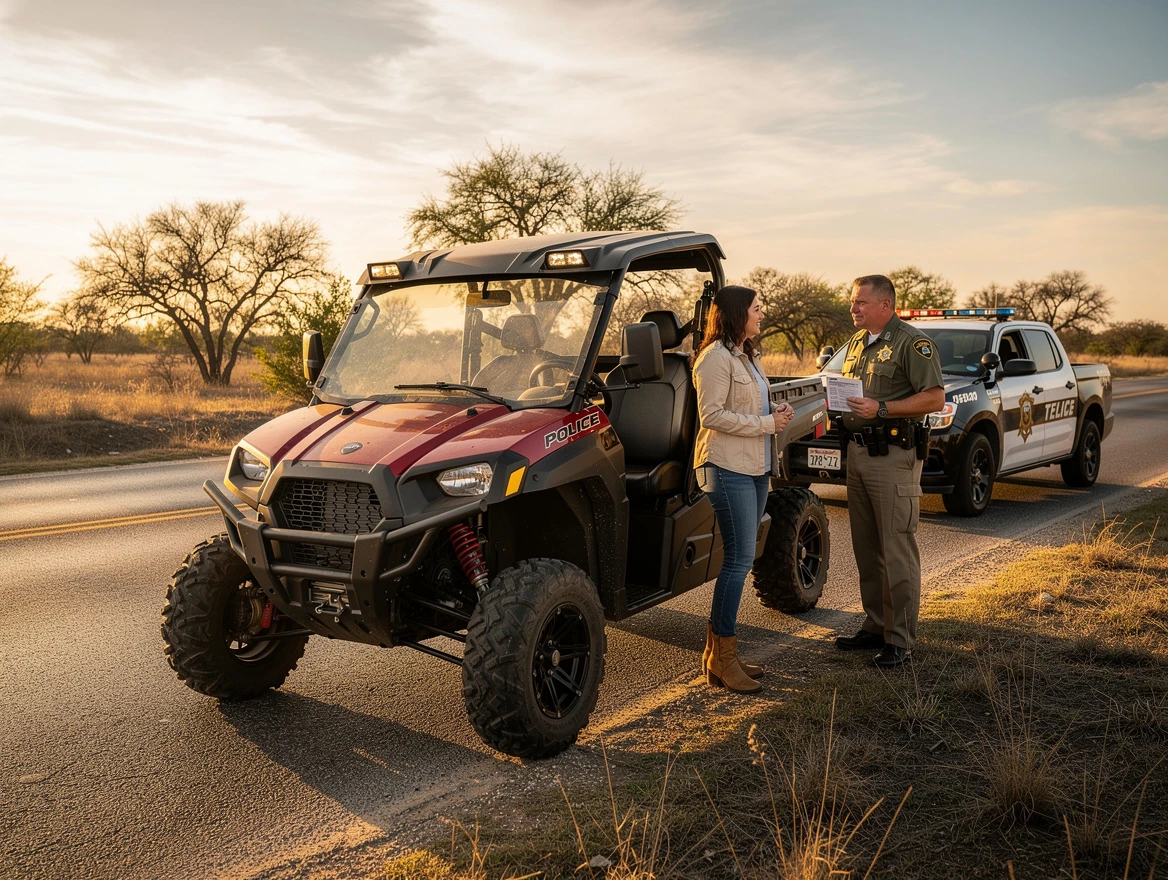
Tackling paperwork hurdles requires understanding insurance, title transfers, and ownership documentation. Before you put your side-by-side on any paved surface, you must secure proper vehicle insurance that complies with minimum financial responsibility thresholds. Running an uninsured vehicle on Texas roads carries heavy fines, license suspensions, and possible impoundment.
Powersports owners often run into issues regarding clean title paperwork when buying used machines on secondary markets. Getting these administrative details sorted out early keeps your vehicle operating smoothly without headaches.
Securing Street-Legal Insurance Coverage
Standard off-road liability insurance policies do not provide coverage when your vehicle travels down highway lanes. When setting up your policy, tell your carrier that your utility vehicle carries road registration and requires an on-road endorsement or tailored motorcycle/powersports road policy. Major carriers routinely insure out-of-state registered UTVs under customized policies. For a detailed look at how multi-state insurance operations work, review this helpful breakdown on how Register Under Montana LLC But Live In California: Insurance Guide handles policy structures across jurisdictional boundaries.
Overcoming Lost Titles and Incomplete Paperwork
Buying a pre-owned machine with a missing title or a fragmented chain of custody is a frequent obstacle for side-by-side enthusiasts. If a previous owner failed to record the title in their name, you enter a tricky territory known as title jumping. Understanding the rules is critical, and you should review 5 Big Risks You Take by Buying a Car Without a Title to avoid buying someone else's legal nightmare.
If you possess only a bill of sale or need an auto title replacement, specialized bonded titling or out-of-state recovery processes can help you establish clear ownership. Check our guide on how the process works to understand how missing paperwork can be resolved efficiently.
Frequently Asked Questions About Street-Legal UTVs in Texas
Can you make a UTV street-legal in Texas?
Under domestic Texas DMV procedures, you cannot register an off-highway UTV as an ordinary road-going passenger car. However, you can make your vehicle road-legal by registering it out-of-state through a Montana LLC. Once equipped with required safety components and valid out-of-state plates, you can operate your UTV on public roads in Texas through multi-state vehicle reciprocity agreements.
Can you make a dirt bike street-legal in Texas?
Yes, Texas allows dirt bikes to be converted for street use domestically if they pass an official safety inspection and receive an updated title. To complete this, the bike must be modified with a high/low beam headlight, horn, rearview mirror, taillight, brake light, and DOT-rated dual-sport tires. After passing inspection, you submit paperwork to your county tax office to transfer the off-highway title to an on-road motorcycle title.
How to make a Sur-Ron street-legal?
Making a Sur-Ron or light electric motorbike street-legal requires equipping it with complete road-safety equipment, including turn signals, rearview mirrors, an electric horn, a DOT-compliant headlight, and taillight assembly. Because many Sur-Ron models ship with only a certificate of origin rather than an off-highway title, owners typically register them through specialized out-of-state processes that issue a valid street-legal motorcycle or moped license plate.
Are UTV street-legal in Tennessee?
Yes, Tennessee law allows utility vehicles to operate on designated county and municipal roads, provided the vehicle displays a Class I off-highway vehicle sticker or valid road registration. The vehicle must be outfitted with headlights, taillights, brake lights, mirrors, seatbelts, and a horn. Operators must carry active insurance and adhere to road speed restrictions posted across participating counties.
Are ATVs street-legal in Texas?
Standard four-wheeled all-terrain vehicles, or ATVs, are strictly prohibited from driving on Texas public roadways for recreational use. Texas law permits ATV operation on pavement only for specific agricultural tasks, public utility maintenance, or emergency law enforcement, and only within 25 miles of the home property during daylight hours. ATVs cannot receive ordinary Texas street plates.
Can you make a go-kart street-legal?
Converting a standard go-kart for street use is exceptionally difficult through standard DMV channels because go-karts lack federal motor vehicle safety standards, structural crash cages, and recognized seventeen-digit VIN structures. While some custom-fabricated karts can be registered as assembled or specially constructed vehicles, they must meet strict equipment standards including full automotive lighting, bumper heights, and DOT-approved safety components.
Can I drive my UTV on Texas farm-to-market roads?
You may only drive an off-highway vehicle on farm-to-market roads in Texas if you Eligible under statutory agricultural exemptions, emergency utility work, or if the vehicle holds valid out-of-state road registration. When driving under agricultural exemptions, you must remain within 25 miles of your property, display a slow-moving triangle emblem, travel during daylight, and hold a valid driver's license.
Effortless Paperwork Assistance for Your Street-Legal Build
Turning your side-by-side into a street-ready utility vehicle does not need to involve bureaucratic head-scratching. While Texas state guidelines keep their doors closed to domestic UTV road registration, out-of-state registration structures allow you to equip your machine and drive on public roads without hassle. By establishing a Montana LLC to hold your vehicle title, you gain access to permanent registration options, zero vehicle sales tax overhead, and the ability to ride straight from your garage to the dirt.
We specialize in handling complex vehicle title transfers, missing document issues, and out-of-state registration filings so you can spend your time driving instead of standing in DMV queues. Our team manages the paperwork from start to finish, ensuring your side-by-side receives the proper filings and documentation necessary for road travel.
Start Your Registration Today →
Can you make a UTV street-legal in Texas? While domestic county avenues will turn you away, an out-of-state Montana LLC registration gives you the exact freedom you need. Outfit your side-by-side with required road gear, secure proper insurance coverage, and hit the pavement with complete peace of mind.