Bought Car With Rebuilt Title Instead of Clean: Your Options
Bought a car disclosed as clean title but received a rebuilt title and the dealer refuses a refund? Here is what you can do to protect your rights.

You have clear consumer protection rights if a dealer sold you a vehicle advertised with a clean title that actually carries a rebuilt brand. Licensed dealerships are required to verify title status before sale, meaning a claim of ignorance does not shield them from liability under state unfair and deceptive trade practices acts. You can demand a rescission of the sale, file a complaint with your state motor vehicle dealer licensing board, or pursue a civil claim for fraudulent misrepresentation to recover your financial losses.
Car buyers facing this situation deal with immediate depreciation, since a rebuilt title reduces a vehicle market value by 20 to 40 percent compared to a clean equivalent. Dealerships often claim they relied on an auction sheet or an inaccurate history report to deflect responsibility. You do not have to accept that excuse because commercial auto retailers hold an affirmative duty to disclose branding on titles prior to executing purchase agreements.
Taking swift action preserves your paper trail, halts potential loan defaults, and positions you to recover your purchase amount or pursue statutory damages.
A rebuilt title is an administrative brand applied by state motor vehicle departments indicating a vehicle was once declared a total loss by an insurer, repaired, and subsequently inspected to return to the road. This status contrasts directly with a clean title, which signifies that an auto title has never accumulated severe structural or flood damage brands. In dealerships, this difference directly dictates safety, resale pricing, and insurability.
Dealership Ignorance Does Not Eliminate Fraud Liability in Vehicle Sales
Updated on September 28, 2026
State consumer protection acts impose an affirmative duty on auto dealerships to inspect the physical title and verify brand history prior to selling any motor vehicle to the public. When an auto dealer states they did not know about an existing brand, they admit to non-disclosure or negligent misrepresentation under state commercial codes. Ignorance of title status is never an acceptable defense in administrative hearings before dealer licensing boards.
Dealer Obligations Under State Fair Trading Laws
Every retail motor vehicle dealer must operate within specific state disclosure statutes. These laws specify that omitting a material fact, like prior total-loss salvage history, constitutes an unfair or deceptive business practice. The Federal Trade Commission Used Car Rule also mandates accurate disclosure of vehicle terms. When you sign a purchase agreement, any representation of a clean title is a material fact upon which the purchase price was determined.
Proving Intentional Fraud Versus Negligent Misrepresentation
Fraudulent misrepresentation occurs when a dealer purposefully conceals a title brand to achieve a higher sale price. Negligent misrepresentation occurs when the dealership sells the vehicle without bothering to verify the title history, even if their sales manager genuinely did not review the paperwork. Both theories provide grounds for transaction rescission. Rescission is a remedy that cancels the purchase contract and returns both parties to their pre-sale financial state.
Why Dealer Disclaimers and As-Is Clauses Fail to Protect the Seller
Many used car lots will point to an "as-is - no dealer warranty" guide displayed in the window to reject your refund request. An as-is clause only disclaims implied mechanical warranties regarding future repairs or component breakdowns. It never excuses express misrepresentations regarding title condition, nor does it override state laws requiring mandatory salvage or rebuilt title disclosures.
Immediate Actions to Take When Your Clean Title Arrives Rebuilt
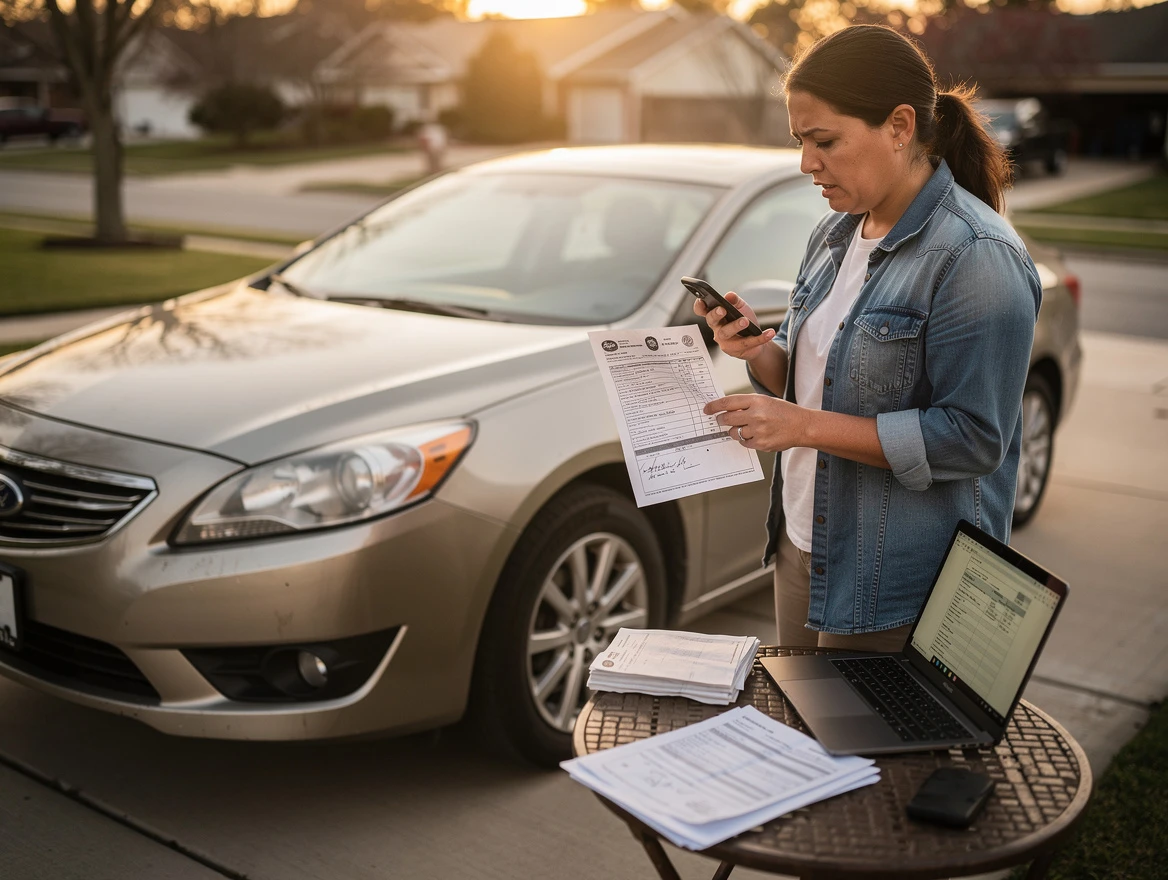
Documenting the exact timeline of purchase representations creates the foundation required to force a buyback or initiate regulatory penalties. Gathering the original sales paperwork, window stickers, and initial purchase disclosures must happen before confronting dealership managers a second time. Establishing an unbroken evidentiary trail prevents the merchant from altering deal jackets or vehicle history records.
Ready to register your vehicle?
Join thousands of vehicle owners who use Dirt Legal to handle their registration quickly.
Collect All Original Documentation and Advertising Records
Locate your bill of sale, buyer order, retail installment contract, window Buyers Guide, and any printed or archived internet listings showing the car advertised as having a clean history. Run an independent NHTSA VIN Lookup to confirm manufacturer specifications and recalls alongside a complete history report. If you do not possess an initial report, our VIN check service helps verify the exact date and jurisdiction where the salvage and rebuilt brands were assigned.
Issue a Formal Written Revocation and Demand for Rescission
Do not rely on verbal confrontations or informal phone calls with sales representatives who dodge your questions. Draft a formal demand letter sent via certified mail with return receipt requested to the dealership owner and general manager. Clearly articulate that you are revoking acceptance of the vehicle under Uniform Commercial Code Section 2-608 due to undisclosed non-conformity that substantially impairs the vehicle value to you. State a firm deadline, such as ten business days, for a full refund of your deposit, trade-in value, and sales fees.
Notify Your Auto Lender and Insurance Carrier Immediately
Inform the financial institution holding your auto loan that the vehicle collateral was delivered with an undisclosed rebuilt title. Lenders calculate auto loan terms based on clean title book values, and many credit unions strictly forbid financing rebuilt vehicles. The lender compliance department may open their own investigation, which can exert immense pressure on the dealer to unwind the financing agreement directly. You should also recognize that Title Isn't Always Ownership: The Reality Most People Miss when liens, third parties, and branded documents intersect.
Resolving Undisclosed Rebuilt Titles Through Regulatory and Bond Claims
Every licensed motor vehicle dealer must maintain an active surety bond to guarantee compliance with state vehicle licensing codes. When a retail dealer refuses to refund payments for an improperly disclosed branded title, you can file a direct administrative complaint and initiate a claim against their auto dealer surety bond. A surety bond is a three-party financial guarantee where a surety company compensates consumers injured by a dealer fraudulent practices.
Filing Complaints With the State Dealer Licensing Division
State agencies such as the Department of Motor Vehicles, Bureau of Automotive Repair, or Secretary of State Dealer Enforcement Division investigate dealership misconduct. Submit copies of your purchase agreement, advertising evidence, and the issued rebuilt title. Regulators have the authority to suspend dealer licenses, assess heavy civil fines, and mandate buyer restitution to resolve pending consumer grievances.
Making a Claim Against the Motor Vehicle Dealer Bond
Locate the dealer licensing bond information through your state DMV regulatory branch. You can file a formal claim directly with the surety provider that holds the dealer bond. The surety company will an independent review of the claim, and if they determine the dealer committed a title disclosure violation, the surety will pay out damages up to the maximum bond limit, which the dealer must later repay to the surety.
Contacting Your State's Consumer Protection Division
Every state has a consumer protection office, usually run by the state's top compliance officer, that enforces deceptive trade practice statutes aimed at predatory dealerships. Filing a consumer complaint starts an inquiry by state investigators, especially if the dealership has a pattern of selling rebuilt cars as if they had clean titles. These investigations often lead dealers to offer a quick settlement, since they want to avoid a public enforcement action.
| Resolution Path | Primary Mechanism | Typical Resolution Timeline | Expected Consumer Outcome |
|---|---|---|---|
| Dealer Rescission Request | Formal UCC Demand Letter | 7 to 14 days | Full refund and unwinding of sales contract |
| State Dealer Board Complaint | Administrative DMV Investigation | 30 to 90 days | Mandated dealer restitution or licensing penalties |
| Surety Bond Claim | Independent Surety Claim Filing | 45 to 60 days | Direct payout of financial damages from bond |
| Small Claims / Civil Action | Deceptive Trade Practice Lawsuit | 60 to 180 days | Refund, statutory damages, and fee recovery |
| Private Paperwork Assistance | Administrative Corrective Processing | 14 to 30 days | Resolved records or corrected titling status |
See How We Can Help With Your Title Needs →
Title Transfer Irregularities and Unlawful Seller Practices

Unscrupulous used car dealers sometimes engage in undocumented vehicle transactions to hide branding history from state registries. The phenomenon known as title jumping occurs when a seller purchases a vehicle and resells it without ever titling it into their own business name to dodge taxes and title branding scrutiny. Understanding whether your vehicle transaction suffered from chain-of-title fraud empowers you when negotiating with state regulators.
Identifying Title Jumping and Floating in Used Auto Sales
Title jumping, also referred to as title floating, occurs when an entity sells an auto without formally assigning ownership through the state motor vehicle division. You can assess whether How to title a vehicle without a title: legitimate options and documents needed applies to missing documentation scenarios. When dealerships acquire inventory via wholesale auctions or private sellers, they must reassign the certificate appropriately. If the dealership skipped intermediate titling, they broke dealer compliance mandates and created severe documentation discrepancies.
The Role of State Titling Agencies and Out-of-State Transfers
Vehicle histories can become obscured during out-of-state DMV title transfer procedures. Different states maintain varying total-loss thresholds, ranging from 70 percent to 100 percent of actual cash value before requiring a salvage certificate. Some disreputable sellers intentionally transfer vehicles through states with lenient branding definitions to wash titles. If you are handling title transfers across borders, reviewing resources on Never Transferred Car Title: How to Fix Ownership Issues helps clarify ownership complications.
Replacing Missing Documents and Resolving Title Gaps
If you find that the title you were handed contains incomplete assignments or requires correction, an auto title replacement or duplicate application might be required. In some circumstances, an owner must replace title for car records to determine the true prior owner. For drivers resolving ownership records remotely, you can look at the Montana Registration Services partner for structured assistance with clean administrative titling structures, or consider how a Montana LLC Vehicle Registration helps owners maintain compliant documentation across multiple personal or fleet assets.
Dirt Legal has completed over 6,000 customer orders to date (lifetime through current month, n=6,225), proving that administrative vehicle paperwork hurdles happen every single day across all fifty states. Understanding your titling chain prevents expensive ownership gaps.
Remedies and Financial Recovery Options for Affected Buyers
Consumers who purchase vehicles under misrepresented title terms possess clear causes of action under civil law. A vehicle with an undisclosed rebuilt title suffers an immediate valuation loss, and state courts recognize this economic injury through specific statutory damages. When a dealership refuses to voluntarily unwind the transaction, pursuing formal litigation or small claims dispute resolution can compel a complete financial recovery.
Recovering Economic Damages and Diminished Market Value
Economic damages represent the difference between the fair market value of the vehicle with a clean title and its actual value with a rebuilt title. In most retail vehicle sectors, that gap equals roughly 25 to 40 percent of the total purchase amount. If you decide to keep the vehicle rather than return it, you can demand an immediate cash settlement covering this depreciation gap along with any interest rate differentials imposed by secondary auto lenders.
Statutory Damages and Treble Recovery Under Deceptive Practice Acts
Many state consumer protection laws allow for treble damages, meaning the court can award up to three times your actual economic damages if the dealership knowingly deceived you. Additionally, these statutes routinely mandate that the deceptive business must pay all reasonable court fees and expenses incurred by the consumer.
Handling Out-of-State Registration and Title Assistance Programs
If avenues become stalled or you must maintain road operation while working through administrative paperwork, alternative registration paths offer practical support. Drivers navigating complex title histories frequently seek reliable ways to Register Your Vehicle compliantly. You can learn more about How Street-Legal Works to find simplified methods for establishing valid plates and ownership documentation without enduring traditional bureaucratic headaches.
Frequently Asked Questions
What happens if you bought a stolen car without knowing?
If you purchase a vehicle that turns out to be stolen, law enforcement will seize the vehicle and return it to the rightful owner or the insurance company that paid out the theft claim. As an innocent purchaser, you have no claim to ownership of the vehicle, regardless of whether you received a fraudulent title. Your remedy is to file a civil claim against the seller or dealership for breach of warranty of title to recover your full purchase price.
Can a dealership sell a rebuilt title car as clean?
No, auto dealerships cannot sell a rebuilt title car as clean under state and federal consumer protection statutes. Commercial auto sellers must perform due diligence on the title certificates they process and provide clear written disclosure of any title brands prior to completing a purchase contract. Claiming ignorance does not excuse the merchant from liability.
Can I return a car if the dealership lied about the title?
Yes, you can demand rescission of the sale if the dealership made a false statement regarding title status. Material misrepresentation of title condition justifies revoking your acceptance of the vehicle under Uniform Commercial Code guidelines. If the dealer rejects your request, regulatory complaints and civil litigation can compel a contract cancellation.
How much value does a rebuilt title take away from a car?
A rebuilt title generally reduces a vehicle market value by 20 to 40 percent compared to an identical vehicle with a clean title. In addition to lower resale value, vehicles with rebuilt titles face financing restrictions from standard auto lenders and may only Eligible for liability-only auto insurance coverage from major underwriters.
Does the dealership surety bond cover title fraud?
Yes, a motor vehicle dealer surety bond is specifically designed to protect consumers against dealership fraud, title manipulation, and failure to provide clear ownership documentation. If a dealer fails to provide a refund for an undisclosed rebuilt title, you can file a formal claim directly against their surety bond to recoup your financial losses.
How do I file a complaint against a used car dealer?
You can file an administrative complaint with your state's motor vehicle dealer licensing board, the state Department of Motor Vehicles, or your state's consumer protection office. Include copies of all your purchase documents, the dealership's advertisements, and the title records that show the brand the dealer didn't disclose.
Start Your Registration Paperwork Today →
When you encounter a situation where an auto dealer sold you a car represented and disclosed as a clean title, but the title came in rebuilt and the used car dealership is unwilling to refund as a claim they didn't know, knowing your options changes everything. Enforce your statutory rights, demand full contract rescission, and use state licensing boards to get the financial recovery you deserve.