Registering a Street-Legal Stock Car: Complete Guide
Wondering about registering a street-legal stock car? Learn the rules for chassis titles, VIN assignments, road equipment, and out-of-state paperwork options.

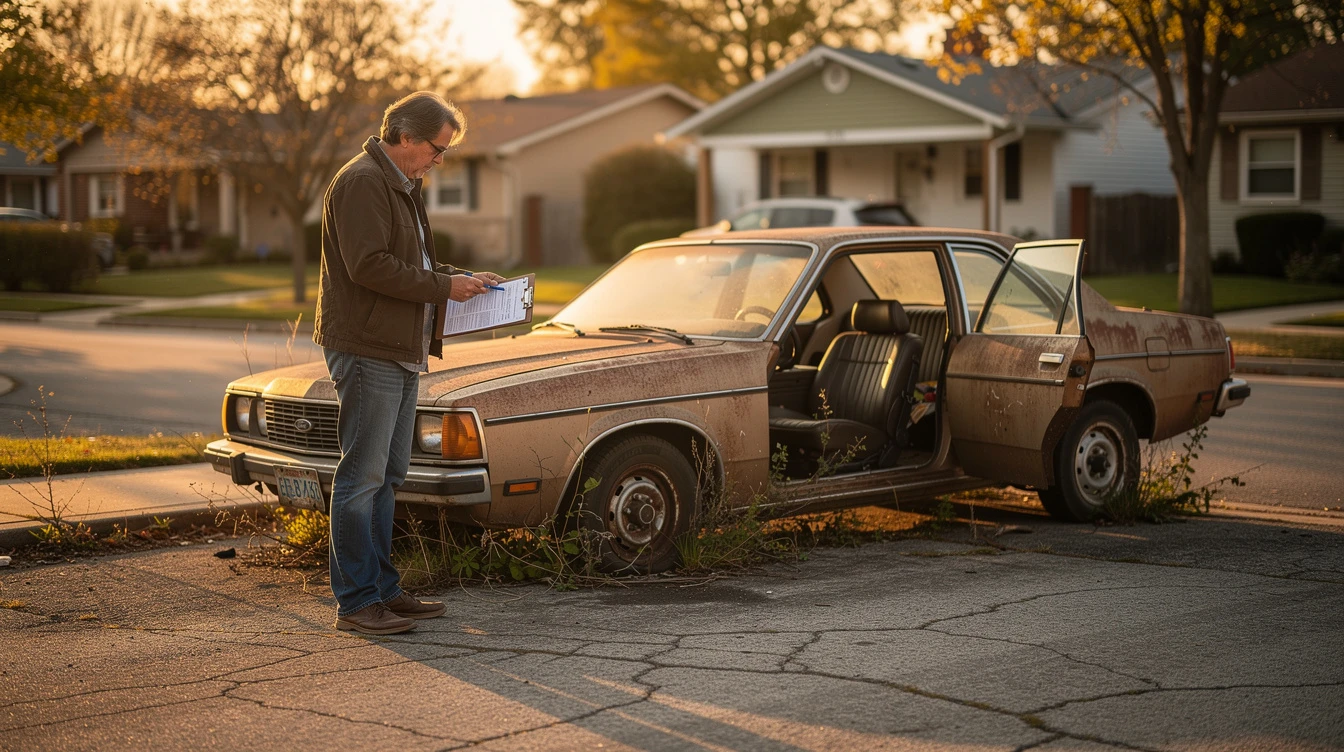
Registering a street-legal stock car requires proving chassis ownership, securing a recognized 17-digit identification number, and installing all required safety equipment before filing for road title documentation. While dedicated tube-frame race cars leave fabrication shops without standard road compliance, transforming them into a tagged vehicle is achievable through custom build pathways or out-of-state registration assistance.
In This Guide
- What Is a Stock Car Chassis and Why Does It Lack a Standard Title?
- What Safety Equipment Is Required to Make a Stock Car Road Ready?
- How Does the Titling Process Work for Custom Tube Chassis Vehicles?
- How Do States Compare for Race Car Road Registration?
- What Are the Steps to Register a Stock Car for Highway Use?
- Frequently Asked Questions
What Is a Stock Car Chassis and Why Does It Lack a Standard Title?
Updated on October 8, 2026
A stock car chassis is a custom tubular steel frame built strictly for closed-course competition rather than highway passenger safety standards. Because these vehicles are fabricated outside traditional assembly plants, they ship without the standard documentation that typical road cars possess.
A Manufacturer Certificate of Origin, also known as an MSO or MCO, is a factory document issued by a vehicle fabricator confirming that a machine was built from specific components. Most competition chassis fabricators issue an MCO stamped strictly for off-highway or track competition. Without an MCO that designates motor vehicle highway status, standard state offices reject direct title applications immediately.
A Vehicle Identification Number, commonly known as a VIN, is a unique 17-character serial code established by the federal government under Title 49 CFR Part 565 to trace ownership, recalls, and vehicle specifications. Purpose-built race platforms carry only internal shop serial stamps, which are typically short 4-digit or 6-digit tags. Because standard computer databases require 17 characters, assigning a new identity tag becomes your primary hurdle.
What Safety Equipment Is Required to Make a Stock Car Road Ready?
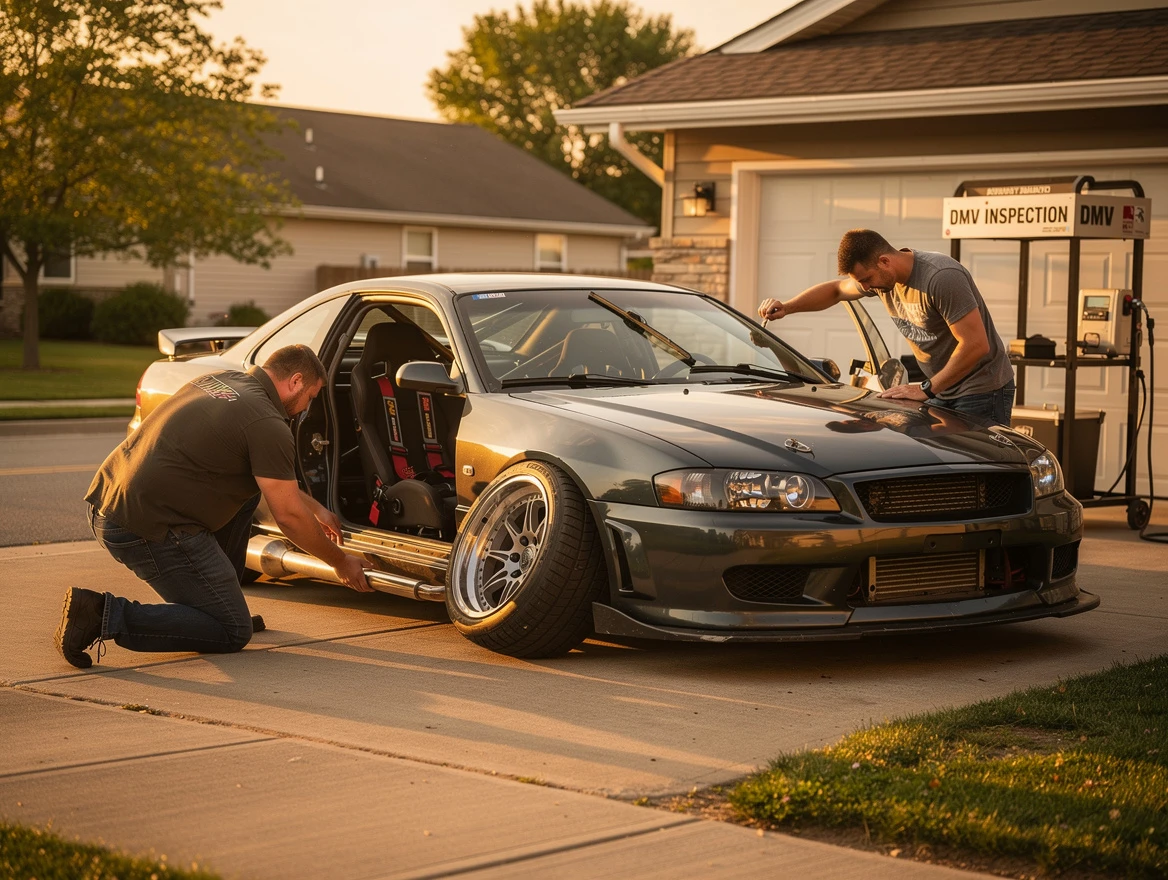
Meeting highway codes means adding every fundamental safety item found on a standard production car. Track cars sacrifice road electronics and visibility hardware to shed curb weight, meaning you must rebuild those systems from scratch.
Ready to register your vehicle?
Join thousands of vehicle owners who use Dirt Legal to handle their registration quickly.
Department of Transportation safety glass, also known as AS-1 safety glass, is laminated automotive glazing engineered to prevent passenger ejection and reduce shattering upon impact. Track stock cars use lightweight polycarbonate or Lexan panels, which do not meet highway glazing statutes in most jurisdictions. You must swap these panels or install approved laminated windshields with functioning wiper systems.
Sound regulations present an equal obstacle. Competition exhaust systems regularly exceed 115 decibels at wide-open throttle, while road regulations in most jurisdictions cap passenger car exhaust sound between 80 and 95 decibels when measured from 50 feet away. Installing true baffled mufflers, catalytic equipment where applicable, and standard lighting controls will bring the vehicle closer to compliance. Before planning your build, review How Do I Build a Car and Make It Street-Legal? to review construction requirements.
- Headlamps and Tail Lights: Dual high-beam and low-beam front lights, red rear reflectors, and taillights visible from at least 500 feet.
- Signaling Controls: Amber front and red rear turn signals wired to a self-canceling or manual dash switch.
- Rear Visibility: A driver-side exterior mirror paired with either an interior rearview mirror or a passenger-side exterior unit.
- Parking Brake: A dedicated, mechanical friction brake completely separate from your primary hydraulic braking lines.
- Tires: D.O.T.-approved street rubber carrying at least 2/32 inch of tread depth, replacing bare competition slicks.
- Safety Belts: Three-point belts or road-approved use restraints firmly anchored to structural roll cage mounts.
How Does the Titling Process Work for Custom Tube Chassis Vehicles?
Securing road papers for a bare race car chassis requires using the assembled vehicle or specially constructed vehicle title pathway. This administrative process forces the builder to document every component used to construct the finished machine.
A Bill of Sale, also known as a proof of purchase transfer, is a receipt recording the date, parties, sales price, and component serial identifiers involved in the transaction. You must keep every receipt for your engine, transmission, frame tubing, and body panels. When presenting an assembled vehicle, state inspectors audit parts invoices to confirm no major components were sourced from stolen donor cars. If you are missing old papers, reviewing Title Jumping is More Illegal Than Jumping a Car explains why chain of ownership paperwork is mandatory.
A Surety Bond, also known as a certificate of title bond, is a financial guarantee purchased through an insurance surety company that protects prior owners and future buyers against undisclosed ownership claims on a vehicle. If you bought an undocumented race car on a simple invoice, several states require posting a bond worth 1.5 to 2 times the estimated vehicle value. To better grasp these options, read Car Insurance Policy vs Surety Bond: Key Differences.
Dirt Legal has helped 80,000+ vehicle orders to date. Navigating the maze of custom component invoices is simplified when you work with experienced specialists who understand out-of-state filing nuances.
How Do States Compare for Race Car Road Registration?

Every jurisdiction handles purpose-built vehicles under different administrative statutes. Some states demand physical structural inspections at state police barracks, while others prioritize mechanical paperwork filings and business entity registrations.
Local departments often refuse to inspect vehicles with non-standard frames or extreme suspension geometry. That is why vehicle owners frequently turn to programs like Montana LLC Vehicle Registration. Setting up a corporate asset holding entity allows drivers to assign their vehicle into an LLC structure where registration rules accommodate unique, custom builds without local inspection gridlock.
| Registration Route | Typical Timeline | Chassis Inspection | Primary Requirement |
|---|---|---|---|
| Home State Assembled Vehicle | 8 to 24 Weeks | Mandatory Police Audit | Parts receipts, MCO, safety glass validation |
| Bonded Title Process | 6 to 12 Weeks | Often Mandatory | Surety bond purchase, prior lien search |
| Montana LLC Entity Support | 3 to 6 Weeks | Not Required Locally | Proof of ownership invoice, LLC formation |
| South Dakota Non-Resident | 4 to 8 Weeks | Varies by County | Valid ownership papers, weight slips |
States like California impose rigorous emissions certifications under the California Air Resources Board, making custom V8 race car engines virtually impossible to approve without thousands of dollars in emissions controls. You can review how strict regional rules apply by reading about can you make a utv street-legal in california?.
Skip the Paperwork , Let Us Handle It →
What Are the Steps to Register a Stock Car for Highway Use?
Converting a track car for road-legal operation demands a methodical approach spanning shop modifications, paperwork collection, and agency filing. Taking these steps out of order can leave you with unapproved parts or rejected applications.
- Inventory Component Documents: Gather all bills of sale, parts invoices, and manufacturing sheets for your engine block, transmission, and chassis frame.
- Install Mandatory Street Equipment: Fit headlights, taillights, brake signals, road-legal mirrors, an AS-1 safety windshield, and an independent parking brake.
- Verify Tire and Exhaust Suitability: Replace racing slicks with tires displaying marked D.O.T. numbers, and install true mufflers keeping exhaust volume under 90 decibels.
- Request an Assigned VIN Inspection: If taking the home-state route, schedule a verification with highway patrol or an authorized inspection agent to apply for an assigned state VIN plate.
- Secure Specialty Coverage: Obtain a modified or classic vehicle insurance policy that accepts modified chassis construction.
- File Title and Tag Applications: Submit your vehicle paperwork to state clerks or use Street-Legal Vehicle registration assistance services to coordinate your remote filings without visiting local agency waiting rooms.
If you encounter title roadblocks or need alternative strategies for non-traditional machinery, read about how owners handle similar machines in How Do I Build a Car and Make It Street-Legal?. Additional advice on complex titles can be found in Can I Get a Title With Just a Bill of Sale in Colorado?.
Frequently Asked Questions
Are stock cars street-legal?
Stock cars are not road-legal straight from racing shops or factory fabricators. They are constructed on purpose-built tubular chassis without road lights, safety glass, catalytic controls, or a 17-digit VIN. Converting one demands installing required road hardware, securing a state-assigned identification number, and passing custom vehicle titling procedures.
Is registering a car in Montana compliant?
Registering a vehicle in Montana through a Montana LLC is a recognized, strategy for holding assets. Non-residents form a local limited liability company that owns the vehicle, allowing the company to title the asset in Montana. This removes out-of-state sales tax obligations and avoids routine emissions inspections.
Is it street-legal?
A vehicle is considered road-legal only when it fulfills all state equipment codes and carries valid plates, registration, and title. Essential equipment includes high and low headlights, turn signals, mirrors, DOT-approved tires, and compliant exhaust setups. Meeting paperwork requirements by establishing a valid vehicle identification number is equally mandatory.
Are open wheel cars street-legal?
Open wheel cars are rarely street-legal due to laws requiring fenders, bumper heights, and tire coverage. Uncovered rotating tires violate debris and pedestrian impact standards in nearly every state. To become road-ready, open wheel vehicles must add structural fenders, complete road lighting, mirrors, and undergo specialized kit car titling.
Can you build a street-legal car from scratch?
You can build a road-legal vehicle from scratch using assembled vehicle or kit car titling channels. You must keep receipts for all structural components, install required safety equipment like safety glass and wipers, and pass an official inspection to receive a newly issued state VIN before plates are granted.
Can you make a f1 car street-legal?
Making a modern Formula 1 car road-compliant is practically impossible due to ground clearance issues, engine cooling demands, extreme sound levels, and complete absence of road equipment. Fitting the required fenders, headlights, bumper crash zones, and emissions components would alter the platform so heavily that it ceases functioning as designed.