How to Get a Dirt Bike Title With No Title
Getting a dirt bike title when you don't have one involves bonded titles, bill of sale documentation, and state filings. Here's your complete guide.
Getting a dirt bike title when you don't have one is possible, but it requires understanding which option works for your situation and your state's specific requirements. The most common paths are obtaining a bonded title, using a bill of sale to apply for a new title, or working with your state's motor vehicle division if the bike was never titled in the first place.
Check My OptionsIn This Guide
- What Is a Bonded Title and How Does It Work?
- Can You Get a Dirt Bike Title With Just a Bill of Sale?
- What's the Application Process for a Dirt Bike Title?
- What Are State-Specific Dirt Bike Title Requirements?
- How Long Does It Take and What Will It Cost?
- Frequently Asked Questions
What Is a Bonded Title and How Does It Work?
A bonded title is a replacement title issued when the original title is lost, missing, or unavailable. It's secured by a surety bond, which protects against claims from someone proving legitimate ownership of the vehicle.
The bonded title process starts when you purchase a surety bond from an insurance or bonding company. This bond acts as a financial guarantee. If someone later proves they have a legitimate claim to the dirt bike, the bond covers the associated costs up to the bond amount. Once you obtain the bond, you file it with your state's motor vehicle division along with an application for a bonded title. Most states require you to hold the bonded title for a set period, usually 3 to 5 years, before it becomes a standard, clear title.
Bonded titles are ideal for bikes purchased secondhand without documentation, homemade builds, or bikes that were never registered in your state. This path is recognized by most states and is one of the safest ways to establish ownership when original paperwork is gone.
- Purchase a surety bond from a licensed bonding agent
- Bond amount typically ranges from $1,500 to $10,000 (varies by state and bike value)
- File the bond plus application with your state's motor vehicle office
- Hold the bonded title for the required period (usually 3, 5 years)
- After the holding period, apply for a clear title in most states
Can You Get a Dirt Bike Title With Just a Bill of Sale?
A bill of sale alone may be enough to apply for a dirt bike title in some states, but many states require additional documentation or proof of ownership beyond the bill of sale alone. This depends on your state's specific rules and whether the bike was previously titled.
Ready to register your vehicle?
Join thousands of vehicle owners who use Dirt Legal to handle their registration quickly.
A bill of sale is a written agreement between you and the seller proving that you purchased the bike. It typically includes the bike's description (make, model, VIN if available, year), the sale price, date of sale, and signatures from both buyer and seller. Some states treat a bill of sale as sufficient proof of ownership for a new title application, especially if the bike was never titled in the first place or was purchased from a private individual without title transfer capability.
However, other states require a bonded title instead, or they ask for additional documentation such as proof of mechanical inspection, proof of insurance, or evidence that you've attempted to locate the original title holder. Before proceeding with a bill of sale alone, contact your state's motor vehicle division or a registration specialist to confirm what paperwork your state will accept.
- Bill of sale must include bike details (make, model, year, VIN if available)
- Both seller and buyer must sign and date the document
- Some states accept bill of sale for new title; others require a bonded title
- Keep a copy for your records and submit the original to your state
- Bring photo ID and proof of residence when filing
For more details on how bill of sale documentation fits into title transfers, see Can I Get a Title With Just a Bill of Sale in Colorado?, which covers the broader principles that apply across many states.
What's the Application Process for a Dirt Bike Title?
The application process varies by state, but the general steps are consistent: gather documentation, complete the title application form, pay the required fee, and submit everything to your state's motor vehicle division.
First, collect all available documentation. This includes your bill of sale, proof of identity (driver's license or passport), proof of residency (utility bill or lease), and if applicable, your surety bond. Then obtain the correct title application form from your state's motor vehicle department website or office. Most states have specific forms for lost titles, bonded titles, or new title applications. Complete the form accurately, providing the bike's description, your information, and details about why the original title is unavailable.
Next, submit your application along with all supporting documents and the applicable fee. You can typically do this in person at your state's motor vehicle office, by mail, or in some cases online. Processing times vary from a few weeks to several months depending on your state and whether your submission is complete. Many states will contact you if additional information is needed before issuing the title.
- Gather bill of sale, ID, proof of residency, and bonded title (if required)
- Download and complete the appropriate state title application form
- Make sure all information is accurate and legible to avoid delays
- Include the correct fee with your submission
- Submit in person, by mail, or online depending on your state's process
- Keep a copy of your submission for your records
- Check the status online if your state offers a tracking system
The exact steps differ by state. If you own your bike in Montana and want to handle the paperwork remotely, Montana LLC Services can provide support with filing your title paperwork through a newly formed LLC, which can simplify the process and provide asset protection.
What Are State-Specific Dirt Bike Title Requirements?
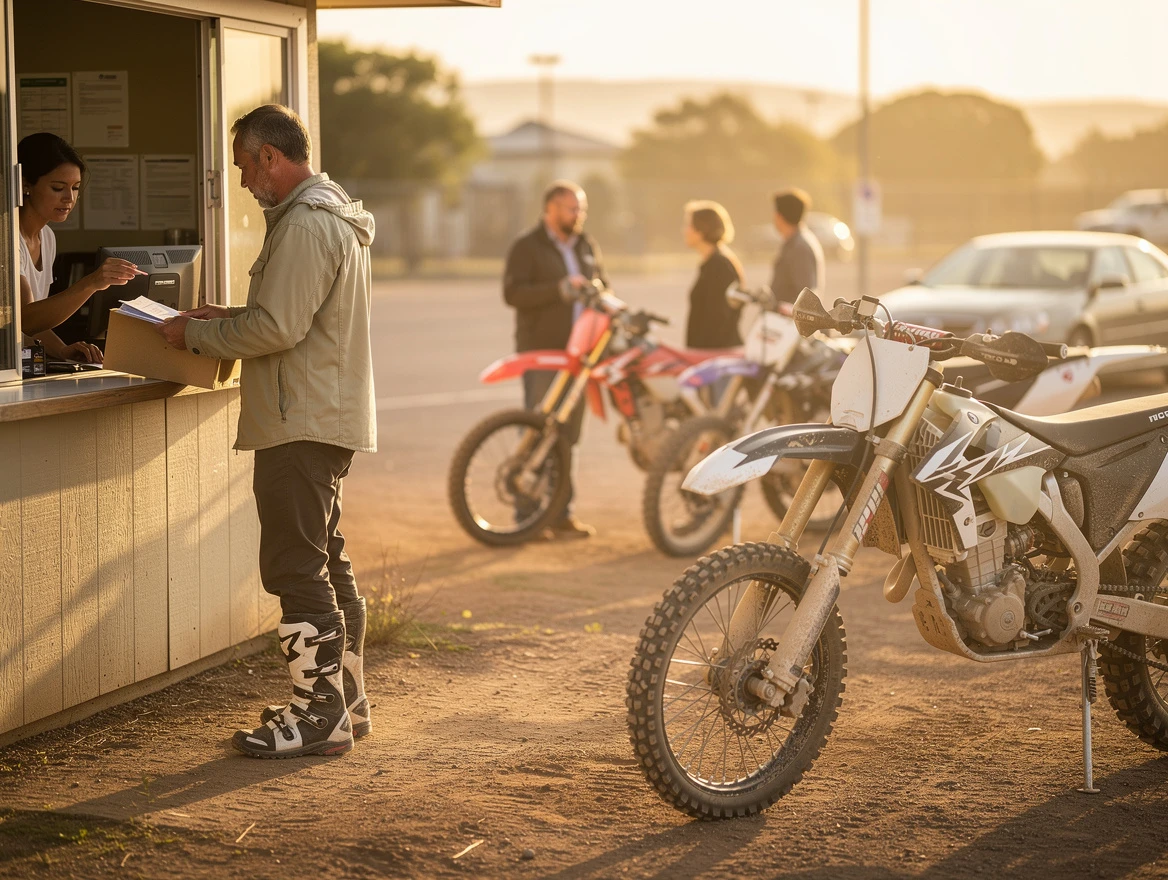
Every state has different rules for titling dirt bikes, especially when the original title is missing. Some states are more flexible with bonded titles, while others require stricter proof of ownership or may not title off-road vehicles at all unless they're street-legal.
Montana, for example, is known for accepting bonded titles and bills of sale more readily than many other states, making it a popular choice for vehicle owners nationwide seeking simplified title solutions. Other states like Colorado, South Dakota, and Florida have their own specific requirements. Some states don't title off-road-only dirt bikes at all, but if you plan to make your bike street-legal, most require a valid title before registration.
Key differences include bonding requirements, holding periods for bonded titles, the types of acceptable proof of ownership, and whether the state requires an inspection before issuing a title. Some states may ask for affidavits of ownership, odometer readings, or documentation from local law enforcement stating the bike is not stolen.
| State | Accepts Bonded Title | Bill of Sale Alone | Inspection Required | Holding Period |
|---|---|---|---|---|
| Montana | Yes | Yes (in many cases) | No | 3 years |
| South Dakota | Yes | Yes (limited) | No | 3 years |
| Colorado | Yes | No | Yes | 4 years |
| Florida | Yes | Limited | Varies | 5 years |
Before starting your application, check with your state's motor vehicle division or consult the website to understand your state's specific bonded title rules, holding periods, and documentation requirements. This ensures you follow the correct process the first time.
If you're looking to register a dirt bike for street use, How to Register a Dirt Bike in FL for Street Use provides state-specific guidance that covers both title and registration considerations.
How Long Does It Take and What Will It Cost?
Timeline and cost depend on your chosen method, your state, and whether your submission is complete on the first try. Bonded title applications typically take 4 to 8 weeks from submission to final title issuance, though some states process faster.
The main costs are the surety bond (if required), the title application fee, and any additional documentation fees. Surety bonds typically range from a few hundred to a few thousand dollars depending on the bike's assessed value and your state's requirements. Title application fees are usually $25 to $100 per state. If you need to pay for certified copies, VIN inspections, or affidavits, expect additional smaller costs.
Working with a registration specialist can reduce the timeline by ensuring everything is submitted correctly and completely the first time. Incomplete applications often cause delays of several weeks or months as your state's motor vehicle office requests additional information or corrections.
- Bonded title processing: 4, 8 weeks on average
- Surety bond cost: $300, $3,000+ depending on bike value and state
- Title application fee: $25, $100
- Certified copy fees: $10, $30 per copy
- VIN inspection or notary fees: $0, $50 depending on state
- Total typical out-of-pocket: $500, $4,000+ depending on path chosen
If timelines and paperwork are a concern, Street Legal Vehicle registration assistance services can handle the paperwork process with our paperwork support with our paperwork support, reducing stress and helping make sure everything is filed correctly.
Frequently Asked Questions
How to get a title for a dirt bike with a bill of sale?
Start by ensuring your bill of sale includes the bike's description (make, model, year, VIN), the sale price, date, and signatures from both you and the seller. Then contact your state's motor vehicle division to confirm whether a bill of sale alone is sufficient or if a bonded title is required. If a bonded title is needed, purchase a surety bond and submit both the bond and bill of sale with your title application. If the bill of sale alone is accepted, gather your ID, proof of residence, and the bill of sale, then complete and submit the state's title application form. Processing typically takes 4, 8 weeks.
How to get a title for a bike?
The method depends on your situation. If you have an existing title but lost it, apply for a replacement or duplicate title directly. If you never had a title, use a bonded title or bill of sale application depending on your state. Start by contacting your state's motor vehicle division to learn which option applies to your bike. Collect the required documentation (bill of sale, ID, proof of residence, and surety bond if required), complete the appropriate title application form, and submit everything with the required fee. Most states process applications in 4, 8 weeks.
Can you register a dirt bike without a title?
In most states, you cannot register a dirt bike for street use without a title. However, off-road-only dirt bikes may not require a title or registration in some states. If you want to make your dirt bike street-legal or ride it on public roads, you'll need to obtain a title first through a bonded title, bill of sale application, or duplicate title request. Once you have the title, you can then register the bike for road use. Check your state's motor vehicle division website to confirm the specific rules for your location.
Do dirt bikes have titles in Pennsylvania?
Pennsylvania does require titles for off-road vehicles, including dirt bikes if they are registered for street use or operated on public roads. If your dirt bike was never titled in Pennsylvania, you can apply for a bonded title or use a bill of sale to establish ownership. Pennsylvania's specific requirements and forms can be found on the Pennsylvania DMV website. Off-road-only bikes used exclusively on private property may not require a title, but this distinction depends on where and how you use the bike.
What does a dirt bike title look like?
A dirt bike title looks similar to any other vehicle title, typically a multi-part document issued by your state's motor vehicle division. It includes the vehicle identification number (VIN), make, model, year, color, your name and address as the owner, the odometer reading (if applicable), lien information (if financed), and an official state seal or watermark. Most titles are printed on security paper to prevent forgery. Bonded titles may have special markings or notation indicating they're bonded and include the bond number and issuing company information. The exact appearance varies by state.
Can you title a homemade dirt bike or custom build?
Titling a homemade or custom-built dirt bike is possible but more complex. You'll almost certainly need a bonded title rather than a bill of sale, since there's no previous owner or title history to reference. You may also need to provide documentation of the build (receipts for major components, photos, affidavits of origin), and some states require a VIN inspection or certification from a mechanic or law enforcement to verify the bike's identity and that it's not constructed from stolen parts. Contact your state's motor vehicle division early in the process to learn their specific requirements for custom-built vehicles.