Can We Buy Modified Jeeps? Street Legal Guide
Yes, you can buy modified Jeeps, but registration varies by state. Learn what makes a modified vehicle street-legal and how to register one.
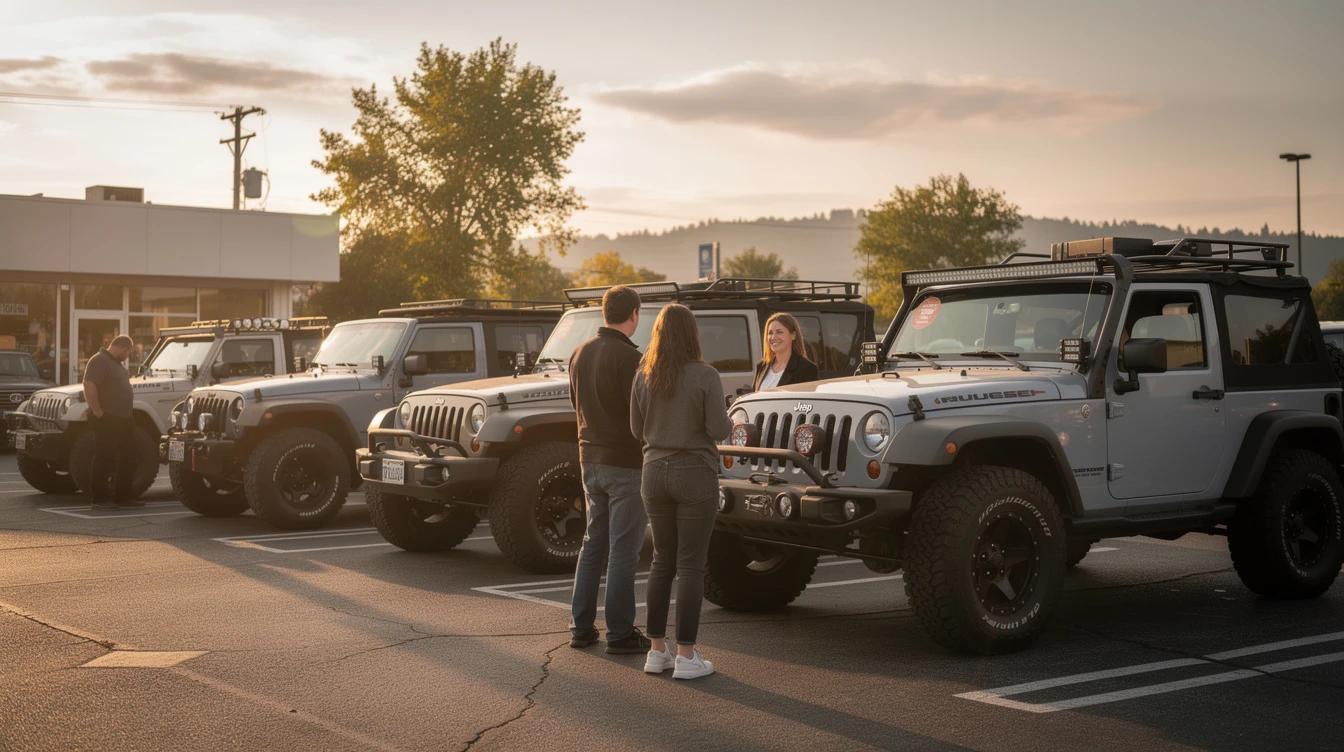
Yes, you can buy modified Jeeps, but whether you can drive one on public streets depends on the modifications and your state's regulations.
Modified vehicles face different registration requirements than stock models. Some alterations are street-legal across most states, while others require specific certifications, inspections, or modifications to meet emissions and safety standards.
In This Guide
- What Modifications Make a Jeep Street-Legal?
- How Do You Register a Modified Jeep?
- What Role Does a Bill of Sale Play When Buying a Modified Vehicle?
- Why Modify Jeeps in Montana?
- Do Modified Jeeps Need Special Inspections?
- Frequently Asked Questions
What Modifications Make a Jeep Street-Legal?
Most modifications are compliant for street use, but certain changes can push a vehicle beyond registration standards. The key is understanding what your state allows and what triggers an inspection or denial.
Common modifications that typically stay street-legal include suspension lifts under state height limits, aftermarket wheels and tires, LED light bars (if they don't replace required lights), and performance upgrades like intake systems or exhaust (if emissions-compliant). Many states allow exterior changes such as custom bumpers, rock sliders, and skid plates without additional registration.
Modifications that create problems include lifted Jeeps exceeding headlight height regulations, engine swaps, turbo or supercharger additions (which can trigger emissions testing), and heavily altered frame geometry. Removing or modifying catalytic converters, changing engine displacement significantly, or altering VIN-related components can make a vehicle ineligible for standard registration in most states.
The real issue: modification rules differ by state. A Jeep with a 6-inch lift might be street-legal in Colorado but face registration denial in California or New York. Some states require pre-registration inspections on modified vehicles, requiring documentation of parts and certification of compliance.
How Do You Register a Modified Jeep?
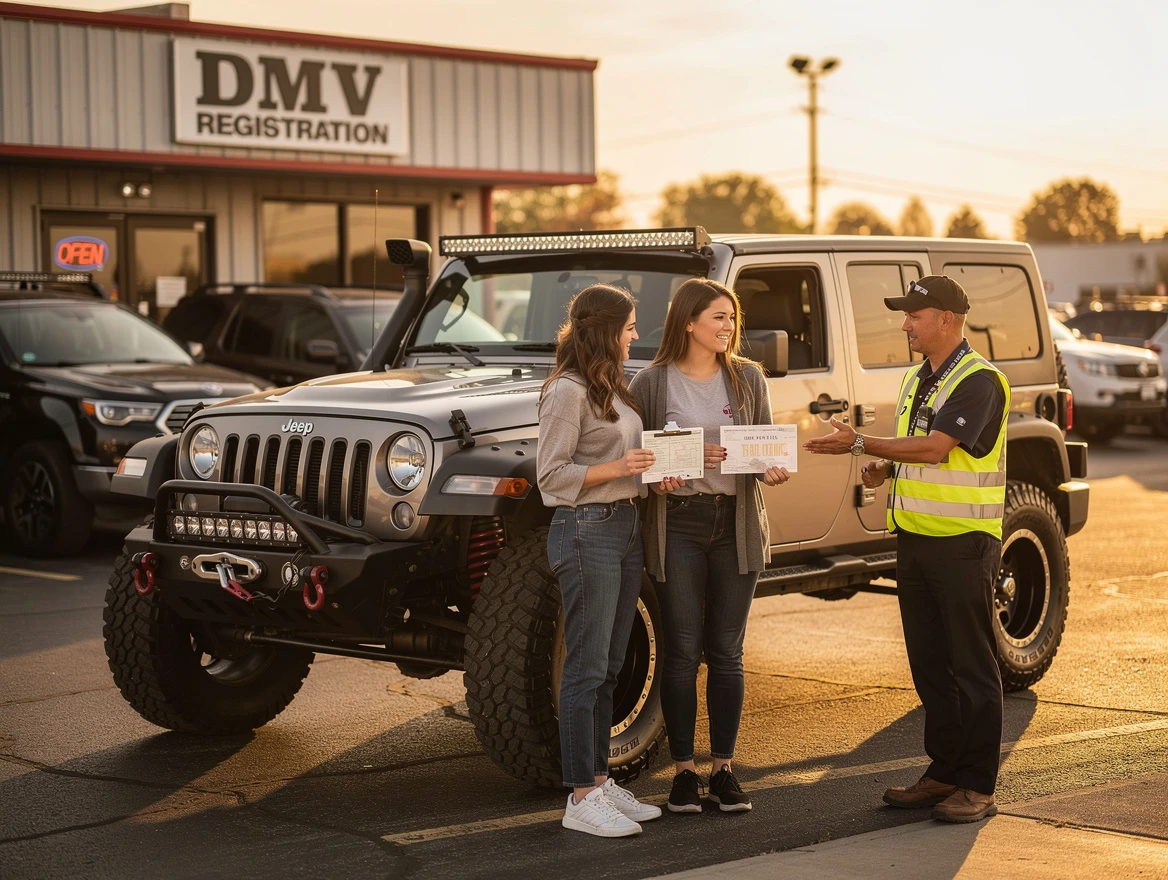
Registering a modified Jeep follows the same basic process as a stock vehicle, but with added documentation requirements depending on the extent of modifications and your state's rules.
Ready to register your vehicle?
Join thousands of vehicle owners who use Dirt Legal to handle their registration quickly.
Here's what you need:
- Title or bill of sale: Proof of ownership is non-negotiable. A clear title is best, but many states accept a bill of sale automotive if the vehicle was never previously titled. If the Jeep has a salvage or rebuilt title due to prior damage, registration becomes more complex.
- VIN verification: The DMV will inspect the vehicle identification number to confirm it hasn't been altered and matches state records.
- Modification documentation: Keep all receipts, photos, and parts certifications. Some states require evidence that aftermarket parts meet emissions standards or safety requirements.
- Pre-registration inspection: Some states mandate a certified mechanic inspect modified vehicles before they'll issue registration. This typically focuses on emissions, lighting, and structural integrity.
- Registration fees: Standard vehicle registration costs apply, though vehicles with major alterations may face additional inspection or classification fees depending on your state.
If your modified Jeep came from another state or has a complex history, street-legal registration services can simplify the paperwork process. Many modified Jeep owners find that remote paperwork support cuts weeks off the typical DMV timeline.
What Role Does a Bill of Sale Play When Buying a Modified Vehicle?
A bill of sale is a critical document when purchasing a modified Jeep, especially from private sellers or if the vehicle lacks clear title history.
A bill of sale serves three functions:
- Proof of purchase: It documents the sale price, date, and both buyer and seller information, protecting you if ownership disputes arise later.
- Title application base: Many states accept a bill of sale to initiate title paperwork, bypassing a previous owner's paperwork delays. This matters when a modified Jeep has been sitting for years or changed hands multiple times.
- Modification baseline: A detailed bill of sale that lists the modifications included (lift kit, wheels, exhaust, etc.) becomes your documentation that the Jeep arrived with those parts, not that you installed them after purchase.
When buying a modified Jeep privately, insist on a written bill of sale that includes:
- Vehicle year, make, model, and VIN
- Sale price and payment method
- Current odometer reading
- Itemized list of modifications and aftermarket parts included
- Statement that the Jeep is sold "as-is" with no warranties (or any warranties offered)
- Signatures and dates from both buyer and seller
A detailed bill of sale protects you during registration and proves you didn't modify the Jeep without proper caution. Many states use the bill of sale to issue a temporary title while processing full registration, so it's often your fastest path to driving if the Jeep lacks title paperwork.
Skip the Paperwork, Let Us Handle It ->
Why Modify Jeeps in Montana?
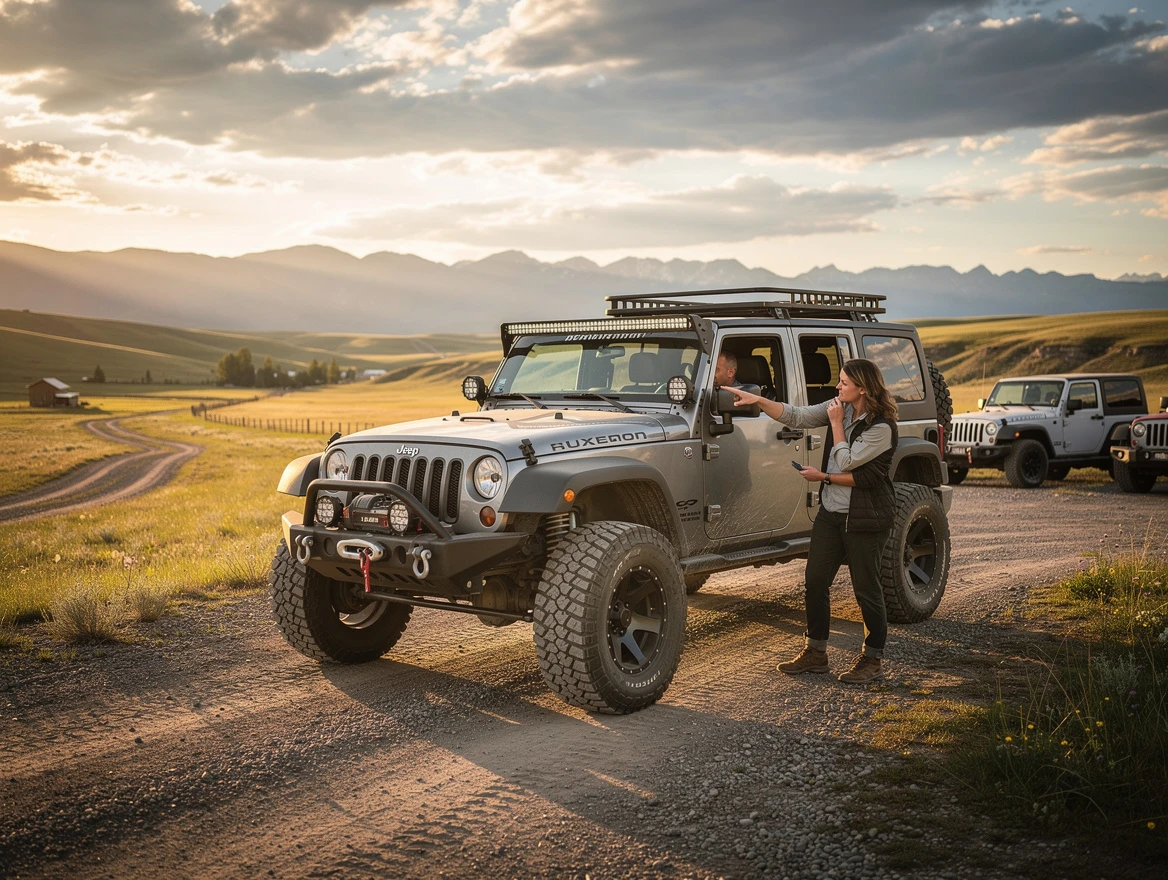
Montana has become the go-to state for registering modified and custom Jeeps. The combination of permissive registration rules and asset protection makes it the preferred choice for enthusiasts nationwide.
Here's why Montana stands out:
- No sales tax: Montana has no sales tax on vehicles, saving thousands on high-value modified Jeeps. Dirt Legal has completed over 6,000 customer orders to date (internal data, lifetime through current month, n=6,609), with many focused on modified vehicles registered in Montana to avoid state sales taxes elsewhere.
- No emissions testing: Montana doesn't require emissions inspections, even for significantly modified vehicles with engine work. This makes vehicles ineligible in California or New York perfectly street-legal in Montana.
- Flexible modification standards: Montana's DMV applies practical judgment to modifications. Lift kits, engine swaps, and significant alterations that would trigger denial in other states often pass Montana's pre-registration review.
- LLC privacy and asset protection: You can register a modified Jeep through a Montana LLC vehicle registration structure, adding a layer of privacy to ownership and potential liability protection for high-value builds.
- Year-round operation: Registering in Montana allows you to drive a heavily modified Jeep across most of the country under Montana plates, bypassing stricter state registration in your home state.
Many modified Jeep owners use a Montana registration strategy even if they live elsewhere.
Do Modified Jeeps Need Special Inspections?
Some states require pre-registration inspections of modified vehicles, while others skip inspection entirely. Your state's specific rules determine whether a modified Jeep faces extra hurdles.
States that typically require inspections: California, New York, Massachusetts, Connecticut, and a few others require detailed pre-registration checks on vehicles with significant modifications. These inspections focus on emissions compliance, lighting, safety equipment, and chassis integrity. An inspection failure can mean you cannot register the vehicle until non-compliant parts are removed or replaced.
States with minimal inspection: Montana, South Dakota, Florida, and several others skip pre-registration inspections even for heavily modified vehicles. They rely on the vehicle passing basic registration criteria and VIN verification.
What inspectors look for:
- Emissions system integrity (catalytic converter present and functional, no modifications that disable emissions controls)
- Lighting compliance (headlights, taillights, turn signals all original or DOT-approved replacements)
- Windshield and glass integrity
- Seat belts and interior safety equipment
- Frame and structural damage (especially if salvage or rebuilt title)
- Suspension geometry (headlight height, ride height within compliant limits)
- VIN plate condition and authenticity
If you're buying a modified Jeep in a high-inspection state and the vehicle was previously registered elsewhere, ask the seller for documentation of prior inspections and emissions tests. This proof can speed registration approval. If the Jeep has never been registered in an inspection state, budget for a pre-registration inspection and be prepared for potential required modifications before registration is approved.
Frequently Asked Questions
Can you buy a Humvee?
Yes, you can buy a Humvee, though civilian sales are limited primarily to surplus military models sold through auction or specialized dealers. Most Humvees in civilian hands are ex-military H1 models from the 1980s through early 2000s, or newer civilian H2 and H3 variants sold by AM General. Buying a Humvee is straightforward, but registration depends heavily on the model year and whether it's classified as a military surplus vehicle. Military surplus Humvees may require a title transfer or bonded title process if they lack prior civilian registration. Registration costs and emissions requirements vary significantly by state, with Montana offering a simplified process for military surplus vehicles through Montana LLC registration.
How do I buy my first motorcycle?
Start by deciding between buying from a dealer, private seller, or auction. Dealers offer warranties and financing, while private sellers often have lower prices. Research the specific model for reliability, maintenance costs, and fuel efficiency. Get pre-purchase inspections to check the engine, brakes, suspension, and tires. Once you find the right bike, negotiate price and secure insurance before you buy it. You'll need a bill of sale or title from the seller. Consider your state's motorcycle registration requirements and whether you need a title transfer service if buying from another state. Finally, obtain a motorcycle endorsement on your driver's license if required in your state, then complete registration paperwork with your local DMV.
Can I buy a car with no title?
Yes, you can buy a car with no title, but it requires additional steps and carries more risk. Cars without titles are common when the seller lost paperwork, the vehicle has been sitting unused, or it was purchased through informal channels. To register a car with no title, you'll typically need a bill of sale, proof of ownership, and possibly a bonded title from your state DMV. A bonded title acts as a placeholder while the state searches for the original title or until a waiting period expires. Some states issue bonded titles quickly, while others require a lengthy waiting period. Once you obtain the bonded title, you can register the vehicle normally. If you're buying a no-title car in Montana, the process is generally simplified, and services like those offered by registration specialists can expedite the paperwork significantly.
What happens if I buy a car with a lien?
If you buy a car with a lien, the seller still owes money to the bank or lender. The lien holder has a claim to the vehicle until the debt is paid. Buying a lien vehicle is risky because the lender can repossess the car if the seller defaults. Before purchasing, verify there's no lien through a title check or VIN report. If a lien exists, the seller must pay it off at sale closing using proceeds from your purchase. The lien release must be notarized and filed with your state DMV as part of the title transfer process. Never complete a purchase without confirming the lien is released and the title is free and clear. If you're uncertain about lien status, a VIN report service can clarify the vehicle's history before you commit to the purchase.
Why do people buy cars in Montana?
People buy and register cars in Montana for several compelling reasons. Montana has no sales tax on vehicles, saving buyers thousands on high-value purchases. The state offers simplified registration processes and no emissions testing requirements, making it ideal for custom builds, older vehicles, and modified cars that wouldn't meet stricter emissions standards in other states. Many owners register through a Montana LLC for asset protection and privacy. Montana's flexible modification standards allow heavily customized vehicles to register without the detailed inspections required in states like California or New York. Additionally, registering in Montana doesn't mean you have to live there, so vehicles registered through Montana can be driven across the country under Montana plates.
Is a Hummer a Jeep?
No, a Hummer is not a Jeep. Both are large, capable off-road vehicles, but they're separate brands with different designs and purposes. Jeep is owned by Stellantis (formerly Fiat Chrysler), while Hummer is a General Motors brand. Jeeps, particularly the Wrangler and Cherokee models, are lighter, more nimble, and designed for both on-road and off-road use. Hummers (H1, H2, H3) are heavier, more military-oriented vehicles built on truck platforms. The original H1 was literally a militarized vehicle, while H2 and H3 are civilian trucks marketed for size and towing capacity. Both vehicles have passionate fan bases, and both can be heavily modified for off-road performance. Registration requirements are similar for both, though Hummers may face different insurance and fuel economy classifications depending on model year and state.