Are Humvees Street Legal for Civilians? Road Laws Guide
Are Humvees street legal for civilians? Learn military surplus HMMWV road requirements, SF-97 titling, state rules, and registration solutions.
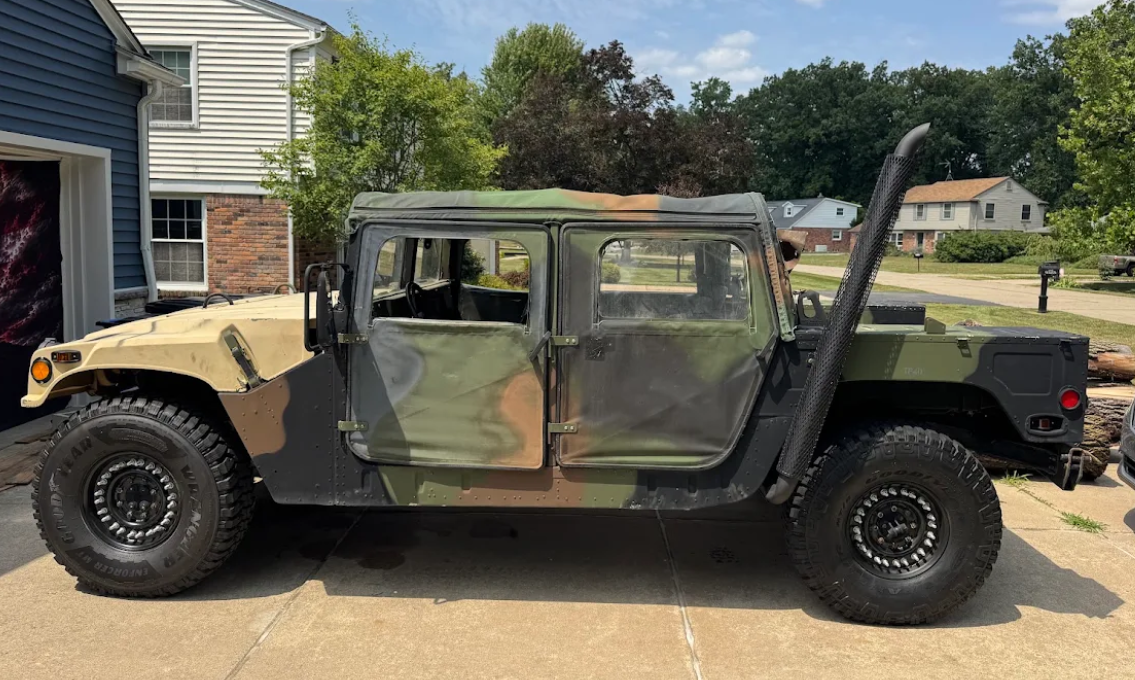
Humvees are street-legal for civilians in many states, provided the vehicle meets basic road safety equipment standards and carries an on-road vehicle title rather than an off-road restriction. Civilians can purchase surplus military High Mobility Multipurpose Wheeled Vehicles (HMMWVs) at government auctions and register them for public highway travel by working through the proper state documentation pathways.
Check Your Registration Options →
In This Guide
- Why Are Military Surplus Humvees Sold With Off-Road Titles?
- What Equipment Do You Need to Make a Humvee Street-Legal?
- Which States Allow Civilians to Register a Humvee for Road Use?
- How Does the Humvee Title and Registration Process Work Step-by-Step?
- How Do Humvee Registration Costs Compare Across Options?
- Frequently Asked Questions
Why Are Military Surplus Humvees Sold With Off-Road Titles?
Surplus military Humvees originate from Department of Defense inventories and were never built to meet Federal Motor Vehicle Safety Standards (FMVSS). Because the United States military designs tactical equipment for combat durability rather than passenger highway safety, these trucks leave active duty without civilian safety certifications.
When a civilian buys a surplus HMMWV through an auction liquidator like GovPlanet or IronPlanet, the transaction comes with a federal transfer document known as Form SF-97. This document, officially titled The United States Government Certificate to Obtain Title to a Vehicle, transfers federal property into private hands. For many years, the Defense Logistics Agency stamped these certificates with off-road use only disclaimers.
That specific disclaimer prevents local motor vehicle clerks in strict states from issuing regular passenger plates. Fortunately, changing state statutes and historical designations now recognize that older military platforms can safely share public roads with proper mechanical inspections. For background on titling challenges, review how I Have a Car With No Title. Is It Worth Trying to Get One? addresses difficult title histories.
What Equipment Do You Need to Make a Humvee Street-Legal?
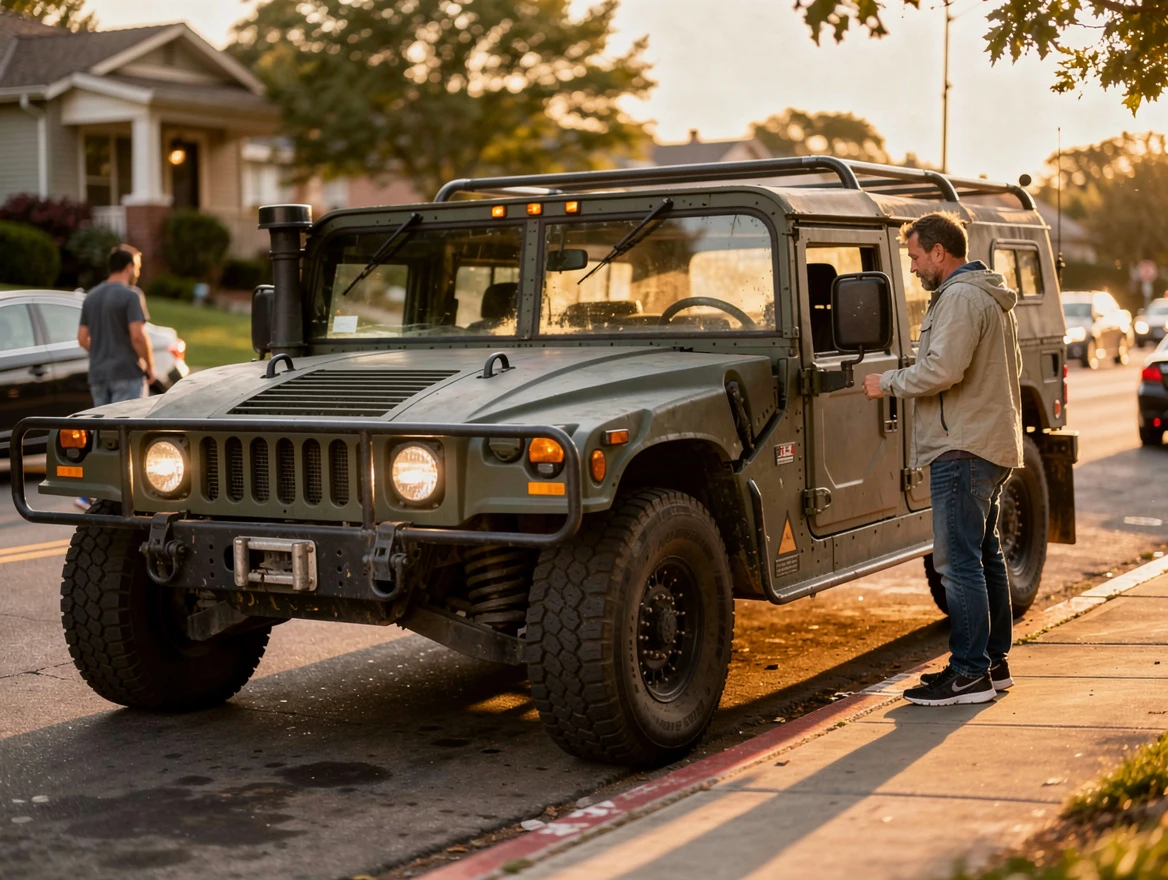
Civilians must equip a military surplus Humvee with mandatory road-safety hardware before operating it on public streets. Military configurations often lack basic DOT-compliant lighting, standard civilian mirrors, and regular horn mechanisms required by state vehicle codes.
Ready to register your vehicle?
Join thousands of vehicle owners who use Dirt Legal to handle their registration quickly.
The baseline conversion checklist includes functional hardware that any highway patrol officer expects to see on a passenger vehicle:
- DOT-Approved Headlights: High and low beams with proper cutoff angles, replacing 24-volt military black-out lighting fixtures.
- Turn Signals and Hazard Flashers: Amber front turn signals and red or amber rear signals visible from at least 500 feet.
- Brake Lights and Tail Lights: Bright red rear running lights that intensify upon brake pedal depression.
- Rearview and Side Mirrors: At least one interior mirror and driver-side exterior mirror offering unobstructed rearward sightlines.
- Windshield Wipers and Safety Glass: DOT-certified safety glass windshield panes and functioning motorized wipers.
- Audible Horn: An electric horn audible from a distance of at least 200 feet.
- Seat Belts: Three-point lap and shoulder harnesses mounted to reinforced structural points for all seating positions.
- Parking Brake: A mechanical secondary braking system capable of holding the vehicle stationary on steep inclines.
Certain states also mandate keyed ignitions. Military Humvees feature a simple mechanical turn-lever rather than an anti-theft key lock cylinder. Installing an aftermarket keyed ignition switch or hidden battery disconnect improves vehicle security and satisfies local anti-theft equipment regulations. Readers studying road-ready modifications can read How Do I Build a Car and Make It Street-Legal? for structural conversion insights.
Which States Allow Civilians to Register a Humvee for Road Use?
State motor vehicle agencies maintain drastically different policies regarding military surplus vehicles. States such as Montana, South Dakota, Utah, and Idaho maintain clear pathways for registering surplus military trucks, while states like California, New Jersey, and Colorado often reject HMMWV titles due to strict emissions rules or missing FMVSS compliance decals.
Understanding these regional variations protects civilian owners from paying registration fees on titles that state clerks ultimately reject. The following comparison highlights how jurisdictions approach military surplus registrations:
| Jurisdiction | Registration Eligibility | Inspection Standard | Emissions Requirement |
|---|---|---|---|
| Montana | Direct on-road passenger or collector registration | VIN verification only | Exempt from state emissions testing |
| South Dakota | On-road registration with road equipment affidavit | Owner-certified safety equipment check | Exempt from emissions testing |
| California | Heavily restricted, off-road green sticker typical | Mandatory CARB and CHP inspection | Strict emissions standards apply |
| Texas | Eligible via former military vehicle status | Standard annual safety inspection | County-dependent emissions checks |
| Florida | Eligible with street-legal conversion verification | VIN and road equipment verification | Exempt from state emissions testing |
States that recognize former military equipment frequently classify these vehicles under historic, antique, or utility truck categories. For vehicle owners living in restrictive states, forming an out-of-state holding company offers an effective solution. You can study Why Do People Register Cars in Montana? The Real Reasons Explained to learn how out-of-state registrations function under state law.
To verify the true background of your vehicle chassis before submitting paperwork, consult the official NHTSA VIN Lookup tool for recall data and manufacturer structural history.
How Does the Humvee Title and Registration Process Work Step-by-Step?
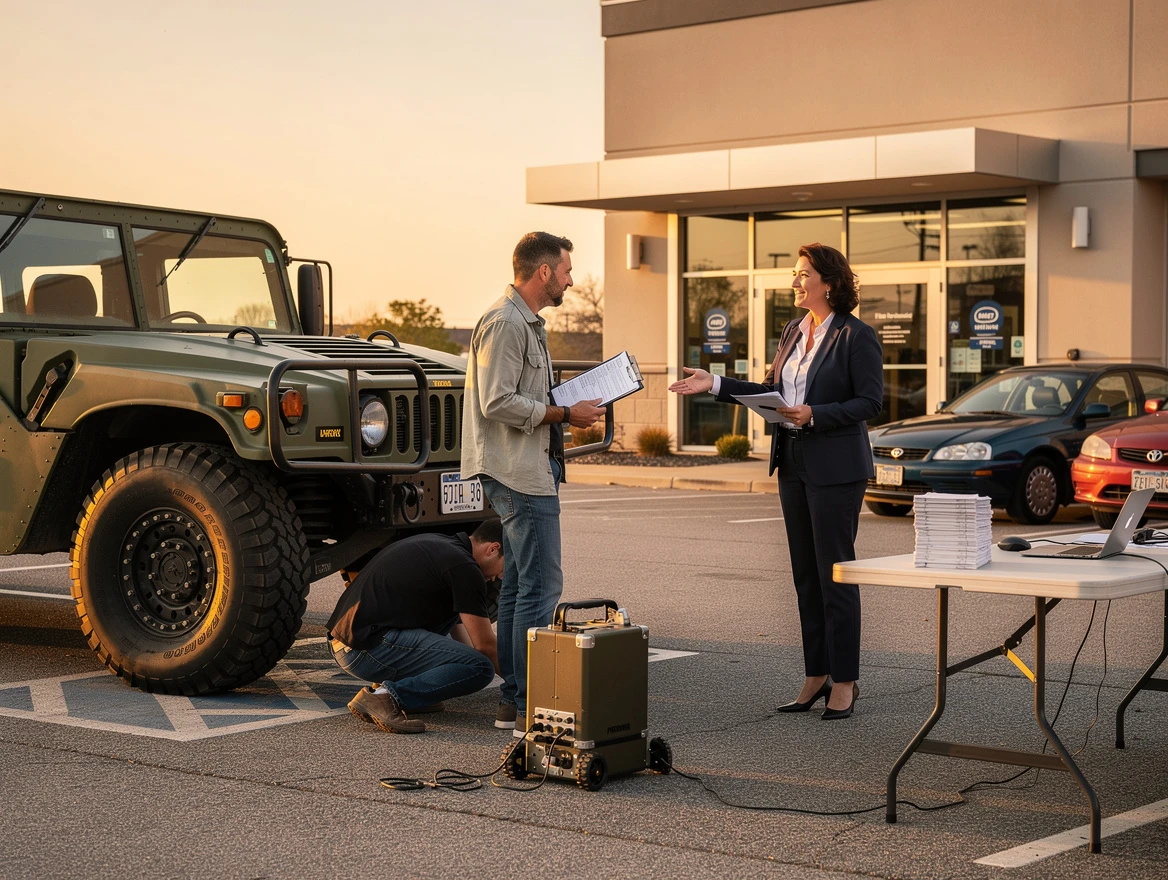
Registering an auction-bought Humvee requires converting federal military paperwork into a civilian state motor vehicle title. Skipping steps or mishandling documentation can trigger extended administrative holds.
- Acquire Form SF-97 from the Auctioneer: Request the official SF-97 certificate from your auction house once the purchase settles. Never buy a military surplus vehicle relying only on a civilian bill of sale without federal ownership documentation, as explained in Can I Get a Title With Just a Bill of Sale in Colorado?.
- Obtain an Initial VIN Verification: Many state bureaus require a physical examination of the data plate riveted inside the driver door frame or on the chassis. A law enforcement officer or certified inspector reviews the unique military serial number against public records.
- Install Street-Legal Equipment: Add DOT-compliant lighting, signals, mechanical horn, and seat belts to satisfy local road standards before signing inspection paperwork.
- Select Your Registration Jurisdiction: Choose whether to submit documents locally or establish ownership through an out-of-state structure like a Montana LLC. Look at our specialized Street Legal Vehicle registration assistance services to review how remote paperwork support handles these technical steps.
- Submit Title and Tag Applications: File your SF-97, completed state application forms, VIN inspection confirmation, and applicable sales taxes with state offices. The state then cancels the federal disposition and issues a standard motor vehicle title with license plates.
Document mistakes slow down approvals. Reviewing common pitfalls in Common Vehicle Registration Mistakes and How to Avoid Them can keep your application moving without delay.
For David Longton, getting his HMMWV registered meant working through government forms, setting up his company, and waiting for government paperwork. In his review, he describes how Kara and the team guided him through those steps and extended his temporary tag while he waited.

“Absolutely amazing place with amazing workers. … Kara spent a lot of time on the phone with me explaining and walking me through everything. They even extended my temp tag because it took so long to get the SF90 from the government. This place is absolutely worth it.”
David Longton, ★★★★★, Google review
Skip the Paperwork, Let Us Guide Your Registration →
How Do Humvee Registration Costs Compare Across Options?
Ownership expenses for a street-legal civilian Humvee vary depending on state tax laws, inspection requirements, and registration methods. In many home states, buyers pay standard state sales tax, local county wheel taxes, annual personal property taxes, and specialized inspection fees.
By contrast, registering a vehicle in a zero-percent sales tax jurisdiction like Montana reduces upfront costs significantly. The table below illustrates the financial differences between common registration pathways for a Humvee valued at $25,000:
| Expense Category | High-Tax Home State (e.g., CA/WA) | Standard Home State (e.g., TX/FL) | Montana LLC Registration |
|---|---|---|---|
| Vehicle Sales Tax (Est. $25,000 Value) | $1,750 to $2,500 | $1,500 to $1,750 | $0 (0% State Sales Tax) |
| Initial Title and Plate Issuance | $150 to $400 | $100 to $250 | Included in standard package |
| Mandatory Emissions / Inspection Costs | $50 to $150 annually | $25 to $50 annually | $0 (No Inspection Required) |
| Annual Personal Property Taxes | Varies widely by county | Varies or minimal | $0 |
| Permanent Plate Option | Rarely available for surplus trucks | Limited availability | Available for vehicles 11+ years old |
To confirm statutory details on zero-tax vehicle filings, review resources provided by the Montana Department of Revenue and title policies maintained by the Montana Motor Vehicle Division. You can also look at How To Register ANY Car TAX-FREE! for tax savings breakdowns.
Dirt Legal has completed over 6,000 customer orders to date (internal data, lifetime through current month, n=6,408), helping vehicle enthusiasts throughout the country change off-road titles into street-legal vehicle registrations. Check our complete guide on how the process works to understand each milestone.
Frequently Asked Questions
Are humvees street-legal?
Humvees are street-legal for civilians when properly equipped and titled for highway use. Because surplus military HMMWVs are sold with off-road federal forms, civilian buyers must install DOT-approved safety gear, clear a VIN inspection, and secure an unrestricted on-road title through a cooperative state licensing agency.
Are ATVs street-legal?
Standard ATVs are not street-legal right off the showroom floor in most states. However, you can make them street-legal by adding DOT-approved equipment like mirrors, turn signals, headlights, a horn, and a license plate bracket, followed by titling them in states that permit all-terrain highway registrations.
Are dirt bikes street-legal?
Off-road dirt bikes can become street-legal once modified with mandatory road equipment. You need DOT tires, functioning high and low beam headlights, brake lights, rear mirrors, and a horn. After completing mechanical upgrades, owners can convert an off-road title or certificate of origin into an on-road motorcycle registration.
Are Polaris vehicles street-legal?
Polaris models, including the RZR and Ranger, are not street-legal from the factory unless registered as specialized vehicles. Owners frequently install safety equipment packages containing glass windshields, turn signals, mirrors, and horns, then register them in friendly jurisdictions to receive valid highway license plates.
Are quads street-legal?
Quads are rarely allowed on public highways without formal safety modifications. To operate a quad on public roads, you must add mirrors, turn signals, brake lights, DOT tires, and a horn. Titling the quad through states with progressive off-road vehicle statutes allows highway operation.
Are razors street-legal?
Polaris RZR models can be driven on public roads when configured to comply with state safety laws. Adding necessary road accessories like side mirrors, signals, illuminated license plate frames, and DOT-certified tires allows owners to obtain civilian road registration through states that license utility terrain vehicles.