Will Insurance Pay for Modified Car With Custom Metal Work?
Modified cars with custom metal work may not be covered by standard insurance. Learn what insurers require, how to get coverage, and registration tips.
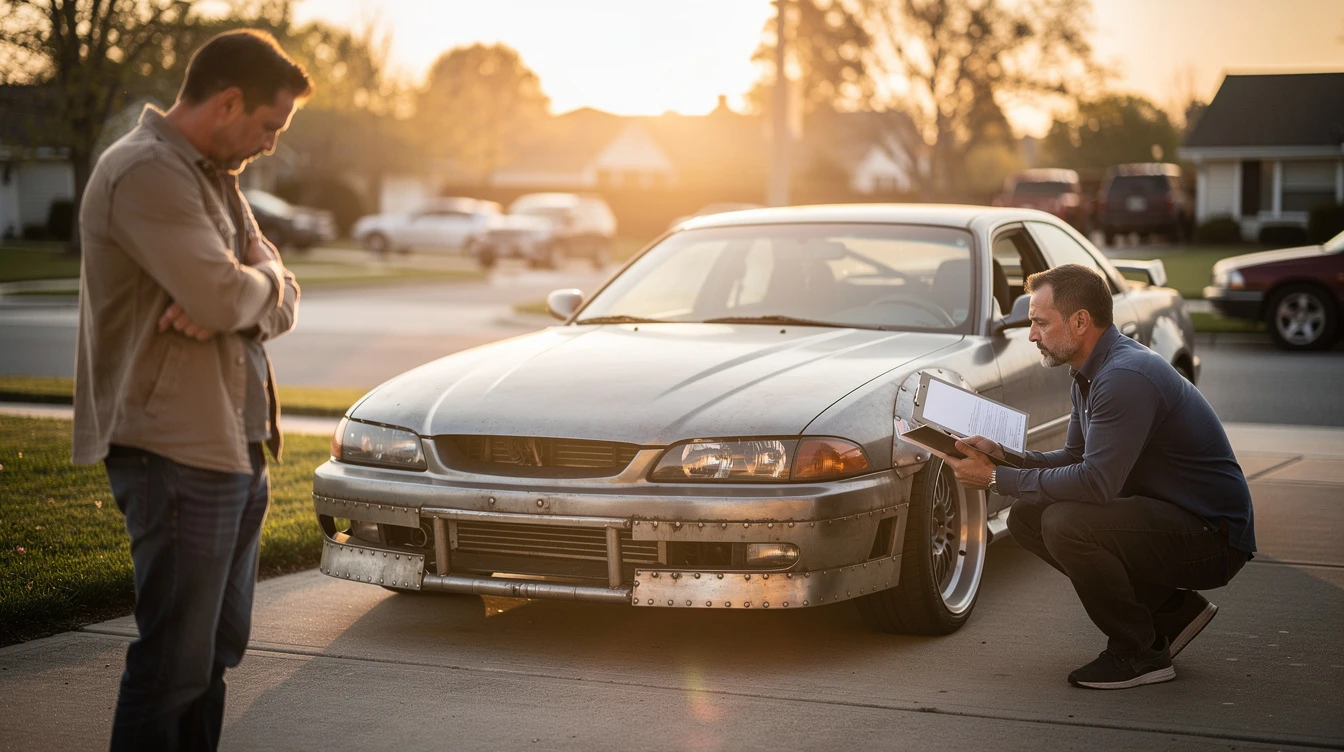
Most standard insurance policies won't cover damage to custom metal work, body modifications, or aftermarket parts on a modified car. You need specialized coverage and must declare all modifications to your insurer when you apply. Skip that step, and you risk claim denial when you need the coverage most.
In This Guide
- What Standard Insurance Covers on Modified Cars
- Why Custom Metal Work Typically Isn't Covered
- How to Get Coverage for Custom Metal Work and Modifications
- How Disclosing Modifications Affects Your Registration and Policy
- Registering a Custom-Built Car: What Insurers Require
- Frequently Asked Questions
What Standard Insurance Covers on Modified Cars
Standard auto insurance policies have a baseline coverage limit for the vehicle itself, usually set at either the actual cash value or an agreed-upon amount. This number assumes an unmodified factory vehicle. Once you add custom metal work, body kits, engine modifications, or other aftermarket parts, the original coverage cap no longer reflects your vehicle's real value.
Collision and complete coverage still apply to the basic structure, but custom parts are typically excluded or capped at a minimal amount. For example, if your policy covers $15,000 in collision damage on a $12,000 base vehicle, but you've invested $8,000 in custom metal fabrication, that extra value sits unprotected.
- Standard policies cover the factory vehicle value only
- Custom additions are often excluded or severely limited
- Modifications must be declared or coverage can be denied
- Failure to disclose voids your policy in many states
- You may face claim denial even for factory-covered damage if modifications weren't disclosed
Why Custom Metal Work Typically Isn't Covered
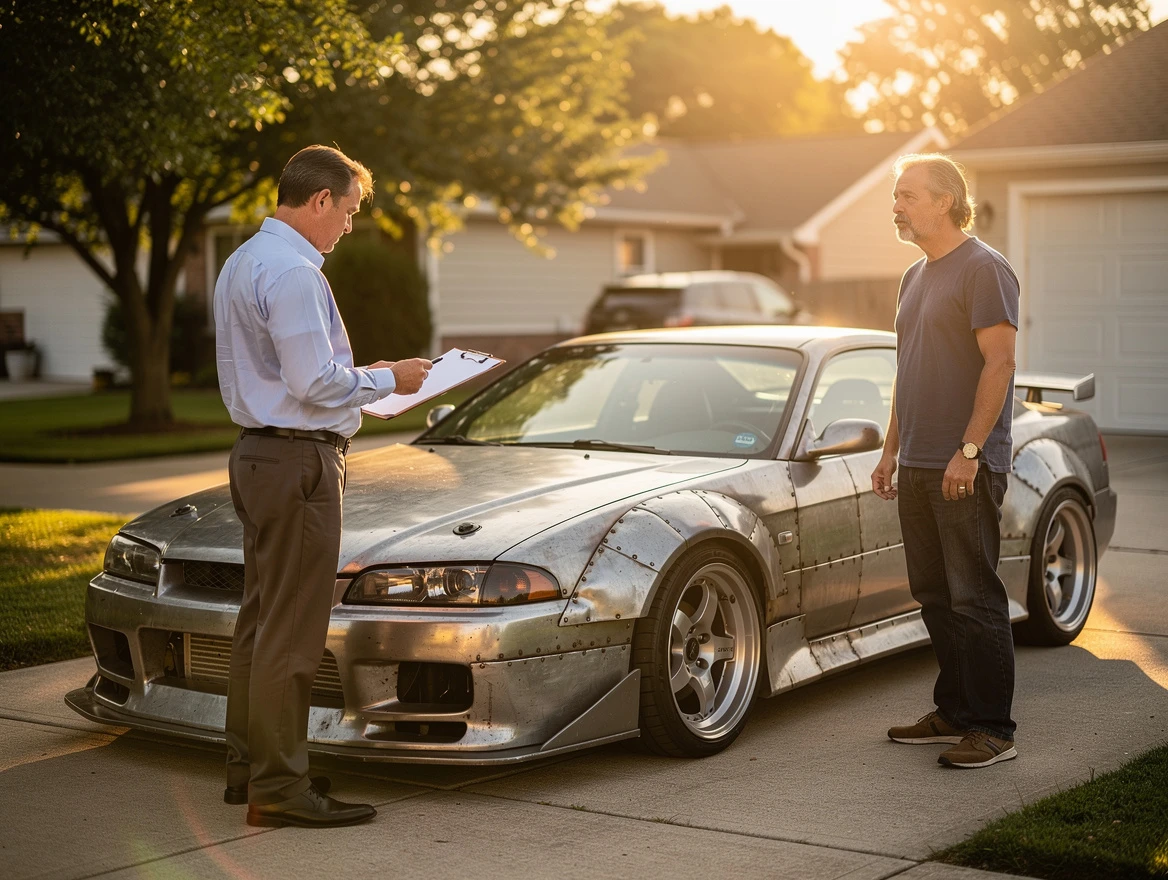
Insurance companies view custom metal work as a significant increase in risk and repair complexity. A frame modification, welded body panel, or bespoke fabrication can't be replaced with a stock part. Repairs require a specialist, not a standard body shop, and labor costs skyrocket. That uncertainty makes standard insurers reluctant to cover the full value.
Ready to register your vehicle?
Join thousands of vehicle owners who use Dirt Legal to handle their registration quickly.
Additionally, if your custom work doesn't meet safety standards or isn't compliant with vehicle regulations, the insurer may refuse to cover any damage related to the modification, claiming you created a non-compliant or high-risk vehicle.
- Custom fabrication requires specialist repair shops with higher labor costs
- Parts cannot be ordered from inventory, delaying repairs
- Insurers cannot easily appraise value of bespoke metalwork
- Non-compliant modifications may trigger blanket exclusions
- Some insurers simply exclude all aftermarket metal work to avoid disputes
How to Get Coverage for Custom Metal Work and Modifications
Specialized insurers and custom car insurance policies exist specifically to cover heavily modified vehicles. These policies account for the custom work, higher replacement costs, and repair complexity. You'll need to provide documentation of the modifications, proof of work (receipts, photos, shop records), and often a professional appraisal of the vehicle's total value including all custom additions.
Some standard insurers do offer agreed-value or custom-vehicle riders that extend coverage to aftermarket parts and custom work. The key is discussing your modifications upfront and in detail, not after an accident.
| Coverage Type | What It Covers | Best For |
|---|---|---|
| Standard Policy | Factory vehicle value only | Stock vehicles |
| Agreed-Value Rider | Fixed value including modifications (no depreciation) | Moderate modifications, collector cars |
| Custom Car Policy | Full custom work, parts, and labor costs | Extensive custom builds |
| Specialty Insurer | Complete modified vehicle coverage | High-value custom builds |
To Eligible for specialized coverage, insurers typically require:
- Detailed documentation of all modifications (receipts, photos, schematics)
- Professional vehicle appraisal or valuation
- Proof that modifications are compliant with state vehicle regulations
- Evidence of safe driving record (some insurers require this for custom vehicles)
- In some cases, a safety inspection confirming the build meets standards
How Disclosing Modifications Affects Your Registration and Policy
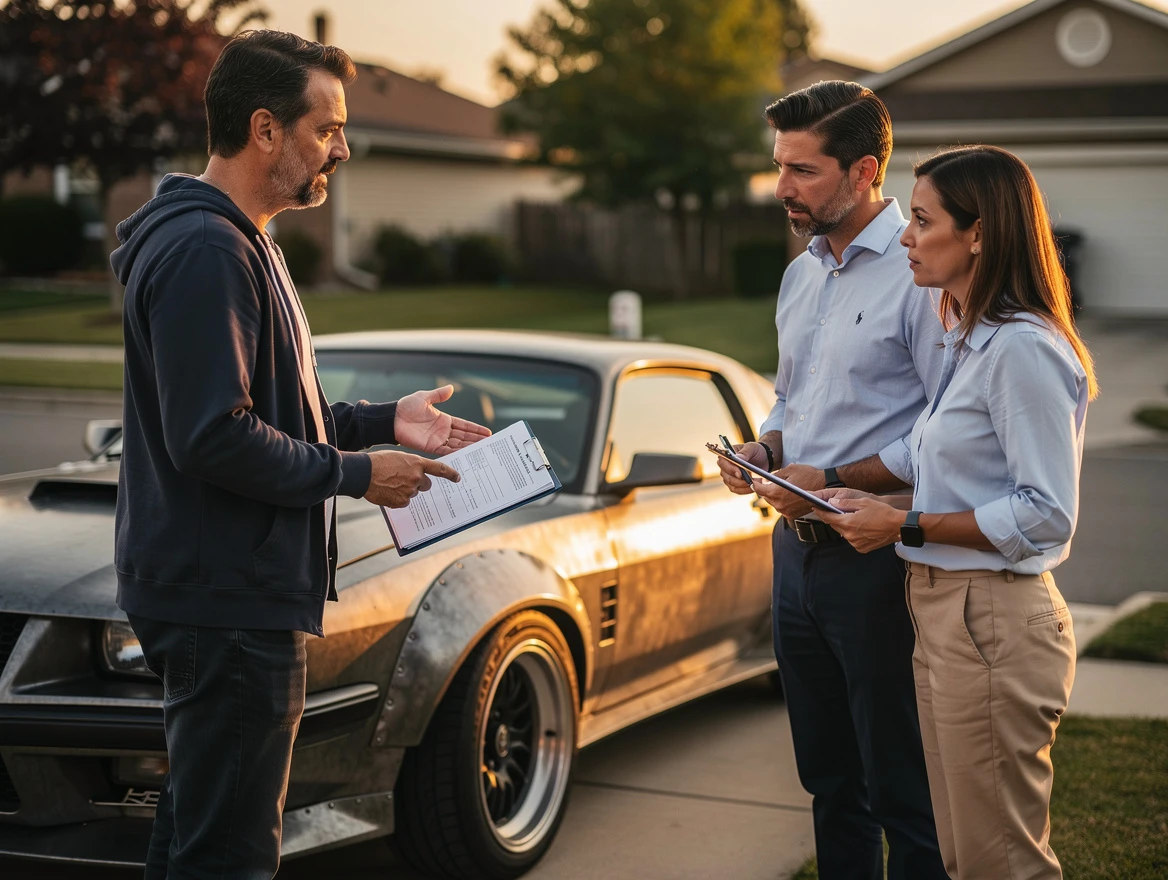
When you register a custom-built car, you may need to declare modifications to both the state and your insurer. Registration requirements vary by state, but many states require a statement about any structural or safety-related modifications. Failing to disclose creates a liability gap, and your insurance company has grounds to deny a claim.
From the insurer's perspective, non-disclosure is misrepresentation. Even if the claim itself has nothing to do with the modifications, they can use your failure to disclose as a reason to void your entire policy. That's a worst-case scenario.
Skip the Paperwork, Let Us Handle It ->
- Most states require disclosure of structural or safety modifications on registration
- Some states use a "For Sale By Owner" bill of sale statement to document work
- Insurance non-disclosure is grounds for claim denial and policy cancellation
- Registration non-disclosure can result in fines or vehicle impoundment
- Always disclose even minor modifications; insurers determine what matters
Registering a Custom-Built Car: What Insurers Require
Before you can insure a custom-built car, it must be properly registered in your state. Some states require a safety inspection for modified vehicles, and the inspection report becomes part of your registration file. Your insurer will likely request proof of registration and may ask to see the inspection report before approving coverage.
If your custom build doesn't pass inspection or isn't registered properly, no insurer will touch it. How Do I Build a Car and Make It Street-Legal? covers the full registration process for custom builds in detail, including inspection requirements and state-specific rules.
Dirt Legal has helped over 6,000 vehicle orders to date, many involving modified and custom-built vehicles requiring specialized registration and insurance coordination (internal data, lifetime through current month, n=6609). Proper registration is non-negotiable for insurance approval.
- Safety inspections are often required for structurally modified vehicles
- Inspection reports must be on file with your state DMV or motor vehicle division
- Insurers verify registration status and inspection compliance before approving coverage
- A bill of sale documenting custom work can support your registration application
- Some states allow Montana LLC registration for vehicles with complex ownership or modification status
Frequently Asked Questions
Does insurance cover modified cars?
Standard auto insurance does not cover custom modifications or aftermarket parts beyond a minimal amount. You need specialized coverage (agreed-value riders or custom car policies) that specifically accounts for your modifications. Always declare all work to your insurer when applying for a policy. Non-disclosure voids coverage entirely, even on unrelated claims.
How do I register a custom-built car?
Register a custom-built car by submitting an application to your state DMV with proof of ownership (bill of sale, title, or previous registration), proof of safety inspection (if required), and documentation of the build. Some states require a statement of modifications. Our end-to-end list includes custom vehicle registration support for most states and vehicle types.
Does an antique car need insurance to register?
Insurance is not required by law to register most vehicles, but it is required to drive on public roads in every state. Antique or custom cars often Eligible for lower-cost collector or specialty insurance, but you still must carry coverage. Check your state's minimum liability requirements before registering any vehicle.
How does car title lien work?
A lien on a car title means the lender (bank, credit union, or finance company) has a claim against the vehicle until the loan is paid. You own the car, but the lender holds title documents and can repossess if you default. When the loan is satisfied, the lien is released and a clear title is issued. Your insurer typically names the lienholder as a loss payee on the policy.
What is a lienholder on car insurance?
A lienholder is the entity listed on your insurance policy as having a financial interest in the vehicle (usually the finance company or bank). If a claim payout is made, the insurance company pays the lienholder first to satisfy the loan balance, then you receive any remaining funds. Most lenders require their name on your policy as a condition of the loan.
Does it matter whose name is on a car title for insurance?
Yes. The person listed as the owner on the title must also be the policyholder on the insurance (or be listed as an insured driver). If you're the titled owner but your spouse is the policyholder, coverage may be limited or denied if you're in an accident. Always make sure the title owner matches the insured party on the policy. Mismatches create coverage gaps and claim denial risks.