Why Is My Truck Registration So Much in California?
Wondering why is my truck registration so much in California? Learn how commercial weight fees, VLF, and local taxes drive up pickup renewal bills.
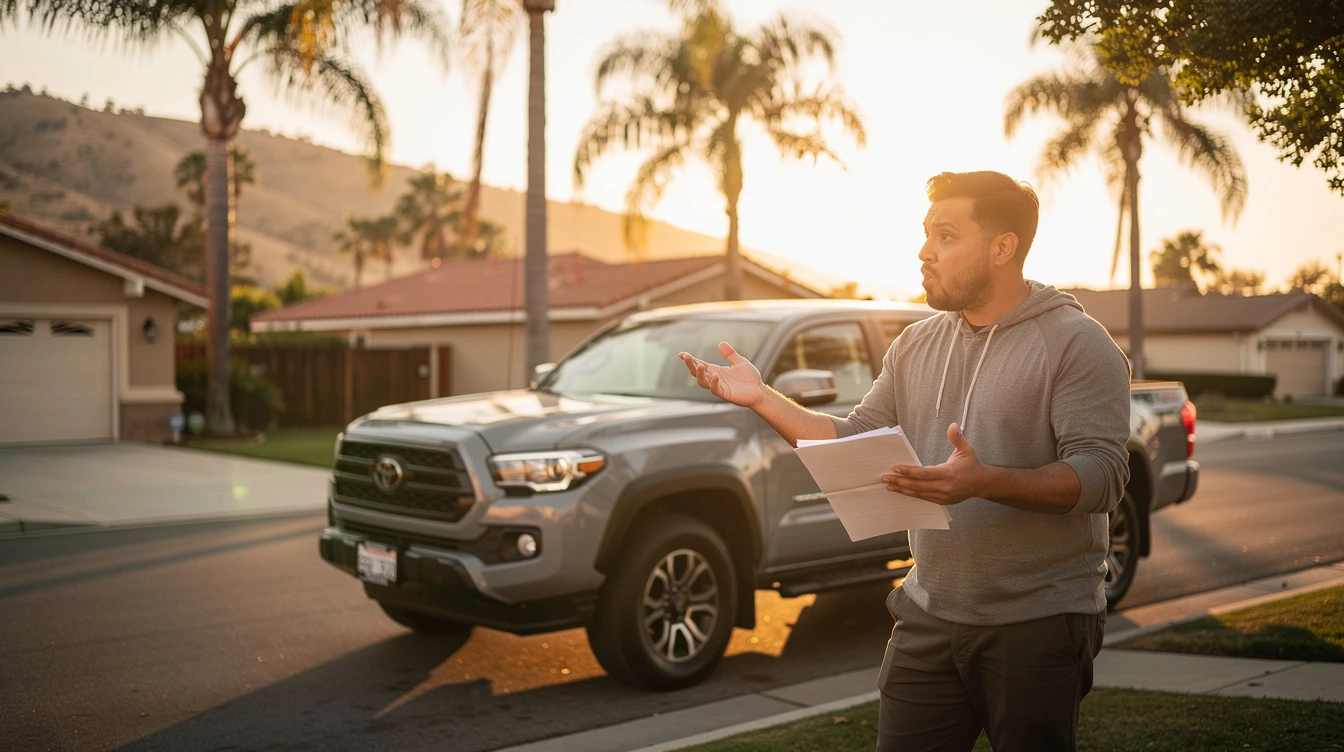
Your truck registration is so much in California primarily because state law automatically classifies pickup trucks as commercial vehicles, which triggers an expensive commercial weight fee on top of standard base registration. When you combine this mandatory weight fee with the value-based Vehicle License Fee and regional transportation assessments, total renewal costs frequently exceed several hundred dollars annually.
In This Guide
- Why Does California Classify Pickup Trucks as Commercial Vehicles?
- How Are California Truck Registration Fees Calculated?
- What Are the Typical Vehicle Registration Costs for California Trucks?
- How Can Drivers Address Expensive California Truck Fees?
- How Does Montana LLC Registration Compare for Heavy Trucks?
- Frequently Asked Questions
Why Does California Classify Pickup Trucks as Commercial Vehicles?
California Vehicle Code Section 471 defines any motor vehicle designed, used, or maintained primarily for the transportation of property as a commercial vehicle. Under this statutory definition, every pickup truck with an open bed is categorized as commercial by default, even if you only use it for personal commuting or grocery shopping.
Because the state labels your pickup as a commercial hauler, you are subject to the commercial weight fee schedule outlined in California Vehicle Code Section 9400. This classification applies regardless of whether you ever haul cargo, tow a recreational trailer, or use the truck for business. The state presumes the vehicle has cargo capacity, and that capacity incurs road-impact surcharges.
The only standard way to remove this commercial label inside the state is by permanently attaching a camper shell, camper body, or permanent cover and completing a formal body type change. Unless that mechanical modification is certified, your light-duty Ford F-150, Chevrolet Silverado, or Toyota Tacoma pays commercial assessments every year.
How Are California Truck Registration Fees Calculated?
Your total California renewal bill is not a single flat charge, but an accumulation of several state and county fees calculated together. The state relies on vehicle purchase price, unladen weight, and county of residence to build the final number on your renewal notice.
Ready to register your vehicle?
Join thousands of vehicle owners who use Dirt Legal to handle their registration quickly.
The largest line items on a California truck notice generally include:
- Base Registration Fee: A baseline charge assessed on all registered motor vehicles in the state.
- Commercial Weight Fee: A tiered assessment determined by the unladen empty weight or gross vehicle weight rating of the truck, typically running between $80 and over $400.
- Vehicle License Fee (VLF): A tax set at 0.65 percent of the depreciated market value of your vehicle, meaning newer and more expensive trucks carry massive VLF charges.
- Transportation Improvement Fee (TIF): An assessment based on the current market value range of the vehicle, created under Senate Bill 1 to fund transit infrastructure.
- County and Air District Surcharges: Local fees ranging from $10 to $50 or more to fund county transportation programs and regional air quality monitoring.
- Smog Abatement or Smog Inspection Fee: Periodic testing and administrative fees assessed to evaluate tailpipe emissions.
When you purchase a modern three-quarter-ton or one-ton diesel truck with an original retail price above $70,000, the combination of high market value and elevated unladen curb weight creates an exceptionally steep renewal bill. For owners dealing with documentation issues on these high-dollar assets, learning about Common Vehicle Registration Mistakes and How to Avoid Them can prevent additional processing delays and statutory penalties.
What Are the Typical Vehicle Registration Costs for California Trucks?
Pickup registration expenses in California regularly rank among the highest in the country due to compound ad valorem taxes and mandatory weight classifications. In states where light trucks are registered identically to passenger cars, drivers often pay flat rates that ignore vehicle market value entirely.
The table below illustrates how different states structure registration charges for a typical late-model pickup truck valued at $55,000 with an unladen weight of 5,500 pounds:
| Jurisdiction | Commercial Weight Fee Applied? | Value-Based Tax (Ad Valorem)? | Estimated Annual Renewal Structure |
|---|---|---|---|
| California | Yes, mandatory on all open beds | Yes, 0.65% VLF plus tiered TIF | High (Weight fee plus VLF plus local air district fees) |
| Montana | No commercial weight fees on personal assets | No ad valorem vehicle property tax | Low flat fee, with permanent options for older assets |
| South Dakota | Graduated by weight, no commercial surcharge | No property or value tax | Moderate flat weight-based schedule |
| Florida | Flat weight classes, no cargo penalty | No ad valorem property tax | Low to moderate flat fee based solely on curb weight |
As the table demonstrates, jurisdictions without value-based property fees keep annual vehicle ownership costs significantly lower over the life of the asset. Exploring broader topics like Why Do People Register Cars in Montana? The Real Reasons Explained clarifies why out-of-state fleet managers and personal asset owners closely track these state-by-state discrepancies.
How Can Drivers Address Expensive California Truck Fees?
Vehicle owners facing high California registration bills have a few specific compliance and structural pathways to evaluate. Depending on how you use your truck, where the vehicle is housed, and whether you run a business, you can examine these potential steps:
- Evaluate Camper Classification: If you use your pickup strictly as a recreational vehicle with a permanently mounted camper unit, you can request a DMV body type conversion to eliminate the commercial weight fee.
- Monitor Vehicle Valuation Depreciation: Confirm that the state has reduced your Vehicle License Fee over time according to statutory depreciation schedules, especially if your truck was purchased used.
- Audit Address and County Surcharges: Make sure your physical garaging address is accurately recorded, as regional air quality management districts impose varying fees across different zip codes.
- Structure Multi-State Business Assets: Companies operating equipment or tow rigs across state boundaries often establish dedicated holding entities in business-friendly jurisdictions to title their fleet.
If you manage multiple utility trailers or off-road machines alongside your primary hauler, you may also want to review out-of-state options. For example, our guide on can you make a utv street legal in california? breaks down how state rules treat specialty utility vehicles that run alongside conventional pickups.
How Does Montana LLC Registration Compare for Heavy Trucks?
Montana is one of five states without a general statewide sales tax, and it does not charge ongoing ad valorem property fees on motor vehicles. Because Montana allows a resident business entity to hold vehicle titles, many equipment owners form a bespoke entity to manage their heavy equipment, toy haulers, and elevated utility builds.
Through Montana LLC Vehicle Registration, your holding company owns the vehicle and registers it with the state division in Helena. Under Montana law, vehicles eleven years and older even become eligible for permanent vehicle registration, eliminating the need to renew tags on that asset in future years.
Dirt Legal has completed over 6,000 customer orders to date (internal data, lifetime through current month, n=6,410), providing streamlined paperwork assistance for enthusiasts and entrepreneurs who want efficient title handling. When examining this strategy, truck owners must also evaluate state compliance boundaries, such as the details covered in California’s New Montana LLC Law (SB 1406): Key Rules.
For owners seeking long-term options, our dedicated Montana LLC Services provide end-to-end paperwork support to establish your business entity and manage title filings properly with the state. Reviewing resources like How To Register ANY Car TAX-FREE! and Register Car in Montana: Everything You Need to Know offers complete clarity on how statutory out-of-state asset holding works.
Frequently Asked Questions
How much are late registration fees in California?
Late registration fees in California accrue based on the length of time your renewal is overdue. The state imposes percentage-based penalties on both the base registration fee and the vehicle license fee, increasing sharply at ten days, thirty days, and beyond. In addition, mandatory California Highway Patrol late fees are tacked on automatically.
How much is an expired registration ticket in California?
An expired registration citation in California typically begins as a fix-it ticket if your tags are less than six months delinquent. However, baseline infraction penalties, combined with mandatory county penalty assessments, state court construction fees, and administrative surcharges, frequently push the final out-of-pocket payment to several hundred dollars.
Why is registration so expensive in California?
California registration is exceptionally expensive because the state combines multiple independent fees onto a single annual bill. Rather than charging a simple administrative tag fee, California levies a 0.65 percent vehicle license fee based on market value, an indexed transportation improvement fee, county-level environmental assessments, and compulsory road-repair taxes.
How much is the penalty for late registration of a vehicle in California?
The penalty for late registration of a vehicle in California scales upward depending on delinquency duration. Penalties apply separately to the registration fee, service fees, and vehicle license tax. As time passes past your expiration date, these compounding percentages can easily double your initial renewal obligation before you can receive valid tags.
Why is California registration so high?
California registration is so high because state legislators use annual motor vehicle renewals to fund public transportation projects, state highway maintenance, and county air districts. High original purchase prices on late-model vehicles dramatically raise the value-based portion of your bill, ensuring newer vehicle renewals remain steep.
Why is my truck registration so high?
Your truck registration is so high because the state automatically classifies pickup trucks as commercial vehicles under vehicle code regulations. This statutory designation adds a heavy commercial weight surcharge directly to your renewal statement, which combines with standard road taxes, clean air fees, and value-based vehicle license fees.