Hit by a Self-Driving Car? What to Do Next
Hit by a self-driving car? Learn immediate steps, liability issues, insurance claims, and how to document the accident for your case.
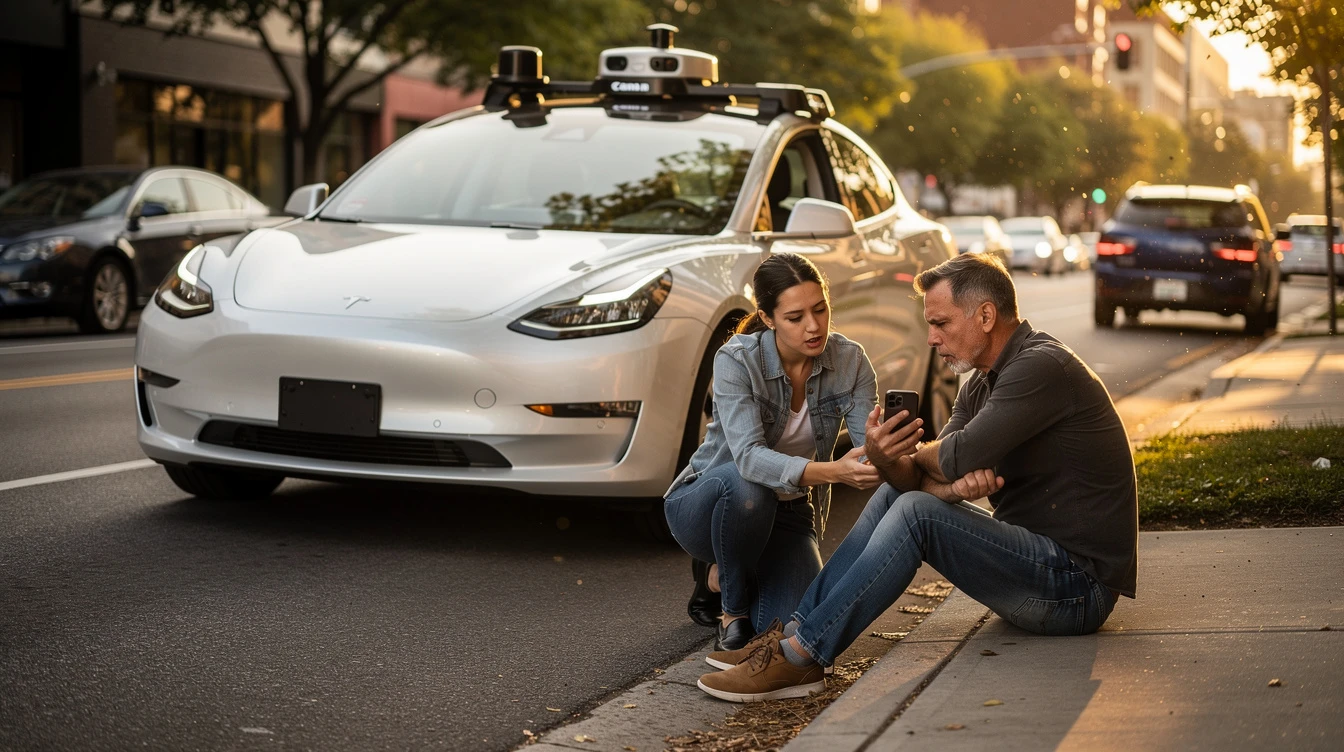
Getting hit by a self-driving car presents a unique challenge. Unlike a traditional accident where you exchange information with another driver, autonomous vehicles operate under different ownership and liability structures. This article walks you through exactly what to do if you're hit by a self-driving car, from the immediate aftermath through insurance claims and legal action.
Autonomous vehicle technology is advancing rapidly. Companies like Tesla, Waymo, and Cruise are testing self-driving systems on public roads. As these vehicles become more common, knowing your rights and responsibilities after an accident is essential. The steps you take right after impact will directly affect your ability to recover damages.
Whether the accident was minor or serious, the process involves documenting the scene, identifying the vehicle's owner, reporting the incident, and working with insurance companies. Some of these steps differ from traditional car accidents because the responsible party may be a corporation or fleet operator rather than an individual driver.
Immediate Steps After Being Hit by a Self-Driving Car
The first few minutes after an accident are critical. Your immediate actions set the foundation for your claim and protect your safety. These steps apply regardless of whether the other vehicle was autonomous or traditionally driven.
Make Sure Everyone Is Safe
Your first priority is personal safety. If you're able to move safely, get yourself and your passengers out of traffic. If anyone is injured, call emergency services (911) immediately. Don't move anyone with suspected spinal or neck injuries. Wait for professional medical help. Even if injuries seem minor, shock can mask pain. Adrenaline fades quickly. You might realize hours later that you have whiplash or soft-tissue damage.
Call the Police and Document the Scene
Contact local law enforcement and request a police report. Give the dispatcher your location and describe any injuries. When police arrive, provide a clear account of what happened. Stick to the facts you witnessed directly. Don't speculate about who was at fault. Police reports create an official record that insurers rely on heavily.
While waiting for police, document everything with photos and video. Photograph the accident scene from multiple angles. Capture the self-driving vehicle's position, the damage to both vehicles, road conditions, traffic signals, and any visible mechanical issues. Get wide shots and close-ups. Photos taken at the scene carry more weight than descriptions provided later. If you're injured but conscious, ask a passenger or bystander to take photos on your phone.
Identify the Autonomous Vehicle and Its Operator
This step differs from a standard accident. You need to identify who owns and operates the self-driving vehicle. Look for company logos, contact information, or fleet identification marks on the vehicle. Write down the vehicle's license plate number, VIN (if visible), and any identifying information. Check for a phone number or QR code on the vehicle linking to the operating company.
If the vehicle is a Waymo autonomous taxi, there may be a phone number inside the vehicle. If it's a Tesla operating in Full Self-Driving mode, contact Tesla directly. Different companies have different protocols. The vehicle may have recorded the accident on its onboard cameras, and your request for that footage should come quickly before it's overwritten or deleted. Most autonomous vehicles maintain continuous video recording, but footage retention varies.
Collecting Evidence and Witness Information
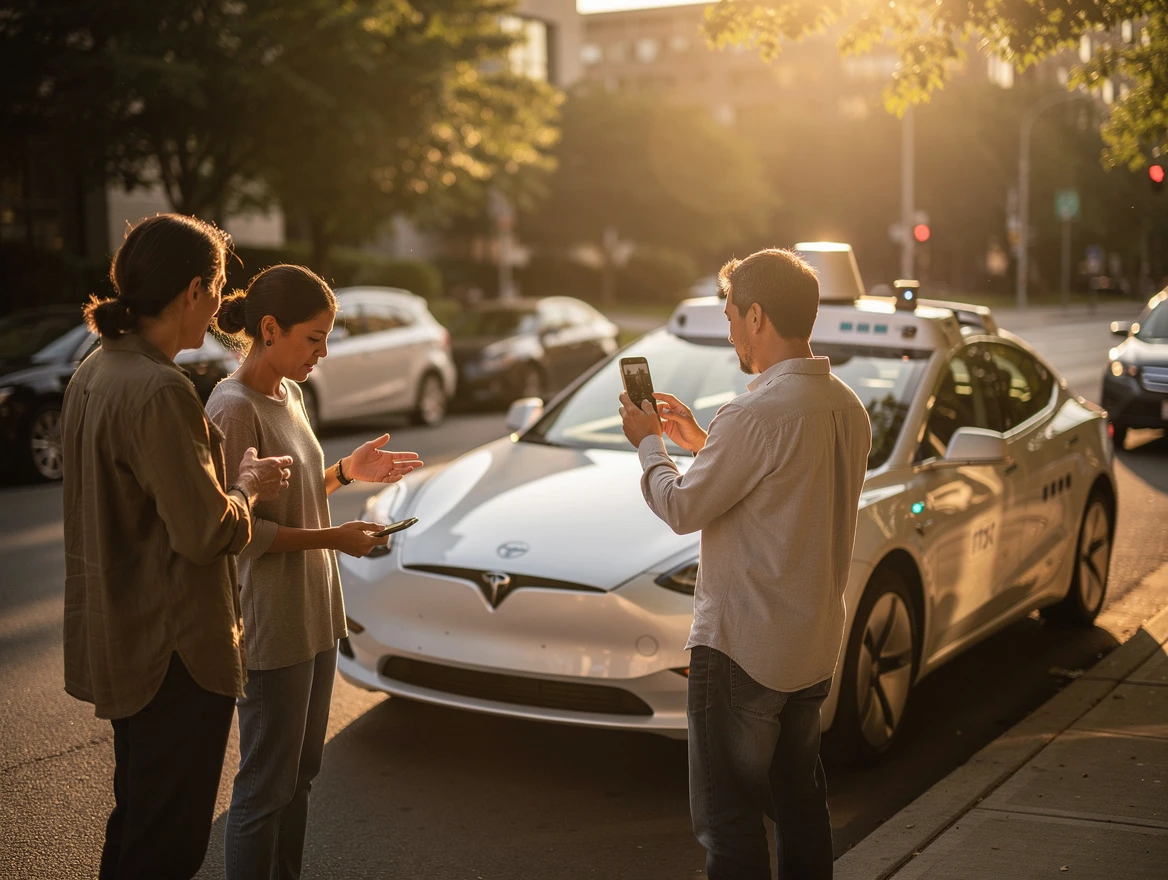
Strong evidence makes the difference between a successful claim and a denied one. Self-driving car accidents often hinge on technical data and eyewitness accounts that support or contradict the vehicle's onboard recordings.
Ready to register your vehicle?
Join thousands of vehicle owners who use Dirt Legal to handle their registration quickly.
Get Contact Information from Witnesses
Ask anyone who saw the accident to provide their name, phone number, and email address. If they witnessed how the accident occurred, ask for a brief description of what they saw. Impartial witnesses carry significant weight in liability disputes. Their accounts help establish whether the autonomous vehicle failed to brake, ran a red light, or caused the accident through mechanical failure rather than human error.
Request the Autonomous Vehicle's Data
Most modern autonomous vehicles log extensive technical data. This data includes camera feeds, lidar readings, radar signals, GPS coordinates, vehicle speed, acceleration, braking events, and system status at the moment of impact. This information is crucial for determining fault. Request this data from the vehicle's operating company or owner immediately. Explain that you were involved in an accident and need the onboard recordings and sensor logs.
Many companies have procedures for data requests following accidents. Some release data voluntarily to expedite claims. Others require a formal request. Working with an experienced professional can speed up this process. The sooner you request the data, the more likely it will be preserved. Federal regulations may require that autonomous vehicle data be retained for investigation purposes, but your own request creates a documented preservation order.
Photograph Your Injuries and Property Damage
Take photos of any visible injuries on the day of the accident and again in the following days as bruising or swelling develops. Document all property damage to your vehicle and personal belongings. Include photos of the vehicle's interior if items were damaged during the collision. These images establish the severity of the impact and support your damages claim. Medical evidence connects injuries to the accident rather than previous conditions.
Understanding Liability in Self-Driving Car Accidents
Liability in autonomous vehicle accidents is more complex than traditional accidents. The law hasn't fully settled who bears responsibility, and it varies by state. Understanding the potential liable parties helps you know who to pursue for compensation.
Who Bears Responsibility: Owner, Manufacturer, or Operator?
In a traditional accident, the at-fault driver and their insurance typically cover damages. With self-driving cars, responsibility could fall to the vehicle owner, the autonomous system manufacturer, the fleet operator, or all three. Current law generally treats the vehicle owner as the responsible party, similar to how you'd be responsible for an accident caused by someone driving your car.
If the vehicle is operated by a commercial service like Waymo or Cruise, the company typically carries the insurance and accepts liability for accidents. Manufacturer liability applies when a malfunction in the autonomous system causes the accident. For example, if the braking system fails or the vehicle's software misinterprets road conditions and causes the collision, the manufacturer may be liable for design defects or failure to warn.
State laws differ significantly. Some states have passed legislation clarifying that autonomous vehicle manufacturers and operators must carry specific insurance minimums. Other states haven't addressed the issue. Consult your state's motor vehicle laws or contact a qualified professional familiar with local accident regulations to understand the specific rules where the accident occurred.
Comparative Negligence and Your Role
Even if the self-driving car caused the accident, courts may assign partial fault to you if you contributed to the collision. For example, if you ran a red light and the autonomous vehicle's brakes failed, both parties may share fault. Most states follow comparative negligence rules. Your compensation is reduced by your percentage of fault. In strict comparative negligence states, you can recover damages even if you're 99% at fault, though your recovery is reduced accordingly. In modified comparative negligence states, you must be 50% or less at fault to recover anything.
Document your own actions carefully. Be honest with police and insurance adjusters about what you were doing at the moment of impact. Admitting minor contributory actions doesn't kill your claim. Dishonesty discovered later does.
Reporting the Accident to Insurance and Authorities
Proper reporting creates the official record that drives the claims process. Timing and accuracy matter significantly.
Report to Your Own Insurance Company
Contact your insurance company as soon as possible, typically within 24 hours of the accident. Provide the police report number, the other vehicle's information, and a description of what happened. Most insurance policies require prompt notice. Delayed reporting can give insurers grounds to deny your claim, even if they ultimately determine you weren't at fault. Be thorough but factual. Describe what you saw and did, not what you assume happened.
Your own collision or complete coverage applies regardless of fault in most states. Your insurer may pay for your vehicle's repairs and medical expenses, then pursue the other party's insurance for reimbursement. This process, called subrogation, protects you if the other party disputes liability.
File a Report With the Autonomous Vehicle Operator or Owner
Notify the self-driving car's owner or operating company about the accident in writing. Email is preferable because it creates a time-stamped record. Include the accident date, time, location, your contact information, the police report number, and a brief description of what happened. Request confirmation that they received your notice. Keep copies of all correspondence.
Some autonomous vehicle companies have dedicated accident response teams. Others may refer you to their insurance carrier. Ask for the name and contact information of the claims adjuster handling the case. This establishes a direct line of communication for your claim.
Report to Your State's Motor Vehicle Department
Most states require accident reports to be filed with the state motor vehicle agency if the accident meets certain thresholds (usually damage over $500 or $1,500, depending on the state). Check your state's requirements and file the report within the required timeframe. This creates an additional official record and may trigger a state investigation if the accident involves an autonomous vehicle system malfunction.
| Step | Timing | Key Documentation |
|---|---|---|
| Call 911 and police | Immediately | Police report number |
| Document scene with photos and video | At accident scene | Multiple angle photos, video, witness info |
| Report to your insurance | Within 24 hours | Police report, vehicle info, description |
| Notify AV operator/owner | Within 48 hours | Written notice with police report number |
| Request vehicle data and footage | Within 48, 72 hours | Data preservation request |
| File state accident report | Within state deadline (varies) | Completed state form |
Managing Medical Treatment and Documentation
Even minor accidents can cause delayed injuries. Getting prompt medical evaluation protects your health and strengthens your claim.
Seek Medical Attention
Visit an emergency room, urgent care clinic, or your primary care doctor within 24 hours of the accident, even if you feel fine. Some injuries, like whiplash, concussions, and internal injuries, don't show symptoms immediately. A medical professional's examination creates a documented connection between the accident and your injuries. This record is crucial if you later develop symptoms and claim they result from the accident.
Be transparent with medical providers about the accident and your symptoms. Don't exaggerate or invent injuries. Insurers investigate claims and may deny fraudulent ones. But do report all symptoms you're experiencing, no matter how minor they seem. Doctors are trained to recognize injury patterns from accidents.
Keep Detailed Medical Records
Retain copies of all medical reports, test results, prescriptions, and bills related to your injuries. Create a timeline documenting your symptoms and treatment. Note when pain started, how it changed over time, and which activities became difficult. This narrative helps establish the injury's severity and impact on your life. It also supports damages claims for pain and suffering, lost wages, and reduced quality of life.
If you require ongoing treatment, follow your doctor's recommendations consistently. Insurance adjusters view gaps in treatment as evidence that injuries weren't serious. If treatment becomes financially difficult, discuss payment plans with your provider.
Working With Your Insurance Adjuster and the Claims Process
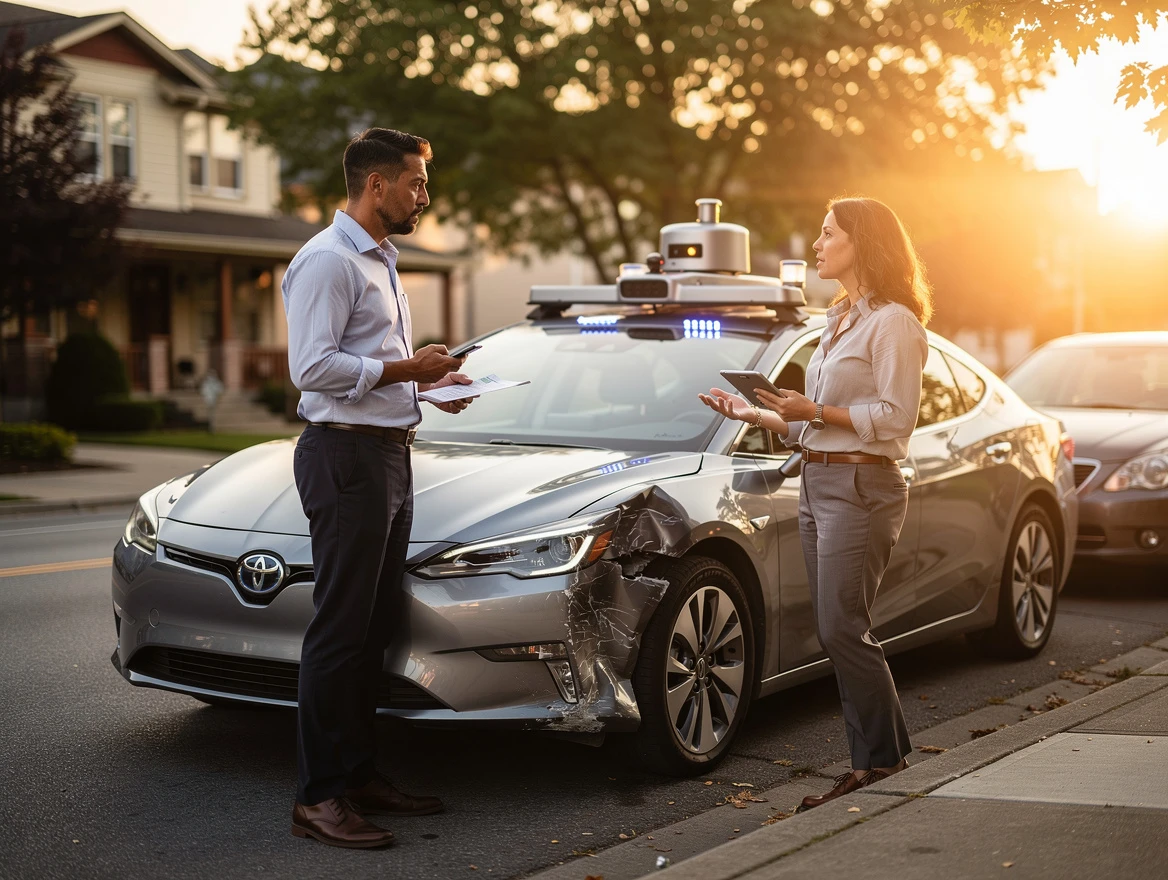
The claims process determines how much compensation you receive. Understanding how insurers evaluate claims helps you present your case effectively.
Coordinate With Your Adjuster
An insurance adjuster will contact you to begin the claims process. They'll request a detailed statement about the accident. Stick to facts you witnessed directly. Don't speculate about the other driver's intent or state of mind. Don't admit fault or apologize for the accident. If the other party's actions contributed to the accident, state that clearly. Adjusters record these conversations, so be careful with your words.
Provide the adjuster with all documentation you've collected: photos, police report, witness statements, medical records, and repair estimates. The more complete your documentation, the faster the adjuster can make a decision. Adjusters evaluate claims based on policy limits, liability, and damages. With self-driving cars, they may need to consult technical specialists to understand the vehicle's role in the accident.
Understand Settlement and Litigation Options
Most accident claims settle through insurance without litigation. The adjuster determines liability and damages, and the insurance company offers a settlement. You can accept or reject the offer. If you reject it and believe the offer undervalues your claim, you may pursue litigation or mediation.
Litigation against an autonomous vehicle company differs from suing an individual driver. The company likely has extensive resources and a team of engineers ready to defend the case. An experienced professional can evaluate whether litigation is worthwhile based on your evidence and the company's insurance limits. Some cases settle once both sides understand the evidence. Others proceed to trial.
Before rejecting a settlement, consider the costs and timeline of litigation. Personal injury cases are often handled under contingency fee arrangements, meaning a percentage of your recovery (usually 25% to 40%) goes toward fees instead of hourly charges. Factor this into your evaluation of settlement offers. A guaranteed settlement now may be worth more than a larger potential award after years of litigation.
Special Considerations: Manufacturer Defects and System Failures
If the autonomous vehicle's failure to avoid the accident resulted from a design defect or software malfunction, you may have additional grounds for recovery beyond the standard insurance claim.
Pursuing Product Liability Claims
Product liability law holds manufacturers responsible for defective products that cause injury. If the autonomous vehicle's braking system, perception software, or decision-making algorithm was defective and caused the accident, the manufacturer may be liable even if the vehicle owner or operator acted responsibly. Product liability claims require proving that the defect existed, that it caused the accident, and that you were injured as a result.
Autonomous vehicle manufacturers have been subject to increased scrutiny from regulators like the National Highway Traffic Safety Administration (NHTSA). If your accident involved a vehicle that had known issues or previous complaints, this strengthens a product liability claim. NHTSA maintains a database of complaints and recalls.
Working With Technical Specialists
Proving that an autonomous system caused an accident requires expert testimony. Engineers, roboticists, and autonomous vehicle specialists can examine the vehicle's data logs, reconstruct the accident, and testify about what the vehicle's systems should have done versus what they actually did. These specialists are expensive, but their testimony can be decisive in establishing liability.
If you have a strong case, the team handling your claim may arrange for specialists’ fees to be deferred until a settlement or judgment, depending on the terms of the agreement. This can help you pursue a case that might otherwise be cost-prohibitive. A team experienced in autonomous vehicle accidents may also help you find specialists with relevant technical expertise.
FAQ: Common Questions About Self-Driving Car Accidents
Which Sports Car Is Practical Enough for Everyday Driving?
While this question focuses on vehicle selection rather than accident response, the question of daily practicality connects to autonomous vehicle adoption. Many people ask about balancing performance with real-world usability. Currently, self-driving capabilities are limited in most vehicles. Tesla's Full Self-Driving, Waymo's autonomous taxis, and Cruise's robotaxis operate under specific conditions (certain geographic areas, weather patterns, and times of day). No autonomous vehicle is yet fully practical for all everyday driving scenarios. If you're considering a vehicle with autonomous features, research the current capabilities honestly. Don't assume a partially autonomous vehicle will handle all your regular routes. Understanding the actual limitations of autonomous systems helps you maintain appropriate control and attention while driving, reducing accident risk.
How Dangerous Is Race Car Driving?
Race car driving carries inherent risks, but professional drivers train extensively and operate in controlled environments. This question relates to autonomous vehicles because some argue that self-driving systems will be safer than human drivers by eliminating human error. Current data shows mixed results. Autonomous vehicles perform well in highway conditions and straightforward scenarios but struggle with unpredictable situations, poor weather, and complex urban intersections. Until autonomous systems match human judgment in all conditions, accidents will continue. If you're involved in an accident with a self-driving car, the comparative safety of autonomous versus human driving may be relevant to liability discussions.
Do I Have to Register My Car if I'm Not Driving It?
Vehicle registration requirements vary by state, but most states require registration regardless of whether you actively drive the vehicle. If you own a car, even one that's parked and unused, check your state's motor vehicle requirements. Some states allow temporary registration for inactive vehicles, but this doesn't eliminate the requirement. Registration is tied to vehicle ownership, not active use. If you're involved in an accident where the other party's vehicle registration is not current or is missing altogether, this strengthens your claim and supports any negligence argument. Unregistered vehicles often aren't insured, complicating recovery. For autonomous vehicle operators or fleet companies, maintaining current registration is essential. If a self-driving vehicle hits you and it's not properly registered or insured, report this to authorities and your insurance company immediately, as it affects the available recovery.
Can You Be Naked in Your Car?
In most states, being unclothed inside a vehicle in public is compliant if you're not exposing yourself in a manner intended to offend or alarm. However, if you're partially clothed or appear to be engaging in prohibited activity, you may face charges. This question connects to autonomous vehicles because people sometimes ask whether they can relax in a self-driving car with fewer inhibitions. While the novelty of hands-free driving is appealing, you're still responsible for the vehicle and must remain alert. Unclothed or intoxicated passengers can complicate accident liability. If you're injured in an accident while not properly dressed or while intoxicated, insurance adjusters and opposing counsel may suggest your own negligence contributed. Maintain appropriate attire in all vehicles, autonomous or not.
How Do I Import a Car?
Importing a vehicle from another country involves compliance with federal safety and emissions standards, tariffs, and customs procedures. The process is complex and expensive. This question occasionally comes up in contexts related to autonomous vehicles, as people ask whether they can import newer autonomous vehicles from countries where they're more advanced. Currently, federal law limits vehicle imports significantly. Vehicles must be at least 25 years old to be imported for street use in most cases, and they must meet all U.S. safety standards. This effectively prevents importing the latest autonomous vehicles developed in other countries. If you own an imported vehicle and are involved in an accident, the vehicle's import status, compliance history, and safety modifications are relevant to liability and damages.
The team handling your claim should investigate whether the vehicle meets U.S. standards and whether any non-compliance contributed to the accident.
How Do I Junk a Car?
Junking a car involves selling it to a salvage yard or scrap dealer. The process typically includes removing the vehicle from registration, getting a salvage title, and obtaining a bill of sale. If you own a vehicle that was damaged in an accident and you decide to junk it rather than repair it, consult your insurance company first. If you have a claim pending, the insurer may want to inspect the vehicle before you scrap it. Some insurers will salvage damaged vehicles themselves and use the scrap value to offset your settlement. If a self-driving car hits your vehicle and causes total damage, the insurer determines the vehicle's salvage value and offers a settlement. You can negotiate if you believe the salvage value is too low. Once you accept a settlement, the vehicle typically becomes the insurer's property. You lose ownership rights. Understanding salvage and title transfer processes helps you evaluate settlement offers accurately.
What Should I Do Immediately After an Accident With a Self-Driving Car?
Immediately after a collision with an autonomous vehicle, prioritize safety first. Move to a safe location away from traffic if you're able to do so. Call 911 if anyone is injured. Document the scene with photos and video from multiple angles, capturing the vehicles' positions, damage, road conditions, and any relevant traffic signals or signs. Write down the license plate number and any identifying information on the self-driving car. Get contact information from any witnesses. Call the police and request a police report. Don't discuss fault with the other party, and be careful what you say to anyone at the scene. Take photos of your injuries if any are visible. Seek medical attention within 24 hours, even if you feel fine, as some injuries appear later. Report the accident to your own insurance company within 24 hours. Notify the autonomous vehicle's owner or operating company in writing. These steps create the documentation and evidence needed to support your claim and protect your rights.
How Do I Determine Fault in a Self-Driving Car Accident?
Determining fault in an autonomous vehicle accident involves analyzing the vehicle's sensor data, comparing it to witness accounts and police reports, and evaluating state traffic laws. Fault usually rests with the party whose actions violated traffic laws or failed to exercise reasonable care. With self-driving cars, the analysis includes whether the vehicle's autonomous system operated correctly, whether it failed to detect hazards, whether it made an unsafe decision, or whether it malfunctioned entirely. The vehicle's onboard cameras, lidar data, radar logs, and GPS records provide objective evidence of what the vehicle detected and how it responded. Your own actions matter too. If you were speeding, running a red light, or driving recklessly when the autonomous vehicle hit you, a court may assign partial fault to you even if the vehicle contributed. Insurance adjusters and courts will review all available evidence before determining liability. A professional experienced with autonomous vehicle accidents can help interpret the technical data and build the strongest case for your recovery.
See How We Can Help With Your Vehicle Registration →
Moving Forward After a Self-Driving Car Accident
Being hit by a self-driving car presents unique challenges, but the fundamental process mirrors other accident claims. Document everything, report promptly, gather evidence, and work with professionals to build your case. The autonomous vehicle operator or manufacturer should bear responsibility for their system's failures. You deserve compensation for your injuries and property damage.
Start with your insurance company and the autonomous vehicle operator's claims process. Most claims settle without litigation. If the settlement offered undervalues your injuries or damages, consult a professional experienced in autonomous vehicle claims. The field of autonomous vehicle liability is evolving rapidly, and new precedents are being set. An experienced claims team can help you evaluate whether litigation makes sense in your specific situation.
Keep all documentation organized. Preserve evidence, including the police report, medical records, photos, witness statements, and any communications with insurance companies. This organized approach strengthens your position whether you settle or proceed to trial.
If you have questions about how to handle your vehicle's registration after an accident, or if you need to register a vehicle and want expert guidance, Dirt Legal provides registration assistance across all states. Our team understands the complexities of vehicle ownership, titles, and registration requirements. Reach out if you need support getting your vehicle properly registered and documented after your accident.