What License Do You Need for a Montana Dirt Bike?
Wondering what license do you need to drive a street legal dirtbike if it’s a Montana permanent plate? Learn license rules, equipment, and state laws.
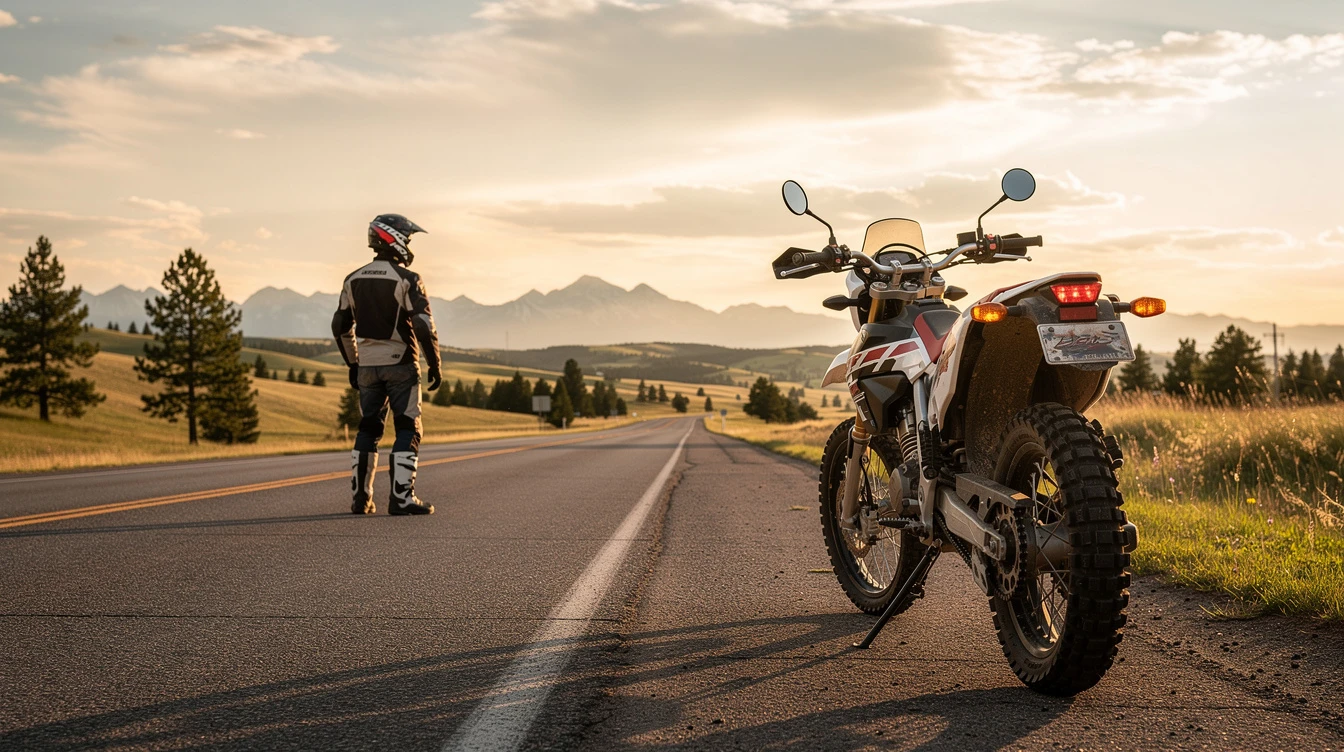
To answer what license do you need to drive a street-legal dirtbike if it’s a Montana permanent plate, you need a valid standard driver's license with a motorcycle endorsement from your home state of residence. Vehicle registration and operator licensing are separate, meaning out-of-state Montana plates do not change the driver licensing standards enforced by your local jurisdiction.
In This Guide
- What Driver's License Do You Need for a Montana Plated Dirt Bike?
- How Does Montana Permanent Registration Work for Motorcycles?
- What Equipment Do You Need to Make a Dirt Bike Street Legal?
- Can You Ride an Out-of-State Street Legal Dirt Bike in Your Home State?
- What Are the Steps to Register a Dirt Bike with Permanent Plates?
- Frequently Asked Questions
What Driver's License Do You Need for a Montana Plated Dirt Bike?
You need a standard driver's license carrying an active motorcycle endorsement issued by the state where you live. Operating an on-road motorcycle requires credentials from your home state, regardless of where the machine holds its license plate.
A motorcycle endorsement is a state-issued credential added to a driver's license that grants authorization to operate two-wheeled motorized vehicles on public roadways. In all 50 states, riders must earn this credential by completing a knowledge exam, an off-street riding skills evaluation, or a certified motorcycle safety course. If an engine displacement exceeds 49cc or the motorcycle reaches speeds over 30 miles per hour, standard driver licensing laws categorize the vehicle as a motorcycle rather than a moped or motorized bicycle.
A common point of confusion involves vehicle jurisdiction versus personal licensing jurisdiction. While a vehicle can be titled and tagged in another state through ownership structures, driver licenses are tied directly to individual residency. Under the national Driver License Compact, a cooperative agreement between 45 states and Washington, D.C., traffic law enforcement agencies share driver status data across state lines. If an officer pulls you over, they review your driver credentials under the laws of your home state, while checking the registration against out-of-state motor vehicle databases.
Riding without a valid motorcycle endorsement can result in class-level misdemeanors, vehicle impoundment fees exceeding $500, and moving violation points. A detailed breakdown of rider licensing standards is covered in Do You Need a Motorcycle License to Ride a Dirt Bike?. Maintaining the proper endorsement protects both your driving record and your insurance coverage in the event of an accident.
How Does Montana Permanent Registration Work for Motorcycles?
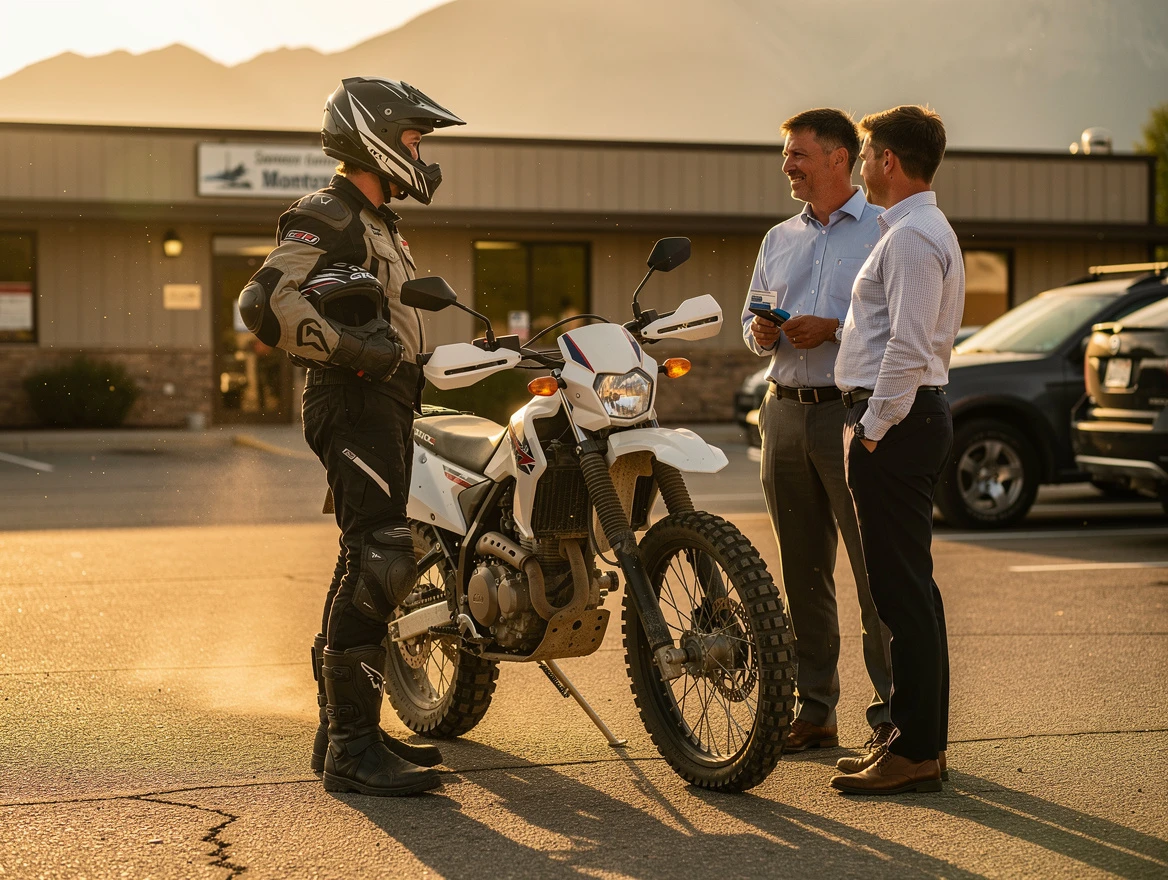
Permanent vehicle registration in Montana grants a permanent license plate that never requires annual decal renewals or recurring state registration fees. Under Montana Code Annotated 61-3-321, all on-road motorcycles registered in the state receive permanent status upon initial registration.
Ready to register your vehicle?
Join thousands of vehicle owners who use Dirt Legal to handle their registration quickly.
Permanent registration is a motor vehicle licensing status where a single, non-expiring registration tag is issued to a vehicle for the duration of its current ownership. Unlike conventional passenger cars in other jurisdictions that demand annual safety inspections and yearly tax filings, Montana motorcycle plates remain active indefinitely. You pay the titling and registration fees once, mount your plate, and maintain continuous street use without returning to an office for new expiration stickers.
Vehicle owners across the country establish ownership using an LLC formation. This structure allows non-residents to hold vehicle titles under a business entity situated in Big Sky Country. For an overview of this framework, review our Montana LLC guide to see how asset titling operates.
Dirt Legal has completed over 6,000 customer orders to date (lifetime through current month, n=6,414), helping riders throughout the country secure paperwork solutions without endless administrative headaches.
What Equipment Do You Need to Make a Dirt Bike Street-Legal?
To operate safely and meet roadway standards nationwide, a converted dirt bike must carry specific mechanical safety components. These hardware additions transition an off-highway motorcycle into a machine capable of meeting on-road visibility and signalling rules.
A street-legal conversion modifies an off-highway vehicle by installing Department of Transportation-approved lighting, mirrors, audible warning devices, and pavement-rated tires. Pictured above, a white, yellow, and blue Husqvarna dirt bike rests on a maintenance stand in a garage workshop, fully fitted with dual mirrors, a durable rear taillight assembly, knobby dual-sport tires, and a permanent Montana plate. Behind the bike, red and black tool cabinets store the necessary equipment for conversions, illustrating how trail machines become completely road-ready.
Most states enforce standard mechanical criteria for two-wheeled vehicles operating on public roads:
- Headlight: Must include high-beam and low-beam operating modes, visible from a distance of at least 500 feet.
- Tail Light and Brake Light: Must activate via both the front hand brake lever and the rear foot brake pedal, maintaining illumination visible from 300 feet.
- Rearview Mirrors: At least one mirror offering 200 feet of rearward visibility, though two mirrors with at least 3 inches of diameter are recommended.
- Turn Signals: Front and rear amber and red indicators spaced at least 9 inches apart, required in roughly 40 states.
- Horn: An electric horn audible from a distance of not less than 200 feet.
- DOT-Approved Tires: Tires marked with Department of Transportation stamps and minimum tread depth of 2/32 inch.
- Exhaust: Spark arrestor and muffler operating within noise thresholds, usually below 84 decibels at 50 feet.
For more details on off-road vehicle standards in other states, read Florida off-road regulations to understand state hardware differences.
Skip the Paperwork, Let Us Handle It
Can You Ride an Out-of-State Street-Legal Dirt Bike in Your Home State?
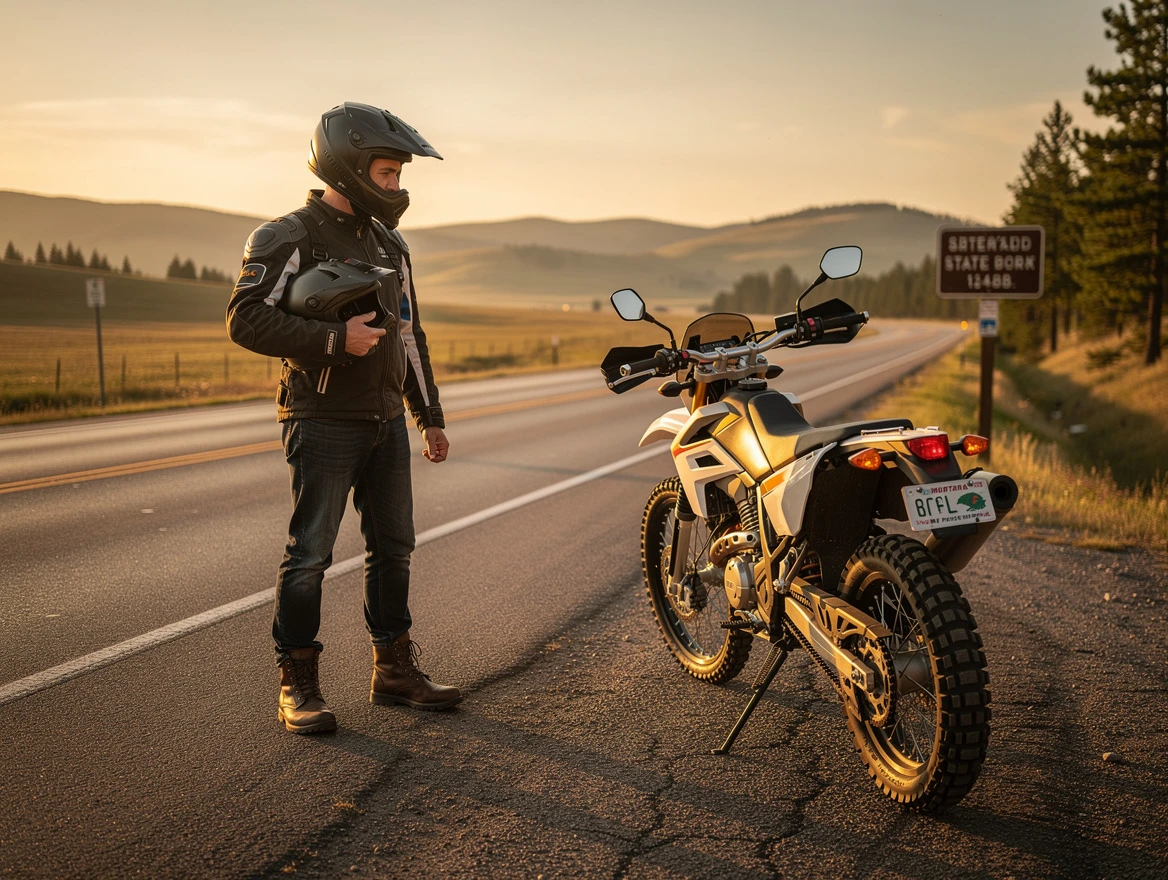
Yes, you can operate a street-legal dirt bike displaying an out-of-state plate in your home state under statutory vehicle reciprocity agreements. Every state recognizes valid registration documents issued by other jurisdictions as long as the operator holds proper driving credentials.
Registration reciprocity is a framework that allows motor vehicles registered in one state to travel on the roads of another state without re-registering for temporary travel. However, local equipment regulations can still be enforced. If your home state mandates turn signals or specific mirror configurations, local law enforcement can cite equipment violations even if the registering state did not require an initial physical inspection.
The following table outlines how registration, inspection, and licensing obligations vary across jurisdictions:
| Jurisdiction Standard | Montana Rules | Typical Home State Rules | Operator Impact |
|---|---|---|---|
| License Plate Lifespan | Permanent (no expiration stickers) | 1-2 years before mandatory renewal | Zero annual tag renewal steps |
| Vehicle Inspection | No physical inspection needed | Annual safety and emissions checks | Must maintain road-ready equipment |
| Sales Tax on Registration | 0% statutory rate | 3% to 10% vehicle sales tax | Significant upfront purchase savings |
| Required Operator License | Motorcycle endorsement | Motorcycle endorsement | Must hold endorsement in resident state |
To examine related powersports rules, read Can You Make a UTV Street Legal in Tennessee? What You Need to Know or review Can You Make a UTV Street Legal in South Dakota? What to Know. You can also look at how partner platforms handle specialty applications via How a Motorcycle Registration Service Online Simplifies Ownership.
What Are the Steps to Register a Dirt Bike with Permanent Plates?
Registering a dirt bike with Montana permanent plates involves establishing ownership through an LLC, preparing vehicle paperwork, and submitting title filings. This process establishes an on-road title and plate without requiring personal travel to a state licensing office.
- Form an In-State Business Entity: Set up an asset-holding company in Montana with a registered agent who receives official mailings.
- Gather Ownership Documents: Collect your original Manufacturer's Certificate of Origin (MCO) or existing vehicle title signed over to your company.
- Submit the Registration Packet: File paperwork with county title departments through an authorized private compliance provider.
- Receive Metal License Plates: Get your permanent motorcycle license plate and title document delivered to your home mailing address.
- Install Street Equipment: Fit DOT-approved dual-sport tires, mirrors, lights, and an electric horn before riding on public streets.
If you recently acquired a machine lacking paperwork, read Have a Motorcycle With No Title? Here’s How to Get One. You can also consult our guides on Why Do People Register Cars in Montana? The Real Reasons Explained, or check our sister brand guide on I Have a Car With No Title. Is It Worth Trying to Get One?.
For owners exploring our offerings, check how the process works to understand how our team assists with your registration goals.
Frequently Asked Questions
Do you need a license to drive a dirt bike?
You do not need a driver's license to operate a dirt bike exclusively on private property or designated off-road riding parks. However, as soon as the dirt bike touches public roadways, thoroughfares, or highway shoulders, operators must hold a valid driver's license with a recognized motorcycle endorsement from their home state.
Are dirt bikes street-legal?
Dirt bikes are not manufactured street-legal from the factory because they lack DOT-approved headlights, mirrors, turn signals, and horns. They become street-legal only after an owner installs the required road equipment and secures an on-road motor vehicle title and license plate through a state motor vehicle division.
What does a car need to be street-legal?
A passenger car requires functional headlights, brake lights, turn signals, seat belts, a horn, rearview mirrors, safety glass windshields, and DOT-stamped tires. Additionally, the car must have an active license plate, up-to-date registration paperwork, and a state-issued certificate of title to operate across public highway networks.
Do you need a license for a street-legal dirt bike?
Yes, you must hold a valid driver's license carrying an official motorcycle endorsement to operate any street-legal dirt bike on public streets. Even with valid Montana permanent plates, law enforcement verifies your personal credentials under the motor vehicle licensing standards established by the state where you hold primary residency.
Does Montana have permanent license plates?
Yes, Montana issues permanent registration plates for eligible vehicles, including light vehicles eleven years or older, utility trailers, and all on-road motorcycles. Owners pay a one-time registration fee, receiving a permanent metal plate that eliminates recurring renewal stickers or regular annual administrative filings.