What Is an MSO? Manufacturer's Statement of Origin
What is an MSO? Manufacturer's Statement of Origin explained simply. Learn how an MSO works, MSO vs title, and how to get your vehicle titled quickly.

A Manufacturer's Statement of Origin (MSO), also called a Manufacturer's Certificate of Origin (MCO), is the initial birth certificate issued by a vehicle manufacturer establishing initial ownership before a state title is ever generated. It proves a brand-new vehicle came straight from the factory and gives the first owner or dealership the document needed to secure a real vehicle title.
Check Your Registration Options →
In This Guide
- What Information Appears on an MSO Document?
- What Is the Difference Between an MSO and a Vehicle Title?
- Can You Legally Drive a Vehicle With Just an MSO?
- How Do You Convert an MSO Into a State Title?
- What Should You Do If You Bought a Used Vehicle With Only an MSO?
- Frequently Asked Questions
What Information Appears on an MSO Document?
An MSO is printed on high-security banknote paper containing watermarks, microprinting, and security threads to deter fraud. It serves as evidence that an original piece of motorized equipment exists and transfers from the factory assembly line into private commerce.
When a factory builds a car, motorcycle, trailer, or side-by-side, it assigns standard technical specs straight onto the face of the document. You will immediately notice essential identifiers printed directly across the front:
- Vehicle Identification Number (VIN): The unique 17-digit code identifying the vehicle chassis. You can always cross-reference the number using the NHTSA VIN Lookup or run a full background verification through our VIN check service.
- Year, Make, and Model: The specific production build designation.
- Body Type and Engine Specs: Number of cylinders, horsepower, gross vehicle weight rating (GVWR), and shipping weight.
- Original Dealer Consignee: The name and physical address of the franchised dealer authorized to receive the initial shipment.
- Authorized Signatures: A certified signature or corporate seal from the manufacturer's authorized representative.
On the back of the MSO, transfer blocks let the selling dealership sign over ownership to the retail purchaser, similar to a title reassignment. Dirt Legal has helped 80,000+ vehicle orders to date, meaning our team knows precisely what a clean, properly endorsed certificate requires.
What Is the Difference Between an MSO and a Vehicle Title?
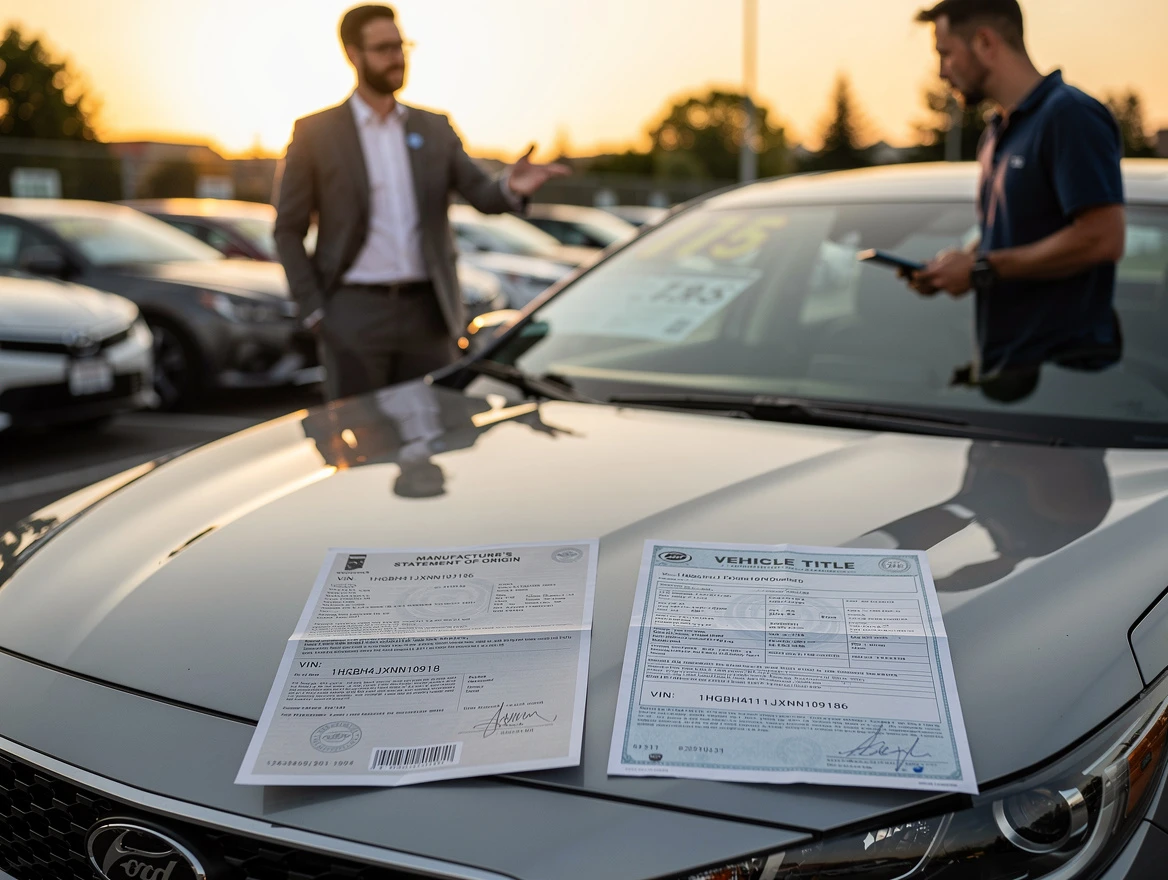
An MSO is an origin document produced by a private manufacturing company, whereas a vehicle title is an official ownership certificate issued by a state agency. You cannot renew tags or register plates on an MSO alone because states require a surrendered origin certificate before printing your first certificate of title.
Ready to register your vehicle?
Join thousands of vehicle owners who use Dirt Legal to handle their registration quickly.
Dealerships hold the MSO in their floor-plan vault while the unit sits on the lot. Once you pay for the machine, that origin paper gets sent to the licensing agency to create your permanent title record. Let us look at how these two critical ownership records stack up against each other.
| Document Feature | Manufacturer's Statement of Origin (MSO) | State Certificate of Title |
|---|---|---|
| Issuing Authority | Private vehicle manufacturer | State licensing department or motor vehicle agency |
| Primary Function | Transfers unit from builder to dealer or initial retail buyer | Proves ownership and records active vehicle liens |
| Allows Road Registration? | No, cannot receive street license plates directly | Yes, required to obtain street tags and registration |
| Holder of Record | Franchised dealer, distributor, or first retail buyer | Vehicle owner or designated lienholder |
| Security Features | Banknote paper, security thread, corporate seal | State seal, tamper-evident security foil, state watermark |
| Lifespan | Temporary, surrendered upon first title issuance | Permanent, replaced only by transfer or duplicate title |
If you purchase brand-new powersport equipment, utility trailers, or off-road machines, you may receive the MSO directly in hand if the dealership does not process local plates. For off-road builds, you can look at our complete breakdown on Street Legal Vehicle registration assistance services to learn how an origin document transforms into highway credentials.
Can You Drive a Vehicle With Just an MSO?
Operating a vehicle on public roads with only an MSO in your glovebox is not permitted in all fifty states. An MSO establishes origin and chains of transfer, but it does not convey highway operating authority, highway tax payment compliance, or active road registration.
Law enforcement officers who pull you over will ask for your driver's license, proof of insurance, and valid registration card. Showing an MSO to an officer simply proves who made the vehicle, not that it is registered to operate on public tarmac. Driving unregistered carries hefty consequences across the country:
- Traffic Citations: Substantial fines for driving an unregistered vehicle or operating without valid plates.
- Vehicle Impoundment: Officers can tow your machine immediately, leaving you with heavy towing and daily impound storage fees.
- Insurance Denials: Many major auto insurers refuse to honor collision or liability claims if an incident happens while operating an unregistered car.
If you run a side-by-side or dirt bike with only an MSO, state laws vary dramatically on street compliant. For example, check out our guide on Can You Make a UTV Street Legal in Tennessee? What You Need to Know to understand state-level street compliance. Drivers looking at out-of-state titled rides can also review our analysis on The Benefits of Registering a Florida Car Out-of-State for tactical paperwork strategies.
How Do You Convert an MSO Into a State Title?

Converting an MSO into a valid state title requires submitting the original origin certificate, sales invoices, proof of sales tax, and a title application to a state vehicle agency. The licensing office cancels the MSO, archives it in their permanent database, and prints a brand-new title certificate in your name.
You can execute this title conversion by completing several orderly steps:
- Obtain the Original MSO: Verify that the manufacturer representative signed the front and that the dealer properly signed the reassignment section on the back directly to your name.
- Gather Bill of Sale and Invoices: Collect a complete invoice showing purchase price, dealer disclosures, and any sales taxes collected at the point of sale.
- Complete the State Application: Fill out the official title and license plate application for your destination state.
- Submit Vehicle Inspections: Some states require a physical VIN verification or safety inspection for newly titled off-road imports or assembled units before issuance.
- Remit State Fees and Taxes: Submit the required state titling fees, local registration fees, and state sales taxes based on your jurisdiction.
If you prefer an ownership framework with no sales tax and permanent plate options, look into forming a company entity in Big Sky Country. Read our complete Montana LLC guide or look at our dedicated Montana LLC Vehicle Registration packages to keep your overhead manageable. Sister operations also provide specialized paths, such as the LLC Vehicle Registration Checklist: Exotic Car Guide over at Ride Legal.
Let Dirt Legal Handle Your Titling Paperwork →
What Should You Do If You Bought a Used Vehicle With Only an MSO?
Buying a pre-owned vehicle where the seller hands you an open MSO instead of a title in their name creates a dangerous paperwork trap known as title jumping. If the person selling you the vehicle never titled it, the chain of ownership is broken, causing licensing offices to reject your application immediately.
In standard transactions, the person listed on the back of the MSO must title the vehicle first before reselling it to someone else. When private parties trade vehicles using an MSO signed over to an earlier buyer, state clerks flag the transaction. Here is how you can resolve an open MSO dilemma:
- Contact the Original Selling Dealer: If the dealer made an administrative error on the reassignment box, they might reissue an updated duplicate MSO or correct the reassignment lines.
- Track Down the Prior Owner: Have the person named on the original paper title the machine in their home state, then transfer that newly minted title to you.
- Review Title Jumping Rules: Skipping steps to avoid sales tax is nationwide. A more detailed breakdown is available in Title Jumping is More Illegal Than Jumping a Car. That breakdown clarifies why skipping the title process creates costly headaches for future buyers.
- Use a Bonded Title or Out-of-State Option: If prior owners are unreachable, you may need a surety bond or specialized registration assistance. Owners facing missing paperwork often read I Have a Car With No Title. Is It Worth Trying to Get One? to weigh their options. Dirt Legal also assists riders wondering Have a Motorcycle With No Title? Here’s How to Get One with reliable remote paperwork support.
Dirt Legal has completed over 6,000 customer orders to date (lifetime through current month, n=6,414), helping riders and collectors resolve complex title defects, missing certificates, and origin paperwork snarls nationwide.
Frequently Asked Questions
What is a manufacturer's statement of origin?
A Manufacturer's Statement of Origin is a certified security document created by a vehicle manufacturer that confirms a vehicle's specifications, VIN, and initial existence. It acts as the unit's birth certificate, allowing the first purchasing dealer or retail customer to establish ownership and obtain an original state title.
How to get a manufacturer's certificate of origin?
You obtain an MCO directly from the authorized selling dealership when buying a brand-new vehicle. If the original origin document is lost before initial titling, only the original selling dealer can request a certified replacement duplicate MCO directly from the vehicle manufacturer's corporate licensing or distribution division.
Is a manufacturer's statement of origin acceptable for vehicle registration?
No, an MSO alone is not acceptable for active road registration or license plates. State motor vehicle agencies require you to surrender the original MSO alongside an application for title and registration so the agency can issue an official certificate of title before granting road license plates.
Why do you need a manufacturer's statement of origin to register a car with the DMV?
State agencies require the MSO for a brand-new vehicle to verify the vehicle identification number, make sure the vehicle meets federal safety regulations, and verify the chain of ownership from the builder. Surrendering the MSO prevents duplicate titles from being printed for the same VIN across different jurisdictions.
What is an MSO?
An MSO stands for Manufacturer's Statement of Origin. It represents the foundational paperwork generated by a factory when assembling a new passenger car, motorcycle, trailer, or powersports machine. It precedes any state-issued title and provides the factual basis required for the first owner to obtain state ownership papers.
What does MSO mean?
MSO means Manufacturer's Statement of Origin, used interchangeably in the automotive industry with MCO (Manufacturer's Certificate of Origin). It signifies that a vehicle was built by an authorized manufacturing entity and has never previously been titled or registered in any public motor vehicle registry.
Ready to Title and Register Your Machine?
Do not let missing paperwork, origin documents, or out-of-state titling rules stall your plans. Dirt Legal provides complete paperwork support to help you title and register your car, motorcycle, side-by-side, or trailer without stress.