Registering a Humvee in Montana: What Owners Need to Know
Many states won't register a surplus Humvee for road use. Learn what paperwork to gather and what to check before you start the Montana registration process.
A surplus Humvee (HMMWV) can be hard to register for road use because many DMVs aren't sure how to classify a former military vehicle. This guide explains why, what paperwork to gather, and what to confirm before you start.
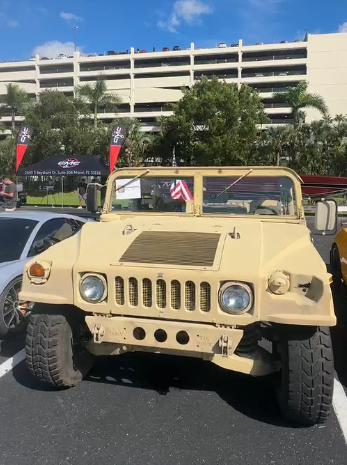
A surplus military HMMWV in desert tan. The flat hood, slatted grille, and stenciled bumper markings are typical of the type.
Why a Humvee is hard to register
Updated on October 15, 2026
Surplus military vehicles weren't built to civilian road standards, and they often arrive with paperwork that looks nothing like a standard title. Some states treat them as restricted or off-road-only, and many DMV counters have little experience with them. Rules differ from state to state and change over time, so check your own state's current requirements before you buy or transport one.
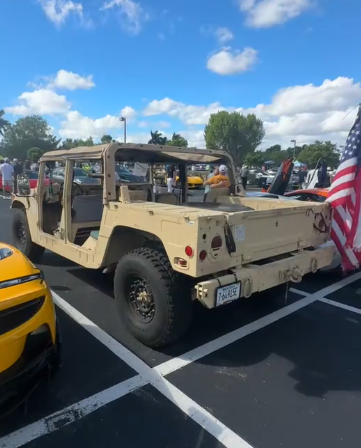
An open-top surplus HMMWV with a cargo bed and military-style wheels. Features like these are part of why DMVs often don't know how to classify these vehicles.
A customer story: six DMV trips, then one call
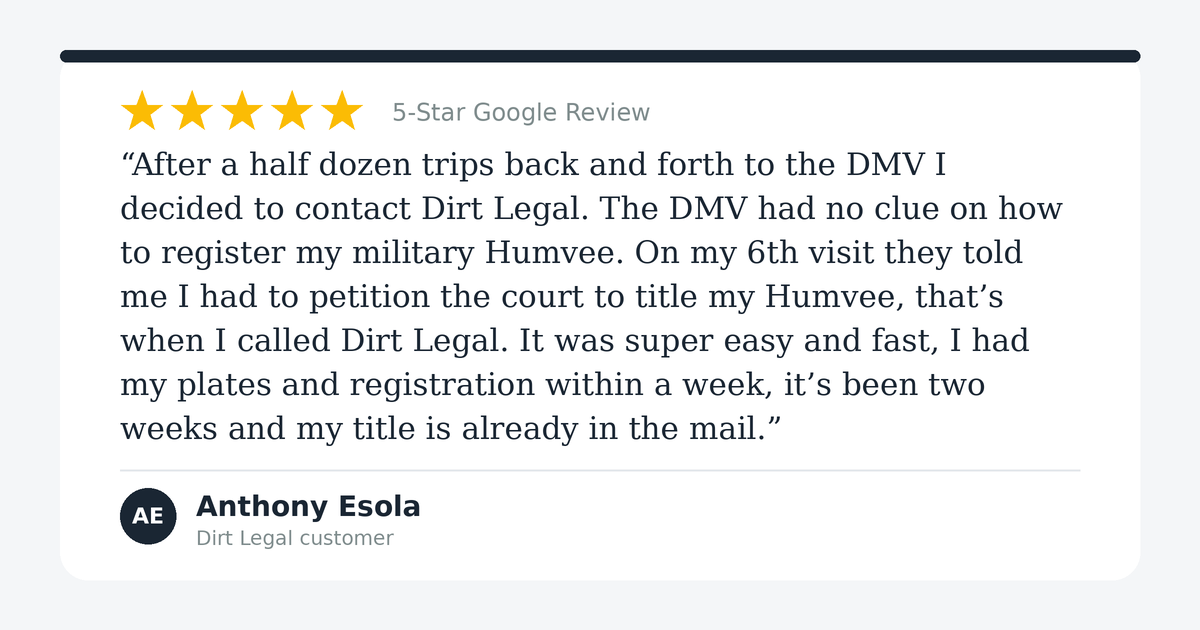
Anthony came to Dirt Legal after what he described as a half dozen trips to the DMV. He wrote that the DMV didn't know how to register his military Humvee, and that on his sixth visit he was told he would have to petition a court to title it. That's when he contacted us.
In his own words, he had plates and registration within a week, and his title was in the mail about two weeks after that. His full 5-star Google review is shown at the top of this page.
This is one customer's experience. Timelines depend on the vehicle, the paperwork and the state involved, and we can't promise the same result in every case.
Paperwork to gather
Which documents apply depends on how you got the vehicle. Start by collecting:
- Proof of ownership, such as a bill of sale and any government sale or demilitarization paperwork.
- A prior title, if the vehicle has one.
- Clear photos of the VIN plate and data tag.
- Details about where you live and where the vehicle is kept, since your home state may still have requirements.
Keep copies of everything you submit. If a DMV turns you away, write down the date, the office, the person you spoke with and the reason given. A clear record of what was tried and what was said makes the next step much simpler, whether you try again or ask for help.
Questions to settle before you buy or move a surplus Humvee
Many owners run into trouble because they bought the vehicle first and asked about registration afterward. Before you commit, work through these questions:
- What document comes with the vehicle: a title, a government sale form, or only a bill of sale?
- Does the paperwork say the vehicle is restricted to off-road use?
- Does your home state register this kind of vehicle for road use, and what does it ask for?
- Will you be able to show a readable VIN and data plate for inspection?
- Do you know what insurance, inspection, and equipment rules apply where you will drive it?
The answers shape what you can do next. If your home state says no, or if the paperwork is incomplete, you may have other options to consider, but they depend on your facts. That's why we ask for your documents before suggesting a path.
Montana residency rules
The Montana Motor Vehicle Division requires new residents to title and register their vehicles within 60 days of establishing residency. You can read the current rules on the Montana MVD vehicle registration page. If you aren't sure how Montana's rules apply to you and your vehicle, talk to us before you file anything.
What we won't promise
We can't tell you in advance that your vehicle will be accepted. Outcomes depend on your documents, your home state and current Montana rules. Describe your vehicle accurately on every form. Accurate paperwork protects you if anyone questions the registration later.
Frequently asked questions
Can I register a surplus Humvee for road use?
It depends on the state and the documents you have. Some states restrict these vehicles to off-road use.
What should I bring to start?
Proof of ownership, any prior title, clear VIN and data plate photos, and your residency details.
Do I still owe anything to my home state?
Possibly. Requirements depend on where you live and where the vehicle is kept, so ask us about your situation.
Published by the Dirt Legal team. This article is general information only. For questions about your specific vehicle, contact us.