Optima vs Interstate Batteries: Which Brand Wins
Compare Optima and Interstate automotive batteries side-by-side. Learn which brand offers better performance, reliability, and value for your vehicle.
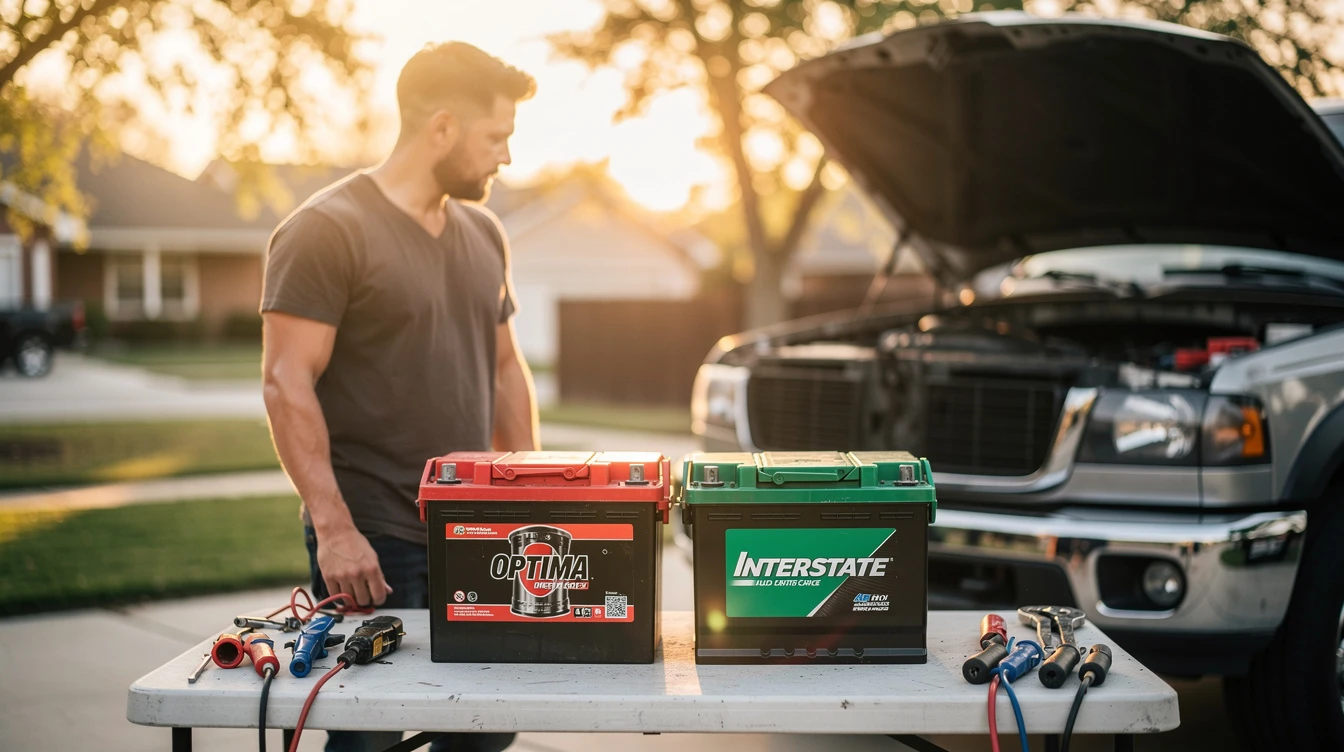
Choosing between Optima and Interstate batteries comes down to your vehicle's needs, budget, and your willingness to pay a bespoke for specialized performance. Both brands deliver reliable power, but they excel in different scenarios, and understanding those differences will help you pick the right one for your situation.
Check My Options ->In This Guide
- What Sets Optima and Interstate Apart as Battery Brands
- How Optima and Interstate Perform Under Real-World Conditions
- Cost and Long-Term Value, Battery by Battery
- Which Battery Works Best for Your Vehicle Type
- Warranty Coverage and Customer Support Comparison
- How to Choose Between Optima and Interstate for Your Needs
- Frequently Asked Questions
What Sets Optima and Interstate Apart as Battery Brands
Optima is a automotive battery brand, part of Clarios, known for its Spiralcell AGM design and its red, yellow, and blue top lines. Interstate Batteries, founded in 1952, is a privately held company that sells batteries made by other manufacturers through a large retail and distributor network across North America.
The fundamental difference lies in positioning. Optima targets motorsports, off-road, marine and heavy-electrical-load users willing to pay more upfront. Interstate aims for broad market coverage with a balanced approach to price and reliability, available at thousands of retail locations nationwide.
- Optima: good standing positioning, Spiralcell AGM technology, higher price point, strong in motorsports and off-road communities
- Interstate: Mainstream market focus, traditional lead-acid and AGM options, competitive pricing, wide availability in local shops and chains
- Manufacturing: Optima’s Spiralcell batteries are built at its Monterrey, Mexico plant; Interstate sells batteries produced by outside manufacturers
Traditional lead-acid batteries can suffer from acid stratification, where the electrolyte separates into layers. AGM (absorbent glass mat) batteries hold the electrolyte in a glass mat, which prevents layering. Both brands make AGM batteries, but Optima’s Spiralcell construction adds vibration resistance and weight savings that matter in off-road, marine, and racing use.
How Optima and Interstate Perform Under Real-World Conditions

Optima batteries excel where conditions are tough: heavy vibration, high heat, cold starts and vehicles running winches, lighting, audio, or other high electrical loads. Interstate batteries deliver dependable starting power for everyday driving, and its AGM line also works well as a replacement for factory AGM batteries.
Ready to register your vehicle?
Join thousands of vehicle owners who use Dirt Legal to handle their registration quickly.
| Performance Factor | Optima | Interstate |
|---|---|---|
| Cold Cranking Amps (CCA) | 750, 1000 CCA (bespoke specs) | 600, 900 CCA (mid-range specs) |
| Reserve Capacity | High (designed for extended drain) | Good (standard vehicle needs) |
| Vibration Resistance | Superior (spiral-wound design) | Adequate (traditional plates) |
| Temperature Range | Excellent in extreme heat and cold | Good in standard conditions |
| Charging Speed | Faster acceptance, especially AGM models | Standard charging times |
| Cycle Life | AGM models last 300+ cycles | Standard models 200, 250 cycles |
In cold climates, Optima’s Red Top is built for strong cold-cranking power, which makes it a good choice for reliable winter starts, especially on diesels. Interstate holds its own in moderate climates and delivers predictable performance across the range of everyday vehicles on the road.
For heavier electrical demands, Optima’s Yellow Top is a deep-cycle battery built for winches, high-power lighting, audio equipment, and fridges, including running accessories with the engine off. If your vehicle is stock with standard alternator and electrical demands, Interstate will handle the job without overspending.
Cost and Long-Term Value, Battery by Battery
Optima batteries typically cost noticeably more than comparable Interstate models. That upfront cost should be weighed against warranty coverage, how long you plan to keep the vehicle, and whether your vehicle will benefit from Optima’s performance advantages.
- Optima pricing: [insert current price range from retailer listings]
- Interstate pricing: [insert current price range for comparable group sizes]
- Optima warranty: 36 months of free replacement on Red Top and Yellow Top, 24 months on Blue Top
- Interstate warranty: 18 to 48 months of free replacement depending on the line, with discounted replacement on some lines for up to 5 to 6 years
The long-term value calculation depends on how long you keep the vehicle and what you ask of the battery. If you run heavy electrical loads, hard vibration, or harsh conditions, Optima’s construction may be worth it. For stock electrical systems or shorter ownership, Interstate offers better immediate value.
Optima’s pricing is partly justified by its motorsports heritage and its use in off-road, marine and high-performance builds where vibration, heat, and electrical demands exceed stock specs. Interstate is engineered for the majority of drivers whose vehicles use standard electrical systems.
Skip the Paperwork, We Handle Registration ->
Which Battery Works Best for Your Vehicle Type
The right choice depends on your vehicle’s electrical demands, climate and modification level. A stock sedan in a moderate climate will do well on an Interstate battery, while a lifted truck with a winch and extra lighting, an off-road build, or a vehicle that runs accessories with the engine off benefits from Optima’s construction.
- Stock passenger cars and sedans: Interstate is the smart choice. It offers dependable starting power at a reasonable price and is a popular OEM replacement.
- Trucks and SUVs: Consider Interstate for baseline vehicles. Optima’s Yellow Top suits those with winches, high-power lighting, or other heavy auxiliary loads.
- Elevated vehicles with factory AGM batteries (BMW, Mercedes, Audi): Replace like with like. Interstate’s AGM line is a common factory-replacement choice, and Optima is an option if you’ve added heavy electrical loads.
- Cold climates and diesels: Optima’s Red Top is built for strong cold-cranking power.
- High-performance and racing builds: Optima’s Yellow Top is the choice for high electrical loads, including race vehicles without an alternator.
- Off-road and recreational vehicles: Optima’s vibration resistance and lighter weight are valuable in rough terrain, which is where the brand built its reputation.
- Marine and RV use: Optima’s Blue Top adds threaded terminals for trolling motors and other accessories.
If you’re unsure about your vehicle’s electrical demands, check your owner’s manual for the OEM battery type and CCA specification. If your vehicle has a factory AGM battery or you’ve added aftermarket systems, match the battery type and review the load before you buy.
For a standard vehicle that runs and starts reliably, Interstate will serve you just as well as Optima, without the bespoke.
Warranty Coverage and Customer Support Comparison
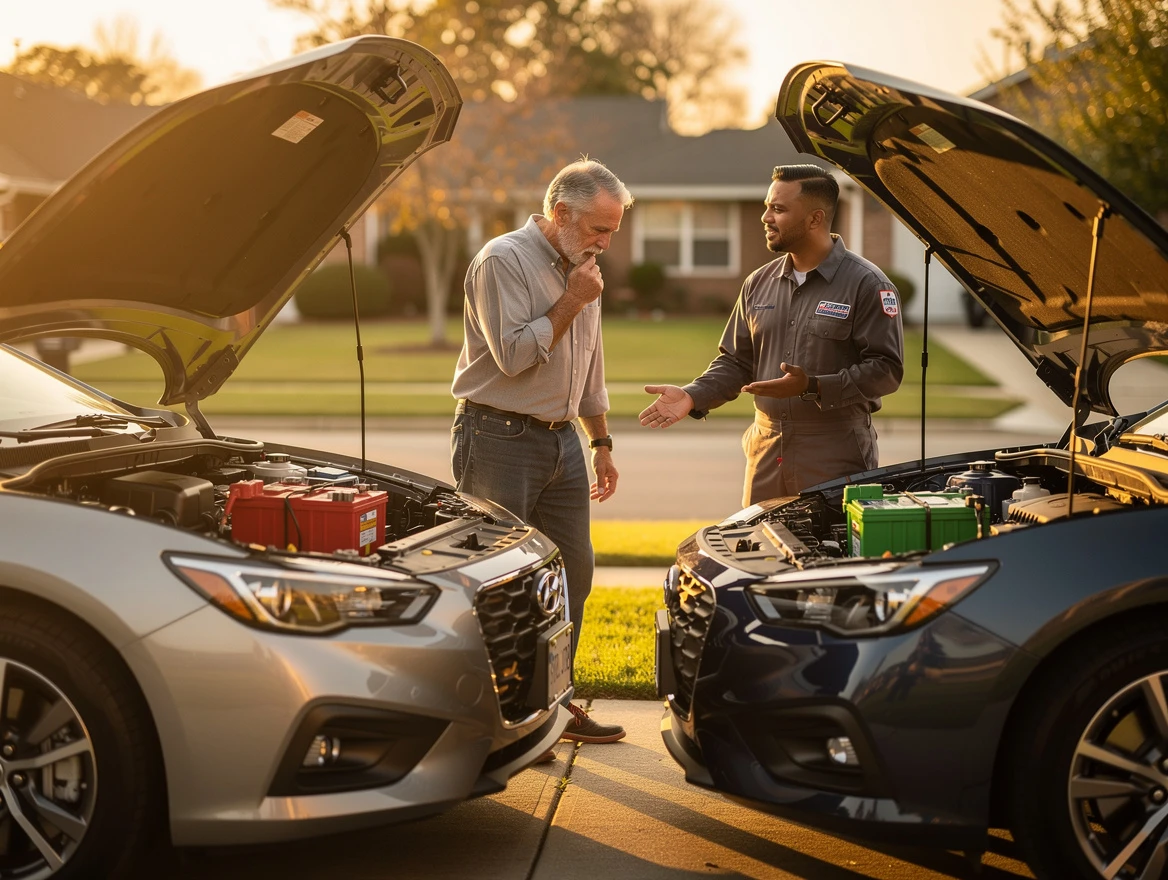
Your decision should start with three questions: What does my vehicle require, what am I willing to spend, and how long do I plan to own the vehicle?
- Check your OEM specification: Look at your owner’s manual or the existing battery for the group size and minimum CCA rating. Both Optima and Interstate offer equivalents.
- Assess your electrical load: Do you have a stock electrical system, or have you added winches, high-power lighting, audio systems or a fridge? Heavy loads, especially with the engine off, point to Optima’s Yellow Top.
- Consider your climate: If you start in cold weather or drive a diesel, Optima’s Red Top is built for strong cold-cranking power. Moderate climates and stock vehicles don’t require the bespoke.
- Think about how you use the vehicle: Hard vibration, high heat and off-road or marine use favor Optima’s construction. Everyday driving favors Interstate’s lower price.
- Factor in availability and service: Interstate has service centers and authorized dealers nationwide, which makes replacements and warranty claims easier. Check local stock for Optima before you plan around it.
- Review your budget: If you’re replacing a failed battery in a stock vehicle, Interstate is usually the more economical fix. If your vehicle’s demands exceed stock, the extra cost of Optima may be worth it.
A practical rule: Install Interstate in standard vehicles with stock electrical systems. Choose Optima for off-road and performance builds, vehicles with heavy electrical loads, and cold-start or harsh-condition use.
How to Choose Between Optima and Interstate for Your Needs
Your decision should start with three questions: What does my vehicle require, what am I willing to spend, and how long do I plan to own the vehicle?
- Check your OEM specification: Look at your owner’s manual or the existing battery for the group size and minimum CCA rating. Both Optima and Interstate offer equivalents.
- Assess your electrical load: Do you have a stock electrical system, or have you added winches, high-power lighting, audio systems or a fridge? Heavy loads, especially with the engine off, point to Optima’s Yellow Top.
- Consider your climate: If you start in cold weather or drive a diesel, Optima’s Red Top is built for strong cold-cranking power. Moderate climates and stock vehicles don’t require the bespoke.
- Think about how you use the vehicle: Hard vibration, high heat and off-road or marine use favor Optima’s construction. Everyday driving favors Interstate’s lower price.
- Factor in availability and service: Interstate has service centers and authorized dealers nationwide, which makes replacements and warranty claims easier. Check local stock for Optima before you plan around it.
- Review your budget: If you’re replacing a failed battery in a stock vehicle, Interstate is usually the more economical fix. If your vehicle’s demands exceed stock, the extra cost of Optima may be worth it.
A practical rule: Install Interstate in standard vehicles with stock electrical systems. Choose Optima for off-road and performance builds, vehicles with heavy electrical loads, and cold-start or harsh-condition use.
Frequently Asked Questions
Can I use an Optima battery as a drop-in replacement for an Interstate battery?
Yes, as long as both batteries have the same group size and terminal configuration. However, Optima batteries are often physically smaller, so verify they fit your battery tray. Check your vehicle's manual for the exact group size requirement and cross-reference both brands' dimensional specs. Most modern vehicles support either brand, but older models may have tight battery boxes.
Why is Optima more expensive than Interstate?
Optima's price reflects its spiral-wound cell design, longer expected lifespan, superior vibration and temperature performance, extended warranty periods, and strong brand positioning in motorsports and bespoke vehicle segments. Interstate uses proven traditional plate technology that costs less to manufacture and is designed for mainstream vehicles with standard electrical demands. Both are quality products; Optima charges for advanced engineering and performance features most drivers don't need.
Which battery lasts longer, Optima or Interstate?
In ideal conditions, Optima typically lasts 4, 6 years; Interstate lasts 3, 5 years. Lifespan depends heavily on climate, driving patterns, vehicle electrical draw, and maintenance. A well-maintained Interstate battery in a moderate climate can outlast a neglected Optima in an extreme environment. Regular charging system checks and clean terminals extend life for both brands.
Is Optima worth it for a daily driver?
For a stock daily driver, Interstate offers better value. Optima shines when your vehicle has heavy electrical loads, you live in an extreme climate, or you plan to keep the vehicle 7+ years. If your car or truck starts reliably and your electrical system is standard, save the bespoke and buy Interstate.
Can I install Optima or Interstate myself?
Yes, battery installation is straightforward. Disconnect the negative terminal first, remove the old battery, clean corrosion from the tray, install the new battery, and reconnect terminals, positive first. Both brands come with installation instructions. If you're unsure, local mechanics and retailers install batteries for a small labor fee.
Do Optima AGM batteries require special charging equipment?
Standard alternators and chargers work fine with Optima AGM batteries. However, if you're charging a deeply discharged AGM battery from zero, a smart charger with AGM settings prevents overcharging and extends life. Interstate offers AGM batteries too, with the same charging compatibility. Regular vehicle driving recharges either battery normally through your alternator.
Next Steps: Choose the Right Battery for Your Vehicle
Both Optima and Interstate deliver automotive reliability at different price points. Your final choice depends on whether your vehicle and driving situation justify Optima's bespoke performance or if Interstate's proven, budget-friendly value aligns with your needs.
If you're building a custom vehicle, registering a modified truck, or working through the paperwork for a specialty vehicle, we can help with the registration side. Street-Legal registration assistance ensures your vehicle meets all compliance requirements, whether it's powered by an Optima, Interstate, or any other battery brand.