My Experience with Vehicle Registration Renewal
Learn how vehicle registration renewal works, what costs to expect, and how Dirt Legal simplifies the process for drivers nationwide.

Vehicle registration renewal is something every driver faces, and it's often more complicated than it should be. The good news is that understanding the process, costs, and options available can save you time and money.
Check My Options ->In This Guide
- What Is a Vehicle Registration?
- Why Is My Vehicle Registration Renewal So Expensive?
- How to Find Your Vehicle Registration Number
- What Happens During the Renewal Process
- Is Vehicle Registration the Same as Tags?
- Registration Options and How to Save Money
- Frequently Asked Questions
What Is a Vehicle Registration?
Updated on November 20, 2026
A vehicle registration is the official document that proves you own your vehicle and have paid the required fees to operate it on public roads. It's issued by your state's motor vehicle division and must be renewed annually or on a schedule set by your state.
Your registration document includes your vehicle identification number (VIN), license plate number, vehicle make and model, and your personal information. The registration tag (also called a plate sticker or decal) displays the year of registration and shows law enforcement that your vehicle is current and street-legal.
Unlike a driver's license, which is personal to you, your vehicle registration is tied to the specific vehicle. When you sell a car, the registration transfers to the new owner, and when you buy a vehicle, you need to register it in your name.
Why Is My Vehicle Registration Renewal So Expensive?
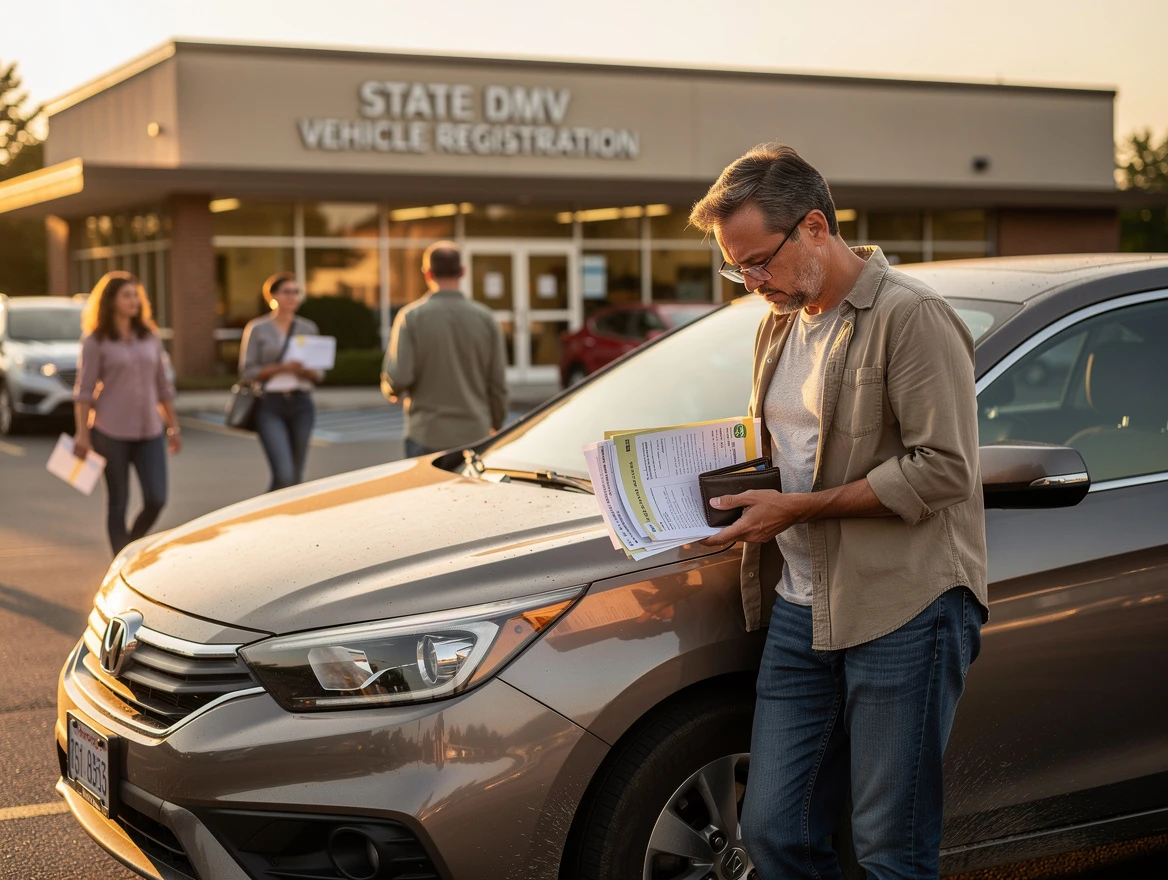
Registration renewal costs vary dramatically based on your state, the vehicle's age, weight, and market value. What you pay in one state might be half or double what you'd pay in another, which is why many vehicle owners look at registration through states like Montana or South Dakota.
Ready to register your vehicle?
Join thousands of vehicle owners who use Dirt Legal to handle their registration quickly.
Several factors contribute to renewal costs:
- State registration fees vary from under $50 to over $300 annually, depending on jurisdiction
- Vehicle value, often determined by age and condition, directly affects the cost in many states
- Vehicle weight and class can increase fees, especially for commercial or heavy vehicles
- Local or county taxes add to the base state fee in some regions
- Specialty plates or vanity options increase the renewal amount
Many states calculate registration fees using a formula that considers your vehicle's market value or depreciation schedule. A five-year-old truck might cost significantly more to register than a classic car, even though the classic is older. This pricing model is why some vehicle owners choose to register their cars in Montana, where vehicle registration costs are structured differently.
If you haven't received your renewal notice or the cost seems unexpectedly high, that's worth investigating. Property tax increases, vehicle reassessment, or changes in state law can all affect your renewal bill.
How to Find Your Vehicle Registration Number
Your registration number is printed on multiple documents and places related to your vehicle. Knowing where to find it is helpful if you lose your physical registration card or need to look it up for a service appointment.
Your registration number appears on:
- Your physical registration card or certificate, usually on the front in large text
- Your vehicle's license plate (some states include registration info on the plate)
- Your vehicle insurance documents and ID card
- Digital copies stored on your state's motor vehicle department website (accessible by logging into your account)
- Renewal notices mailed to your address
If you've lost your registration card, you can typically obtain a duplicate through your state's motor vehicle office online, by mail, or in person. Some states charge a small fee for a duplicate, while others provide it at no cost.
If you're not sure where to start, your state's motor vehicle division website will have a search tool or online portal where you can look up your registration status and details using your license plate number or VIN.
What Happens During the Renewal Process
Vehicle registration renewal is meant to be straightforward, but the steps vary depending on your state's requirements and whether your vehicle needs an inspection. Here's what typically happens:
Step-by-step renewal timeline:
- Receive notice: Your state mails you a renewal notice 30-60 days before your registration expires, showing the amount due and renewal deadline
- Check vehicle requirements: Some states require an emissions test, safety inspection, or VIN verification before you can renew
- Gather documents: You'll need proof of insurance, your current registration card, and sometimes proof of residency
- Pay the renewal fee: Submit payment online, by mail, or in person at your local motor vehicle office
- Receive updated registration: Once processed, you'll receive your new registration card and updated plate sticker by mail
- Apply sticker: Place the new year sticker on your license plate to show your registration is current
Most states allow you to renew up to 30 days before your registration expires, so you don't have to wait until the last minute. Many also offer online renewal, which is the fastest way to complete the process.
Some states require an inspection or emissions test before you can renew. This is common in areas with air quality regulations or in states that want to verify your vehicle is still roadworthy. If your vehicle fails an emissions test, you'll need to have it serviced and retested before you can proceed with registration renewal.
Is Vehicle Registration the Same as Tags?

Vehicle registration and tags are related but not the same thing. The registration is the official document and status of your vehicle, while tags are the physical proof displayed on your license plate.
| Registration | Tags (Plate Stickers) |
|---|---|
| Official document proving ownership and status | Sticker or decal placed on your license plate |
| Kept in your vehicle or at home | Visible on the back of your plate |
| Issued once per year (or on your state's schedule) | Updated annually with new year sticker |
| Required for road-legal operation | Shows law enforcement your registration is current |
| Proves you've paid renewal fees | Proof that you've completed the registration process |
When you renew your registration, you're doing two things: updating your Montana registration status with the state, and receiving a new tag sticker to display your current registration year. If you're pulled over and an officer scans your plate, they'll see that your registration is current if that year's tag is displayed.
Some states use digital registration on your phone instead of physical tags. These digital systems are becoming more common and work the same way, except the proof of registration is electronic rather than a sticker on your plate.
Registration Options and How to Save Money
Not every vehicle owner has to register in their home state. Depending on your situation, you may have multiple registration options that could save you hundreds of dollars annually.
Common registration alternatives:
- Montana registration for vehicles owned out-of-state, with low fees and no vehicle sales tax on initial purchase
- South Dakota residency registration, available to non-residents with low annual fees and simple renewal
- Multi-year registration (available in some states), where you pay for 2-3 years upfront at a discounted rate
- Classic or collector car registration, which costs significantly less than standard registration for older vehicles
- Low-use or recreational vehicle registration, designed for vehicles driven only seasonally
If your registration costs feel unreasonable compared to other states, you have options. Many vehicle owners, especially those with custom builds or high-value vehicles, find that registering through Montana's LLC registration system offers significant tax and fee advantages.
Dirt Legal has completed over 6,000 customer orders to date, helping vehicle owners find registration solutions tailored to their needs and budgets (internal data, lifetime through current month, n=6,669). Whether you're looking to lower your annual renewal costs or simplify the registration process, understanding your options is the first step.
Less paperwork. More peace of mind.
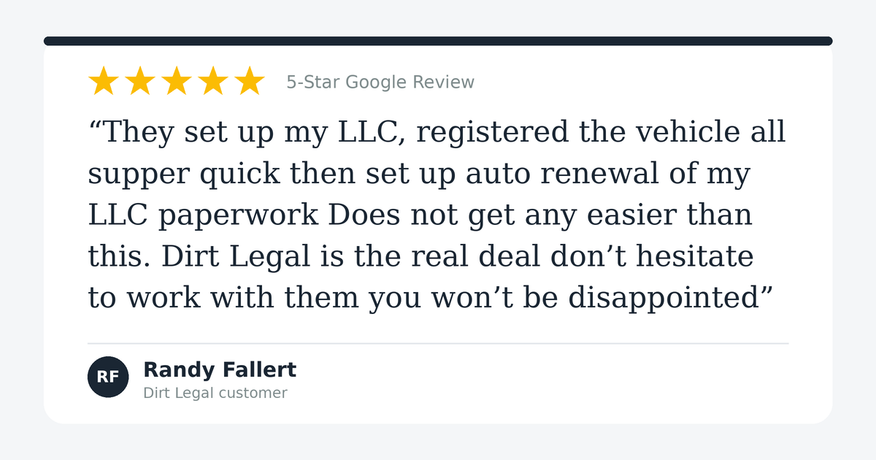
For Randy Fallert, Dirt Legal made the Montana LLC process simple,from forming his LLC to registering his vehicle “super quick.” In his five-star Google review, he also highlighted automatic renewal of his LLC paperwork: “does not get any easier than this.”
Skip the Paperwork, Let Us Handle It ->
Frequently Asked Questions
Why Is My Vehicle Registration Renewal So High?
Registration renewal costs depend on your state's fee structure, your vehicle's value, weight, and class. Some states base fees on a depreciation schedule tied to your car's age and market value, which is why older vehicles sometimes cost more to register than you'd expect. Local taxes, specialty plates, and driving record surcharges can also increase your bill. If the cost seems unexpectedly high, compare your state's rates to alternatives like Montana or South Dakota registration, which are often lower for out-of-state owners.
What Is a Vehicle Registration?
Vehicle registration is the official document and status proving you own a vehicle and have paid the required fees to operate it on public roads. Issued by your state's motor vehicle division, it includes your VIN, license plate number, vehicle details, and your personal information. Registration is renewed annually or on your state's schedule and must be current for your vehicle to be street-legal. It's separate from your driver's license and applies to the vehicle, not the person driving it.
How Do I Find My Vehicle Registration Number?
Your registration number is printed on your physical registration card, often in large text on the front. You can also find it on renewal notices, vehicle insurance documents, and your state's motor vehicle department online portal (by logging into your account). If you've lost your physical registration card, you can order a duplicate through your state's motor vehicle office online or in person. Some states charge a small fee for duplicates, while others provide them at no cost.
What if I Don't Have My Vehicle Registration Renewal Notice?
If you don't receive your renewal notice, don't wait until your registration expires. Contact your state's motor vehicle division directly and check your account online using your license plate number or VIN. The office can confirm your renewal deadline and provide details on what you owe. You can renew without the physical notice by paying online or visiting a motor vehicle office in person. Your registration is still expiring on schedule, so it's important to find out your due date as soon as possible to avoid driving with an expired registration.
Is Vehicle Registration the Same as Tags?
No, they're related but different. Registration is the official document and status proving you own the vehicle and have paid renewal fees. Tags are the physical proof displayed on your license plate, usually as a sticker showing the year of registration. When you renew registration, you receive both an updated registration document and a new tag sticker for your plate. Some states now use digital registration on your phone instead of physical tags, but the concept is the same: the registration is the status, and tags (or digital proof) show that status is current.
What Should I Do If My Registration Renewal Notice Doesn't Arrive?
If you don't receive a renewal notice, your registration deadline is still approaching. The motor vehicle division may have an outdated mailing address for you, or the notice may have been lost in the mail. The safest approach is to log into your state's motor vehicle online portal and check your registration status directly. Use your license plate number or VIN to look up your account. Contact your state's motor vehicle office by phone to confirm your renewal deadline and payment options. Don't wait for the notice; renew as soon as you confirm your due date to avoid penalties and driving with an expired registration.