Can My LLC Own a Vehicle Without a Driver's License?
Can my LLC own a vehicle if I do not have a valid driver’s license? Yes, business ownership is separate from individual driving privileges. Learn how it works.

Yes, your LLC can own a vehicle if you do not have a valid driver’s license because a limited liability company is an independent entity with its own distinct property ownership rights. Vehicle ownership requires title assignment to the corporate entity rather than an individual operator license.
In This Guide
- How Does LLC Vehicle Ownership Work Without an Operator License?
- What Is the Difference Between Titling a Vehicle and Driving It?
- What Documentation Does an LLC Need to Register an Asset?
- What Identification Can an LLC Member Use for Paperwork?
- Why Do Asset Owners Use a Montana LLC for Fleet Vehicles?
- How Does Commercial Insurance Function When the LLC Owner Cannot Drive?
- Frequently Asked Questions
How Does LLC Vehicle Ownership Work Without an Operator License?
A limited liability company possesses distinct property rights separate from its human owners under United States corporate law. Because an LLC acts as its own entity, it can purchase, title, and hold assets such as automobiles, heavy equipment, and powersports regardless of whether its members hold driving credentials. When an LLC buys an asset, the bill of sale and the resulting title certificate reflect the corporate entity name alongside its federal employer identification number.
State motor vehicle titling agencies separate property ownership from the privilege of operating that property on public roadways. Titling establishes equity, while a driver's license merely certifies an individual to steer an automobile on public streets. Consequently, an LLC member without an active license can buy an exotic car, commercial hauler, or work trailer under company ownership without issue.
You can review our Montana LLC guide to see how establishing a holding entity creates asset separation. Dirt Legal assists vehicle purchasers across all fifty states with resolving titling roadblocks when dealing with out of state documentation. In fact, Dirt Legal has completed over 6,000 customer orders to date (lifetime through current month, n=6,410), supporting buyers through complex asset structuring challenges.
What Is the Difference Between Titling a Vehicle and Driving It?
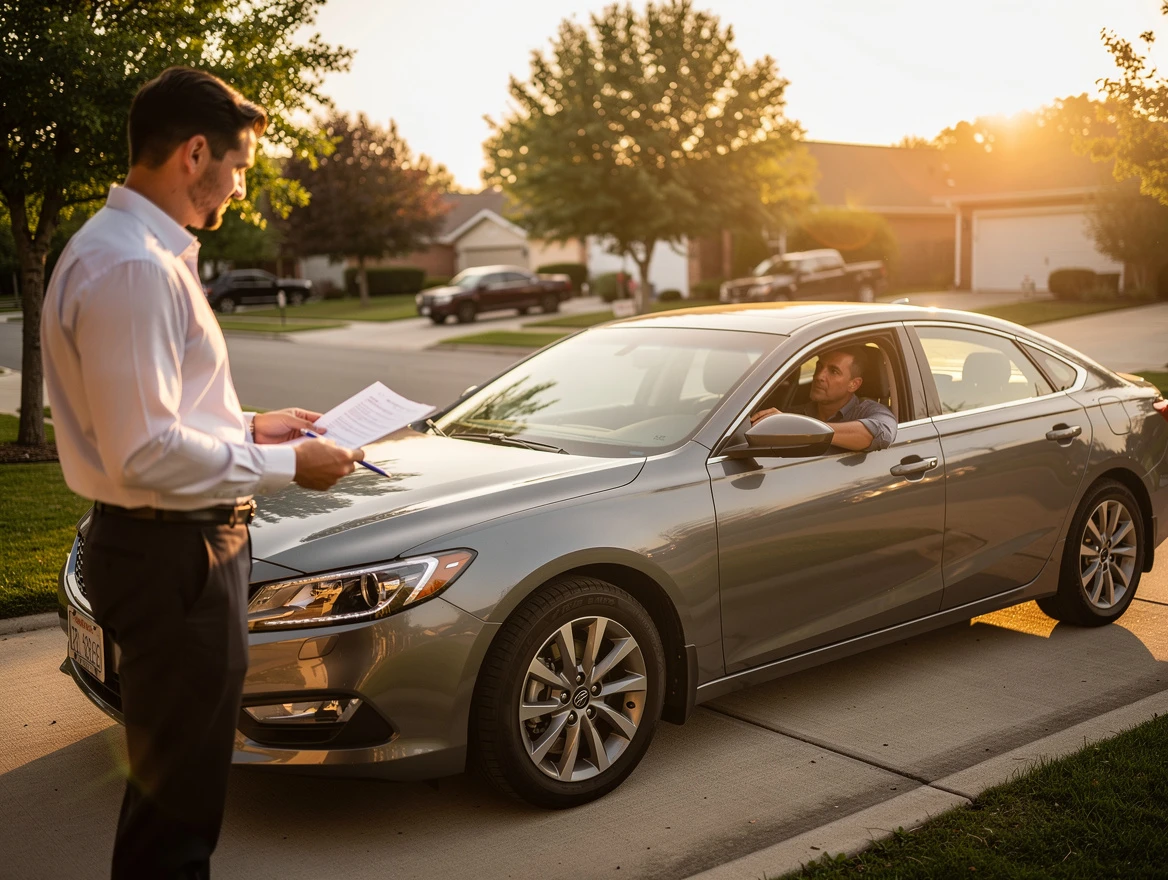
A certificate of title serves strictly as documentary evidence of ownership over tangible personal property. An operator credential represents a state-granted credential permitting an individual to guide an automobile along public thoroughfares. You do not need to drive a machine simply to hold legitimate equity in it.
Ready to register your vehicle?
Join thousands of vehicle owners who use Dirt Legal to handle their registration quickly.
Consider scenarios where non-drivers frequently purchase motor equipment:
- Business investors who acquire fleets of transport haulers operated exclusively by hired staff.
- Collectors acquiring vintage muscle cars intended solely for climate-controlled warehouse storage.
- Parents or relatives establishing business entities to hold mobility vans operated by hired medical caregivers.
- Entrepreneurs buying agricultural or construction equipment used solely on private acreage.
When an individual asks, "Can my LLC own a vehicle if I do not have a valid driver’s license?", the distinction between holding title and road operation provides clarity. The LLC is listed as owner on title documents, insulating your personal driving record from asset acquisition. For more background on registration oversights, consult this guide on Common Vehicle Registration Mistakes and How to Avoid Them.
What Documentation Does an LLC Need to Register an Asset?
Registering an automobile under an entity name demands specific corporate paperwork rather than standard individual credentials. State registration bureaus demand verification that the company exists in good standing, alongside proof of asset acquisition such as an assigned manufacturer certificate of origin or signed title. The LLC must also present identification for the designated authorized signer, which does not need to be a driver's license.
Here is how titling under an entity compares to personal individual titling across general state guidelines:
| Requirement Category | Individual Titling | LLC Entity Titling |
|---|---|---|
| Owner Listed on Title | Individual Name | LLC Registered Name |
| Primary Identification | Driver License or State ID | Articles of Organization + FEIN |
| Signer Identification | Owner’s Active Driver License | Passport, Government ID, or Signer ID |
| Operator Credential Needed? | Often requested by DMV clerks | Not required for entity registration |
| Sales Tax Exposure | Local residence county rate | Zero in states like Montana |
Procedural requirements for corporate titling include several clear steps:
- Form the business entity and acquire an employer identification number from the Internal Revenue Service.
- Draft an operating agreement outlining authorized signing members who manage capital assets.
- Acquire the vehicle title or origin statement transferred cleanly to the company name.
- Submit the documentation packet to the state bureau alongside proof of entity standing.
- Receive the issued registration certificate and plates assigned straight to the LLC.
If you recently purchased machinery without clean paperwork, check our resource on how to handle an asset where you Have a Motorcycle With No Title? Here’s How to Get One.
What Identification Can an LLC Member Use for Paperwork?
Motor vehicle clerks frequently ask for identification during paperwork processing, but a valid driver's license is not strictly required. An LLC member or authorized corporate officer can verify identity using non-driver state identification cards, valid United States passports, or foreign travel documents. Because the human filing the paperwork acts simply as an agent signing for the company, non-operating identification fulfills all verification mandates.
Acceptable identification options include:
- State-issued non-driver identification cards with current residential details.
- Valid, unexpired United States passports or permanent resident cards.
- Foreign government passports accompanied by official corporate signing authorizations.
- Military identification credentials.
If you encounter resistance at a county desk, look at Can I Register a Vehicle That Is Not in My Name in Vegas? to see how agent signing authorization operates. Alternatively, review What's a Good Site to Look Up a VIN Number? Top Sources to double-check vehicle history before paperwork submission.
Skip the Paperwork, Let Us Support Your Filing ->
Why Do Asset Owners Use a Montana LLC for Fleet Vehicles?

Montana permits out-of-state investors to form limited liability companies that hold clear title to motorized equipment without imposing sales tax. The Treasure State levies zero percent statewide sales tax on equipment purchases, making it a primary destination for fleet managers and exotic asset collectors. Montana allows registration paperwork processing by mail without requiring vehicle owners to present a state-specific driver's license.
For owners lacking an active operator license, establishing a Montana entity simplifies documentation. Montana law does not condition entity property titling on the personal driving privileges of business organizers. An organizer forms the entity through the Montana Secretary of State, Business Entity Search, appoints a registered agent, and files titling paperwork through county offices like the Montana Motor Vehicle Division.
Owners registering specialty units often look at customized tag styles. Why Do People Register Cars in Montana? The Real Reasons Explained. In Montana, permanent registration status applies to vehicles eleven years and older, cutting ongoing renewal requirements. You can also look at styling selections like black Montana license plates or special plate categories directly through our Montana LLC Vehicle Registration support workflow.
How Does Commercial Insurance Function When the LLC Owner Cannot Drive?
Commercial auto insurance policies evaluate authorized vehicle drivers rather than non-driving corporate organizers. When an LLC owns a car, the business secures a commercial auto or fleet policy naming the LLC as the primary insured entity. The unlicensed LLC owner designates one or more licensed drivers as authorized operators on the insurance binder.
Insurance underwriters look at the safety records of the individuals who actually drive the vehicle. For business owners who do not operate the machine themselves, this provides distinct functional advantages:
- Fleet drivers can be added or removed without restructuring company vehicle titles.
- High individual insurance rates do not inflate business asset coverage.
- Claims against the operating driver remain separate from business holdings when corporate formalities are maintained.
- Unlicensed organizers remain compliant by keeping their names off active driver rosters.
If you operate recreation machines alongside street vehicles, read about How Do I Build a Car and Make It Street-Legal? to review equipment checklists. You can also learn how surety guarantees operate by reviewing Car Insurance Policy vs Surety Bond: Key Differences.
Frequently Asked Questions
Can you register a vehicle without a driver's license?
Yes, you can register a vehicle without an operator license in most states. Titling and registration establish property equity rather than driving authority. Owners commonly use government photo identification cards or United States passports to satisfy identity requirements when processing paperwork through local county motor vehicle offices or private registration compliance services.
Do you have to have a driver's license to drive a side-by-side?
Driving a side-by-side on public thoroughfares generally requires a valid operator license once the vehicle is converted for street use. While operating on private lands typically does not require state credentials, municipal access roads, county routes, and state highways mandate that all off-road operators hold an active motor vehicle license.
What is a vehicle license number?
A vehicle license number is usually an alphanumeric code stamped on an issued registration plate or the vehicle identification number found on the chassis. Clerks use this distinct identifier to track ownership, verify title history, and make sure matching tax compliance within electronic motor vehicle inventory databases.
Do you have to have a driver's license to register a car?
You do not need a driver's license simply to complete registration on an automobile. Non-drivers, investors, and business entities register vehicles regularly by showing alternative government identification, such as state ID cards, corporate filings, or passports, verifying identity without proving motor vehicle operating qualifications.
Can you have a car in your name without a driver's license?
Yes, you can hold an automobile title entirely in your individual name without holding driving privileges. Ownership represents personal property equity, which state title divisions process using valid non-driver identification, military credentials, or passports without requiring driving examinations or license validation.
How many vehicles can you have in your name?
State agencies generally do not place numerical restrictions on how many vehicles an individual or limited liability company can own. As long as you submit accurate title documents, settle required registration fees, and maintain appropriate insurance coverage, your business entity may hold multiple recreational, commercial, or private automobiles.