Can I Make My UTV Street-Legal if My State Doesn’t Allow It?
Can I make my UTV street-legal if my state doesn’t allow it? Learn how out-of-state registration lets you plate a side-by-side legally.
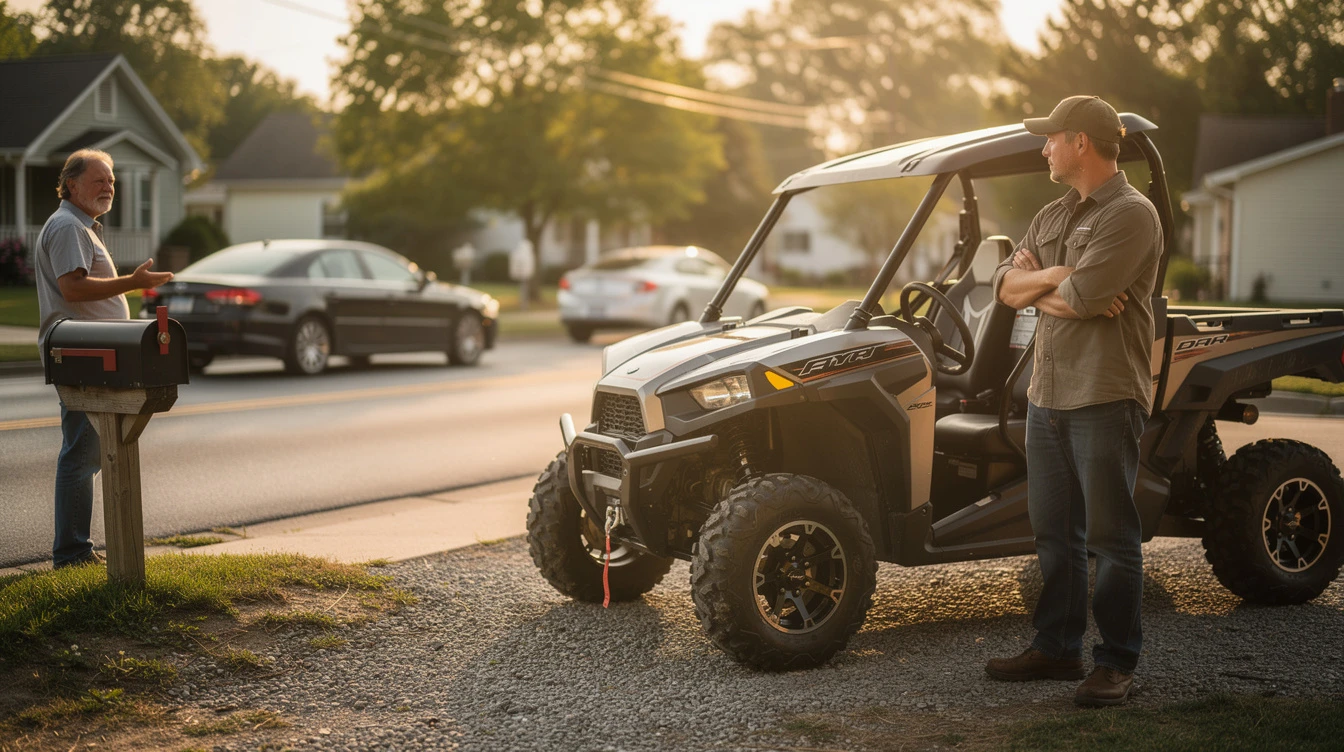
Yes, you can make your UTV street-legal if your state doesn’t allow it by registering your machine through a state that does, such as Montana or South Dakota. Through an out-of-state registration or a Montana LLC, you receive legitimate license plates, physical registration cards, and a clean title that allow road operation across state lines under nationwide reciprocity rules.
Check Your Registration Options
In This Guide
- How Does Out-of-State Registration Work for UTVs?
- Which States Forbid Street-Legal UTV Conversions?
- What Equipment Makes a Side-by-Side Street-Legal?
- How Do Different States Treat Street-Legal UTVs?
- What Is the Process to Make an Out-of-State UTV Street-Legal?
- How Does Interstate Reciprocity Protect Your Vehicle?
- Frequently Asked Questions
How Does Out-of-State Registration Work for UTVs?
Out-of-state registration lets you title and tag a utility terrain vehicle in a jurisdiction with flexible motor vehicle codes, even if you reside elsewhere. In states like Montana, non-residents can form a holding company that owns the vehicle and registers it with the state motor vehicle authority.
A utility terrain vehicle, commonly known as a UTV or side-by-side, is an off-highway vehicle built with a roll cage, bench or bucket seating, steering wheel control, and seatbelts. Many state vehicle departments strictly designate these machines as off-road only, refusing to issue on-road license plates regardless of added turn signals or mirrors. Montana and South Dakota law, however, treat converted side-by-sides as regular motor vehicles or low-speed vehicles once minimum safety hardware is documented.
When you set up a dedicated holding company, your corporate entity holds title to the asset. The Montana Secretary of State establishes the entity, and the Montana Motor Vehicle Division issues the street-legal tags. You can review how this structure operates in detail by exploring our Montana LLC Vehicle Registration program.
Which States Forbid Street-Legal UTV Conversions?
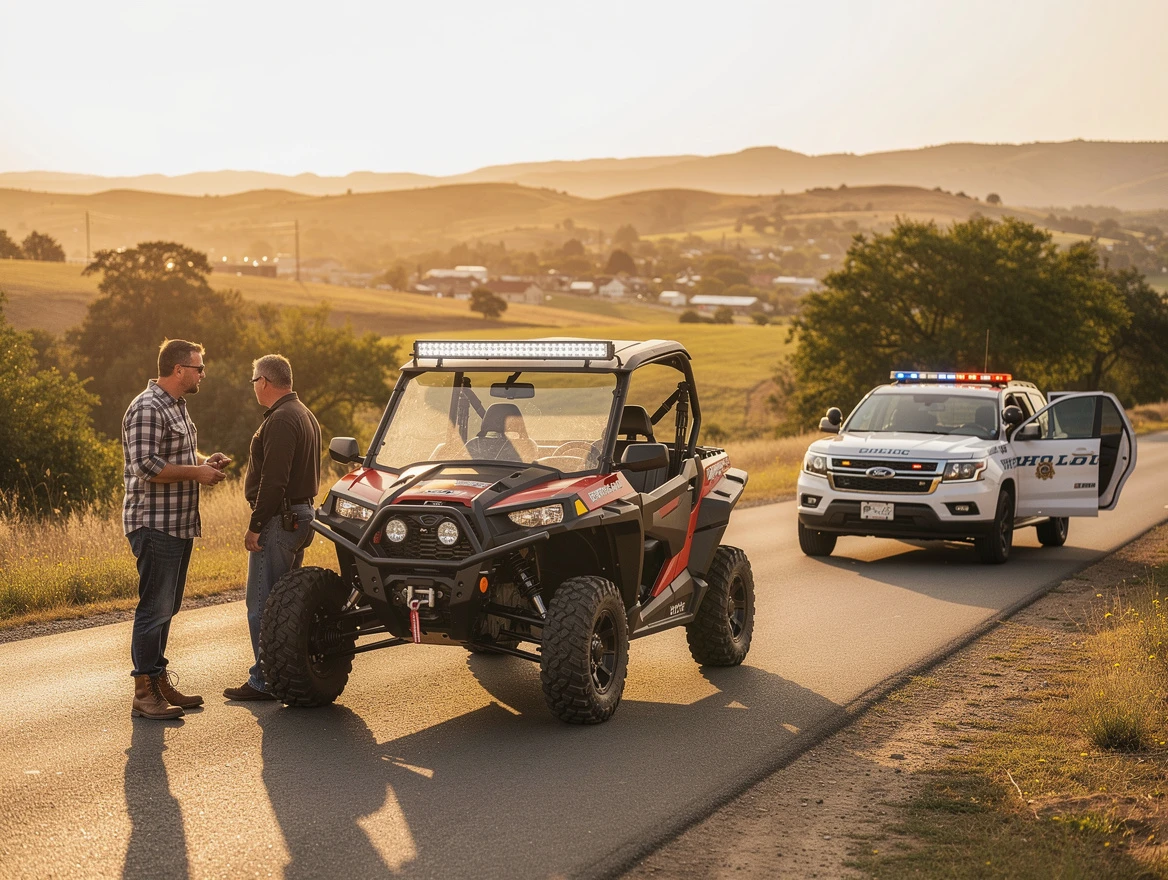
Several states prohibit native street-legal UTV conversions entirely by classifying factory off-highway VINs as ineligible for standard road registration. States such as California, New York, Pennsylvania, New Jersey, and Massachusetts will not issue highway tags directly through their local county branch offices.
California represents the most rigid example. The California Air Resources Board (CARB) and the California Department of Motor Vehicles categorize side-by-sides exclusively as off-highway vehicles, banning road plates from being issued internally. You can review this specific scenario in can you make a UTV street legal in California? to see where the state draws its compliance line. Similarly, residents in northeastern jurisdictions face outright rejections at local inspection stations when presenting side-by-side paperwork.
Look, the hurdle is rarely the vehicle itself; it is your local administrative code. State agencies assign rigid parameters based on federal vehicle safety standards. When your home state locks you out, out-of-state titling provides an administrative pathway. For insight into regional regulations, see Can You Make a UTV Street Legal in Tennessee?
If your state does not offer a registration pathway for your UTV, understanding your options is the next step. Customer experiences can also offer a closer look at working with a registration service.
Read Chris Anderson’s review on Google
Ready to register your vehicle?
Join thousands of vehicle owners who use Dirt Legal to handle their registration quickly.
What Equipment Makes a Side-by-Side Street-Legal?
To safely and street-legal drive a UTV on public roadways, you must install street-legal hardware that complies with universal safety mandates. Even if your registration state does not inspect parts prior to tag issuance, law enforcement officers in your home state expect functional equipment.
Here is what you need to install on your machine:
- Headlights: Must include functioning high and low beams visible from at least five hundred feet.
- Tail Lights and Brake Lights: Dual illuminating lamps that brighten when the brake pedal is depressed.
- Turn Signals: Front amber indicators and rear red or amber flashers with a dashboard indicator switch.
- Rearview and Side Mirrors: At least one rearview mirror and an adjustable driver-side exterior mirror providing two hundred feet of rear visibility.
- Horn: An electric horn audible from a distance of two hundred feet.
- Lighted License Plate Bracket: A white light illuminating the rear plate clearly at night.
- Windshield and Wiper: An automotive safety glass or polycarbonate windshield, paired with a manual or electric wiper blade.
- DOT-Approved Tires: Street-rated radial tires meeting highway standards rather than pure mud-terrain treads.
- Seatbelts: Functional three-point harnesses or lap belts for every passenger.
Once you install these components, your vehicle transitions from a trail-only rig to a road-ready utility machine. If you plan to register a side-by-side under an entity, reviewing the LLC Vehicle Registration Checklist: Exotic Car Guide offers a helpful reference for asset documentation and paperwork management.
How Do Different States Treat Street-Legal UTVs?
State vehicle statutes range from permissive jurisdictions that issue road tags over the counter to strict states that limit utility terrain vehicles to agricultural use or private property. Comparing these statutory differences clarifies why an out-of-state route is often required.
| State Status | Allowed In-State? | Out-of-State Plates Honored? | Equipment Requirements | Best Path Forward |
|---|---|---|---|---|
| Montana | Yes | Yes | Horn, mirrors, plate light, turn signals | Montana LLC registration |
| South Dakota | Yes | Yes | Eye protection, mirror, horn, exhaust | Direct non-resident registration |
| California | No | Yes (under reciprocity) | DOT safety parts, mirrors, blinkers | Montana LLC structure |
| New York | No | Yes (subject to local traffic code) | Full DOT lighting and windshield | Out-of-state registration |
| Tennessee | Yes (Class I/II) | Yes | Full safety equipment and insurance | In-state or out-of-state LLC |
| Florida | No (Limited) | Yes | Brakes, mirrors, safety gear | Montana LLC structure |
A closer look at permissive states shows South Dakota as another popular destination for riders. Our guide on Can You Make a UTV Street Legal in South Dakota? What to Know highlights the specific rules for non-resident registrations there.
Get Street Legal Paperwork Support
What Is the Process to Make an Out-of-State UTV Street-Legal?
Getting street-legal plates for your machine involves organizing ownership paperwork, establishing an out-of-state entity if necessary, and completing the title filing with an open-minded state jurisdiction. Following the correct order keeps your build moving forward without unnecessary delays.
- Verify Your Vehicle Identification Number: Make sure your side-by-side has an intact, unblemished 17-digit VIN stamped onto the frame, which matches your current title or manufacturer certificate of origin (MCO). You can verify your VIN history using the NHTSA VIN Lookup.
- Install Necessary Street Hardware: Add your turn signal kit, mirrors, horn, lighted license plate holder, and DOT-compliant tires so the rig is road-ready the moment tags arrive.
- Form an Out-of-State Business Entity: For Montana filings, register a limited liability company through a registered agent service inside the state.
- Submit Ownership and Transfer Documents: Submit your vehicle title, bill of sale, and registration paperwork to the state processing office.
- Receive Your Plates and Registration: Once the state documents your application, you receive legal tags, a clean title, and registration cards mailed directly to your door.
If you have questions about out-of-state tax rules, read our breakdown on Why Do People Register Cars in Montana? The Real Reasons Explained. In fact, Dirt Legal has completed over 6,000 customer orders to date (lifetime through current month, n=6,408), helping riders work through multi-state vehicle documentation without unnecessary delays. To understand how third-party paperwork assistance operates, read How Street Legal Works.
How Does Interstate Reciprocity Protect Your Vehicle?
Interstate reciprocity is a constitutional and statutory principle requiring states to honor the valid vehicle registrations, titles, and driver licenses issued by other jurisdictions. Article IV, Section 1 of the United States Constitution contains the Full Faith and Credit Clause, which forms the legal foundation for interstate travel.
When a vehicle is registered in Montana, other states acknowledge that registration while the vehicle travels across their roadways. However, you must obey local traffic rules. If a city prohibits all off-road vehicles on certain bypass routes, an out-of-state plate does not override local access limits. Always verify municipal road restrictions in your local area before driving.
States with complex regulatory environments sometimes update their corporate compliance rules. Drivers in the Golden State should review California’s New Montana LLC Law (SB 1406): Key Rules to understand how resident registration laws interact with out-of-state business assets. When titling across jurisdictions, reading Common Vehicle Registration Mistakes and How to Avoid Them can help you prevent common document errors.
Frequently Asked Questions
What states allow street-legal utv?
States allowing street-legal UTV registration directly include Montana, South Dakota, Arizona, Utah, Wyoming, Idaho, and Tennessee. Each state sets specific safety criteria, such as requiring turn signals, mirrors, horn, and eye protection. Other states permit limited road use strictly on municipal, rural, or county roads that have adopted local ordinances.
Can you make a UTV street-legal?
Yes, you can make a UTV street-legal by outfitting it with required safety equipment like mirrors, blinkers, horn, and headlights, then completing registration in a state that issues on-road tags. Many riders use an out-of-state Montana LLC or South Dakota registration to obtain street plates when their home state refuses.
What states are side-by-sides street-legal?
Side-by-sides are street-legal in states with explicit off-highway conversion statutes, including Montana, South Dakota, Arizona, Michigan, West Virginia, and North Carolina under modified utility rules. Vehicles properly tagged in these jurisdictions can often operate in other states under standard interstate reciprocity laws when complying with local traffic codes.
Can i make a dirt bike street-legal?
Yes, you can make a dirt bike street-legal by installing high and low beam headlights, a brake-activated taillight, mirrors, a horn, DOT tires, and turn signals. Once equipped, you can register it through an out-of-state process or local titling conversion to obtain street-legal plates and a road title.
Can you make a four-wheeler street-legal?
Yes, four-wheelers can become street-legal in permissive jurisdictions like South Dakota, Montana, and Arizona with required street equipment. Adding functional headlights, a taillight, horn, rear reflector, and rearview mirror allows four-wheel all-terrain vehicles to be eligible for passenger road registration, subject to regional speed limits.
Can you make a go-kart street-legal?
Making a go-kart street-legal is challenging due to strict federal motor vehicle safety standards and bumper height rules. However, custom builds classified as special construction or low-speed vehicles equipped with proper roll cages, DOT lighting, braking systems, and seatbelts may be eligible for registration in flexible states like Montana.