RV Camping During a Tornado Watch: What to Do
RV camping during a tornado watch is dangerous. Learn exactly what to do, where to shelter, and how to stay safe when severe weather hits your campsite.
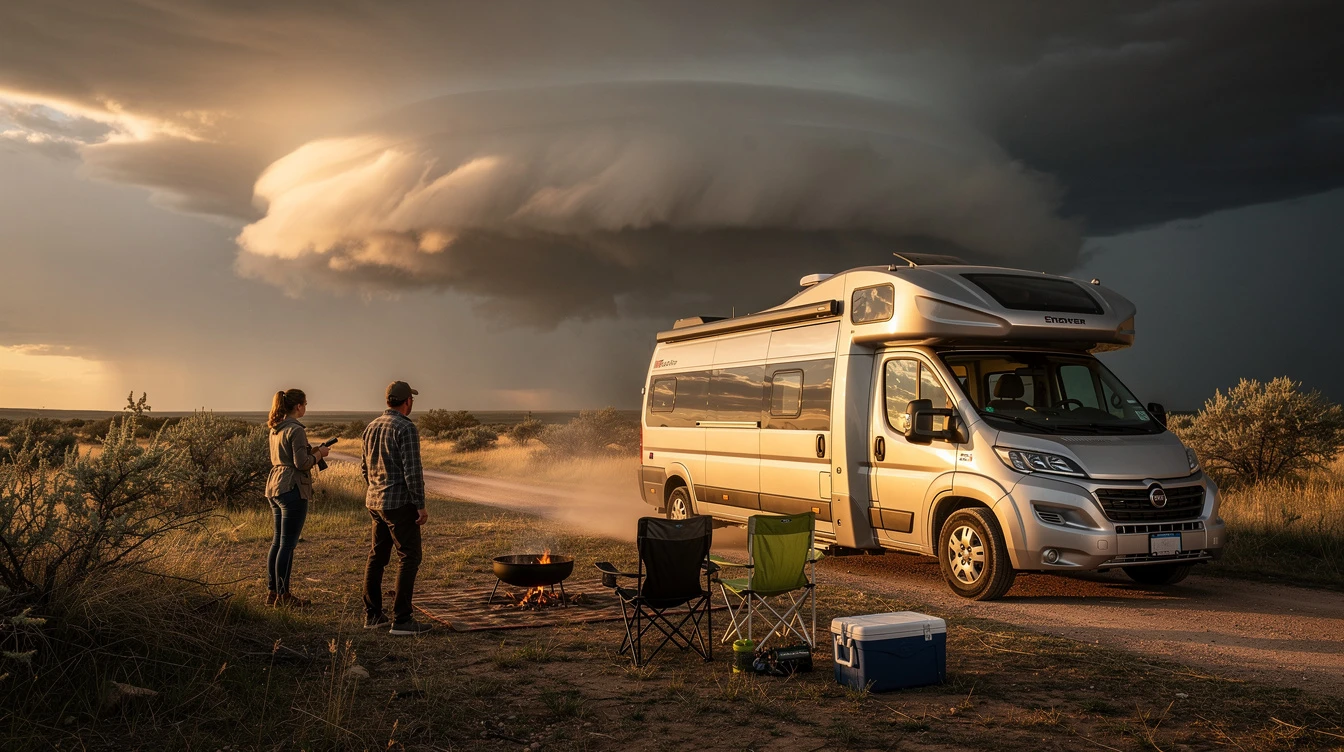
RV camping during a tornado watch means you need to act efficient and think clearly. An RV is one of the most vulnerable structures you can be in when a tornado approaches, so your first priority is finding solid ground-level shelter away from your rig. This guide covers exactly what to do, where to go, and how to prepare so you're never caught off guard in severe weather.
Your RV Won't Protect You From a Tornado, Period
This is the single most important thing to understand: an RV, regardless of its size or construction, offers almost no protection from even a weak tornado. The walls are thin, the windows are large, and the entire structure can be lifted or rolled by EF1-level winds. Don't wait to find out if the watch becomes a warning.
Watch vs. Warning: Know the Difference Before You Act
A tornado watch means conditions are favorable for tornadoes to develop, typically covering a large geographic area for several hours. A tornado warning means a tornado has been spotted or detected on radar, and immediate action is required. Both require a response from RV campers, but a warning means you have seconds to minutes, not hours.
When a watch is issued, that's your window to prepare. Move now, not when the sirens start.
What Makes RVs Especially Dangerous in Severe Weather
RVs sit high off the ground, have large aerodynamic surfaces that catch wind, and their chassis can become projectiles. Class A motorhomes, fifth wheels, and travel trailers all share this vulnerability. Even a strong thunderstorm with straight-line winds above 60 mph can roll a trailer. A tornado is an entirely different level of threat.
If you own an RV and rely on it for extended travel, it's worth thinking about how it's registered, too. RVs registered through a Montana RV registration structure have title and registration handled remotely, which means less paperwork hassle when things go sideways on the road.
Step-by-Step: What to Do When a Tornado Watch Is Issued at Your Campsite
A watch gives you time, and time is the most valuable thing you have. Use it deliberately. Here's the order of operations that gives you the best chance of staying safe.
Ready to register your vehicle?
Join thousands of vehicle owners who use Dirt Legal to handle their registration quickly.
Register Your Vehicle Today →Step 1: Identify Your Shelter Options Immediately
Before you do anything else, know where you're going. Look for these in order of preference:
- Campground bathhouse or permanent restroom building: These are often the sturdiest structures on any campground. Interior rooms with no windows are ideal.
- A designated storm shelter: Many modern campgrounds, especially in tornado-prone states like Oklahoma, Kansas, and Texas, have marked below-ground or reinforced shelters.
- A nearby permanent building: A ranger station, camp store, or maintenance building beats any RV.
- A low-lying ditch or culvert: Only use this as a last resort if no structures are available. Lie flat, cover your head.
Do not shelter under highway overpasses. Despite popular belief, they funnel wind and create deadly debris zones.
Step 2: Secure or Abandon Loose Items
If time allows, bring in awnings, chairs, grills, bikes, and anything else that can become a projectile. A folding chair launched at 100 mph is a weapon. Don't spend so long doing this that you delay getting to shelter. People first, gear second. Always.
Step 3: Move Your RV If You Have a Safe Route
If you have a vehicle and a clear route perpendicular to the storm's path, moving your RV to a safer parking area, away from trees and power lines, reduces risk. Tornadoes typically track northeast in the U.S., so moving south or east often takes you away from the path. That said, never try to outrun a tornado in a large motorhome on a narrow campground road. Know your limits.
Step 4: Alert Everyone in Your Party
Wake up anyone sleeping. Get kids and pets ready to move. Assign one person to grab the emergency bag (documents, medications, phone chargers, water) while another secures the rig. Two minutes of organized action beats ten minutes of chaos.
Building a Severe Weather Emergency Kit for Your RV
Most RV campers are well-prepared for flat tires and engine trouble. Fewer have a dedicated severe weather kit. Here's what you actually need, not what sounds good on a checklist.
The Core Items That Matter Most
- NOAA Weather Radio (battery or hand-crank): Cell service fails in storms. A dedicated weather radio runs independently.
- Helmets: Bicycle or motorcycle helmets protect your skull from flying debris. Keep them accessible.
- Sturdy shoes by the bed: Broken glass and debris make barefoot evacuation dangerous.
- A waterproof document bag: Vehicle title, registration, insurance cards, and ID. If your RV is destroyed, you'll need these.
- First aid kit with tourniquets: Go beyond band-aids.
- A whistle: If you're trapped under debris, your voice gives out. A whistle doesn't.
Your Vehicle and Title Documents: Don't Lose Them in a Storm
One thing RV owners rarely think about until it's too late is what happens to their registration and title paperwork after a catastrophic loss. If your RV is totaled in a tornado, having a clear title on file makes the insurance and replacement process dramatically faster. If you've been dealing with title complications, an insurance advice for RV fire loss situation is a useful reference for understanding how total-loss claims work with RVs.
RV owners who've set up a Montana LLC structure to handle their vehicle registration also benefit from having a separate registered entity on record, which can simplify claims and re-titling after a loss event.
| Alert Type | What It Means | RV Camper Action | Time Window |
|---|---|---|---|
| Tornado Watch | Conditions favorable for tornadoes | Identify shelter, secure gear, monitor weather | Hours |
| Tornado Warning | Tornado spotted or radar-confirmed | Get to shelter immediately, leave RV now | Minutes or less |
| Severe Thunderstorm Warning | High winds, hail, lightning | Secure awnings, move away from trees, monitor closely | 30-60 minutes |
| Flash Flood Watch | Flooding possible in the area | Move to higher ground, check campground elevation | Hours |
| Tornado Emergency | Catastrophic tornado confirmed | Take cover immediately, this is the highest-risk alert | Seconds |
After the Storm Passes: What RV Campers Need to Do
Surviving the storm is step one. What you do in the first hour after matters almost as much. Tornadoes are often followed by additional severe weather, downed power lines, gas leaks, and unstable debris fields.
Do Not Return to Your RV Immediately
Wait for an all-clear from campground staff or emergency services before approaching your rig. Structural damage isn't always visible from the outside. A tornado can compromise an RV's frame without visibly destroying it, making the interior dangerous to enter. Check for propane leaks by smell before entering. If you detect gas, stay out and call for help.
Document Everything Before You Touch Anything
Take photos and video of all damage before you move a single item. Walk around the full exterior first. This documentation is the foundation of any insurance claim. If the RV is a total loss, having your vehicle title in order is critical. Owners who have experienced wildfire damage to their RVs face a similar documentation challenge, and the process covered in how to deal with a wildfire while RVing applies directly to tornado aftermath as well.
Contact Your Insurance Provider and Note Your Registration Details
Have your RV's title number, VIN, and registration documentation ready when you call. If your rig was registered through a Montana LLC, your LLC documentation is also part of the claim file. Having these documents in a waterproof bag in your shelter kit, not inside the RV, is exactly why the prep step matters.
RV owners who need to sort out title or registration issues after a loss event can find more about how the process works at Dirt Legal's registration assistance.
Long-Term Prep: How Smart RV Owners Reduce Weather Risk
The campers who handle severe weather best are the ones who prepared before the season, not the night before a storm. A few habits make a real difference.
Choose Your Campsites with Weather in Mind
Tornado Alley runs through Texas, Oklahoma, Kansas, Nebraska, and South Dakota. If you're doing extended travel through these states, check the campground's storm shelter situation before you book. Many KOA locations and state park campgrounds in these areas have designated shelters. Ask specifically. Don't assume.
Also consider terrain. Low valleys can flood. Hilltops expose you to higher wind. A mid-elevation site near a permanent structure is your best bet in storm-prone areas.
Keep Your RV's Registration and Title Paperwork Current
This may seem unrelated to tornado safety, but a lapsed registration or missing title creates real complications after a catastrophic loss. Insurance companies need clear proof of ownership to process total-loss claims. The Montana RV registration process keeps your documents in order without requiring you to visit a DMV in person, which is a genuine advantage for full-time travelers.
Dirt Legal has helped 80,000+ vehicle orders to date. When documents come back needing correction, our QC team resolves 52.9% of those cases without sending the order back to the customer, keeping the process moving even when paperwork gets complicated (internal data, rolling last 90 days, n=121). That kind of back-end support matters when you're managing life on the road.
Monitor Weather Actively, Not Passively
The Storm Prediction Center issues watches hours in advance. Apps like RadarScope, Weather Underground, and the NWS app give you polygon-level accuracy so you know whether a watch actually covers your specific campground. Don't rely only on general news alerts. Get specific data for your GPS coordinates.
For RV owners who also deal with wildfires, the same active-monitoring discipline applies. More details are in how to deal with a wildfire while RVing.
Frequently Asked Questions About RV Camping During a Tornado Watch
Is it safe to stay inside my RV during a tornado watch?
No. A tornado watch means severe weather is possible, and you should identify and prepare to reach solid shelter immediately. Even if a tornado doesn't materialize, watches are often accompanied by high winds, large hail, and lightning that can damage or overturn an RV. Don't wait for a warning before taking the threat seriously. Use the watch period to get yourself, your family, and your pets ready to move to a permanent structure at a moment's notice.
What if my campground has no storm shelter?
Look for the most substantial permanent structure available: a bathhouse, camp store, ranger station, or maintenance building. Interior rooms without windows on the lowest floor are best. If no buildings are available, a low-lying ditch away from trees and vehicles is a last resort. Lie flat, face down, cover your head and neck with your arms. Never shelter under an overpass. If you're regularly camping in tornado-prone areas, choose campgrounds that have designated shelters as a baseline requirement.
Should I try to drive my RV away from a tornado?
Driving away is reasonable only if you have a tornado watch (not a warning), a clear escape route perpendicular to the storm's path, and open roads. A tornado warning changes everything. Large motorhomes are slow to maneuver, and campground roads are often narrow. Tornadoes can change direction unpredictably. If the warning is issued, abandon the drive plan and get to the nearest shelter on foot. Your RV is replaceable. Don't make a vehicle decision that puts you on the road when a tornado is nearby.
Can a tornado destroy a large Class A motorhome?
Yes. Even the heaviest Class A motorhomes offer minimal structural protection against tornado-force winds. An EF1 tornado produces winds of 86-110 mph, which is enough to roll a large motorhome or drive debris through its walls at lethal speed. Class C rigs, fifth wheels, and travel trailers are equally vulnerable. No RV size or construction type changes the core advice: get out and get into a permanent, reinforced structure when a tornado threatens.
What documents should I grab when evacuating my RV for a tornado?
Prioritize: your RV title and registration documents, vehicle insurance cards, personal ID, medications, phone and charger, and a small amount of cash. Keep these in a waterproof grab bag stored near the exit, not buried in a compartment. If your RV is totaled, you'll need the title and registration to process the insurance claim and re-title a replacement vehicle. Missing paperwork after a total loss significantly slows the claims process.
How do I know if my campsite is in the tornado watch area?
Use apps like the National Weather Service, RadarScope, or Weather Underground to check current watches and warnings by GPS location. The NWS issues tornado watches as geographic polygons, not by county name alone. Enter your exact coordinates or zip code to confirm whether your campsite falls inside the watch area. Sign up for Wireless Emergency Alerts on your phone so you receive automatic push notifications when watches or warnings are issued for your location.
What should I do with my pets during a tornado watch at a campsite?
Leash or crate your pets before a storm develops, not after. Many shelters, including campground bathhouses, may not officially allow pets, but most campground staff will make an exception in a life-safety situation. Bring your pet's carrier, leash, and any medications in your emergency bag. Don't leave pets secured inside the RV when you evacuate. If the RV is damaged or destroyed, a crated pet inside can't escape and may not survive.
Does RV insurance cover tornado damage?
Most complete RV insurance policies cover tornado damage, but coverage details vary significantly by provider and policy type. Total loss, structural damage, and personal property loss are typically separate line items. Full-timers' RV policies often include broader personal property coverage than standard recreational policies. Having a current, clear title is a prerequisite for most total-loss claims. If you're unsure about your title status or need to address a registration issue before storm season, that's worth sorting out proactively.
RV camping during a tornado watch is manageable if you know your shelter options before the sky turns green. The single best thing you can do is prepare in advance: know your campground's emergency resources, keep your documents in a grab bag, and take every watch seriously. Your rig can be replaced. Make the decision to leave early, every time.