Why Motorcycles Have Two Separate Brakes Explained
Why does a motorcycle have two separate brakes instead of one? Learn the physics, safety reasons, and riding mechanics behind front and rear brake systems.
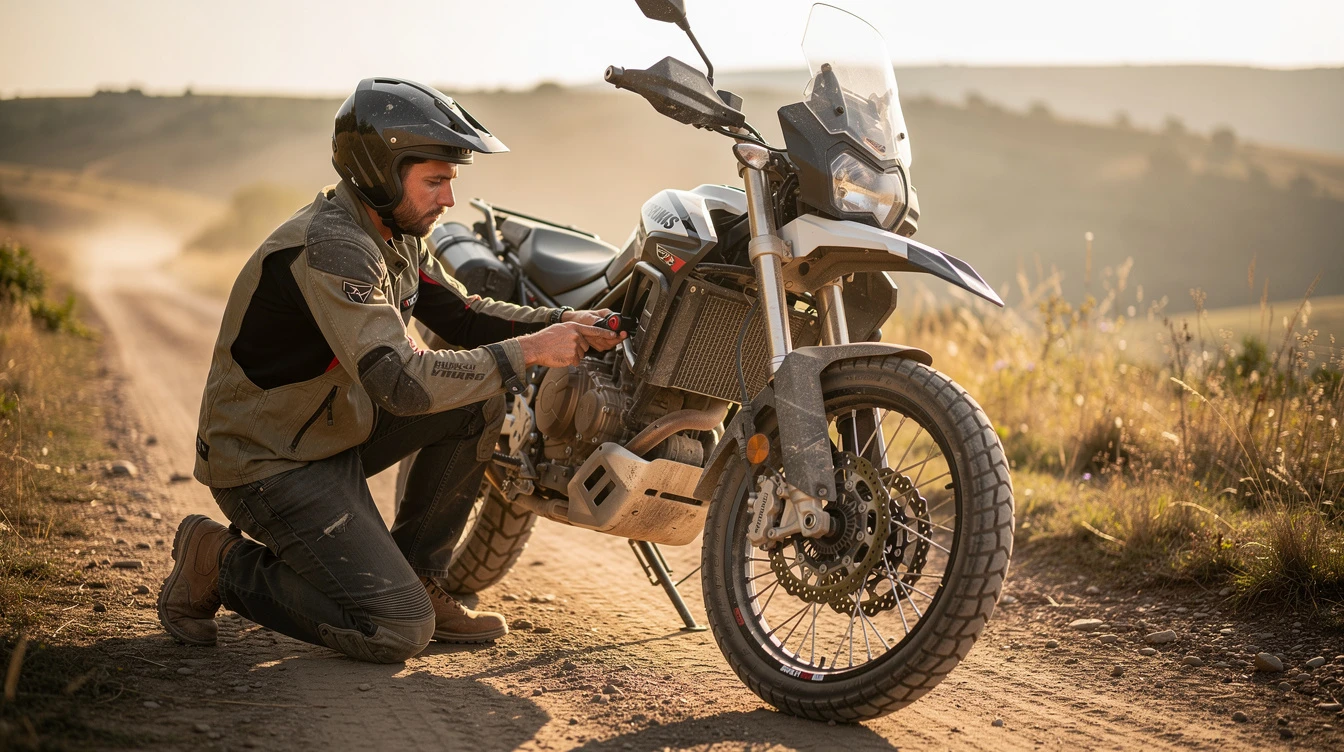
Motorcycles have two separate brakes, front and rear, because each wheel carries a completely different load during braking, and combining them into one control would reduce your ability to stop safely. Unlike a car, where all four wheels share the stopping work through a single pedal, a motorcycle's weight shifts dramatically forward the moment you begin to slow down. That physics difference is the entire reason two independent controls exist.
This guide covers why the two-brake system was designed this way, what each brake actually does under real riding conditions, and why most riders, even experienced ones, underuse one of them. If you ride, own, or plan to title a motorcycle, understanding your brake system matters as much as knowing how to register your bike.
Honest answer up front: there's no unnecessary complexity here. Every part of the two-brake design has a mechanical reason behind it.
The Physics Behind Motorcycle Braking: Why Two Brakes Are Not Optional
When a motorcycle decelerates, weight transfers forward. That's not a design quirk, it's basic physics. The front wheel can carry anywhere from 70% to 90% of the total braking force during a hard stop because gravity pushes the bike's mass over the front axle.
The rear wheel, now comparatively light, has far less grip available. Push too hard on the rear brake alone and the wheel locks, the bike slides, and you've lost directional control. The separation of controls lets the rider apply the right amount of force to each wheel based on what's actually happening at that moment.
Why the Front Brake Does Most of the Work
The front brake on a motorcycle generates the majority of stopping power, typically 70% or more in emergency situations. Because the front tire has more weight pressing it into the road during braking, it has more traction available. More traction means more braking force before the tire slides.
Riders who only use the rear brake out of habit are leaving most of their stopping ability unused. That's a real safety concern, and it's one reason riding schools spend significant time teaching proper front-brake technique.
Why the Rear Brake Still Matters
The rear brake isn't just a backup. It stabilizes the bike during lower-speed maneuvers, helps control speed on downhills, and provides a crucial balancing force when trail braking into corners. At low speeds, like parking lot maneuvering or slow-speed turns, the rear brake gives you fine throttle-like control over bike balance.
Using both brakes together, with the right pressure split, gives you shorter stopping distances than either brake alone. That split is something a rider must feel and adjust in real time, which is precisely why the controls are separate.
Why Cars Can Use a Single Brake Pedal But Motorcycles Cannot
Cars have four contact patches with the road, two in front, two in back. They also have a much wider track width, which keeps the vehicle stable even when rear wheels lose grip briefly. The geometry of four-wheel stability makes a unified braking system practical.
Ready to register your vehicle?
Join thousands of vehicle owners who use Dirt Legal to handle their registration quickly.
Register Your Vehicle Today →A motorcycle has two contact patches. It's also dynamically balanced, meaning it relies on rider input and gyroscopic forces to stay upright. A single brake input that simultaneously locked both wheels would remove your ability to modulate each independently, and on two wheels, that's the difference between a controlled stop and a crash.
Weight Distribution Differences: Car vs. Motorcycle
| Factor | Car | Motorcycle |
|---|---|---|
| Contact patches | 4 tires | 2 tires |
| Braking weight shift | Moderate, distributed | Dramatic, mostly forward |
| Rear-wheel grip during hard braking | Maintained across two rear tires | Reduced to near zero in hard stops |
| Brake control | Single pedal, ABS distributes force | Two independent controls, rider adjusts split |
| Risk of rear lockup | Low (traction control/ABS common) | High if rear brake over-applied |
| Risk of front lockup | Low | High if front brake applied abruptly |
What About Linked Brake Systems (CBS)?
Some motorcycles, particularly touring and scooter models, use a Combined Braking System (CBS) that links front and rear brakes to one control. Honda has used CBS on many of their bikes for decades. This is different from a true single brake, because CBS applies proportional pressure to both wheels automatically while still allowing independent use.
Anti-lock Braking Systems (ABS) go further by pulsing brake pressure to prevent lockup. Even with ABS or CBS, most bikes still offer some degree of independent control. Pure single-input braking, like a car's setup, hasn't been adopted broadly because the physics on two wheels don't support it.
How Riders Actually Use Two Brakes Together
The technique matters as much as the hardware. Most professional riders and instructors teach a 70/30 split: 70% front brake, 30% rear brake, in a standard emergency stop. That ratio shifts depending on conditions, speed, and road surface.
Progressive Braking and Threshold Technique
You don't slam either brake. You squeeze the front lever progressively so the suspension compresses gradually, which loads the front tire and improves grip as you apply more force. Grab the lever too hard too efficient, and the fork compresses suddenly, the tire skips, and you're fighting a slide.
The rear pedal gets steady, moderate pressure. Enough to add stopping force and stabilize the chassis, not enough to lock the wheel. Experienced riders develop a feel for the "threshold," the point just before lockup, and stay just under it throughout the stop.
Low-Speed vs. High-Speed Braking
The brake split changes with speed. At low speeds, the rear brake carries more relative importance because weight transfer is minimal and you need smooth, precise control. In high-speed emergency stops, the front brake does nearly all the work because that's where the grip is.
This is another reason separate controls are necessary. A single unified brake couldn't adjust this ratio based on the rider's situation. The human input is the variable, and the two-control design gives you access to that variable in real time.
Motorcycle Registration and Brake Requirements
Every state that titles and registers motorcycles has minimum brake standards. Most states require that both a front and a rear brake be functional and meet performance minimums before a bike can pass inspection or be titled. This isn't just safety policy, it's baked into federal equipment standards that trace back to NHTSA guidelines.
If you're titling a motorcycle, especially an older or modified bike, confirming that both brake circuits are functional and compliant is part of the process. Bonded title situations, bill of sale transfers, and salvage title conversions all involve inspections where brake condition can come up.
For a closer look at the title process on a motorcycle, the guide on how to obtain a title for a motorcycle in PA covers what documentation and inspections are typically required at the state level.
Montana Motorcycle Registration and No Sales Tax
Montana is one of the only states with no sales tax on vehicle purchases, including motorcycles. That means when you register a motorcycle in Montana, you avoid the sales tax hit that applies in states like California, where registration and tax costs can add thousands to the purchase price.
Riders who own high-value motorcycles, custom builds, or collector bikes often choose to register their vehicle through a Montana LLC for exactly this reason. The bike is titled and registered under the LLC, and Montana's vehicle sales tax policy means no state sales tax on the transaction.
For details on how that process works, the guide to registering a new or used vehicle outlines what owners need and how the paperwork flows from purchase to plate.
Registering Modified or Custom Motorcycles
Custom builds, café racers, and heavily modified bikes can create title complications. Brake system modifications, aftermarket setups, or hybrid part combinations sometimes trigger additional scrutiny during the title process. The key is documenting what's on the bike accurately and making sure the brake systems meet the state's minimum standards.
If your motorcycle has had significant modifications, it's worth reading through the guide on insurance coverage for modified vehicles before you start the registration process, since coverage gaps at the insurance level can complicate titling as well.
Dirt Legal has helped 80,000+ vehicle orders to date, including plenty of custom and non-standard motorcycle registrations. The most frequent reason documents come back for correction during these registrations is odometer compliance, meaning the stated mileage doesn't match supporting documentation (internal data, rolling last 90 days, n=115). Getting that detail right upfront avoids delays.
Ride a high-value or modified motorcycle? See how Montana LLC registration can work for your bike.
See How Montana LLC Registration Works for Your Motorcycle →ABS, CBS, and the Future of Motorcycle Braking
Motorcycle ABS has become standard on most new bikes sold in Europe and is increasingly common in the U.S. market. ABS monitors wheel speed and releases brake pressure rapidly if a lockup is detected, then reapplies it, repeating that cycle many times per second. The rider still controls front and rear separately, but the system prevents either wheel from fully locking.
CBS goes further by automatically distributing brake force between both wheels when you apply either control. On a Honda Gold Wing, for example, pressing the foot pedal activates both front and rear brakes in a pre-set ratio. The system does the distribution math so the rider doesn't have to, but both brakes are still doing their respective jobs.
Why Two-Wheel Electric Motorcycles Still Use Two Brakes
Electric motorcycles add regenerative braking to the equation. When you roll off the throttle, the motor generates electricity and slows the rear wheel. But they still use separate front and rear brake controls for the same physical reasons as combustion bikes. Weight transfer doesn't care what's powering the rear wheel.
Some electric bikes combine regenerative braking with traditional hydraulic systems so regen force adjusts based on speed and load. Even in those systems, the independent front and rear brake controls remain because removing rider control over that split would compromise safety.
Frequently Asked Questions
Why doesn't a motorcycle just use one brake lever like a car's pedal?
Because motorcycles only have two contact patches and experience dramatic weight transfer to the front during braking, a single combined input would make it impossible for the rider to modulate the right amount of force at each wheel. The physics of two-wheel balance require that the rider control the front-to-rear brake ratio manually, or at minimum, that an electronic system do it with precise, real-time adjustments. A simple unified control can't do that safely.
Is it bad to only use the rear brake on a motorcycle?
Using only the rear brake drastically reduces your stopping power. During a hard stop, the rear wheel can carry as little as 10-15% of the available traction, so relying on it alone means you're using a fraction of your bike's stopping ability. It also increases the risk of the rear wheel locking and the bike sliding sideways. Most riding coaches emphasize front brake technique precisely because new riders tend to under-use it.
What happens if you only pull the front brake hard on a motorcycle?
Grabbing the front brake too abruptly without rear brake support can cause the front fork to compress suddenly, upsetting the bike's balance and potentially pitching the rider forward. With progressive application, the front brake is your primary stopping tool. Without it, the rear brake alone won't stop you in time in an emergency. The right technique is to use both, progressively, with most force going to the front.
Do all motorcycles require both brakes to function for registration?
Most states require that both front and rear brakes meet minimum performance standards before a motorcycle can be titled or pass inspection. Federal motor vehicle safety standards set baseline requirements, and state DMVs typically enforce them at the inspection level. If you're registering an older or project bike, confirming both brake circuits are operational before starting the title process saves time. Check your state's specific requirements or consult a registration specialist.
Is motorcycle ABS the same as a combined brake system?
Not exactly. ABS (Anti-lock Braking System) prevents wheel lockup by pulsing brake pressure when a wheel is about to slide, but the rider still controls front and rear separately. A Combined Braking System (CBS) links both brakes to one control so applying either the lever or the pedal activates both wheels in a set ratio. Some bikes have both systems together. ABS prevents lockup; CBS distributes force. They solve different problems, though both are designed to make braking safer.
Can I register a motorcycle in Montana if I don't live there?
Yes. Non-residents can register motorcycles in Montana through a Montana LLC. The LLC is a registered entity in the state, and the motorcycle is titled under it. This approach is popular with riders who own high-value bikes and want to avoid sales tax in their home states. Montana has no state sales tax, which can mean significant savings on expensive motorcycles. A private registration service can assist with the LLC formation and title paperwork. For more on how the process works, see the Montana ATV registration guide for non-residents, which covers the same general LLC registration framework.
Do off-road motorcycles and dirt bikes need the same brake setup?
Off-road and competition bikes also use separate front and rear brakes, though the ratio of use differs from street riding. On loose dirt or gravel, the rear brake often carries more relative importance because weight transfer on unpacked surfaces behaves differently than on pavement. Racing and trail riders develop their own brake-split instincts based on terrain. For bikes ridden on public roads, both brakes must meet state equipment standards regardless of how the bike is primarily used. The guide to riding ATVs, UTVs, and dirt bikes on public roadways covers what's required to make off-road vehicles street-legal.
How does brake system condition affect a motorcycle title transfer?
During a title transfer, especially for older bikes or salvage titles, inspectors can flag brake deficiencies. Non-functioning front or rear brakes may cause a bike to fail a safety inspection, which can delay or block the title transfer. Getting brakes serviced and documented before starting the title paperwork is a practical step. A detailed breakdown of the title transfer process is available through VIN Inspections Explained: What Vehicle Owners Must Know, which covers what inspectors look for during the vehicle check-in process.
Ready to title or register your motorcycle? Dirt Legal provides paperwork support for motorcycle registrations nationwide, including Montana LLC options for high-value bikes.
Start Your Motorcycle Registration Today, No Hidden Fees →The Bottom Line on Two-Brake Motorcycle Design
The two-brake system on motorcycles isn't a relic of old engineering. It's a direct response to the physics of two-wheel braking, where weight transfer, tire grip, and chassis balance all change in real time and demand independent rider input at each wheel. Cars can use a single pedal because four contact patches and a stable platform make unified braking practical. On two wheels, that approach would remove the control you need most in an emergency.
Understanding your motorcycle's braking system is one part of owning a bike responsibly. The other part is making sure your motorcycle is properly titled and registered so you're covered when you ride. Whether you're registering a new bike, transferring a title, or looking at Montana LLC registration for a high-value motorcycle, Dirt Legal provides registration assistance to get your paperwork handled correctly. See how the process works and find the right option for your bike.