Montana plates ship in as little as 1 day, titles in 2 weeks. Temp tags issued same day.

Resources

Oregon Bike Laws: What You Need to Know

DirtLegal explains Oregon dirt bike laws, OHV registration, and how to make your bike street-legal while following state riding regulations.
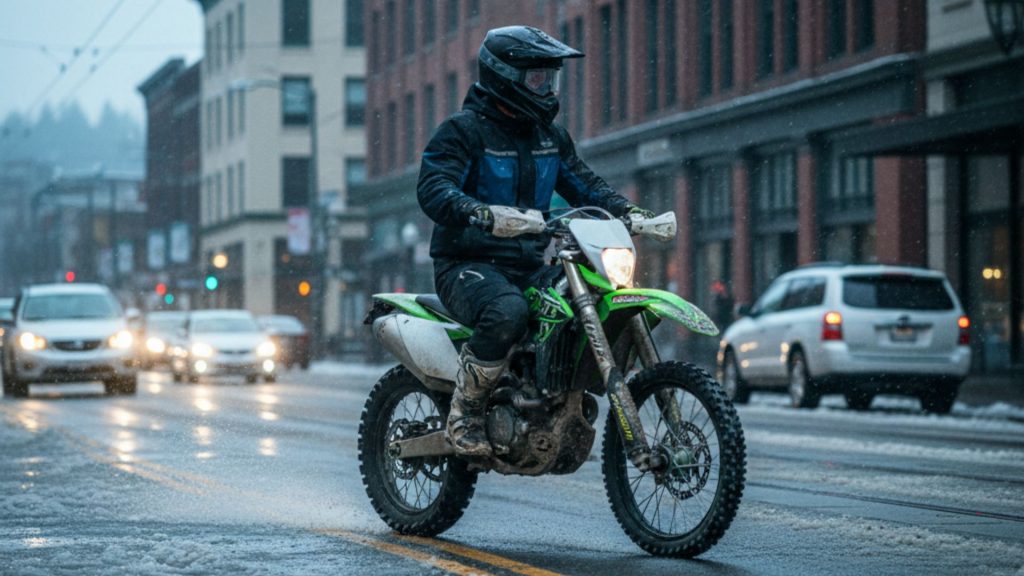

Dirt bike rider navigating urban street in protective gear, illustrating Oregon motorcycle riding regulations

Off-Road Use: Registration Requirements

In Oregon, dirt bikes used off-road are classified as Class III all-terrain vehicles (ATVs). While titling and registration are not required for off-road use, an ATV Operating Permit is mandatory when operating on public lands designated for ATV use.


  • ATV Operating Permit:
    • Cost: $10
    • Validity: 2 years
    • Requirement: Must be displayed on the vehicle when operating on public lands open to ATV use.
 
  • Safety Education:
    • All Class III ATV operators are required to complete the ATV Safety Education Course and carry the ATV Safety Education Card while riding.
 
  • Youth Riders:
    • The minimum age to operate a Class III ATV is 7 years old.
    • Riders 15 years and under must:
      • Complete a hands-on training course.
      • Be supervised by an adult with a valid ATV Safety Education Card.
      • Wear a DOT-approved helmet.
      • Operate an appropriately sized ATV.
       

Street Use: Converting a Dirt Bike to Street-Legal

Converting a dirt bike for street use in Oregon is possible but involves strict compliance with both federal and state regulations.


Conversion Requirements:


  1. Engine Certification:
    • Contact the manufacturer (not the dealership) to verify if the engine is EPA-certified for street use.
    • If certified, obtain a letter from the manufacturer stating the engine meets street standards and any modifications needed.
  2. Required Equipment:
    • DOT-approved headlight with high and low beams.
    • Taillight with brake light function.
    • Front and rear turn signals.
    • Rearview mirror(s).
    • Horn audible from at least 200 feet.
    • DOT-approved tires.
    • Muffler to comply with noise regulations.
    • Speedometer and odometer.
    • Reflectors and high/low beam indicator.
  3. Documentation:
    • Manufacturer’s Certificate of Origin (MCO) or title.
    • Bill of sale.
    • Receipts for all modifications.
    • Letters from the manufacturer regarding engine certification and required modifications.
  4. Inspection and Registration:
    • Submit all documentation to your local DMV field office.
    • A Vehicle Identification Number (VIN) inspection may be required.
    • Register the motorcycle and obtain a license plate.
  5. Insurance:
    • Secure liability insurance as required for all street-legal vehicles in Oregon.
 
Dirt bike rider calmly riding along a snowy street in downtown Portland, Oregon, seen from a side view, with urban buildings and light traffic under a cloudy daytime sky.

Where You Can Ride

Off-Road:


  • Private Property: Riding is permitted with the landowner’s consent.
  • Designated Areas: Oregon offers over 50 designated and managed riding areas and trails. Ensure compliance with local regulations and obtain necessary permits.
 

On-Road:


  • Permitted Roads: Operation of dirt bikes on public roads is allowed only if the bike has been converted to meet street-legal requirements and is properly registered and insured.
 

Rider Requirements

  • License: A valid driver’s license with a motorcycle endorsement is required to operate a street-legal dirt bike on public roads.
  • Helmet Use: All riders and passengers are required by state law to wear a helmet that meets U.S. Department of Transportation standards.
  • Eye Protection: If the motorcycle is not equipped with a transparent windscreen, riders must wear protective glasses, goggles, or a face shield.
 

Penalties for Non-Compliance

Failure to adhere to Oregon’s dirt bike laws can result in:


  • Fines: Monetary penalties for unregistered or improperly equipped vehicles.
  • Impoundment: Unauthorized vehicles may be impounded by law enforcement.
  • License Suspension: Operating without a valid license or insurance can lead to suspension of driving privileges.
 
Winding two-lane road along the dramatic coastline of Oregon, featuring rocky cliffs, evergreen trees, and the Pacific Ocean under a dramatic sky.

Relevant Oregon Laws and Agencies