Can You Make a UTV Street Legal in Tennessee? Guide
Can you make a UTV street legal in Tennessee? What you need to know about TN speed laws, equipment mandates, and remote out-of-state registration options.
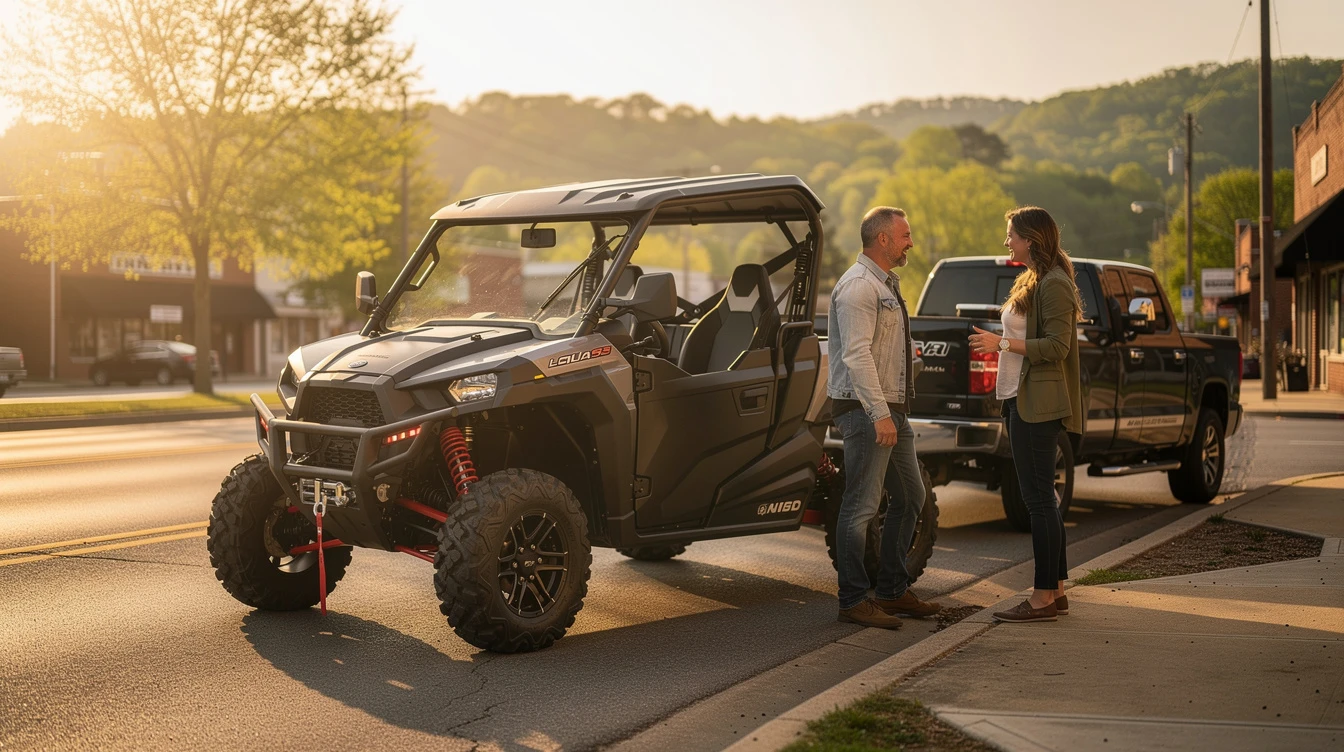
Yes, you can make a UTV street-legal in Tennessee by registering it as a Class I or Class II off-highway vehicle or through the state medium-speed vehicle classification. However, Tennessee state rules restrict where you can drive, limiting standard off-highway vehicles to designated county roads and municipal streets with posted speed limits of 35 mph or less. If you want true unrestricted public road access without municipal boundary constraints, registering through an out-of-state process like a Montana LLC or South Dakota registration gives you regular license plates recognized across state borders.
Understanding local equipment mandates, title documentation, and county-specific road allowances will save you hours of wasted effort. Many owners assume bolting on blinkers and mirrors makes their side-by-side ready for any highway, but local statutes carry strict roadway limits.
This guide explains the local Tennessee requirements, the hardware your machine needs, and how our team helps riders across the country achieve full road compliance without headaches.
Tennessee Statutes Permit Limited Street-Legal UTV Operation Under Specific Classifications: Can You Make a UTV Street-Legal in Tennessee? What You Need to Know
Updated on September 24, 2026
Tennessee Code Annotated Section 55-8-185 allows off-highway vehicles on public roads under defined conditions. The Tennessee General Assembly permits Class I (extreme terrain vehicles) and Class II (commercial utility vehicles) on two-lane roads when individual counties and municipalities pass local ordinances authorizing them. Without local approval, driving an off-highway vehicle on public streets remains restricted.
Additionally, Tennessee provides a pathway under its medium-speed vehicle statute (TCA 55-1-125). A medium-speed vehicle is defined as any four-wheeled electric or gas-powered vehicle whose top speed exceeds 20 mph but does not exceed 35 mph. These machines can travel on secondary roads posted at 35 mph or less, but state routes, interstates, and primary highways remain completely off limits.
For owners seeking full highway access, state-level restrictions often present a significant roadblock. A machine built to run 60 mph on trails remains restricted to 35 mph zones inside municipal limits when titled under local rules. That makes commuting or running errands across town impractical for many owners.
What Defines Class I and Class II Off-Highway Vehicles in Tennessee?
Class I vehicles are designed primarily for off-road recreation, carrying up to four passengers with a non-straddle seat and steering wheel. Class II vehicles include utility-focused machines built for agricultural, industrial, or land management operations. Both groups require municipal permission before touching public asphalt.
Why County Ordinances Dictate Local Road Access Across Tennessee
Tennessee operates on a local-option framework for off-highway vehicles. Counties like Campbell, Anderson, and Scott have passed ordinances permitting side-by-sides on certain roads connecting trail systems like Windrock Park and Brimstone. Conversely, suburban counties near Nashville, Memphis, or Knoxville generally forbid off-highway machines on municipal roads entirely.
The Difference Between Medium-Speed and Standard Passenger Vehicles
Standard passenger vehicles meet Federal Motor Vehicle Safety Standards (FMVSS) established by the NHTSA. Side-by-sides are manufactured under recreational vehicle standards. Registering locally as a medium-speed vehicle requires an affidavit confirming the vehicle cannot exceed 35 mph, fundamentally neutering modern performance machines.
Mandatory Equipment to Make a UTV Street-Legal in Tennessee: What You Need to Know
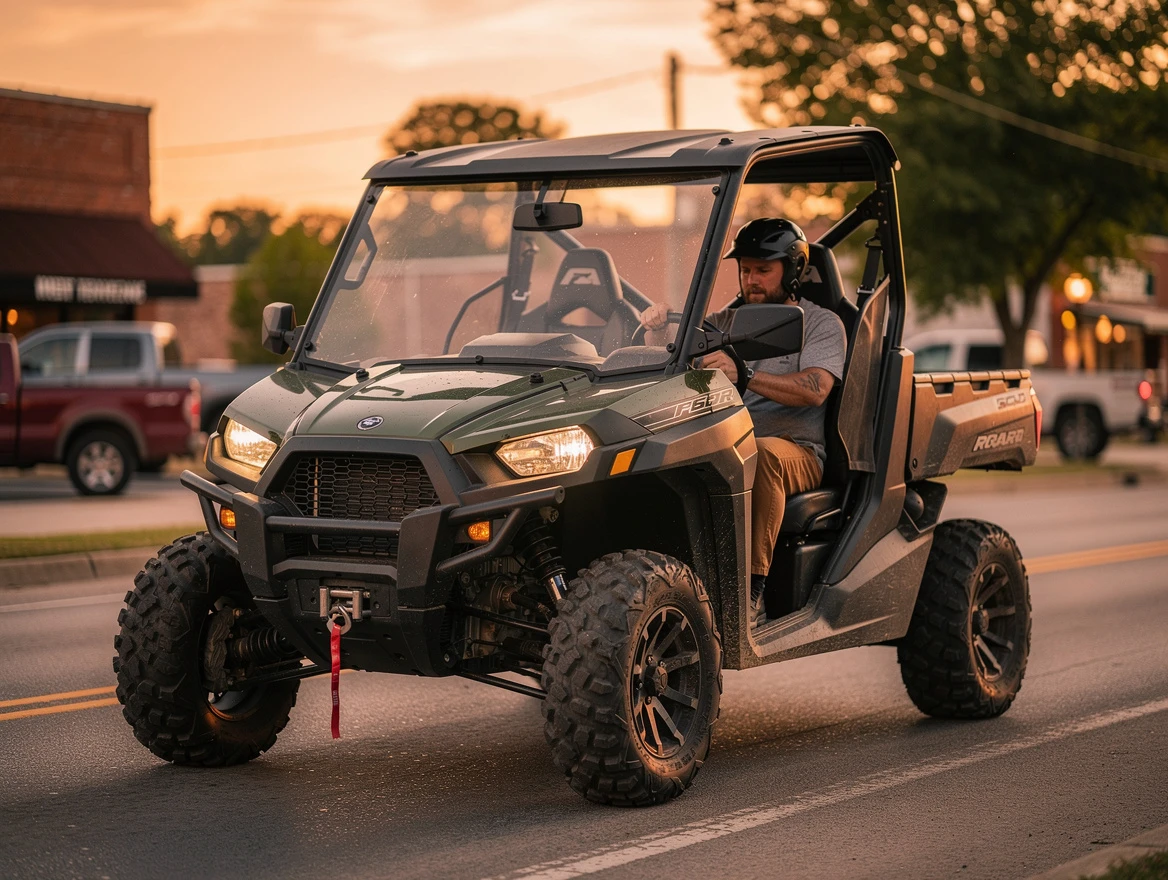
Meeting safety standards is essential before attempting to operate on public tarmac. Tennessee law mandates a specific collection of mechanical components and safety hardware. Installing these parts protects operators while ensuring local law enforcement treats your machine as compliant.
Ready to register your vehicle?
Join thousands of vehicle owners who use Dirt Legal to handle their registration quickly.
You must equip your machine with Department of Transportation (DOT) compliant components. Standard aftermarket trail lights or plastic mirrors rarely satisfy law enforcement during a routine traffic stop. Proper illumination, audible warning devices, and passenger restraints are required across all road-going platforms.
A complete review of mechanical equipment guidelines is available in the parts and equipment handbook. Adding these pieces transforms your factory machine into a road-capable vehicle.
Lighting and Electrical Hardware Requirements
Your side-by-side must have two operational headlights visible from at least 500 feet, functioning red taillights, and red brake lights that activate with the foot pedal. Amber front turn signals and red or amber rear turn signals must be operable from the driver seat. A white license plate light is also required to clarify your registration plate at night.
Visibility and Safety Restraints
Tennessee requires at least one rearview mirror giving a view of at least 200 feet to the rear. A shatterproof windshield or safety glasses for all occupants is mandatory. All occupants must wear DOT-approved seatbelts or multi-point harnesses installed according to manufacturer specifications.
Horns, Exhaust Systems, and DOT Tires
Your UTV needs an electric horn audible from 200 feet. The exhaust must include a working muffler without cutouts or excessive noise bypasses. Tires must have adequate tread depth and DOT street ratings, since standard aggressive knobby tires wear rapidly and lack wet-pavement braking traction.
Overcoming Paperwork Hurdles: Can You Make a UTV Street-Legal in Tennessee? What You Need to Know About Out-of-State Titling
Many side-by-side owners run into dead ends at local county clerk offices. If your vehicle was purchased with only an off-road Certificate of Origin (MSO) or an off-highway bill of sale, local offices often refuse to issue standard license plates. The paperwork barrier stops thousands of riders from enjoying their machines.
Fortunately, you can use remote paperwork support to register your machine compliantly in states that allow street-legal utility vehicles. Forming a Montana LLC allows your asset to be titled and plated as a passenger vehicle, giving you transferable license plates and an unrestricted title. Our team provides complete Montana LLC services to assist riders nationwide.
When reviewing title documentation, avoid improper transfers. Purchasing a machine where the previous owner failed to record their purchase creates major title defects. Learning what to do when a seller forgot to sign title documents helps prevent costly title clearance delays.
How Out-of-State Registration Works for Powersports
States like Montana and South Dakota do not restrict side-by-sides to low-speed zones or municipal corridors. By forming a Montana LLC, the corporate entity acts as the entity holding vehicle title. The LLC completes the registration paperwork through the Montana Motor Vehicle Division, resulting in regular street plates mailed directly to you.
Understanding out-of-state titling rules helps owners across state lines. For example, comparing our guide on how can you make a utv street-legal in south dakota? with local rules reveals the differences in registration procedures. South Dakota offers direct non-resident vehicle titling, providing another reliable route.
Avoiding Title Floating and Title Jumping Penalties
Never skip steps in vehicle conveyance. Buyers sometimes ask, what is title jumping? Title jumping occurs when someone buys a vehicle, does not title it, and sells it directly to another buyer. Understanding how to title a vehicle without a title protects you from severe fines and impound risks.
The Role of a Proper Bill of Sale
When purchasing an off-highway machine, securing an accurate bill of sale automotive document is essential. It establishes true consideration, dates, and ownership history. Without documented chain of title, securing compliant license plates becomes significantly more complex.
| Registration Pathway | Permitted Roadways | Speed Cap | Paperwork Complexity |
|---|---|---|---|
| Tennessee Class I / II OHV | Designated county / municipal roads only | Per local ordinance (usually ≤ 35 mph) | Moderate (County dependent) |
| Tennessee Medium-Speed Vehicle | Secondary roads with posted limits ≤ 35 mph | Strictly capped at 35 mph | High (Affidavit & inspection) |
| Montana LLC Street-Legal Registration | Public roads, highways, and connectors nationwide | Follows posted traffic speed limits | Effortless with private registration assistance |
| South Dakota Non-Resident Registration | Public roads and state routes nationwide | Follows posted traffic speed limits | Simplified remote processing |
See How We Can Help With Your Street-Legal registration →
Insurance and Driving Regulations: Can You Make a UTV Street-Legal in Tennessee? What You Need to Know About Compliance
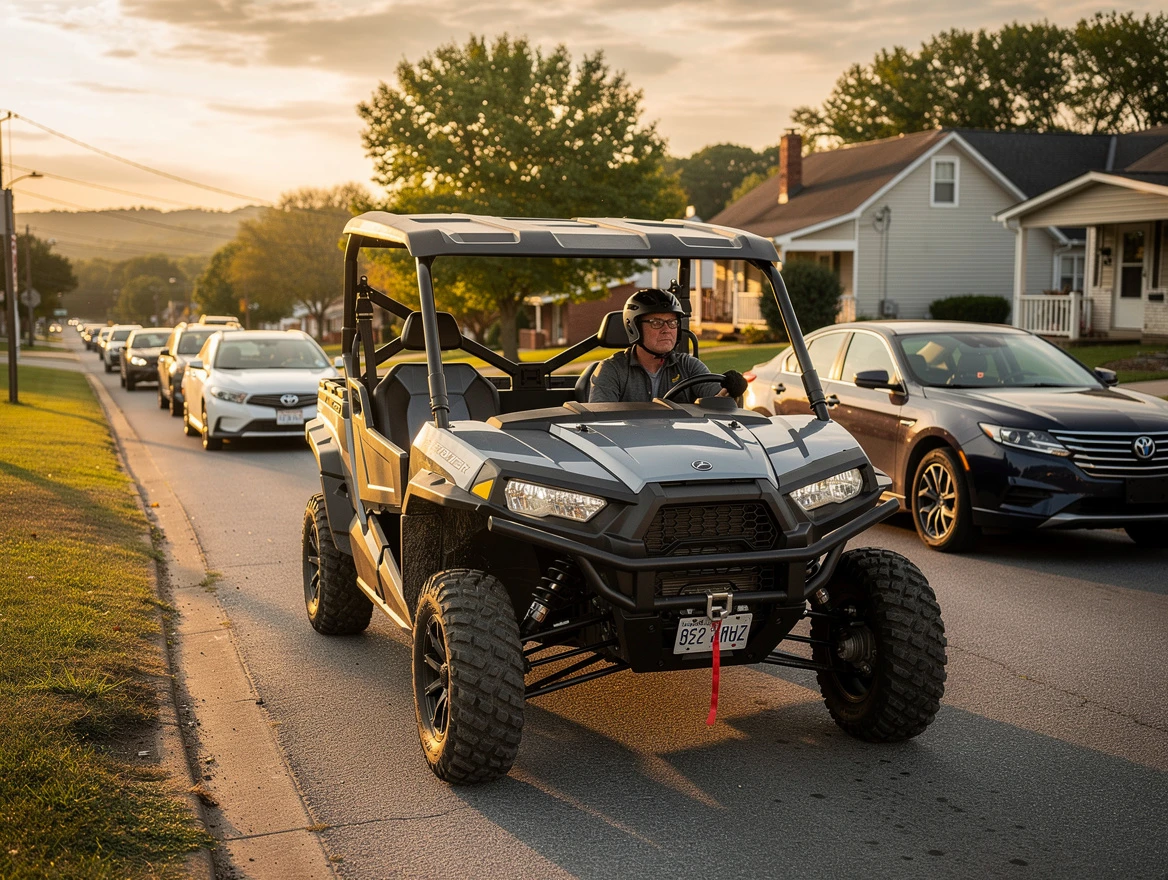
Operating any motor vehicle on public roads in Tennessee requires compliance with state financial responsibility laws. Tennessee Code Annotated Section 55-12-101 mandates continuous liability coverage. Riding without insurance leads to license suspension, fines, and vehicle impoundment.
You must carry at least the state minimum coverage limits: $25,000 for bodily injury per person, $50,000 for bodily injury per accident, and $25,000 for property damage. Specialized off-road or dual-sport policies satisfy this requirement when structured correctly for road-use endorsements.
Operating compliantly means understanding multi-state traffic and driver requirements. We recommend reviewing general guidelines like tennessee driving laws: a complete guide to make sure you follow standard driver responsibilities. Obeying traffic signals, using proper signals, and carrying active proof of insurance are mandatory everywhere.
Securing the Right Policy for Road Use
Not all insurance carriers cover side-by-sides on public streets. Many policies limit coverage strictly to private property or off-road trail systems. Speak with an insurer offering specialty street-legal powersport endorsements so your liability and collision protection remain active on pavement.
Driver License and Helmet Rules
Any person driving a road-going utility vehicle on public roads must hold a valid Class D regular driver license. Tennessee statute mandates helmet use for all operators and passengers unless the vehicle features a fully enclosed cab, automotive-glass windshield, and factory roll-cage protection.
Emissions and Local Inspections
Tennessee phased out vehicle emissions testing in most counties, simplifying equipment verification. However, local police retain authority to cite any vehicle lacking basic functional safety equipment like operational lights, audible horns, and functional mirrors.
Comparing State Regulations: Can You Make a UTV Street-Legal in Tennessee? What You Need to Know Before Crossing Borders
State laws regarding utility terrain vehicles vary dramatically across the country. Tennessee offers partial access, but nearby states like North Carolina, Georgia, and Virginia enforce completely different rules. Understanding these differences prevents unexpected roadside citations when traveling with your trailer and machine.
If you take your side-by-side on interstate trail trips, having multi-state recognized registration is a major advantage. States like Montana issue standard automotive license plates that benefit from interstate reciprocity. This avoids confusing local patchwork rules across county and state lines.
For owners exploring rules in other regions, our guide on how can you make a utv street legal in oregon? what you need to know highlights how west coast states handle off-road conversions. Comparing these frameworks underscores why so many owners turn to specialized registration pathways.
Dirt Legal has completed over 6,000 customer orders to date (lifetime through current month, n=6,199), assisting powersport enthusiasts in solving complex vehicle paperwork and securing street-legal plates without local DMV headaches.
How Reciprocity Works Between States
Under the Driver License Compact and standard interstate registration agreements, states honor motor vehicle registrations issued compliantly by other jurisdictions. A vehicle bearing valid Montana or South Dakota tags is treated as a registered passenger vehicle when operated within posted traffic guidelines.
Regional Trail Connectors and Public Thoroughfares
Tennessee offers some of the best riding in the nation, but connecting trails often requires driving on connecting county roads. Without proper road registration, crossing or driving between trail sections can risk a misdemeanor citation. Compliant registration bridges the gap between major riding destinations.
Simplifying Your Path to the Road
Rather than struggling with ambiguous county clerk guidelines, our team provides vehicle registration assistance services tailored to your vehicle. We help with the out-of-state paperwork with our paperwork support so you spend more time driving and less time researching municipal codes.
Frequently Asked Questions About Tennessee UTV Street Compliance
How to Make a UTV Street-Legal?
To make a UTV street-legal, install mandatory safety equipment including DOT-approved headlights, taillights, turn signals, mirrors, horn, and seatbelts. Then, secure a title and registration through an eligible state pathway. If your home state restricts side-by-sides to low-speed roads, you can register through a Montana LLC or South Dakota non-resident registration. This provides regular passenger vehicle plates, giving you freedom to operate across public thoroughfares while complying with traffic laws.
How to Make a Dirt Bike Street-Legal in Tennessee?
Making a dirt bike street-legal in Tennessee requires adding DOT tires, a high-and-low beam headlight, taillight, brake light operated by both switches, rear reflector, horn, and rearview mirror. After mechanical conversion, you must submit a title application and equipment certification to the county clerk. If your motorcycle lacks an on-road MSO or faces paperwork hurdles, using our private registration service provides a clean, compliant out-of-state title and tag without local clerk rejections.
Can You Make a Go Kart Street-Legal?
In almost all cases, traditional go-karts cannot be made street-legal for public road operation. Most states require vehicles to feature an identifiable 17-digit VIN, meet basic federal safety parameters, and incorporate roll protection, DOT-rated lighting, mirrors, and automotive-grade tires. However, certain heavy-duty off-road buggies or custom fabrications can be titled as specially constructed vehicles or medium-speed vehicles if they satisfy all state mechanical and safety inspections.
Are ATVs Street-Legal in Tennessee?
Standard four-wheel all-terrain vehicles (ATVs) with straddle seating and handlebars are generally not street-legal on standard roads in Tennessee. TCA 55-8-185 allows ATVs to be operated on designated county roads only where local municipal governments have explicitly passed ordinances allowing them, primarily near off-road trail systems. For general road travel, standard ATVs do not Eligible for medium-speed or standard passenger vehicle registration within Tennessee.
What Does a Side-by-Side Need to Be Street-Legal?
A side-by-side requires specific hardware and compliant paperwork to become street-legal. Mechanically, it needs DOT headlights, taillights, brake lights, turn signals, a license plate bracket with illumination, rearview mirrors, a horn, seatbelts, and DOT-rated tires. Legally, it needs an official title, active vehicle registration with license plates, and a valid liability insurance policy meeting the minimum state limits.
Can You Make a Side by Side Street-Legal in PA?
Pennsylvania does not allow side-by-sides or UTVs to be registered directly for regular street use through the Pennsylvania Department of Transportation (PennDOT). PA riders are limited to designated trails, state forest roads open to ATVs, and agricultural crossings. However, PA residents can compliantly register their UTV via an out-of-state Montana LLC, obtaining tags that allow operation on roads under interstate reciprocity guidelines.
Can I Drive My UTV on the Highway in Tennessee?
Under standard Tennessee registration, off-highway vehicles and medium-speed vehicles are strictly prohibited from operating on access-controlled highways, state routes, and interstates. If your machine is registered through an out-of-state passenger vehicle title, you must still follow posted minimum speed limits and maintain safe traffic flow, making multi-lane high-speed interstates ill-advised for lightweight powersports.
Do I Need a Motorcycle License to Drive a Street-Legal UTV?
No, you do not need a motorcycle endorsement to drive a street-legal UTV in Tennessee. Because side-by-sides feature non-straddle seating, seatbelts, and a standard steering wheel, they are classified as four-wheeled motor vehicles. A standard, valid Class D driver license is all that is required for adult operators on public roadways.
Start Your Registration Today → No Hidden Fees
Getting your side-by-side on the road does not have to mean endless trips to government offices or fighting over state equipment definitions. When asking: can you make a utv street-legal in Tennessee? what you need to know is that state options leave you restricted to slow speeds and local borders. Registering your vehicle through our tailored out-of-state paperwork services gives you true freedom on the pavement. Reach out to our specialists today and take the quickest path to driving your machine anywhere you want to ride.