Can You Make a UTV Street Legal in South Dakota?
Wondering can you make a UTV street legal in South Dakota? Learn the equipment rules, out-of-state options, and paperwork requirements.
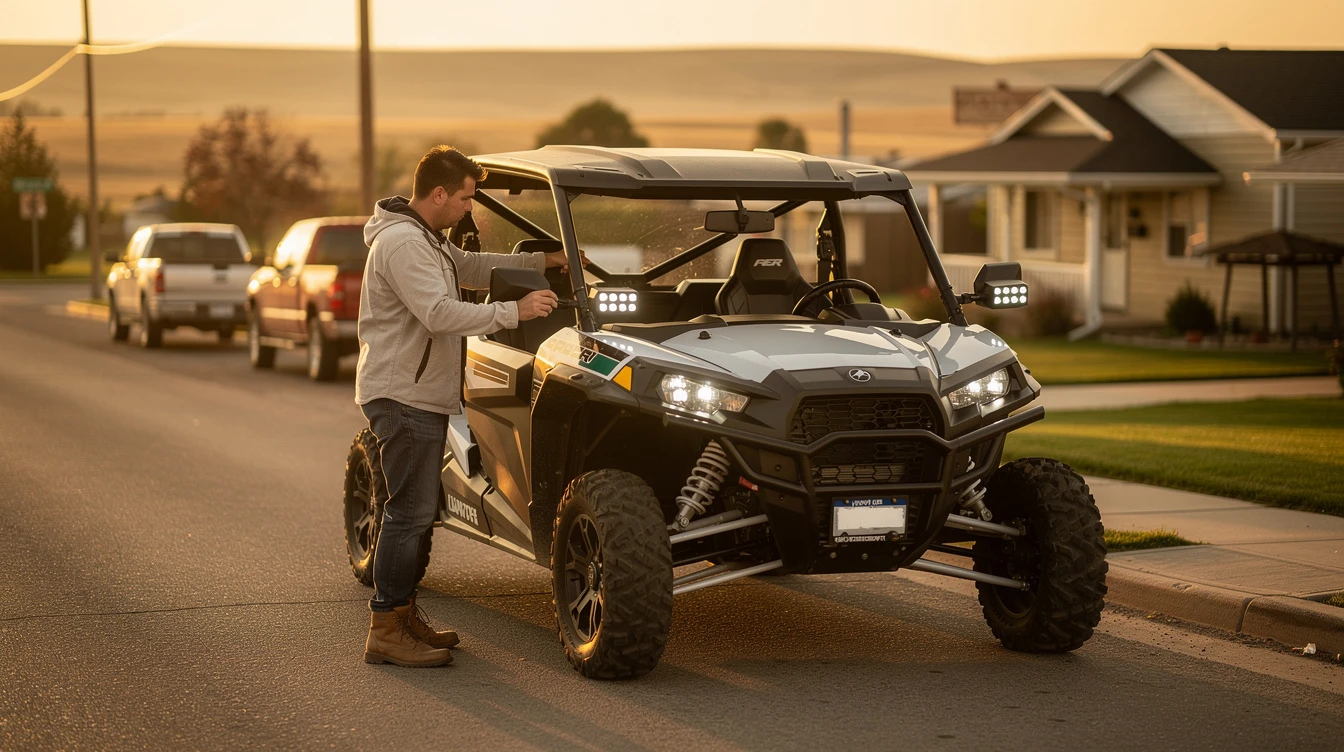
Yes, you can make a UTV street-legal in South Dakota by equipping your four-wheel utility vehicle with essential safety equipment and submitting the proper registration paperwork to the state. South Dakota allows both residents and non-residents to register utility vehicles for public highway use with an interstate titling pathway. By meeting equipment standards like mirrors, headlights, and safety belts, your off-road machine transforms into an on-road compliant machine across state lines.
Whether you want to drive through the Black Hills, cruise around town, or take your machine on public highways in other states that honor South Dakota tags, understanding the titling process makes a huge difference. You will learn the exact equipment requirements, the required forms, how out-of-state owners register remotely, and common titling hurdles.
Can You Make a UTV Street-Legal in South Dakota With Basic Equipment?
Updated on September 24, 2026
South Dakota law outlines explicit mechanical standards under Title 32 of the South Dakota Codified Laws. Unlike many states that prohibit off-highway utility task vehicles from paved roadways entirely, South Dakota establishes a clear statutory path. The machine must have four or more wheels, a steering wheel, and meet specific safety specifications to obtain a standard automotive license plate.
Meeting these mechanical thresholds does not require factory modification by an original manufacturer. Aftermarket additions meet state compliance as long as they function correctly and maintain visibility during day and night operation. Once equipped, the vehicle is classified as a four-wheel motorcycle or low-power passenger vehicle for road access.
Required Street Gear and Safety Additions
To prepare your machine for public roadways, your vehicle needs specific hardware installed before submitting an application. The required components include:
- At least one lighted headlamp that illuminates persons and vehicles at least 200 feet ahead.
- At least one red taillamp mounted on the rear, clearly visible from 500 feet.
- A functional stop lamp operated by foot or hand brake that shines red or amber.
- At least one rearview mirror mounted to provide a clear view 200 feet directly behind.
- A functional horn capable of emitting sound audible under normal conditions from 200 feet.
- An exhaust muffler in good working order that prevents excessive or unusual noise.
- Department of Transportation compliant tires with visible tread depth.
- A parking brake or functional parking mechanism.
While turn signals are technically not mandated under baseline South Dakota motorcycle statute if hand signals are used, adding electronic signals is strongly recommended. Most local jurisdictions and reciprocal states expect functioning front and rear amber turn signals whenever an off-road utility rig operates alongside standard highway traffic. You can read our detailed breakdown on parts and equipment to see our recommended lighting packages.
Eye Protection, Helmets, and Seatbelts
Safety regulations also apply directly to operators and passengers. Operators and passengers under eighteen years of age must wear a compliant safety helmet. Windshields are not strictly required if the operator wears approved protective eye gear such as safety goggles, shatter-resistant glasses, or a full-face helmet shield.
If your machine came from the factory with factory roll-cage structures and occupant restraints, those seatbelts must remain installed and in active use by all passengers. Removing original manufacturer safety harnesses compromises the roadworthy status of your off-road rig during state evaluations.
Can You Make a UTV Street-Legal in South Dakota as an Out-of-State Resident?
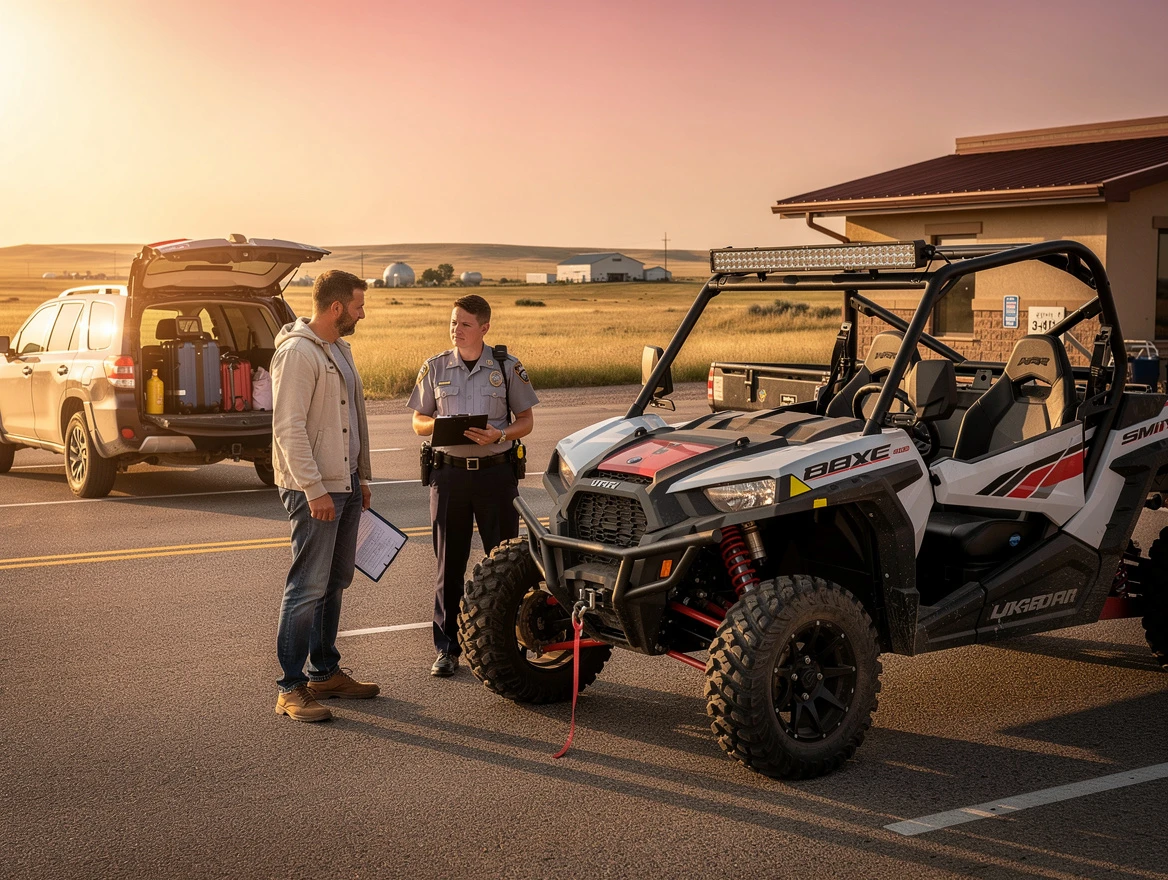
South Dakota stands out nationwide because state statutes allow non-residents to register their four-wheel utility machines without maintaining a physical home address inside the state. This makes South Dakota one of the top destinations for powersport enthusiasts across the country who live in restrictive regions where local departments ban off-road highway conversion.
Ready to register your vehicle?
Join thousands of vehicle owners who use Dirt Legal to handle their registration quickly.
Out-of-state residents can submit an application through county treasurer offices by mail. The state assigns a standard full-size or motorcycle-dimension street plate that allows the vehicle to run on designated public roadways. If you want to check how your home jurisdiction treats these conversions, take a look at our complete state guide on how to make a UTV street-legal by state.
The Out-of-State Titling Process and Paperwork
The core paperwork required for out-of-state registration includes the original Certificate of Title or Manufacturer's Certificate of Origin (MCO). If you hold an active loan on the vehicle, your lender must provide the title or an authorized electronic release for processing. You will also submit an Application for Motor Vehicle Registration along with a certified affidavit affirming your vehicle contains all required road equipment.
Owners must also provide proof of a Social Security Number or federal identification, along with an unexpired copy of their current driver's license. You will need to account for vehicle registration costs and local county excise taxes, which are calculated based on the purchase price or retail market value of your utility machine. If you bought your machine without clear ownership paperwork, you might first need to check how to title a vehicle without a title: legitimate options and documents needed.
South Dakota vs Montana LLC Registration Pathways
Powersport owners often debate whether South Dakota or Montana presents the best route for highway compliance. In South Dakota, you register the vehicle under your personal name as a non-resident. In Montana, owners form a specialized holding company to title the asset. Both options offer distinct operational advantages depending on your state of residency, sales tax status, and planned usage.
With a Montana LLC, the vehicle is owned by a corporate entity based in a state with zero percent sales tax. This structure is particularly appealing for high-value custom machines, turbo models, or commercial fleets. You can read more about this corporate titling approach in our sister article explaining whether is Montana LLC vehicle registration compliant for business.
Dirt Legal has helped 80,000+ vehicle orders to date. Our team evaluates vehicle types, ownership documents, and local jurisdiction rules to match owners with the right pathway. To see how these programs function from start to finish, review our breakdown of how street-legal works.
| Feature | South Dakota Non-Resident | Montana LLC Structure |
|---|---|---|
| Ownership Entity | Personal Name | Montana LLC Entity |
| Sales Tax Treatment | 4% State Excise Tax Due on Value | 0% State Sales and Excise Tax |
| Plate Dimension | Motorcycle or Full Size | Standard Highway Plate |
| Physical Inspection Required? | No Physical Inspection in SD | No In-State Inspection Needed |
| Annual Renewals | County Mail-in Renewal | Annual Secretary of State Filing |
| Best For | Moderate-Value UTVs and Quads | High-Value Builds, RVs, and Fleets |
See How We Can Help With Your Street Legal Journey →
Can You Make a UTV Street-Legal in South Dakota to Drive Interstate?
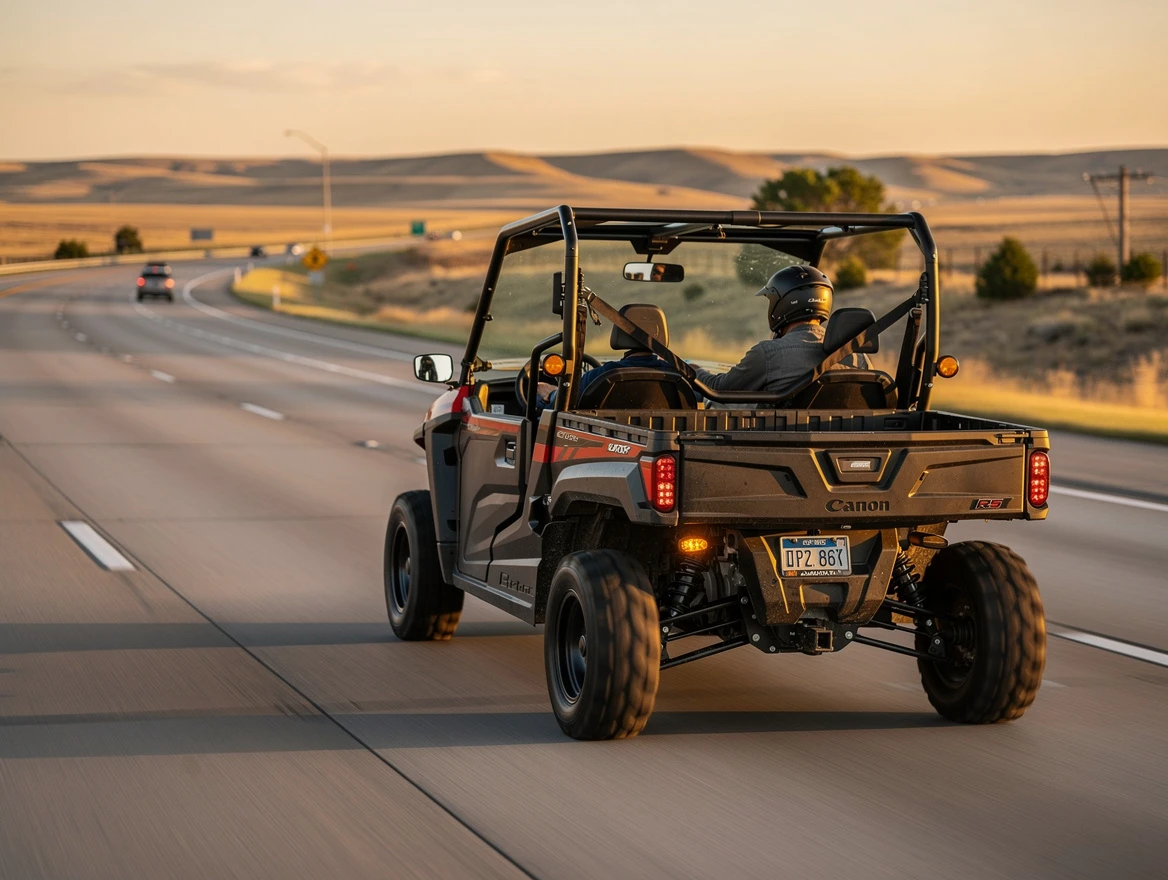
Once your machine sports a valid South Dakota license plate and registration document, interstate travel becomes possible through interstate reciprocity. Under the Driver License Compact and reciprocal motor vehicle titling agreements, states generally recognize valid registrations issued by sister jurisdictions. However, equipment rules and local road limitations remain governed by the state whose pavement you are actively driving on.
For instance, if your rig carries a South Dakota plate and you transport it to ride in Wisconsin, local authorities require you to observe local highway operational restrictions. You can learn more about regional rules in our state breakdown for Wisconsin as well as the rules governing New Jersey.
Understanding State Roadway Restrictions
While South Dakota allows road-converted utility vehicles on most state highways and secondary roads, controlled-access interstate highways like I-90 and I-29 remain restricted for slower off-highway utility vehicles. Most jurisdictions require vehicles entering multi-lane divided interstates to maintain posted minimum speeds and carry standard federal motor safety certifications.
When operating in other states, your South Dakota plate establishes that the vehicle is compliant and titled. Yet, you must obey local municipal bans. If an urban county prohibits all low-speed vehicles from roads with speed limits above 35 mph, your out-of-state plate does not exempt you from those speed limits. Always verify local county ordinances before driving through city centers.
Maintaining Compliant Insurance Coverage
Operating any motor vehicle on public thoroughfares demands continuous financial responsibility. South Dakota requires minimum liability insurance coverage for all motor vehicles operating on public roads. Standard policy limits include $25,000 for bodily injury per person, $50,000 per accident, and $25,000 for property damage.
Make sure your powersport insurance carrier adds an on-road or street endorsement to your policy. A basic off-road trail liability policy will not satisfy law enforcement during a traffic stop on a county highway. For a detailed look at how policies interact across state borders, consult our sister article on how do I need to have my insurance in Montana if I register my LLC in another state.
Frequently Asked Questions
How to make a UTV street-legal?
To make a utility task vehicle street-legal, install mandatory safety hardware including headlights, a tail light with brake illumination, a rearview mirror, a functioning horn, and tires approved for roadway use. Next, obtain the proper titling documents such as your Manufacturer's Certificate of Origin or prior vehicle title. Submit these documents alongside a safety equipment affidavit to an accommodating state department, such as South Dakota or Montana. Once approved, affix your highway license plate, purchase an on-road insurance policy, and observe local road ordinances wherever you travel.
Can you make a dirt bike street-legal?
Yes, you can convert an off-road dirt bike for on-road use by outfitting it with dual-sport equipment and transferring the title from off-road status to standard on-road registration. Required hardware typically includes high and low beam headlights, an operational brake light switch, a rearview mirror, Department of Transportation certified dual-sport tires, and a mechanical horn. Many states restrict dirt bike title conversions locally, but our paperwork assistance team routinely guides riders through remote out-of-state title solutions.
Can you make a go kart street-legal?
Making a traditional go-kart street-legal is considerably more difficult than titling a commercial side-by-side or dirt bike. Standard recreational go-karts lack structural roll cages, compliant brake assemblies, certified lighting systems, and recognized seventeen-digit Vehicle Identification Numbers. While specialized custom kit builds or heavy-duty utility buggies can sometimes obtain assembled vehicle status or custom titles, basic yard karts generally cannot meet highway safety benchmarks.
Can you make a side by side street-legal in PA?
Pennsylvania does not allow direct road registration for standard utility side-by-sides within state borders, limiting them strictly to recreational trail networks, designated pilot roads, and private property. However, Pennsylvania residents frequently use out-of-state titling mechanisms, such as registering through an out-of-state structure like South Dakota or a Montana LLC. While this grants the machine a compliant road plate, operators must remain mindful of Pennsylvania local road access rules and municipal vehicle codes.
How to make a race car street-legal?
Converting a dedicated race car for highway driving involves bringing the vehicle into full compliance with state passenger vehicle lighting, emissions, and safety statutes. You must verify the vehicle has functioning bumpers, approved windshield glass, front and rear turn indicators, wipers, mirrors, and an exhaust system with functional catalytic converters where required by law. Once the mechanical equipment is operational, paperwork transferring or clearing the vehicle's title status must be submitted to receive valid plates.
How to make an ATV street-legal in Florida?
Florida state statutes strictly categorize traditional four-wheel all-terrain vehicles (ATVs) as off-highway vehicles, prohibiting them from operating on public paved roads under standard local DMV guidelines. To achieve compliant street operation, Florida riders frequently look into our street-legal vehicle registration assistance services. By establishing an out-of-state title and plate in a jurisdiction like South Dakota or Montana, owners can compliantly operate on appropriate public thoroughfares while maintaining proper insurance coverage.
Do I need an in-state address to register in South Dakota?
No, South Dakota does not require you to establish personal residency or own physical real estate inside the state to title your vehicle. State administrative procedures permit out-of-state vehicle owners to submit their title paperwork and receive valid tags by mail. Our specialists manage this entire process with our paperwork support, eliminating the guesswork from county clerk submissions.
When you ask, can you make a UTV street-legal in South Dakota, the answer is a clear yes. With the right combination of basic safety gear, an accurate title application, and the proper registration paperwork, hitting the open highway with your side-by-side is entirely achievable. Rather than letting complex paperwork hold you back, our team is here to manage the filings and turn your off-road machine into a road-ready reality.