Are E-Bikes Legal? Complete US Road & Trail Laws Guide
Are e-bikes legal? Find federal three-class rules, local street regulations, licensing requirements, and titling options for electric bikes.
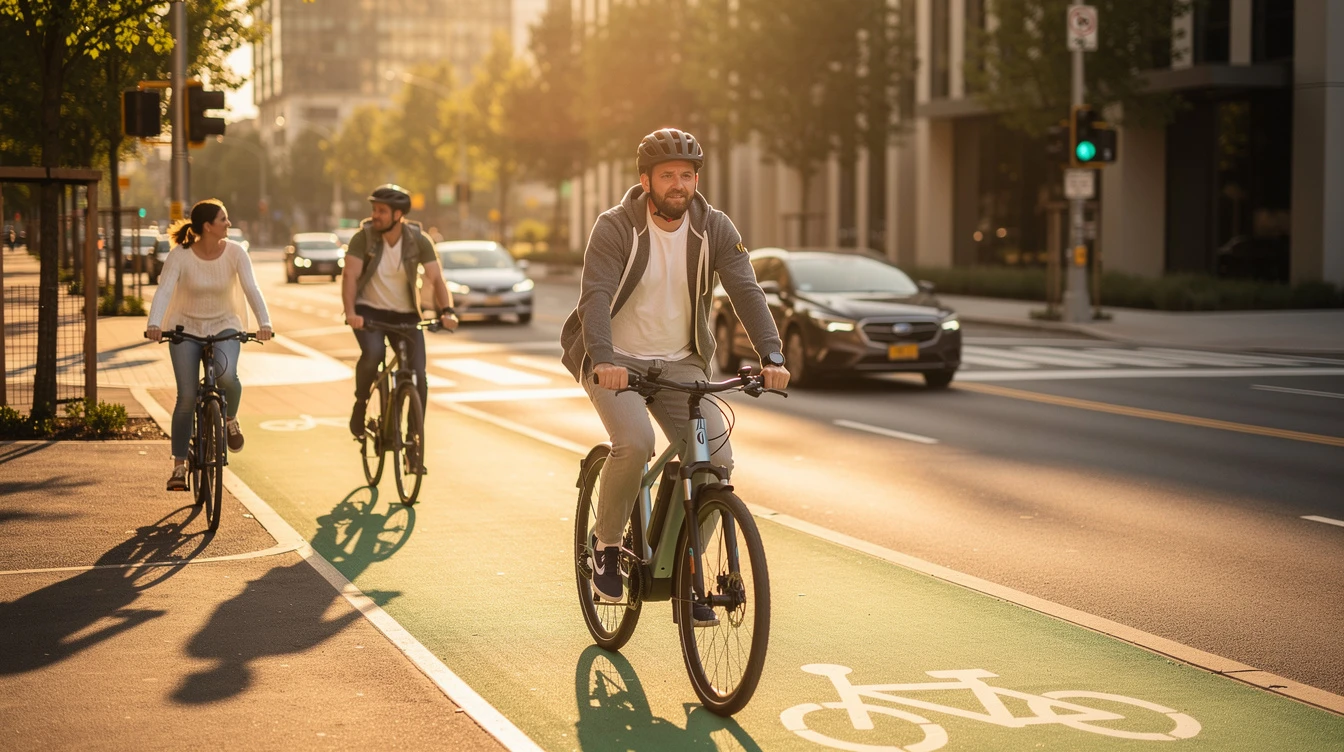
Yes, e-bikes are street-legal across the United States under federal law and within the vast majority of individual states, provided they comply with specific operational classes. Most jurisdictions treat electric bicycles that have functional pedals, a motor of 750 watts or less, and maximum assisted speeds between 20 and 28 mph identically to traditional human-powered bicycles. However, models exceeding these power specifications or operating without pedal assistance may cross into moped or motorcycle classifications that require formal titling, registration, and driver licensing.
Understanding where and how you can ride depends heavily on how federal statutes intersect with your state and municipal vehicle codes. While the federal government defines product safety and consumer manufacturing standards, municipal traffic ordinances dictate whether your bike belongs on a road shoulder, a protected bike lane, or a shared multi-use pathway.
Riders frequently find themselves caught off guard when an out-of-the-box electric cycle exceeds nominal motor ratings or features a standalone throttle that state highway patrols regulate strictly. Let us break down the exact classifications, state distinctions, and equipment standards required to stay street-legal on two wheels.
Federal Law Classifies Most Low-Speed Electric Bicycles as Traditional Bicycles
Updated on September 22, 2026
The baseline for electric bicycle in America began with Public Law 107-419, enacted by Congress in 2002. This statute amended the Consumer Product Safety Act, moving the regulatory oversight of low-speed electric bicycles away from the National Highway Traffic Safety Administration (NHTSA) and into the Consumer Product Safety Commission (CPSC). This critical shift established that an electric bicycle is not treated as a motor vehicle under federal manufacturing rules if it adheres to strict wattage and speed caps.
Under CPSC oversight, a compliant low-speed electric bicycle must feature fully operable pedals, an electric motor rated at 750 watts (1 horsepower) or less, and a maximum speed on a paved level surface of less than 20 mph when powered solely by the motor. If a cycle meets these criteria, manufacturers can sell it without the turn signals, automotive-grade glass, or extensive crash testing mandated for road-going passenger cars.
However, federal law only governs the sale and initial manufacturing of these cycles. Once an e-bike hits a public roadway, path, or trail, state-level motor vehicle statutes take over completely. This distinction is where many riders run into confusion regarding where they can travel compliantly.
The Standard Three-Class System Defined
To establish nationwide consistency, the bicycle industry and legislative bodies developed the three-class framework, which more than 40 states have formally adopted into their transportation codes. Knowing your cycle's class determines where you can ride and what speed restrictions apply.
- Class 1: Pedal-assist only (no throttle). The electric motor engages only when the rider pedals and stops providing assistance once the bike reaches 20 mph.
- Class 2: Throttle-assisted. The motor can drive the bicycle up to 20 mph without pedaling, though it may also feature pedal-assist capability up to the same speed limit.
- Class 3: Pedal-assist only (in most states, though some permit throttles up to 20 mph). The electric motor assists pedaling up to 28 mph and must be equipped with a functional speedometer.
Motor Wattage Limits and Federal Preemption
Federal statute specifies a maximum output of 750 watts for consumer electric bicycles. While European markets cap standard e-bikes at 250 watts, the United States allows up to 1 horsepower. When evaluating whether high-powered models are compliant, local authorities look strictly at continuous motor ratings rather than short-burst peak wattage spikes.
If you purchase a high-powered electric cycle equipped with a 1,000-watt to 3,000-watt hub motor, federal consumer bicycle protections no longer apply to that machine. At that threshold, states classify the machine as an off-highway vehicle, moped, or motorcycle, requiring you to look at alternative compliance methods such as Street Legal Vehicle registration assistance services to ride on paved public surfaces.
Why Manufacturing Rules Differ from Highway Codes
It is important to recognize that the CPSC dictates how products are manufactured and marketed, whereas state departments of transportation control traffic operations. A bike can be sold compliantly as a consumer product, yet local highway patrol officers can still prohibit it from public roads if it lacks operational pedals or operates above posted speed limits. Federal status does not grant an automatic right to ride on every municipal path.
State and Local Rules Dictate Street-Legal Operation Across the Country
Because state legislatures maintain individual control over transportation infrastructure, the rules governing helmets, age requirements, and path access fluctuate across borders. While the three-class system has unified much of the country, regional variations remain critical for riders traveling through multiple jurisdictions.
Ready to register your vehicle?
Join thousands of vehicle owners who use Dirt Legal to handle their registration quickly.
For example, some states enforce strict age floors for higher-speed models. Class 3 e-bike operators in states like California, New York, and Colorado must be at least 16 years of age. Helmet mandates also vary, some states require approved protective headgear for all riders regardless of age, while others limit helmet requirements strictly to minors or operators of Class 3 machines.
Local municipalities and park districts reserve the statutory authority to ban e-bikes from public sidewalks, shared equestrian trails, and natural-surface greenways. Even if your e-bike is fully recognized by state statute as a bicycle, local city councils often bar motorized travel on crowded boardwalks or protected pedestrian trails.
Navigating Sidewalks and Multi-Use Paths
Class 1 and Class 2 electric bikes typically enjoy access to conventional paved bike paths and lanes. However, Class 3 bikes, capable of 28 mph, are frequently barred from multi-use paths separated from vehicular roadways unless explicitly permitted by local signage. Sidewalk riding is heavily restricted in urban business districts across almost every state to protect foot traffic.
Equipment Mandates: Lights, Reflectors, and Bells
To operate compliantly after dark, nearly all state vehicle codes require e-bikes to sport a white front headlight visible from at least 500 feet and a red rear reflector or active taillight visible from 600 feet. Many municipalities also mandate an audible warning device, such as a bell or horn, capable of signaling pedestrians from a distance of 100 feet.
Out-of-Category Electric Bikes and Dirt Bike Conversions
A growing category of high-performance electric two-wheelers, such as Sur-Ron, Talaria, and Segway models, blur the line between e-bikes and small motorcycles. These vehicles often feature motor outputs exceeding 3,000 watts, lack operational pedals, and hit speeds well above 30 mph. Under almost every state transportation statute, these are considered off-road motor vehicles rather than consumer bicycles.
Operating a high-powered electric dirt bike on city asphalt without a license plate, valid registration, or motorcycle endorsement invites traffic citations and potential impoundment. Many riders faced with this obstacle turn to programs that make a dirt bike street-legal in California or look at out-of-state paperwork solutions to secure valid license plates for two-wheelers that the local DMV struggles to categorize.
Comparing Electric Bicycles to Mopeds, Scooters, and Motorcycles
The line between a traditional bicycle and a regulated motor vehicle hinges directly on power, speed, and whether pedaling is strictly required. States split these two-wheeled machines into distinctive categories, each demanding varying levels of documentation, insurance, and administrative paperwork.
When a machine discards operable pedals or pushes past 750 watts, DMV systems no longer treat it as a lightweight commuter conveyance. The machine enters the jurisdiction of vehicle titling agencies, bringing requirements for a manufacturer's certificate of origin (MCO), a vehicle identification number (VIN), and statutory lighting arrays.
To see how your machine fits into standard transportation definitions, examine the functional differences outlined in the comparison table below.
| Vehicle Classification | Top Assisted Speed | Motor Power Limit | Functional Pedals Required? | Driver License Required? | DMV Registration Required? |
|---|---|---|---|---|---|
| Class 1 E-Bike | 20 mph (pedal-assist) | 750 Watts (1.0 HP) | Yes | No | No |
| Class 2 E-Bike | 20 mph (throttle/assist) | 750 Watts (1.0 HP) | Yes | No | No |
| Class 3 E-Bike | 28 mph (pedal-assist) | 750 Watts (1.0 HP) | Yes | No (Age 16+ typically) | No |
| Moped / Motor-Driven Cycle | 30 mph | Up to 1,500 Watts (or 49cc) | Optional | Yes (Standard Class C) | Yes (in most states) |
| Electric Motorcycle (Sur-Ron/Talaria) | 45+ mph | Over 1,500 Watts | No | Yes (Motorcycle M1/M) | Yes |
As outlined above, standard Class 1 through Class 3 e-bikes provide tremendous freedom because they bypass state licensing desks, inspection stations, and annual property taxes. But if your machine lands in the moped or motorcycle tiers, riding without a title or plate risks heavy fines.
When Does an Electric Bike Require a Title and Registration?
An electric two-wheeler requires title and registration the moment it exceeds state-defined bicycle limitations. If your cycle lacks functional pedals, produces 2,000 watts of continuous power, or hits 40 mph via a twist-grip throttle, state law designates it as a motor vehicle. To operate on surface streets, it must possess a 17-digit VIN and carry a state-issued license plate.
Securing a standard title for unique or imported electric machines is often difficult because local DMVs lack category definitions for off-road electric frames. In many cases, owners hold only an informational bill of sale automotive invoice rather than a conforming title. That is where specialized vehicle registration assistance services step in to help bridge the paperwork gap through compliant out-of-state pathways.
See How We Can Help With Your Vehicle Registration →
Driver Licensing and Insurance Distinctions
Standard electric bicycles require neither a state driver license nor liability insurance under state vehicle codes. However, if your electric machine falls under moped or motorcycle rules, operating it without a valid driver license or motorcycle endorsement can lead to misdemeanor citations. while conventional bicycle accidents fall under general homeowner or personal umbrella insurance policies, motor-driven electric machines require dedicated motorcycle liability policies to satisfy state financial responsibility laws.
If you manage multiple unique vehicles or custom powersports, structuring your assets correctly is essential. Many collectors look into how a Montana LLC vehicle registration handles diverse fleets to manage compliance across various equipment types without unnecessary roadblocks.
Navigating DMV Title Transfer and Paperwork Headaches
When purchasing an electric cycle or dual-sport motorcycle second-hand, private transactions can get messy. Missing titles, incomplete paperwork, or sellers who never finalized transfers cause substantial friction at the local licensing branch. Situations involving a lost title or an invalid assignment require an auto title replacement or bonded title process to establish clear ownership before plates can be issued.
Understanding that titling rules change dramatically across state borders helps avoid expensive mistakes during private-party acquisitions.
Trail Access and Federal Land Regulations for Electric Cycles
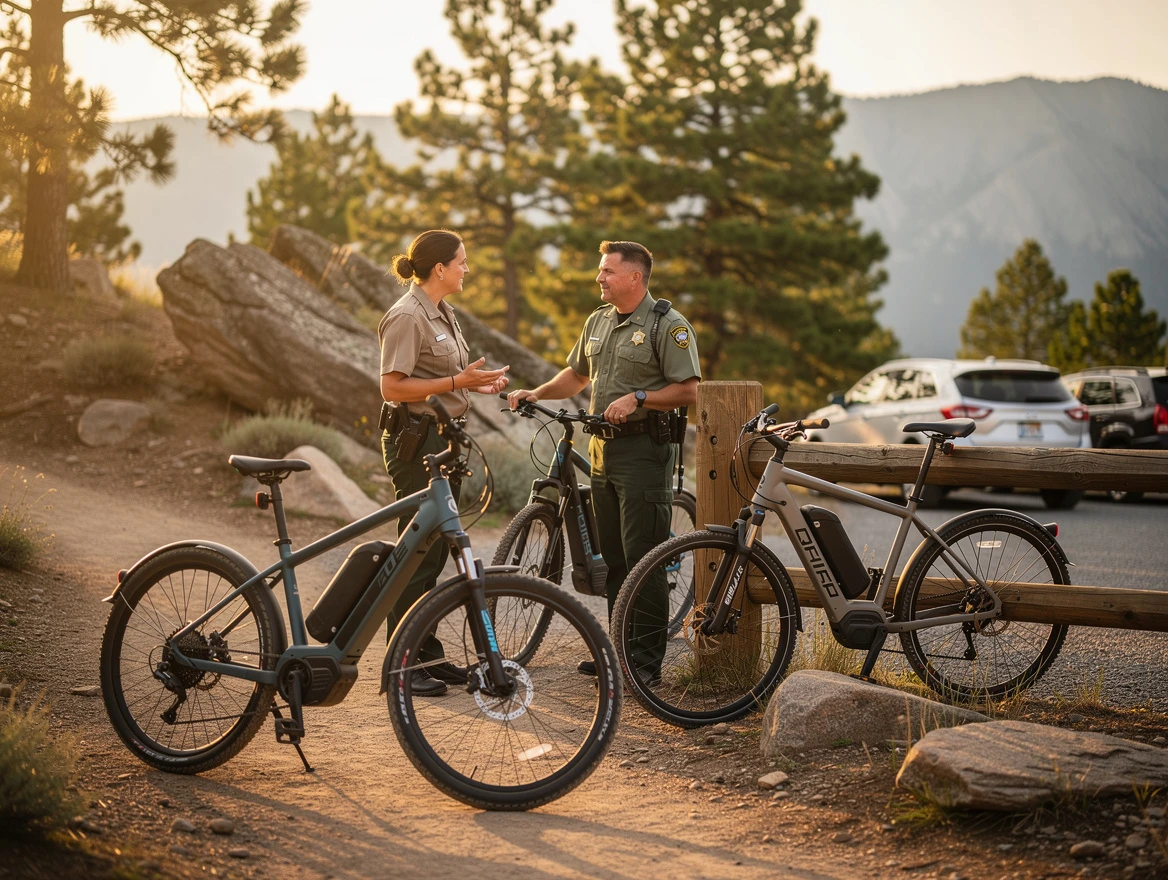
Riding an electric bike through national parks, state forests, and BLM land involves an entirely different set of rules than cruising through suburban neighborhoods. The federal agencies that manage public lands, including the U.S. Forest Service (USFS), the Bureau of Land Management (BLM), and the National Park Service (NPS), do not automatically treat e-bikes like traditional mountain bikes.
In 2019, the Department of the Interior issued Secretarial Order 3376, which directed agencies like the BLM and NPS to expand e-bike access on public lands. Under these updated provisions, local park superintendents and land managers have the authority to allow Class 1, 2, and 3 e-bikes on trails previously designated solely for non-motorized bicycles.
However, the U.S. Forest Service operates under the Department of Agriculture and maintains distinct travel management policies. The USFS classifies all electric cycles as motorized vehicles regardless of wattage or pedal mechanics. This means you can ride your e-bike on thousands of miles of motorized Forest Service roads and motorized trails, but you cannot enter non-motorized singletrack unless that specific trail system has undergone an environmental assessment permitting electric use.
Understanding BLM and National Park Travel Plans
While the Bureau of Land Management has broadly adopted policies permitting e-bikes on non-motorized paths where traditional bicycles operate, local field offices establish individual designations. Never assume an open dirt trail welcomes electric power. Always check local trail management maps to make sure electric motors are explicitly authorized before heading out.
Wilderness Areas Are Strictly Off-Limits
Under the Wilderness Act of 1964, mechanical transport of all types is strictly prohibited within congressionally designated Wilderness Areas. This federal prohibition bans human-powered mountain bikes, and it strictly bans all classes of electric bicycles. Operating an e-bike within a designated federal Wilderness Area can result in federal misdemeanor charges, heavy financial penalties, and equipment confiscation.
State Parks and Local Municipal Trail Networks
State park systems across the country develop their own operational rules for electric cycles. Some states, such as Pennsylvania and Washington, grant broad access for Class 1 pedal-assist cycles on multi-use paths while restricting Class 2 throttle models. Other states restrict all motorized models to paved campground loops and vehicular roadways. Always inspect the trailhead advisory signs before unloading your machine.
Frequently Asked Questions About E-Bike and Two-Wheeler Compliance
Are 49cc bikes street-legal?
Yes, 49cc gas-powered bikes are street-legal in nearly every state, but they are regulated as mopeds or motor-driven cycles rather than bicycles. Because they rely on small internal combustion engines rather than electric motors, you typically must possess a valid driver license, obey local helmet mandates, and carry proof of insurance. In many states, you must also obtain a specific moped decal or license plate through your local motor vehicle agency to ride on public streets.
Can you make an e-bike street-legal in Illinois?
In Illinois, standard Class 1, Class 2, and Class 3 e-bikes are already street-legal for road and bike lane travel without special equipment conversion, provided they feature operable pedals and a motor rated under 750 watts. However, if your electric bike exceeds 750 watts or travels faster than 28 mph, Illinois categorizes it as a moped or motorcycle. To make an oversized or throttle-only electric cycle street-legal in Illinois, it must be equipped with motorcycle-grade safety hardware, a 17-digit VIN, and receive formal titling and registration.
Are dirt bike street-legal?
Standard off-road dirt bikes are not street-legal out of the box because they lack DOT-approved lighting, horn assemblies, mirrors, and street tires. To operate a dirt bike on paved public roads, you must install the required street conversion hardware, secure a compliant title, and obtain a license plate. If your local DMV rejects off-road titling documentation, our remote paperwork support options help riders secure street plates through compliant jurisdictions.
Are 50cc mini bikes street-legal?
Factory 50cc mini bikes are rarely street-legal when purchased because most models are built strictly for private property or closed-course recreational use. They typically lack DOT-compliant headlights, taillights, mirrors, turn signals, and conforming VIN geometry. However, you can make a 50cc mini bike street-legal by installing required road hardware and applying for moped or motorcycle titling documentation through supported motor vehicle processes.
Which package makes a bike street-legal?
To convert an off-highway motorcycle or high-powered electric frame into a street-legal machine, you need both a mechanical equipment kit and an administrative paperwork package. Mechanically, you must install DOT-approved headlights with high and low beams, rear brake lights, turn signals, rearview mirrors, a horn, and compliant dual-sport tires. Administratively, our dirt bike street-legal service guides you through the necessary title transfers and registration filings to secure a valid license plate.
What is Dirt Legal?
Dirt Legal is an independent automotive document and title assistance service that helps vehicle owners manage complex DMV paperwork. Founded to solve frustrating motor vehicle registration roadblocks, Dirt Legal has completed over 6,000 customer orders to date (lifetime through current month, n=6,180). Whether you need help titling a custom motorcycle, registering an imported vehicle, or organizing out-of-state paperwork through a Montana LLC, our registration specialists manage the process compliantly with our paperwork support.
Do you need a driver license to ride an e-bike?
No, you do not need a driver license to operate a standard Class 1, Class 2, or Class 3 electric bicycle in the vast majority of US states. Because state transportation codes categorize these low-speed cycles alongside traditional human-powered bicycles, no testing, endorsement, or state licensing is required. However, riders under 16 years old are typically prohibited from operating Class 3 machines capable of assisted speeds up to 28 mph.
Final Steps for Staying Compliant on Roadways and Trails
Operating an electric bicycle provides exceptional freedom and an efficient alternative to traditional commuter travel. So long as your machine remains within the standard 750-watt boundary, maintains operable pedals, and adheres to the speed caps of its classification tier, you can ride confidently without worrying about licensing, titling, or insurance mandates across public roads.
When your machine steps outside these boundaries into high-powered electric territory or off-road powersports, compliance rules change quickly. Do not leave your machine vulnerable to impoundment or costly traffic citations when paperwork solutions exist. Whether you are dealing with an unusual bill of sale, exploring an out-of-state transfer, or needing to license a custom two-wheeler, having the right administrative support keeps your focus where it belongs, out on the open road.