Two Vehicles Drifting Together at 70 MPH: What Happens?
Find out what happens when two vehicles traveling side by side at 70 mph drift together, how aerodynamics pull them in, and the effect with a semi-truck.
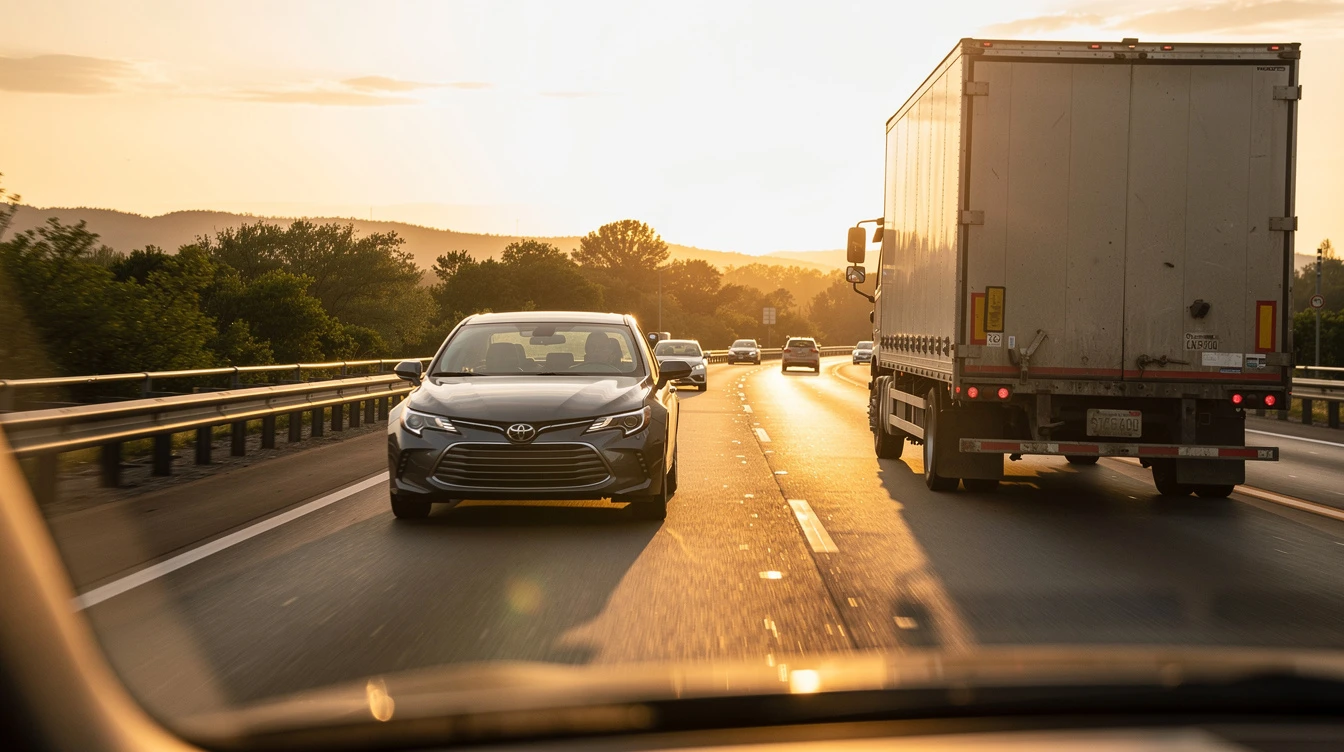
When two vehicles traveling side-by-side at equal speeds of 70 mph drift together, air turbulence does not prevent a crash, but actually accelerates it. The narrowing channel between the vehicles creates a low-pressure Venturi zone that pulls the vehicles inward rather than pushing them apart. If one vehicle is a semi-truck, this aerodynamic suction is dramatically magnified, drawing the smaller vehicle directly toward the trailer wheels before any physical contact occurs.
Many motorists assume that rushing air between two cars forms a protective air cushion. Fluid dynamics proves the exact opposite, as air forced through a constricting gap must accelerate, dropping local pressure according to Bernoulli's principle. This guide explains the physics of parallel highway drafts, what takes place when passenger cars touch at speed, how semi-truck aerodynamics alter the outcome, and how to protect your vehicle documents if highway mishaps lead to major repairs.
Air Turbulence Accelerates Rather Than Prevents Side-by-Side Collisions at 70 MPH
The intuition that compressed air acts like a rubber bumper between two moving objects is mistaken. In fluid mechanics, air does not pack tightly enough between smooth vehicle body panels at highway speeds to create an opposing cushion. Instead, air behaves as an incompressible fluid under typical highway conditions, meaning its behavior follows pressure differentials rather than mechanical spring tension.
As two vehicles approach each other while traveling side-by-side at 70 mph, the air passing between their flanks must squeeze through an ever-narrowing corridor. Because both machines displace significant volumes of atmosphere forward and to the sides, the pocket directly between them experiences rapid airflow acceleration. That accelerated airflow causes static pressure between the cars to drop well below the ambient atmospheric pressure pushing against the outer sides of each vehicle.
How Bernoulli's Principle Creates Dangerous Aerodynamic Suction
Bernoulli's principle states that an increase in the speed of a fluid occurs simultaneously with a decrease in static pressure. When cars maintain high speed in parallel lanes, air enters the space between their front fenders. As the gap between the doors narrows, the volume of that channel decreases while the incoming air volume remains constant.
To clear the gap, the trapped air must move faster than the air passing along the vehicle exteriors. The resulting low-pressure zone between the inner doors creates a net suction force. Atmospheric pressure on the outer flanks pushes both machines toward one another with surprising intensity, turning a gentle drift into an aggressive inward snap.
Why High Speeds Magnify the Venturi Effect on Highways
Speed plays an exponential role in aerodynamic forces because dynamic pressure increases with the square of velocity. At 35 mph, the aerodynamic draw between two drifting vehicles is modest and easily counteracted by minor steering corrections. At 70 mph, the aerodynamic force is four times greater than at 35 mph, generating several hundred pounds of lateral draw as the gap narrows below twelve inches.
Once the lateral distance closes to a few inches, the velocity of air between the vehicles spikes dramatically. Drivers who do not anticipate this sudden pull often fail to apply steering resistance in time. The low pressure pulls the inner body panels flush against each other, eliminating any possibility that air turbulence will push the cars apart.
What Happens When Two Passenger Cars Make Contact at 70 MPH
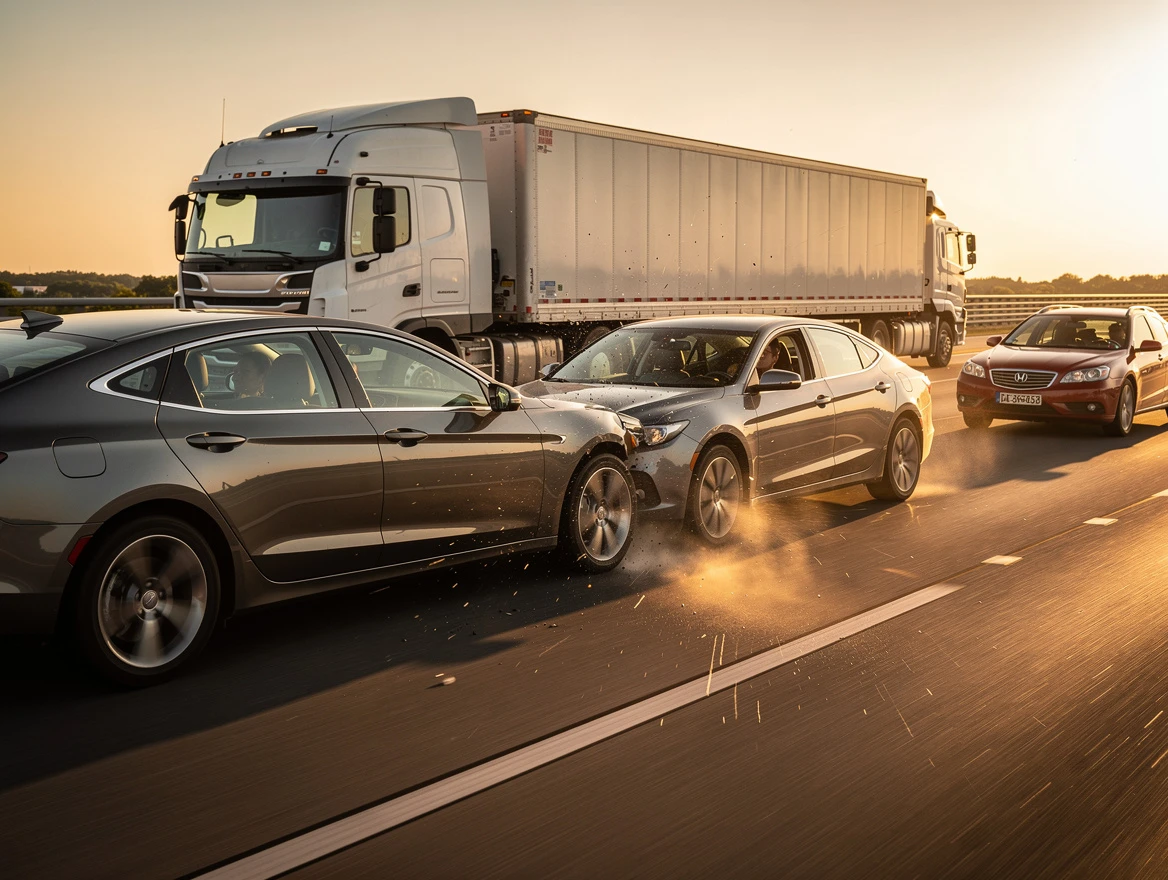
If two typical passenger cars drift together at matched speeds of 70 mph, the initial physical contact is often surprisingly smooth along the sheet metal, but immediately destabilizing. Because both vehicles have zero relative velocity in the forward direction, there is no massive kinetic energy impact from forward momentum. Instead, the danger stems from tire contact, interlocking body trim, and severe driver overcorrection.
Ready to register your vehicle?
Join thousands of vehicle owners who use Dirt Legal to handle their registration quickly.
Initial contact usually occurs at the side mirrors or protruding door handles. Side mirrors will fold or shatter, sending plastic debris across the highway lanes. Once the smooth side panels meet, sheet metal rubs against sheet metal, producing friction, sparks, and intense tire scrub if the wheels brush against one another.
The Peril of Rotating Wheel Contact and Tire Climb
The most catastrophic hazard in a side-by-side drift scenario is not metal contact, but tire-to-tire contact. Car tires rotate at approximately 800 to 900 revolutions per minute when traveling at 70 mph. The outer edge of a front tire spins upward toward the front of the vehicle, while the exposed rear edge spins downward.
If exposed spinning rubber touches spinning rubber on an adjacent car, the friction immediately grabs. The upward-rotating surface of one tire climbs the adjacent tire, instantly vaulting one vehicle into the air. This phenomenon, well known in open-wheel auto racing, flips passenger cars into violent rollovers in fractions of a second.
Human Reaction Times and Destructive Steering Overcorrections
When drivers feel their vehicle pulled sideways by aerodynamic suction, their instinctive reaction is to yank the steering wheel hard in the opposite direction. The typical human reaction time is between 0.75 and 1.5 seconds. By the time a motorist registers the contact, the cars have already traveled over 100 feet down the interstate.
Jerking the steering wheel away from the adjacent car unloads the suspension and transfers massive weight to the outside tires. At 70 mph, this violent steering input frequently induces severe oversteer or a fishtail motion. The car that broke away often spins across multiple lanes, striking highway barriers or tripping on unpaved shoulders.
How Semi-Truck Aerodynamics Change the Drifting Equation
Replacing one of the passenger cars with a fully loaded semi-truck completely alters the physical dynamics. A commercial tractor-trailer presents an enormous flat vertical surface that displaces thousands of pounds of air every second. The aerodynamic wake around an eighteen-wheeler is far larger, more complex, and much more violent than that of a passenger car.
A semi-truck creates distinct pressure zones along its 70-foot length. Near the front bumper, high pressure pushes air outward, while the middle section along the trailer sides forms an elongated low-pressure trough. Near the rear doors, detached turbulent eddies create a chaotic vacuum that pulls surrounding objects inward.
The Bow Wave Repulsion Followed by Violent Trailer Suction
If a passenger car drifts toward a semi-truck near the front bumper, the truck's forward bow wave initially pushes the car outward. This brief repulsion often misleads the driver into thinking air turbulence will keep the vehicles apart. As the car moves further back along the trailer, that repulsive force collapses into an aggressive low-pressure vacuum.
The large flat side of a 53-foot dry van trailer acts like a massive wall. Air rushing between the car door and the trailer wall moves at extreme speed, dropping pressure significantly. The passenger car is pulled firmly toward the truck, and the driver must actively steer away to prevent being sucked into the trailer undercarriage.
Underride Hazards and the Fatal Danger of Trailer Tandem Wheels
Contact with a semi-truck at 70 mph rarely results in harmless sheet metal rubbing. Most passenger car hoods sit lower than the base of a semi-trailer between the landing gear and rear axles. If the car drifts inward, it risks sliding beneath the side of the trailer, an event known as a side underride.
the exposed tandem wheels of the commercial trailer will shred passenger vehicle doors, quarter panels, and suspension components. Touching these heavy dual tires at 70 mph will rip the front wheel off a passenger vehicle, sending it spinning beneath the trailer axles. The disparity in mass, around 4,000 pounds for a car versus 80,000 pounds for a loaded commercial truck, means the truck driver may barely feel an impact that completely destroys the passenger vehicle.
Comparing Side-by-Side Aerodynamic Scenarios at Highway Speeds

Understanding how different vehicle pairings behave when drifting together at 70 mph helps illustrate why aerodynamic suction is so perilous. The table below outlines pressure zones, lateral forces, and collision outcomes across vehicle types.
| Vehicle Pairing | Primary Aerodynamic Effect | Estimated Lateral Pull | Most Common Collision Result |
|---|---|---|---|
| Sedan vs Sedan | Venturi low-pressure channel | Moderate (100, 250 lbs) | Side mirror loss, panel scraping, spinout from overcorrection |
| Sedan vs Full-Size SUV | Unequal displacement suction | High (200, 450 lbs) | Sedan pulled toward SUV beltline, wheel contact hazard |
| Sedan vs Semi-Truck (Front) | High-pressure bow wave push | Outward repulsion | Temporary steering deflection away from truck cab |
| Sedan vs Semi-Truck (Side) | Severe trailer vacuum trough | Extreme (500, 1,000+ lbs) | Sedan sucked into trailer side or rear tandem wheels |
| Motorcycle vs Semi-Truck | Violent shear turbulence | Critical destabilization | Immediate rider loss of control and fatal underride risk |
As demonstrated, the physics of moving air offer zero defensive barrier. When vehicles occupy adjacent highway space at equal speeds, pressure differentials consistently draw smaller profiles toward larger masses.
See How We Can Help With Your Vehicle Paperwork →
Post-Collision Vehicle Titles and Administrative Aftermath
When high-speed contact occurs on an interstate, the resulting body damage often compromises vehicle structural integrity. Even if both cars manage to come to a stop safely without rolling over, damaged suspension mounts, crumpled quarter panels, and shredded doors can easily lead an insurance adjuster to write the car off as a total loss. Managing the vehicle paperwork after such an incident presents its own set of hurdles.
If an insurer declares a car totaled, state motor vehicle agencies issue a salvage certificate. Returning that vehicle to roadworthy condition requires safety inspections, structural rebuilds, and titling updates. Understanding state guidelines protects vehicle owners from severe administrative headaches down the line.
Addressing Salvage and Rebuilt Titles After Major Highway Accidents
Rebuilding a vehicle damaged in a highway sideswipe requires clear documentation of every replacement part. State motor vehicle departments require proof that junkyard panels, doors, and suspension clips were compliantly obtained. If you purchase a damaged or repaired car, you must know what documentation is required to avoid titling delays.
For owners dealing with reconstructed titles, our guide on Bought a Car Sold as Clean Title But Got a Rebuilt Title? Here's What You Can Do explains your consumer protections. Knowing your titling status ensures you do not invest thousands of dollars into repairing structural damage only to be denied road tags by state authorities.
Avoiding Title Floating and Registration Errors on Damaged Vehicles
When vehicles change hands after an accident, buyers and sellers sometimes mishandle title assignments. Skipping title reassignment steps is known in the automotive trade as title jumping or title floating. This practice creates severe tax penalties and administrative blocks when the next owner attempts to register the car.
To understand the severe fines and penalties involved, review our article on Title Jumping is More Illegal Than Jumping a Car. Keeping your paperwork compliant is just as crucial as ensuring your vehicle's mechanical components are roadworthy before heading onto public highways.
Streamlining Out-of-State Titling and Montana LLC Registration
Many automotive enthusiasts who rebuild performance cars, elevated overland rigs, or custom builds prefer registering through states with simplified processes. Montana allows individuals and businesses to establish holding companies that own vehicles compliantly without annual emissions or aggressive personal property taxes.
Through our Montana LLC Vehicle Registration process, owners can title their passenger vehicles, vintage classics, and specialty projects without navigating complex local red tape. Setting up a Montana LLC establishes an independent entity that holds clean title to your asset, supported by professional registration specialists who manage filings with our paperwork support.
If you run commercial assets or transport gear across borders, maintaining current registrations is critical. Sister platform Ride Legal highlights this in their review of Truckers Pulled Over for Expired Registration Rules. Ensuring your documents remain valid prevents roadside impounds and heavy commercial citations.
Whether you need a bonded title, registration renewals, or asset holding structures, working with seasoned specialists eliminates paperwork delays. Dirt Legal has completed over 6,000 customer orders to date (lifetime through current month, n=6,225), helping drivers nationwide keep their cars fully documented and road-ready.
Frequently Asked Questions About Side-by-Side Vehicle Aerodynamics
Can air pressure between two cars ever push them apart at 70 mph?
No, air pressure between two cars traveling side-by-side at 70 mph will not push them apart. While stagnant air can be compressed under mechanical force, air flowing around moving cars accelerates through narrow spaces. Under Bernoulli's principle, higher velocity results in reduced static pressure, forming a low-pressure trough that pulls the vehicles together rather than pushing them away.
What is the Venturi effect, and why does it affect parallel driving?
The Venturi effect occurs when a fluid or gas speeds up as it flows through a constricted section of pipe or narrow channel. In highway driving, two parallel cars create a mobile channel between their side panels. As the gap between the vehicles shrinks, the displaced air accelerates, causing pressure to drop and creating a physical suction force that draws both vehicles inward.
What should a driver do if their car begins drifting toward another vehicle?
If your vehicle begins to drift toward an adjacent car, make smooth, controlled steering inputs rather than abrupt, jerky movements. Panic steering at 70 mph destabilizes your suspension and breaks tire traction, often causing high-speed spinouts. Gradually steer away from the other car while smoothly releasing the throttle, allowing distance to open up naturally.
Why does drafting work in racing if side-by-side air creates suction?
Drafting in racing occurs inline, where one car follows closely behind another's rear bumper, reducing front aerodynamic drag on the trailing car and smoothing rear wake for the lead car. Side-by-side drafting, often called side-drafting in NASCAR, intentionally dumps high-pressure air onto an opponent's rear spoiler to slow them down, demonstrating how disruptive side airflow is at racing speeds.
How does vehicle weight influence the collision outcome when drifting together?
Mass dictates how much momentum a vehicle retains during contact. A 4,000-pound sedan contacting an 80,000-pound loaded semi-truck cannot transfer sufficient force to deflect the truck. The car absorbs the entire kinetic displacement, crushing its outer body panels and suspension, while the semi-truck driver might only register minor road vibration.
What paperwork is needed if a highway collision results in a total loss?
If your vehicle is written off by an insurance provider, you will receive a salvage certificate. To compliantly rebuild and drive that vehicle again, you must gather all component bills of sale, pass state road safety inspections, and obtain a rebuilt title. Private registration services can assist in filing the necessary out-of-state paperwork to restore road privileges smoothly.
Dealing with complex DMV paperwork, bonded titles, or out-of-state registrations? Dirt Legal manages vehicle titling and Montana LLC formations so you can stay focused on the road.
Start Your Registration Today, No Hidden Fees
Understanding the physics behind what would happen if two vehicles, traveling side-by-side at equal speeds of 70mph were to very gently drift together clarifies why maintaining safe lane buffers is vital. Air turbulence creates vacuum suction instead of a cushion, and drifting into a semi-truck magnifies those dangers exponentially. Protect your vehicle both on the asphalt with attentive driving and off the road with compliant titling support from Dirt Legal.