Can Babies Ride in Side by Sides (UTV)? Safety & Laws
Can babies ride in side by sides (UTV)? Learn the safety risks, age requirements, and legal considerations before taking your infant on the trail.
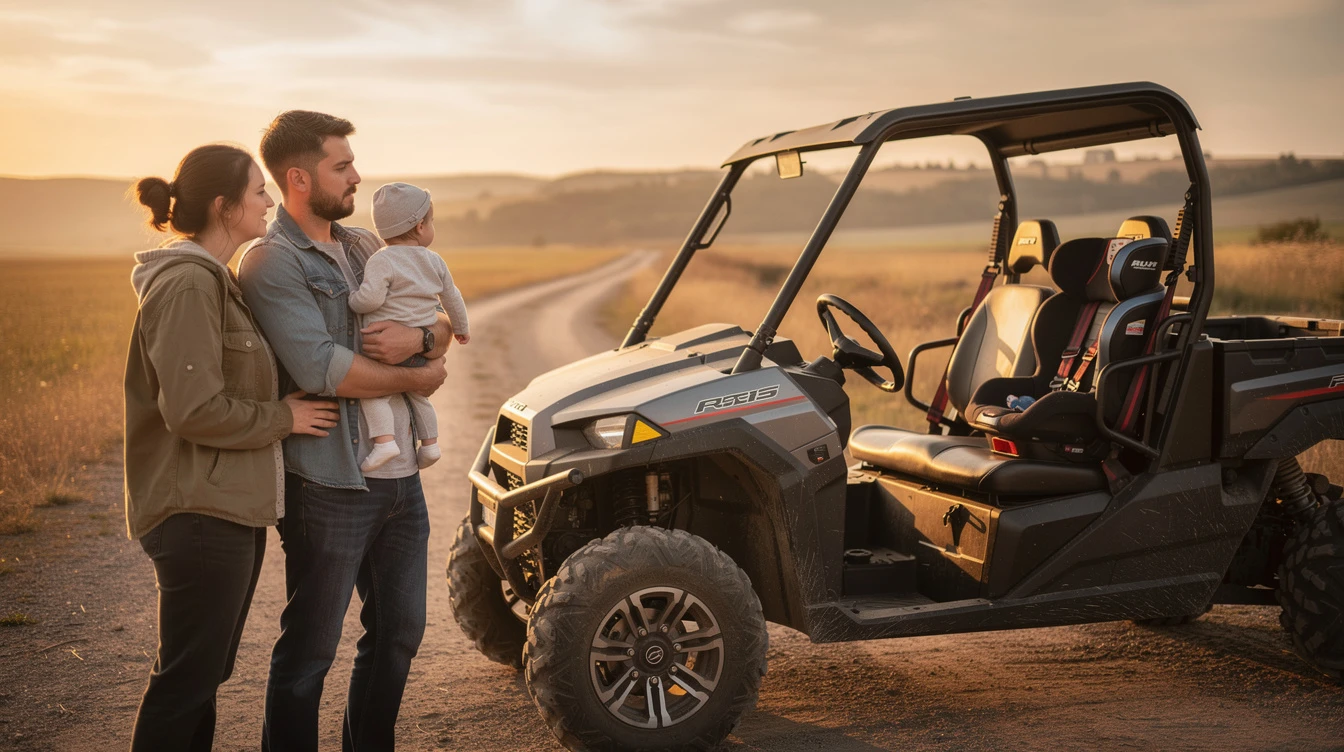
Babies cannot safely ride in side-by-sides (UTVs) because these vehicles lack the necessary crash protection, restraint systems, and developmental support required for infants. Most manufacturers and safety organizations strictly advise against transporting children under the age of eight or those who do not meet specific height and weight requirements for passenger seating in off-road vehicles.
Safety Hazards of Transporting Infants in UTVs
The primary concern regarding infants in UTVs involves the vehicle design itself. Side by sides are engineered for off-road terrain, which inherently involves unpredictable movements, sudden jolts, and a high risk of vehicle rollover. Unlike a standard car seat in a modern vehicle, UTV seats are not built to secure an infant carrier, and the lack of a protective roll cage that shields passengers from outside debris makes the environment dangerous for a developing body.
Why Standard Car Seats Fail in UTVs
You cannot simply strap a standard car seat into a UTV. Car seats are tested and certified for use in vehicles that meet FMVSS (Federal Motor Vehicle Safety Standards). Because a UTV does not offer the same structural integrity, even a tightly buckled car seat will experience extreme G-forces during a trail ride. These forces can cause neck and spinal injuries to an infant because their muscles are not developed enough to withstand off-road vibration.
The Risk of Rollover and Ejection
If a UTV rolls over, the occupants are typically held in place by harnesses and the roll cage. However, these systems are designed for adults or older children who can sit upright with their backs flush against the seat. An infant in a rear-facing or even forward-facing seat will be exposed to significant trauma if the vehicle tips. In the unfortunate event of an accident, an infant does not possess the physical stability to avoid injury from the vehicle structure.
For those who are considering Montana registration for their adventure vehicles, our Street-Legal Vehicle registration assistance services can help you understand the requirements for keeping your adult-sized machines on the road properly. While these services focus on the registration process, understanding the limitations of the vehicle is essential for every owner. A more detailed breakdown is available in These Are the Facts and Statistics Behind Dirt Bike Safety. This resource explains the inherent risks associated with powersports equipment.
Street-Legal and Age Requirements for UTV Passengers
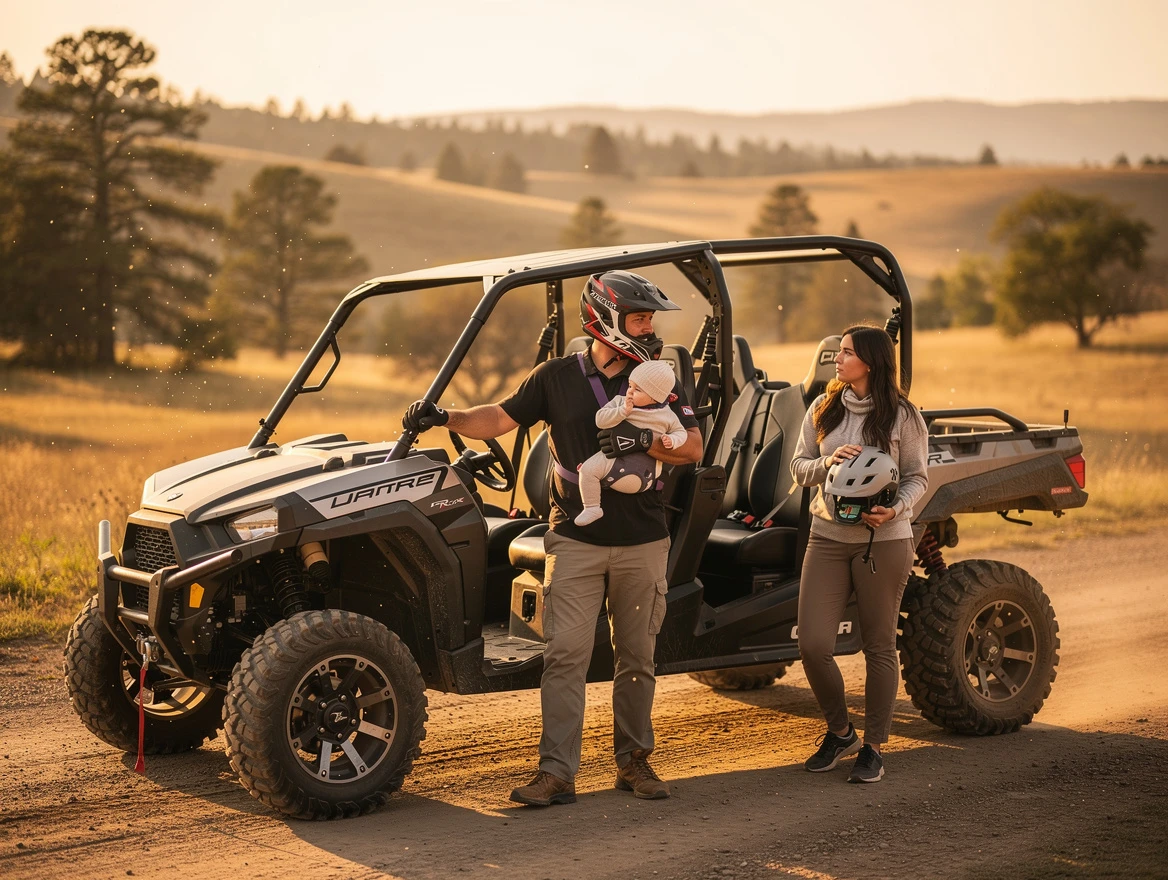
Compliance regarding passengers vary by state, but most regions follow guidance set by the UTV manufacturer. If you look at the owner's manual for any major side-by-side brand, you will notice a specific warning label that prohibits children who are too small to sit with their backs against the seat and feet flat on the floor from riding. This is not just a suggestion; it is a manufacturer mandate to prevent liability and injury.
Ready to register your vehicle?
Join thousands of vehicle owners who use Dirt Legal to handle their registration quickly.
Understanding Manufacturer Age Guidelines
Almost all UTV manufacturers stipulate that passengers must be at least six to eight years old. Some specify that the passenger must be able to sit with their back against the seat and their feet flat on the floor while holding onto the handholds provided by the factory. If a child cannot reach these points, they are not safely seated, and allowing them to ride violates the manufacturer's safe operation requirements.
Liability and Insurance Implications
If you transport an infant in a UTV and an accident occurs, your insurance carrier may deny coverage based on the fact that you operated the vehicle in direct violation of the manufacturer’s safety guidelines. This is a massive financial risk. Many owners choose to focus their resources on proper vehicle documentation instead of taking unnecessary risks on the trail. We have helped 80,000+ vehicle orders to date. Dirt Legal has completed over 5,000 customer orders to date (internal data, lifetime through current month, n=5,973).
See How We Can Help With Your Registration Needs →
| Feature | Infant Passenger | Adult Passenger |
|---|---|---|
| Safety Equipment | None (Standard car seats are incompatible) | Roll cage, harnesses, handles |
| Physical Maturity | Inadequate neck/spine strength | Can withstand off-road G-forces |
| Manufacturer Rules | Strictly Prohibited | Allowed |
| Street-Legal Risk | High (Negligence) | Minimal |
The Importance of Proper Vehicle Documentation
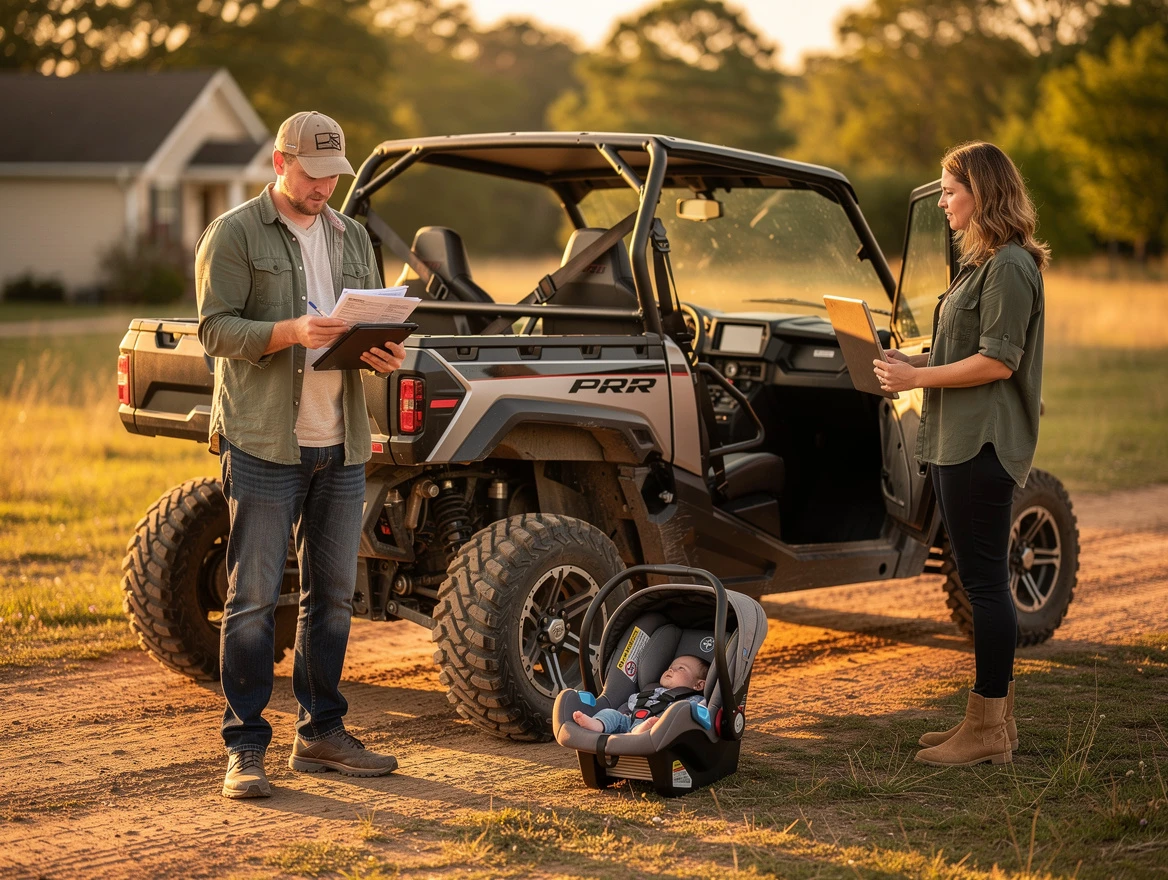
Whether or not you are taking your family out on the trails, making sure your vehicle is registered correctly is a priority for every responsible owner. Many riders find that getting their machines set up properly helps avoid unnecessary scrutiny from authorities when they are out riding. You can learn more about how we assist with these processes by visiting How Street-Legal Works. We simplify the process so you can focus on the ride.
Frequently Asked Questions
At what age can a child safely ride in a UTV?
Most UTV manufacturers and safety specialists require children to be at least eight years old. They must also be able to sit with their back against the seat, feet flat on the floor, and hands holding the grab bar. If a child cannot reach all these points, they are physically too small to be a passenger.
Are there any safe ways to transport a baby in a UTV?
There are no safe ways to transport a baby in a UTV. The vehicle is not equipped with the anchor points or structural safety features required for infant car seats. Exposure to the off-road environment poses a significant risk to an infant’s developing skeletal system and overall safety.
Why do some people say it is okay for babies to ride in UTVs?
Some people may believe that using a custom mount for a car seat is sufficient, but this is a dangerous misconception. Off-road trails are incredibly rough, and even minor bumps can exert forces on an infant that are far beyond what a car seat is designed to handle. Always defer to the manufacturer's guidelines found in your vehicle manual.
Does insurance cover accidents if a baby is on board?
In many cases, insurance companies will deny a claim if an accident occurs while you are operating the vehicle in a manner that contradicts the manufacturer’s safety instructions. Because carrying an infant is a violation of these instructions, you could be held personally liable for any injuries sustained by the child.
What should I do if I want to share the outdoors with my infant?
For parents who want to introduce their infants to the outdoors, consider safer, slower-paced activities like hiking in a properly fitted carrier or using a standard vehicle on paved or improved roads. Prioritize the safety of your child over the desire to take them on a high-adventure, high-risk vehicle like a UTV.
Start Your Registration Today, No Hidden Fees
Ultimately, when asking can babies ride in side-by-sides (UTV), the answer remains a firm no. The design of these vehicles is not compatible with infant travel requirements. By keeping infants off the trails and focusing on legitimate vehicle registration for your adult rides, you keep your family safe and your ownership compliant.